
2026 Best Online Library and Information Science Degrees for Career Changers

Co-Founder and Chief Data Scientist
Mid-career professionals seeking to switch into library & information science frequently confront the challenge of balancing rigorous program demands with full-time work and family obligations. The National Center for Education Statistics reports that over 40% of graduate enrollments in 2024 consist of adults aged 25 and older, signaling a rising need for flexible, accessible online degree formats. This shift reflects how traditional on-campus programs often create timing and geographic barriers, limiting opportunities for career changers aiming to enter a field that requires both specialized knowledge and practical credentials.
Evaluating programs based on flexibility, accreditation, and employer recognition becomes critical for making a viable transition. This article assesses the best online library & information science degrees specifically tailored to accommodate career changers, providing clear guidance on which offerings align with professional goals, scheduling needs, and market value.
Key Things You Should Know
- Accelerating online MLIS programs average 18 months but increase tuition by 25% compared to standard 24-month formats, creating a tradeoff between cost and quicker workforce entry per National Center for Education Statistics 2024 data.
- Employers in academic and corporate archives prioritize candidates with dual certification in digital preservation and data curation, raising barriers for generalist degrees despite LIS graduate numbers growing 8% annually per ALA employment reports.
- Over 65% of career changers funding LIS degrees rely on personal savings or loans, emphasizing financial accessibility challenges as median salaries post-graduation remain near $55K, limiting ROI timelines in a market with rising living costs.
What is an online library and information science degree, and who is it best for?
Choosing an online library and information science degree as a career changer requires assessing how program design and accreditation translate into hireable skills within evolving information sectors. Candidates shifting from unrelated fields must prioritize programs aligned with American Library Association standards to ensure employer recognition, especially since many roles demand competencies in digital asset management and remote practicum experience.
For example, a marketing professional aiming to manage digital archives should verify that the curriculum covers relevant data curation techniques and offers internships that mirror current industry workflows. The online format benefits those balancing work or family obligations but demands strict time management and dependable technology to complete remote assignments and practicums.
Those pursuing an online library and information science degree benefits for career changers often include stackable credentials and part-time pacing options. Financial considerations are crucial as well. The median annual wage for librarians and media specialists hovers around $64,310, with top earners exceeding $98,650, making it important to weigh tuition costs against realistic salary gains and growth potential in sectors like healthcare data administration or corporate knowledge management.
Prospective students seeking who should pursue a library and information science online program will find it tailored primarily to professionals needing a flexible, accredited pathway into information governance and archival roles. To evaluate how this degree aligns with your career goals, explore what is library science in a detailed context reflecting employer expectations and labor market demands.
Are online library and information science degrees respected and properly accredited in the U.S.?
Employers in public libraries, archives, museums, and corporate information sectors increasingly demand online library and information science degrees accredited in the U.S. by the American Library Association (ALA). With over 60 ALA-accredited master's programs available online across the U.S. and Canada, these degrees carry broad professional recognition and align with employer expectations for competence in metadata, cataloging, and digital resource management.
For career changers, such as a mid-career professional transitioning from education, enrolling in an ALA-accredited program enhances eligibility for certification and state licensing-requirements often tied directly to accredited credentials. Non-ALA-accredited programs significantly limit credential recognition, thereby restricting employment prospects, particularly in government or institutional settings.
Choosing an accredited program typically means access to flexible asynchronous coursework and practical tracks in archival management, digital libraries, or IT, accommodating working students. Conversely, non-accredited degrees often require graduates to pursue additional qualifications to remain competitive.
The reputation of online library and information science programs in America strongly hinges on this accreditation status, shaping workforce mobility and hiring outcomes. Students balancing work and study should also consider that some online degrees in related fields, such as the best online animal science degree, demonstrate similar tradeoffs in cost and flexibility worth evaluating alongside LIS options.
How do online library and information science programs compare to campus-based options?
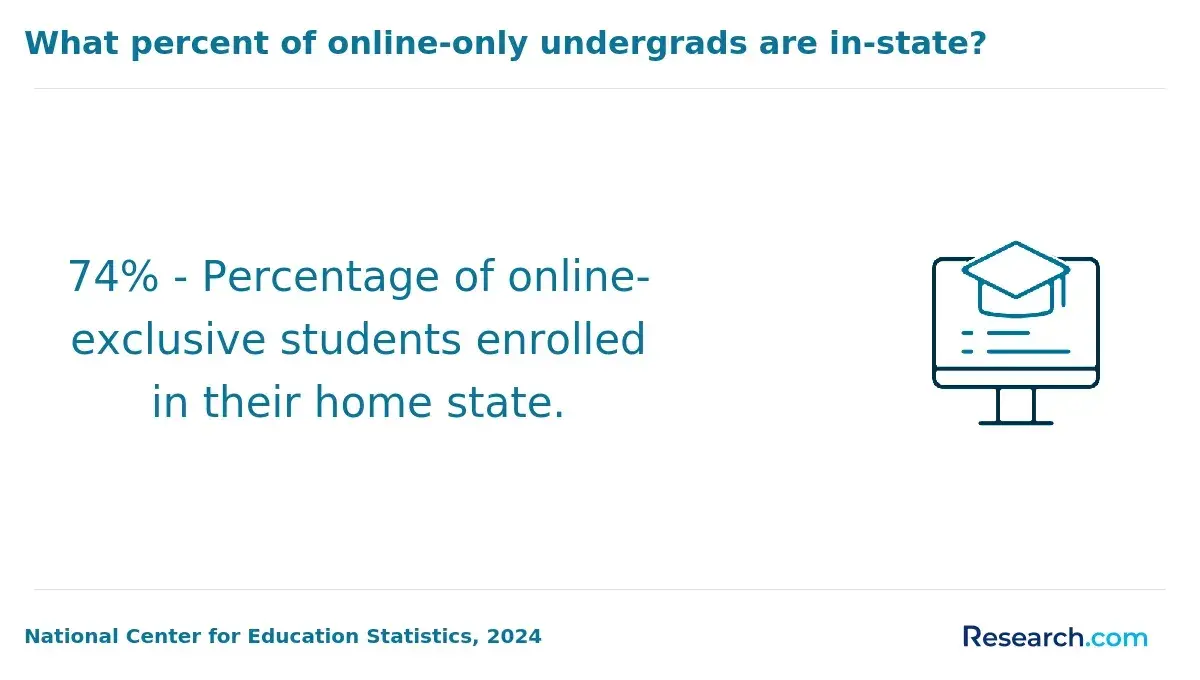
The flexibility comparison between online library and information science programs versus campus-based degrees reveals distinct tradeoffs affecting learners with varied priorities. Over 70% of online MLIS programs now accept candidates from any undergraduate background, a practical shift facilitating career changers without traditional prerequisites commonly expected in on-campus formats. This accessibility supports professionals pivoting from fields like healthcare or corporate roles into LIS careers.
Online programs emphasize asynchronous learning, providing necessary scheduling freedom that allows students to maintain full-time employment while advancing credentials. In contrast, campus-based degrees often deliver richer face-to-face mentorship and networking opportunities crucial for competitive job markets or research institutions, highlighting the importance of local connections for recent graduates targeting academic librarianship.
Employers increasingly accept online degrees from accredited institutions as comparable in rigor and outcomes, provided candidates demonstrate relevant internships and practical experience. This dynamic is particularly relevant for those pursuing specialized roles, such as in healthcare data management, where an online LIS program can be integrated with professional work without relocation. Students exploring these options should assess their capacity for self-motivation and time management against potential network-building benefits found on campus.
Understanding this balance informs strategic choices when comparing flexibility and outcomes of library and information science education. Career changers benefit from higher acceptance rates in online programs but must proactively seek experiential learning to meet employer expectations. For detailed guidance on related healthcare degrees, consider exploring the HIM degree pathways available.
What types of online library and information science degrees can career changers pursue?
Career changers evaluating online library and information science degree programs for career changers should weigh specialization options that align with prior experience and market demands. The Master of Library and Information Science (MLIS) remains the principal qualification for shifting into roles spanning libraries, archives, and digital asset management. Specialized tracks-such as digital libraries or knowledge management-offer targeted skill sets valuable for transitions from IT or business sectors.
For working professionals seeking flexibility without a full master's commitment, post-bachelor's certificate programs focus narrowly on essential competencies like metadata standards or cataloging. These shorter pathways often facilitate faster entry or advancement in positions involving records management and information governance, accommodating schedules that balance job and family responsibilities through asynchronous coursework.
While online PhD programs provide a route toward academic or strategic leadership positions, their limited availability and intensive time demands reduce accessibility for immediate workforce pivots. Confirming regional accreditation is critical to avoid credential recognition issues during career transitions.
Employment outcomes reflect practical utility: a 2024 survey reported 96% of MLIS graduates employed post-graduation, with 81% securing jobs before degree completion-an indicator that employers prioritize tangible skills such as digital literacy and user-focused service design over credentials alone. Practical considerations like these underscore decision tradeoffs for those eyeing flexible library and information science degrees for working professionals.
For those comparing pathways amid evolving industry demands, it is instructive to consider degree affordability and return on investment alongside emerging adjacent fields-such as data science degrees-which may intersect with information curation and management roles in hybrid environments.
What courses and skills are typically covered in online library and information science programs?
Library & information science programs position students to meet employer demands for managing both physical and digital resources, a balance that requires technical precision and adaptability. Mastery of cataloging standards like MARC records and controlled vocabularies directly influences the accessibility and usability of archives in public and corporate environments. For example, professionals in healthcare research rely on refined information retrieval techniques to deliver exact results where inaccuracy can have serious consequences.
Beyond foundational skills, students must engage with digital preservation and ethical stewardship of data to remain relevant amid rapid technological shifts. The fastest-growing roles extend into big data analysis and information policy, fields demanding fluency in emerging tools and frameworks. Communication and project management competencies are equally essential, as cross-disciplinary collaboration is routine in digitization projects and technology implementation.
Practical challenges for career changers include navigating varied software platforms and complying with evolving metadata standards. Internships or capstone projects offered by many programs provide vital applied experience that recruiters increasingly seek when evaluating candidates transitioning from unrelated sectors.
Employment projections indicate a moderate 3% growth rate over the next decade for librarians and related professionals, with median salaries exceeding $64,000. This data points to a competitive but stable labor market where a blend of traditional cataloging expertise and digital specialization markedly improves employability.
What are the usual admission requirements for online library and information science degrees?
Admission to online library and information science programs hinges less on broad academic credentials and more on measurable readiness and relevant experience aligned with workforce expectations. While most schools require a bachelor's degree-often favoring backgrounds in liberal arts or social sciences-they also assess candidates from diverse academic fields, provided transcripts show at least a 3.0 GPA or equivalent professional achievements.
Applicants targeting a career pivot must factor in the time needed to compile personal statements clarifying their motivation and future goals, along with two or three targeted letters of recommendation from supervisors who can verify applicable skills and academic potential. Pragmatically, the GRE is becoming optional, yet some competitive or specialized programs still request it.
Non-native English speakers typically must prove proficiency through TOEFL or IELTS to ensure they can navigate rigorous content remotely. Prospective students should plan carefully given tuition rates ranging from $300 to $550 per credit hour, translating to between $10,800 and $23,100 for a full program, influencing budget decisions, application timing, and financing strategies.
Key considerations include
- Early submission of transcripts and recommendation letters to allow for administrative processing
- Demonstrating work experience in information management or technology to strengthen applications
- Balancing cost against prospective salary increases within information science roles
This attention to operational details helps reconcile the educational commitment with realistic employability outcomes in competitive information science markets.
How long do online library and information science degrees take, and what do they cost?
Selecting a library and information science degree demands balancing time, cost, and workforce alignment. Full-time programs typically span 1.5 to 3 years, requiring 36 to 42 credits, often delivered online. For professionals managing work alongside studies, part-time or accelerated options may extend completion beyond 4 years, influencing immediate income and market entry timing.
Tuition costs vary sharply: public universities generally charge $400 to $800 per credit, with total tuition ranging from $14,000 to $33,000, while private institutions surpass $1,000 per credit, driving costs over $40,000. Additional expenses for fees, books, and technology add $1,000 to $2,000, though financial aid and employer assistance can mitigate these outlays.
Employers in this evolving sector expect applied skills combined with digital fluency, favoring graduates with practicum or project experience. The median librarian salary of $64,370 and approximately 4,200 job openings projected through 2033 underscore cautious but steady demand.
For career changers, slower-paced pathways lower short-term financial stress but delay workforce reentry. Strategic program choice can reduce redundant coursework when prior credits align with curriculum, accelerating time-to-hire and salary progression.
- Typical duration: 1.5-3 years full-time, 4+ years part-time
- Credit load: ~36-42 credits (10-14 courses)
- Cost: $14,000-$40,000+, plus $1,000-$2,000 fees and materials
- Projected job growth: ~4,200 new jobs (Through 2033)
- Median salary: $64,370 annually
What library and information science careers can you pursue after an online degree?
Career changers pursuing an online library and information science degree face complex tradeoffs between cost, flexibility, and workforce readiness. Programs often cost over $1,800 per credit hour at private institutions, posing a financial burden that is partially offset by the ability to maintain full-time employment during study. This balances income preservation against the limited scheduling options of traditional, campus-based courses.
Employment outcomes vary notably by sector and region. Public librarian roles, especially in urban areas, typically require an American Library Association-accredited master's and practical experience often gained through internships or remote practicums included in online curricula. Meanwhile, corporate knowledge management positions prioritize technical skills in metadata and database management, reflecting divergent employer expectations linked to distinct organizational needs.
Graduates increasingly must demonstrate hybrid competencies, combining IT proficiency with user experience design, to remain competitive. This convergence arises from the shift toward digital collections and remote service delivery. Programs offering hands-on projects and connections to industry partners enable students to bridge education and employer demands more effectively.
- Library, academic, and special librarian roles remain accessible pathways for graduates.
- Information architect and archivist positions require advanced organizational and digital curation skills.
- Knowledge management careers demand deeper technical data management expertise.
What salary ranges and job outlook can library and information science graduates expect?
Graduates entering the library and information science workforce in 2026 encounter median salaries between $50,000 and $65,000, shaped heavily by geographic location, sector, and role specialization. Positions such as archivists, curators, and librarians average around $60,820, but roles within corporate or tech-driven settings can start above $70,000.
Those moving from unrelated fields should consider that public and academic library entry-level salaries typically fall on the lower end, balancing financial expectations against job security and mission alignment. Employment growth for librarians and related fields is projected at 9% through 2032, aligning with average occupational growth. This demand largely stems from needs in digital resource management and data governance, rather than traditional cataloging.
Online MLIS programs offer flexibility, with over 80% supporting part-time study to accommodate working adults. This option often extends the time to the degree but reduces financial disruption. For example, a mid-career administrative worker shifting to information management might start at $55,000 but progress to $75,000 within five years in specialized roles like health informatics or corporate archiving.
- Salary depends on industry and region more than credentials alone.
- Programs emphasizing data skills enhance employability.
- Flexible enrollment supports income stability during study.
- Networking and certifications remain key for long-term advancement.
How can career changers choose a reputable, flexible online library and information science program?
Choosing an online library and information science program demands prioritizing accreditation and tangible employment outcomes over promotional claims. Programs accredited by the American Library Association (ALA) remain the de facto standard for ensuring employer recognition and eligibility for many public library positions. Career changers must weigh flexible pacing options against program rigor; asynchronous formats suited to working professionals vary widely in depth and time-to-completion.
Graduates benefit most when programs offer specialization tracks aligned with concrete industry sectors like digital archives or data curation, which directly influence job market positioning in academia, government, and corporate roles.
Verifiable placement metrics matter. For instance, a 2025 report from Syracuse University's MLIS program shows an 87% five-year job placement rate, indicating strong ROI for candidates pivoting careers. This contrasts with programs lacking transparent, recent employment data, complicating decisions about return on educational investment.
Practical considerations include policies for transferring prior graduate credits and the availability of remote career services and networking. Additionally, candidates should confirm each program's compatibility with state licensing requirements. Comparing total cost against these deliverables clarifies whether a program's expense aligns realistically with the anticipated career trajectory.
Other Things You Should Know About Library & Information Science
Prior professional experience is not required to enter or complete an online LIS program, but it significantly shapes the learning curve and practical application. Students without a background in information work should plan for additional time to build foundational skills like cataloging or metadata management, which may require more intensive study or supplemental courses. Employers often expect familiarity with basic LIS principles, so career changers must seek programs that offer strong practical components or internships to gain real-world exposure alongside theoretical knowledge.
Online LIS programs vary widely in their coverage of emerging technologies; some focus heavily on digital libraries, data curation, and information systems, while others lean more toward traditional librarianship. Students aiming for technology-centric roles should prioritize programs with updated curricula in areas like database management, programming basics, and digital asset management. Graduates lacking robust tech training may face challenges adapting to rapidly evolving employer expectations in data-driven or IT-supported library environments.
Internships or practicum components are increasingly essential for career changers because they provide hands-on experience that complements online instruction. Programs that require or facilitate local placements improve graduate employability by demonstrating applied skills and building professional networks. Without practical experience, graduates risk competing at a disadvantage in a field where employers prioritize demonstrated competencies over academic credentials alone.
Yes, selecting an accredited program with clearly defined specialization tracks, such as archival studies, school libraries, or data management, helps align education with specific career goals. Specializations deepen expertise, which employers view favorably when hiring for niche or advanced roles. Career changers must assess whether the curriculum matches their intended job market segment rather than choosing the shortest or cheapest option, as generalist programs may limit pathways in competitive subfields.
References
- Explore Librarian Salary, Jobs, and Careers in Library Science https://teach.com/online-ed/education-degrees/online-masters-library-science/librarian-careers/
- Alternative Career Paths Utilizing Library Science Skills https://www.librariancertification.com/alternative-career-paths-utilizing-library-science-skills/
- Online Master of Library and Information Studies https://www.ualberta.ca/en/school-of-library-and-information-studies/programs/online-mlis.html
- Best Online Library Science Degrees, Updated for 2025 https://www.librarysciencedegrees.org/programs/online
- Career Change to Library Science: A Marketing-to-MLIS Guide https://www.mastersinlibraryscience.org/articles/career-change-to-library-science/
- Online vs. On-Campus Library and Information Science Programs in India https://lis.somaiya.edu/en/blog/online-vs-on-campus-library-and-information-science-programs-in-india/
- 5 Key Courses In A Master’s In Library Science Program - GradSchoolHub.com https://www.gradschoolhub.com/lists/5-key-courses-masters-library-science-program/
- Introduction to Library and Information Science | Free Course | Alison https://alison.com/course/introduction-to-library-and-information-science