2027 Common MSN Application Mistakes to Avoid

Co-Founder and Chief Data Scientist
Missing key deadlines or submitting incomplete materials can instantly derail a highly qualified applicant's chance at an msn program, especially as competition intensifies and programs tighten admission standards. Recent data from the National Center for Education Statistics shows a 23% increase in enrollment for online nursing master's programs since 2022, reflecting broader shifts toward flexible learning but also amplifying the stakes of navigating varied application requirements. Candidates often underestimate how misaligned documentation or misunderstood prerequisites affect their admission timeline and potential funding options. This article identifies common application errors and offers targeted strategies to help prospective students streamline submission processes and optimize acceptance outcomes.
Key Things You Should Know
- MSN programs often underestimate opportunity cost: data from the National Center for Education Statistics shows mid-career nurses face average income interruption of 12 months, impacting lifetime earnings despite post-degree salary gains.
- Employer demand increasingly favors MSN specializations in informatics and geriatrics; AMSN reports 43% of healthcare recruiters prioritize these, meaning generic MSN tracks risk lower job placement rates.
- Delays in application timing due to misinterpreting prerequisite clinical hours increase program start lag by 6-9 months, raising financial strain and reducing net present value of career advancement, according to a 2024 AACN survey.
What are the most common MSN application mistakes that cause rejections?
Incomplete or late msn applications consistently cause rejections due to missing essential components like transcripts, recommendation letters, or clinical verifications. Data shows that applicants with incomplete college applications are 9.2 percentage points less likely to enroll, a critical disadvantage especially in graduate nursing admissions where full documentation signals readiness for advanced clinical responsibilities. This practical friction highlights administrative thoroughness as a decisive gatekeeper in MSN admissions.
Critical mistakes applicants make on MSN admissions forms include submitting personal statements that do not clearly connect clinical goals and leadership aspirations to the specific msn curriculum. For instance, nurses pursuing nurse practitioner tracks in geriatrics must present relevant clinical experience to align with program expectations. Generic statements dilute perceived fit and reduce chances in competitive cohorts where specialization and research interests shape selection.
Additional hurdles involve inadequate prerequisite coursework proof, missing licensure details, or underreported supervised clinical hours. These omissions can delay processing or prompt outright denial.
Finally, with virtual and hybrid interviews becoming routine, demonstrating technological competencies such as telehealth certifications or electronic health record experience is increasingly non-negotiable to remain competitive.
For professionals aiming to pivot within psychiatric nursing, exploring options like the fastest PMHNP program can address some timing and employment alignment considerations.
How can you strengthen your MSN personal statement and avoid generic content?
Applicant narratives that rely on generic statements undermine their competitiveness in an increasingly selective MSN admissions environment. Enrollment declines of 14% in the past two years after a prior surge suggest admissions committees are now prioritizing applicants who present differentiated, evidence-based storytelling that connects experience to measurable outcomes. For example, rather than a vague intention to enhance clinical skills, detailing how a candidate implemented a protocol reducing hospital readmissions by a specific percentage illustrates leadership and impact in concrete terms.
Effective MSN personal statement tips for stronger impact include addressing concrete challenges encountered in professional roles and explaining how advanced education will fill skill gaps. Vague phrases like "passion for nursing" are insufficient; admissions panels expect clear linkage between goals and program offerings. Demonstrating awareness of healthcare system priorities such as value-based care or health disparities shows preparedness for employer expectations and real-world applicability.
Since balancing coursework with full-time employment is a practical barrier for many candidates, addressing logistical strategies and previous academic success in high-pressure environments signals readiness. Increasingly, applicants benefit from considering online nursing programs for working adults that accommodate such needs without compromising program rigor.
Avoiding generic content in MSN application essays means articulating specific leadership outcomes, quality improvements, or team management achievements quantified by relevant metrics. Admissions committees seek evidence of strategic planning, resilience, and return on investment in a contracting applicant pool competing for limited seats.
What GPA, prerequisites, and clinical experience do MSN programs really expect?
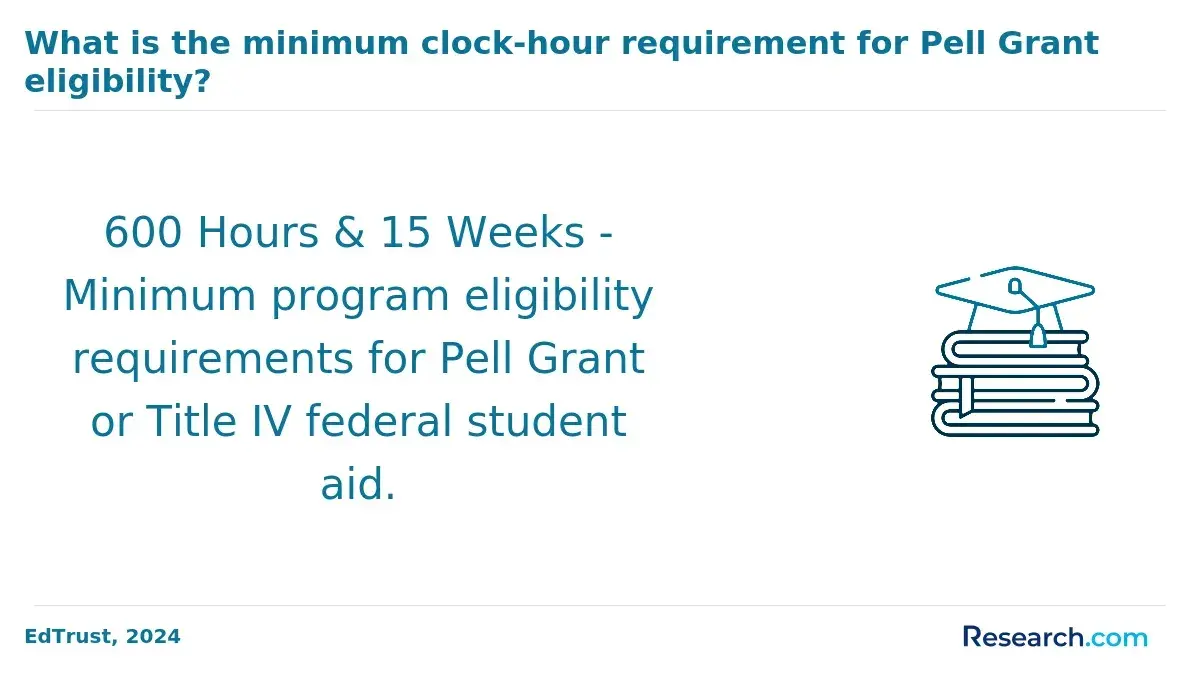
Competitive MSN programs typically mandate a minimum cumulative GPA of 3.0, with many selective tracks requiring 3.2 or higher, particularly for direct-entry or accelerated options. Beyond GPA, prerequisites such as anatomy, physiology, microbiology, chemistry, and statistics form the academic baseline; some programs also demand pathophysiology and pharmacology. Clinical experience expectations differ markedly depending on specialization: bedside nursing tracks favor candidates with 500-1,000 documented hours, while administration or education-focused pathways may place more value on related work experience over clinical hours.
Ignoring these nuances can delay progress and reduce admission odds. For example, candidates from community hospitals often struggle if lacking formal clinical hour documentation, leading to remedial coursework or deferred graduation. Applicants benefit from clarifying program-specific requirements, as access to detailed application guidelines corresponds to a 3.7 percentage point increase in enrollment and a 4.1 point boost in persistence, as demonstrated in the 2025 application-mistakes study.
Employers in nursing administration and education weigh both academic rigor-reflected in GPA-and practical expertise validated through clinical or relevant work experience. Prospective students should verify if programs require coursework completed within recent years and whether clinical hours must be paid, volunteer, or observational. Those weighing their options may also explore alternatives like RN to BSN programs that can serve as strategic stepping stones in nursing education.
MSN program GPA requirements in the US
Prerequisites and clinical hours needed for MSN admission
How do MSN admissions committees evaluate recommendation letters and what hurts your chances?
The evaluation criteria for msn recommendation letters extend beyond simple endorsements to include specificity, relevance, and the recommender's recognized authority. Admissions committees weigh letters that document measurable clinical skills, leadership during crises, and program-specific achievements more heavily than vague or generic praise. For example, a letter detailing how a nurse coordinated patient care during a pandemic showcases unique competencies that differentiate candidates in competitive specialty tracks like pediatrics or nurse anesthesia.
Common recommendation letter mistakes affecting msn admissions include relying on colleagues without clinical or academic credibility and submitting letters with broad, unsupported claims. Such pitfalls undermine trust when admissions panels cross-check narratives for consistency against other application components. Inconsistent or overly generalized endorsements raise concerns about candidate readiness for advanced practice roles that increasingly demand leadership and specialized expertise.
To enhance application strength, candidates should:
- Select recommenders intimately familiar with their clinical and academic performance
- Provide clear guidance for letters to address specific msn program requirements and career goals
- Equip recommenders with detailed resumes highlighting relevant accomplishments
- Ensure letters avoid generic statements and instead illustrate concrete outcomes or patient impact
Ignoring these factors risks rejection or placement on waiting lists, especially given the competitive nature of top-tier programs. Applicants interested in unique pathways may also evaluate universities with dual degree programs that could integrate clinical and academic pathways more efficiently, reducing redundant barriers and facilitating smoother career pivots.
What MSN application pitfalls arise when choosing online vs on-campus programs?
Applicants choosing between online and on-campus msn programs face distinct operational challenges that directly influence admission success and long-term career prospects. Online students must navigate decentralized communication and self-managed deadlines, increasing the chance of missing critical submissions. For instance, the National Council of State Boards of Nursing (NCSBN) documented 207,015 nursing student errors over three years, with 22.7% attributed to late or delayed actions, pointing to systemic deadline risks in remote settings. Without rigorous personal scheduling, applicants risk delayed progression or admission denial due to overlooked transcript or license submissions.
On-campus candidates benefit from clearer administrative structures and in-person support but contend with rigid deadlines that may conflict with professional and personal obligations. Missed interviews or poorly timed paperwork can cause irreversible setbacks. Employers often scrutinize clinical experience authenticity more closely for online graduates, especially if practicum verification is weak, which can hinder employability in competitive job markets. On-campus students, although monitored directly by faculty, face attrition risks if in-person commitments disrupt work balance.
Well-informed applicants should:
- Develop centralized calendars with automated alerts for every application requirement.
- Verify clinical placement validation processes early to avoid submission delays.
- Engage proactively with program advisors to understand nuances in online versus on-campus administrative procedures.
How can you verify MSN program accreditation and avoid diploma or accreditation mills?
Validating msn program accreditation is a decisive factor in securing licensure and job eligibility within nursing. Relying exclusively on school websites or third-party aggregators risks encountering diploma mills-entities offering credentials without recognized accreditation, which invalidates credits and licenses. A nurse aiming for leadership must present an msn from a program accredited specifically for nursing education, not merely institutional accreditation.
Employers in healthcare rigorously screen credentials. A recent survey showed that top Fortune 500 hiring managers disqualify candidates instantly upon discovering credential misrepresentation. This reality illustrates that degrees from non-accredited sources significantly limit career trajectories and could lead to license revocation.
To confirm program legitimacy, cross-check accreditation through the U.S. Department of Education's Database of Accredited Postsecondary Institutions and Programs or the Council for Higher Education Accreditation (CHEA), and verify with state nursing boards. Recognized accreditors include the Commission on Collegiate Nursing Education (CCNE) and the Accreditation Commission for Education in Nursing (ACEN). Request official accreditation documentation from programs and verify independently before enrolling.
- Accreditation ensures curriculum rigor aligned with licensure requirements
- Non-accredited degrees risk wasted tuition and delayed licensure
- Only accredited credentials hold long-term professional and transfer value
Confirming accreditation upfront safeguards against credential invalidation and aligns educational investment with realistic employability in the nursing sector.
What errors do applicants make when documenting RN licensure and clinical hours for MSN programs?
Applicants face tangible setbacks in msn program admissions when documentation for RN licensure and clinical hours lacks precision or accuracy. Failure to supply explicit proof of active, unrestricted licensure including license number and issuing state often leads to automatic disqualification or prolonged reviews. More than bureaucratic details, such omissions signal misalignment with program expectations and generate costly application delays.
Equally impactful is the misclassification or inaccurate reporting of clinical hours. Hours credited from administrative roles or non-direct patient care activities frequently do not meet programs' stringent criteria prioritizing hands-on clinical proficiency. For example, nurses working in critical care must distinctly separate direct patient care hours from ancillary responsibilities to maintain compliance with program mandates. This distinction directly affects eligibility and perceptions of preparedness.
Further compounding issues are missing signatures or verifications by licensed supervisors or authorized clinical sites. Self-reported clinical hours without authenticated logs weaken application credibility, reducing competitiveness in high-stakes admissions environments where match rates for U.S. seniors dip below 50% in specialized fields. This reality forces many applicants to weigh the cost of resubmission against lost time and professional opportunity.
- Incomplete licensure details delay application processing and may cause rejection.
- Misreported clinical hours undermine program compliance and readiness.
- Unverified documentation lowers the chance of matching to competitive msn programs.
How do applicants commonly misjudge MSN program costs, financial aid, and total debt?
Financial planning for an msn program frequently overlooks critical indirect costs beyond tuition, such as technology fees, textbooks, and clinical placement expenses, which can dramatically increase total debt. Many applicants also assume generous grant availability, yet most financial aid comes as loans, heightening long-term repayment burdens. State-specific income-driven repayment plans and employer-based loan forgiveness options further complicate these calculations by altering debt impact based on employment context.
Registered nurses' median annual wage of $86,070 (U.S. Bureau of Labor Statistics, May 2024) serves as a pivotal metric when assessing return on investment. For instance, a nurse accruing $40,000 in loans without steady salary growth may face constrained financial flexibility due to an unfavorable debt-to-income ratio. It is rare for salary to double immediately post-msn; instead, pay increases tend to be incremental and vary significantly by geographic location and sector.
Applicants should perform rigorous cost-benefit analyses by:
- Accounting for all program-related expenses, not solely tuition.
- Examining grant versus loan proportions within financial aid packages.
- Comparing expected salary trajectories specific to their employment region and specialty.
- Investigating varied loan repayment and forgiveness programs linked to employer type and locale.
What mistakes occur when aligning MSN concentrations with long-term nursing career goals?
Just like with the fastest Psych NP program, selecting an MSN concentration disconnected from labor market realities restricts employment potential and may necessitate costly retraining. The U.S. labor market projects 193,100 registered nurse openings annually from 2024 through 2034, but not all specialties align with this demand. For example, nurse midwifery demands vary regionally; in areas with low birth rates or entrenched providers, competition intensifies despite overall nursing shortages. In contrast, concentrations in family nurse practitioner or psychiatric nursing correspond with more consistent openings and often better salary trajectories.
Prospective students must also confront employer requirements beyond degree completion. Many positions mandate specific certifications and documented clinical hours unique to the specialty. Choosing nurse educator pathways without securing academic credentials or faculty experience commonly limits professional progression. Moreover, logistical factors-such as program availability, delivery format, and financial outlay-impact the feasibility of steady advancement.
Sound decision-making entails:
- Reviewing authoritative data from sources like the Bureau of Labor Statistics to assess both regional and national workforce trends.
- Prioritizing specialties with demonstrated and enduring demand.
- Anticipating certification and clinical experience prerequisites crucial to employer expectations.
- Aligning program schedules and costs with personal career timelines to minimize disruptions.
The failure to systematically integrate these elements risks underemployment and credential redundancy, diminishing the return on investment in msn education.
How can you avoid timing and deadline errors in centralized and school-specific MSN applications?
Meeting the diverse deadlines in centralized and school-specific msn applications demands more than basic calendar entries; it requires disciplined verification and proactive communication to avoid disqualification or costly delays. Centralized systems impose uniform cutoffs, yet individual programs frequently have distinct document and reference submission rules that complicate the process.
Applicants should integrate all deadlines into a master schedule, refreshed periodically to reflect changes. Digital tools with escalating reminders, starting a month ahead, help minimize missed cutoffs. Confirming transcripts, recommendations, and licensure proofs well before deadlines avoids last-minute postal or technical failures. This layered approach reduces the 47.8% error rate confirmed by the National Council of State Boards of Nursing's (NCSBN) findings related to communication gaps.
Consider a working nurse navigating clinical shifts while applying to multiple programs: batch processing parts of applications outside peak work hours helps manage competing demands. Employer expectations for precision in organizational skills extend into this process-missing or misjudging a submission window can create cascading effects on licensure, employment status, and program admission timing.
- Create and regularly update a combined deadline list covering all centralized and school-specific dates
- Set multiple alerts in advance, increasing frequency as deadlines near
- Verify each requisite document with both submitting and receiving entities to prevent last-minute issues
Other Things You Should Know About MSN
Missing or unsigned clinical-hour logs can delay review or lead to rejection. Many MSN programs require documented practicum hours, preceptor verification, and official transcripts before admission or progression. Applicants should submit exact hour totals, dates, and supervising nurse details, and keep copies for audit requests.
Employers often differentiate between MSN programs based on reputation, clinical rigor, and curriculum relevance to specialized roles. A well-established program with strong clinical partnerships typically carries more weight than newer or less selective programs. Choose programs that align with your target employer expectations and provide robust clinical exposure to avoid limiting job prospects post-graduation.
Early specialization can deepen expertise and improve targeted job placement but reduces flexibility if career goals shift. Leaving your concentration undecided or selecting a broad focus may delay skill mastery and weaken competitiveness in specialized roles. Prioritize a clear specialization if you have a defined career path; otherwise, opt for programs that allow concentration changes with minimal penalty to maintain adaptability.
In 2027, when choosing between online and traditional campus MSN programs, examine tradeoffs such as flexibility and convenience in online programs versus networking opportunities and structured environments in campus options. Accreditation remains crucial, as it ensures that both formats meet educational standards for advanced nursing education.
References
- How Schools Lie - Phenomenal World https://phenomenalworld.org/analysis/how-schools-lie/
- 6 Statement of Purpose Mistakes That Get Applications Rejected (Examples) https://gradpilot.com/news/sop-mistakes-kisses-of-death-avoid
- Proper documentation protects patients and your license https://www.myamericannurse.com/proper-documentation-protects-patients-and-your-license/
- Nursing FAQ https://www.pacific.edu/healthsciences/programs/nursing/questions
- How Do Online BSN Degree Programs Work? https://www.allnursingschools.com/msn/online-or-on-campus/
- Top 10 Tips for Navigating the Graduate School Application Process https://penniedp.blog/2026/01/20/top-10-tips-for-navigating-the-graduate-school-application-process/
- The Best MSN Online Programs in 2026 | New England Tech https://www.neit.edu/blog/best-msn-online-programs
- Documentation - College of Registered Nurses of Saskatchewan (CRNS) https://www.crns.ca/nursing-practice/nursing-practice-resources/rn-manager-tool/documentation/
- The Ultimate Nursing School (MSN) Application Timeline https://www.passportadmissions.com/blog-posts/the-ultimate-nursing-school-msn-application-timeline
- Inside the Admissions Committee: What Really Happens https://bethanygoldszer.com/how-the-admissions-committee-works/