2027 Online Marketing Degrees With Strong Customer Research Training

Co-Founder and Chief Data Scientist
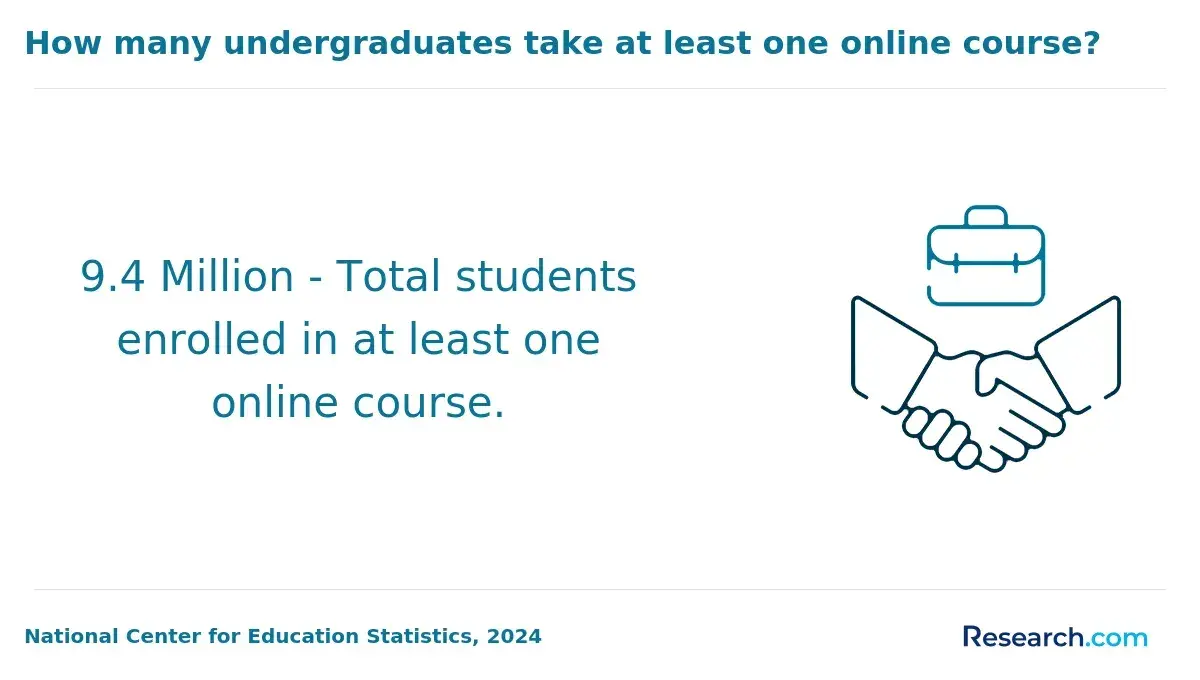
Professionals aiming to pivot into marketing research or elevate their strategic insights often encounter a critical obstacle: finding flexible, rigorous online programs that integrate comprehensive customer research training. The National Center for Education Statistics reports that nearly 30% of postsecondary enrollees in 2024 are adult learners balancing work and study, underscoring the imperative for schedules accommodating career commitments without sacrificing depth.
This enrollment trend marks a shift from traditional full-time models toward adaptable pathways delivering real-world skills employers demand, particularly in data-driven consumer analysis. This article evaluates online marketing degrees offering substantial customer research training to guide informed decisions on programs aligning with career mobility and practical mastery.
Key Things You Should Know
- Only 18% of online marketing degrees emphasize advanced customer research tools, constraining graduates' abilities to meet employer demands for data-driven insights, as shown by a 2024 LinkedIn Workforce Report.
- Employers prioritize candidates with hands-on experience in consumer behavior analytics, forcing a tradeoff between theoretical curriculum breadth and specialized research skills, impacting early career trajectory fundamentally.
- Programs integrating up-to-date customer ethnography and big data methods reduce time-to-hire by 22%, yet these often require additional tuition premiums exceeding 15%, influencing access for mid-career professionals.
What is an online marketing degree with a focus on customer research?
Online marketing degrees with customer research specialization train students to apply quantitative methods and behavioral insights directly toward consumer-centric strategies. This focus is essential as employers prioritize candidates who can convert complex customer data into targeted actions that measurably improve campaign ROI and reduce wasted budget.
For instance, in retail, graduates optimize product placement and ad spend using demographic analytics; in B2B environments, nuanced client behavior research training in online marketing programs sharpens lead nurturing and conversion tactics. Cost and flexibility weigh heavily in program choice. According to the National Center for Education Statistics, fully online bachelor's in marketing programs average $10,473 in tuition and fees, about 38% less than on-campus alternatives priced at $16,941.
This price gap attracts professionals balancing work and study schedules, yet the lack of in-person data access and hands-on research tools remains a challenge. Programs that integrate virtual labs or internships deliver better preparatory experience for analytical roles requiring proficiency in statistical software and applied insights.
Given the importance of practical skills in customer behavior research training in online marketing programs, students should evaluate how well prospective curricula embed real datasets and business partnerships. This translates to tangible employability advantages in data-intensive marketing roles. For a broader perspective on related career paths, consider exploring 'What jobs can you get with a project management degree?'
How do online marketing programs teach customer research, data analysis, and consumer insights?
Online marketing programs that emphasize customer research techniques in online marketing programs integrate applied case studies and advanced analytics tools to sharpen audience segmentation and behavior analysis. These courses typically demand proficiency in statistical methods like regression, cluster analysis, and A/B testing to assess campaign effectiveness, translating abstract data into actionable consumer insights.
For instance, analyzing e-commerce metrics to determine purchase triggers bridges classroom theory with employer expectations within sectors such as retail, tech, or financial services. Data analysis and consumer insights training in digital marketing courses routinely involve hands-on use of software like SPSS, Google Analytics, and Tableau, fostering skills in dashboard interpretation and visualization for diverse stakeholders.
Projects intentionally simulate workplace pressures, requiring precise communication of findings that influence strategic marketing decisions. Given market data showing median salaries of approximately $157,000 for marketing managers and $74,000 for research analysts, these skills align directly with workforce demands for analytical rigor.
Programs also confront operational challenges including data privacy compliance and ethical consumer data use, reflecting realities in industries like healthcare and entertainment. Effectiveness depends on blending quantitative and qualitative methods to mitigate data bias and limitations, helping students deliver insights that sustain measurable ROI.
For those evaluating career pivots, understanding how these training components compare to other disciplines can influence choices-similar to considerations faced by professionals exploring online construction management degrees offered in cost-conscious formats like those outlined at online construction management degrees.
Are online marketing degrees with strong customer research training respected and accredited?
Employers in sectors such as consumer packaged goods, technology, and retail analytics value online marketing degrees with accredited customer research programs that equip graduates with applied research skills integrated within rigorous academic frameworks. Accreditation confirms that programs adhere to standards aligned with real-world requirements, particularly in roles demanding evidence-based decision-making, like market segmentation and consumer behavior analysis.
For instance, a marketing analyst with competencies in survey design, ethnographic methods, and CRM data interpretation can more effectively influence strategic initiatives. Recognized online marketing degrees offering customer research training must be scrutinized for course content depth and accreditation status before enrollment, as incomplete or non-accredited programs may hinder employability and access to certification.
Working professionals should also consider whether programs incorporate contemporary tools, such as AI-driven customer analytics, to stay current with industry shifts. U.S. News, referencing FREOPP data, highlights that graduates from top-ROI bachelor's marketing programs can expect lifetime returns exceeding $800,000, underscoring the financial impact of strategic program selection beyond tuition costs.
Online candidates evaluating degree options should weigh the tradeoff between program flexibility and research rigor. Those seeking efficient pathways might explore a degree in finance as a comparative alternative in data-intensive fields.
What types of online marketing degrees offer the best customer research preparation?
Online master's degrees that concentrate on marketing analytics and customer insights remain uniquely positioned to meet employer demands for data-driven decision-making in customer research roles. Penn State World Campus, for example, lists 2026-27 tuition for its online Master's in marketing analytics and insights at $1,089 per credit or $13,062 per full-time semester, reflecting the premium costs associated with programs heavily focused on advanced analytics.
Graduates equipped with statistical software proficiency in tools like R, Python, or SPSS are better prepared to handle complex consumer behavior analysis, segmentation, and predictive modeling-skills essential to interpreting customer lifetime value, churn prediction, or A/B testing outcomes. In contrast, online marketing degrees with advanced customer research skills offer more technical depth than typical undergraduate programs centered on consumer behavior or digital marketing.
Online MBAs with marketing concentrations tend to bridge strategy and leadership but frequently underdeliver in practical data analysis, limiting direct applicability for specialist research roles. Working professionals should consider the sector-specific case studies embedded in programs from industries like retail, technology, or healthcare, where customer data complexity varies.
These practical applications reduce the costly misalignments sometimes experienced when academic training diverges from on-the-job research challenges. For non-technical entrants, navigating retraining or skill gaps can be a significant challenge. For those comparing educational pathways, reviewing options alongside seemingly unrelated but in-demand degrees, such as an online construction management bachelors degree, may reveal important insights about program affordability and career pivot feasibility.
How do online and campus-based marketing programs compare for customer research training?
Choosing between online and campus-based training for customer research hinges on the distinct skill sets and contexts each delivers. Campus programs offer immersive, hands-on experience through direct partnerships with businesses and live focus groups, valuable for roles demanding real-time consumer interaction. This exposure is hard to parallel fully in online formats, which lean heavily on data analytics and large-scale quantitative methods suited for digital marketing segments.
Employers favor candidates with demonstrable practical skills such as survey design and ethnography, areas where campus curricula typically embed internships or labs-elements less accessible in purely online settings unless supplemented by external projects. Senior consumer insights positions commanding salaries of ₹22-34 lakh annually require not just technical mastery but networking and mentorship often cultivated more readily on campus.
Online learners must proactively pursue industry connections to bridge this gap while balancing continued employment. For working professionals, the flexibility of online programs allows skill acquisition without career interruption, but it requires compensating for reduced tactile experiences. In contrast, full-time students on campus gain structured access to client-based research projects, accelerating readiness for leadership roles in consumer insights.
- Online tracks excel in quantitative rigor and adaptability.
- Campus education fosters qualitative, client-facing competencies and embedded networking.
- Career timelines and personal learning styles dictate which format aligns with long-term marketing research goals.
What courses and specializations strengthen customer research skills in online marketing programs?
The value of customer research skills in online marketing programs hinges on their ability to translate complex data into actionable strategy. Coursework targets market research methods, consumer behavior analysis, and data analytics to build competence in survey design, customer segmentation, and CRM software use. Specializing in digital analytics and behavioral marketing adds practical skills in real-time data tracking and predictive modeling-critical for adapting campaigns to shifting consumer trends.
Practical application distinguishes graduates in competitive roles. For instance, a student aiming for retail marketing will focus on ethnographic data to refine brand positioning, whereas those pursuing B2B marketing prioritize lead scoring and customer lifetime value calculations. Programs also integrate experimental design and A/B testing to enable evidence-based decision making and conversion optimization.
Ethics and privacy training ensures compliance with regulatory frameworks like CCPA and GDPR, a necessary foundation as data privacy steadily influences employer expectations in marketing roles. From a cost perspective, the average yearly tuition for online bachelor's marketing programs is approximately $10,473, compared to $16,941 for in-person formats, offering flexibility for candidates to allocate savings toward professional certifications or specialization courses that directly enhance employability.
- Hands-on projects often use tools such as Google Analytics, SQL, and Python for data manipulation.
- Courses emphasize translating big data insights into marketing strategy with a strong focus on experimental validation.
- Students must balance technical skills with regulatory knowledge to navigate shifting privacy standards.
What are the typical admission requirements for online marketing degrees in the U.S.?
Admission to online marketing programs in the U.S. prioritizes quantitative skills and practical analytics experience, a reflection of employer demand for graduates who can navigate customer data effectively. Undergraduate applicants typically need a high school diploma, while graduate programs require a related bachelor's degree with a minimum GPA near 3.0.
Although standardized tests like the SAT or ACT may still be requested for undergraduates, many schools have relaxed these requirements; similarly, GRE waivers for graduate applicants with professional expertise are common. Applicants must prepare a statement of purpose showcasing their understanding of customer research principles and aligning career goals with program objectives.
Letters of recommendation, often from academic or industry sources, remain a critical component. Programs with a digital or customer research focus may ask for previous research or work analyzing consumer behavior to assess applied skills. Consider the contrast between a mid-career retail marketing professional seeking flexible admissions that value industry experience versus a recent graduate aiming for rigorous research training.
Such differences influence application success and time to degree. MarketingTerms' 2024 review identifies over 40 U.S. universities offering specialized digital marketing certificates or degrees, a clear sign that practical digital analytics expertise increasingly shapes curricular design and candidate profiles.
How long do online marketing degrees take, and what do they cost?
Time and money are decisive constraints when selecting an online marketing degree or course, especially for working professionals seeking skills in customer research and data analytics. Associate degrees typically require 18 to 24 months, bachelor's 3 to 4 years, and master's about 1.5 to 2 years; part-time pacing can extend these durations by over 25%.
Financially, associate degrees cost between $7,000 and $15,000, bachelor's range from $20,000 to $50,000, and master's programs often exceed $30,000, with specialized customer research courses sometimes adding fees for certifications or software access. Employers generally expect analysts to hold at least a bachelor's degree, making that credential a baseline for many roles.
However, targeted shorter courses, such as the University of Georgia's Principles of Market Research priced at $1,795, offer a practical route for professionals who need focused skill upgrades without the full degree commitment. These courses emphasize research design, analytics, and consumer insights, enhancing resumes for mid-level positions demanding specialized expertise.
Tradeoffs between comprehensive degrees and concentrated courses boil down to the depth of strategic grounding versus speed and cost efficiency. Decision-makers should weigh the value of broad academic preparation against the immediacy of upskilling, considering how credentials align with employer expectations in sectors like consumer goods, digital advertising, and market intelligence.
What customer research careers can you pursue with an online marketing degree?
Pursuing a marketing degree with a focus on customer research shapes specific career trajectories such as market research analyst, consumer insights specialist, product development researcher, and UX researcher. Each role requires distinct skill sets: for instance, interpreting sales trends in retail differs markedly from analyzing digital user behavior in technology sectors. Employers expect mastery of tools like SPSS, Tableau, or Python, alongside the ability to communicate complex data clearly without jargon.
Practical challenges include staying current with evolving privacy laws and demonstrating applicable experience, often through portfolios or internships embedded in online degree programs. Graduates must balance broad marketing knowledge with deep analytical expertise-a tradeoff that impacts employability depending on whether one targets specialized research roles or broader strategic positions.
Salary data from FREOPP cited by U.S. News highlights financial growth from $37,483 at age 25 to $64,836 by age 45 for West Texas A&M University marketing graduates, indicating robust mid-career progression linked to data-driven skills. For working professionals, programs that integrate real-world datasets and case studies provide tangible learning without disrupting employment.
Key considerations include:
- Demand for actionable insights that align with business strategy
- The necessity of technical proficiency paired with domain knowledge
- The advantage of certifications in statistical software or user research
- The importance of portfolio evidence reflecting applied customer research
What are the salary expectations and job outlook for marketing and customer insights roles?
Salary ranges for marketing and customer insights roles in the U.S. typically fall between $70,000 and $95,000 annually, with senior positions at leading firms surpassing $120,000. Job growth over the next decade is expected to be around 10%, exceeding average occupational growth due to intensified dependence on data analytics for customer targeting and conversion optimization.
Employers prioritize candidates who combine marketing expertise with strong customer research and data interpretation skills. For instance, a consumer packaged goods firm recruiting a customer insights analyst seeks professionals capable of transforming behavioral data into strategies that enhance market share-skills often developed through specialized graduate training.
Program costs present a tangible tradeoff in educational choices. Traditional U.S. master's degrees typically require tens of thousands of dollars and longer time commitments, while international alternatives like Stanmore School of Business offer condensed 1-2 month programs at £90-£140. However, shorter programs might necessitate additional practical experience or internships to reach comparable job readiness.
Practical experience with analytics tools, certifications, and internships often outweigh formal education alone in hiring decisions. Students aiming for swift career transitions or advancement should weigh upfront expenses against the broader skill acquisition and networking advantages of traditional programs.
Other Things You Should Know About Marketing
The workload in online marketing degrees with strong customer research training often demands rigorous time management, especially for students balancing work or family. Programs that offer asynchronous content provide more flexibility but may require consistent self-discipline to keep pace. Those with cohort-based structures or live sessions can enhance interaction but add fixed scheduling pressures, which can limit flexibility. Prioritize programs with clear pacing policies and realistic credit loads that align with your availability to avoid burnout and ensure steady progress.
Employers prioritize marketing graduates who demonstrate practical data handling and consumer insight skills over theoretical knowledge alone. Degrees emphasizing applied customer research, including experience with real data sets or client projects, have a competitive advantage. Hiring managers often expect familiarity with current analytical tools and the ability to translate research findings into actionable strategies. Candidates from programs lacking this practical focus may face challenges proving their readiness for market-facing roles.
Online marketing degrees that include internships or applied projects significantly increase job readiness by providing direct exposure to market dynamics and organizational workflows. These experiences build professional networks and develop skills that employers actively seek, such as teamwork, problem-solving, and client communication. Prioritize programs with structured internship opportunities or capstone projects over those that rely solely on theoretical coursework, especially if your goal is rapid workforce entry or a career shift.
A strong 2027 program should include survey design, interview methods, focus groups, and basic statistical analysis. It should also cover customer segmentation, A/B testing, and interpreting analytics from tools such as Google Analytics, with practice using real datasets for class projects.
References
- Degree in Online Marketing - Updated 2026 https://uniscopio.com/en/bachelors-degrees/online-racing/online-marketing/
- Accredited Online Marketing Degree Programs https://www.accreditedonlinecolleges.org/marketing/
- Explore online marketing bachelor’s degrees | edX https://www.edx.org/bachelors/marketing
- Market Research and Consumer Insights Training Course | Armstrong Global Institute https://www.armstrongglobalinstitute.com/course/market-research-and-consumer-insights-training-course
- The 8 Types of Market Research - Qualtrics https://www.qualtrics.com/articles/strategy-research/market-research-types/
- Online Marketing Research: Everything You Should Know - Desk Research Group (DRG) https://www.deskresearchgroup.com/online-marketing-research/
- Customer Insight Marketing: How to Use Data to Improve Customer Relationships - Custify Blog https://www.custify.com/blog/customer-insight-marketing/
- Tuition-Free Distance Learning Program in Marketing - UNYBT https://unybt.com/tuition-free-marketing/
- Marketing Recruitment & Employment Insights & Job Market Insights | Ashdown Group https://www.ashdowngroup.com/marketing-insights
- 15 Marketing Certifications to Build Must-Have 2025 Skills https://www.cmswire.com/digital-marketing/10-marketing-certifications-that-can-help-you-earn-a-better-salary/