2027 Growth Marketing Roles You Can Target With a Marketing Degree

Co-Founder and Chief Data Scientist
Facing intense competition, many prospective marketing graduates struggle to identify precise roles that align with their skills while promising clear career advancement. The Bureau of Labor Statistics projects a 10% growth in marketing-related jobs through 2032, underscoring increased employer demand but also signaling the need for strategic specialization. Yet, many students confront conflicting program structures and uncertain outcomes, complicating choices about degrees that sufficiently prepare them to target high-impact positions. The rise of flexible online options, now accounting for nearly 40% of enrollments according to the National Center for Education Statistics, shifts timing and accessibility but raises questions about quality and networking opportunities. This article will map actionable growth marketing roles accessible with a marketing degree and clarify pathways to optimize educational and career outcomes.
Key Things You Should Know
- By 2028, demand for growth marketing analysts is set to rise 20%, but 42% of employers prioritize candidates with hybrid skills in data science, creating a tradeoff between traditional marketing degrees and advanced analytics training.
- Employers emphasize mastery in AI-driven personalization tools, with 65% expecting hands-on experience upon hiring, pressuring candidates to supplement degrees with specialized certifications or apprenticeships.
- The median cost of accredited growth marketing certificate programs in 2024 is $3,600 versus $32,000 for a bachelor's degree, forcing pragmatic decisions about time and financial investment relative to rapid industry evolution.
What growth marketing roles can you pursue with a marketing degree?
A marketing degree opens pathways to targeted roles like Growth Marketing Manager, Growth Analyst, and Acquisition Specialist that prioritize data-driven revenue scaling and customer lifecycle management. Growth Marketing Managers, tasked with designing experiments and optimizing multichannel campaigns, face a rapidly evolving demand for skills that blend analytical precision with creative problem-solving. These positions require fluency in marketing automation, CRM platforms, and user experience testing frameworks, often necessitating additional training beyond a degree.
Entry-level growth marketing positions for marketing graduates typically demand hands-on proficiency with analytics tools and interpreting complex customer data to identify scalable growth opportunities. For instance, acquisition specialists at startups navigate rapid A/B testing cycles and funnel optimization under tight budget constraints, highlighting the practical need for agility and technical fluency beyond standard marketing curricula.
Employers increasingly expect candidates to translate quantitative insights into actionable tactics focused on operational metrics and revenue impact rather than broad brand awareness. Without practical experience-such as internships or familiarity with growth stacks-graduates encounter barriers to entering these competitive, technically demanding growth marketing career paths with a marketing degree.
Considering workforce realities, combining a marketing degree with direct exposure to data-intensive marketing teams or relevant certifications is critical. For those interested in diversifying skills, programs like a bachelor's in project management can supplement strategic and operational competencies crucial for these roles.
Which marketing degree best prepares you for growth marketing jobs?
Growth marketing degree programs in the US must equip students with an analytical toolkit that matches employer expectations in fast-scaling environments. A bachelor's degree centered on digital analytics, customer acquisition funnel analysis, and performance measurement positions candidates for roles requiring immediate technical impact. Practical application of tools like Google Analytics, SQL, and CRM platforms is vital, yet many marketing programs remain overly theoretical, limiting graduates' readiness for growth marketing careers.
Consider a candidate targeting a growth marketing role in a SaaS company focused on enterprise clients. Programs that emphasize experiential learning-internships, client projects, or agency partnerships-enable candidates to demonstrate quantifiable campaign ROI and adapt strategies in real time. Such competencies are critical as digital and performance marketing job postings have grown approximately 22% annually since 2020. By contrast, degrees heavy on creative advertising or brand management without foundational data skills constrain access to growth marketing roles.
Students exploring top marketing degrees for growth marketing careers should assess program flexibility and specialization options in automation, paid media buying, or email marketing. Supplemental certifications in platforms like Facebook Ads or Google Ads enhance credentials but do not replace core analytics proficiency. Those weighing degree choices against areas like online masters in construction management should note the importance of integrated, measurable outcomes combined with hands-on technology exposure to meet evolving industry demands.
What skills do employers expect for growth marketing roles?
Employers prioritize growth marketing candidates who can merge data analysis and interpretation skills in growth marketing with technical execution and clear communication. The ability to navigate CRM and automation tools alongside digital marketing tools proficiency for growth roles such as Google Analytics and A/B testing frameworks is essential for optimizing acquisition funnels and scaling campaigns effectively. Different sectors impose distinct emphases; for instance, B2B SaaS firms demand rigorous lead quality analytics, while e-commerce brands require hands-on expertise in conversion rate optimization and retargeting strategies.
The rise of AI in marketing introduces operational tradeoffs-candidates must master AI-generated content tools, predictive analytics, and automated bid management without sacrificing foundational SEO judgment or strategic insight. National University's 2025 SEO careers analysis shows a 21% uptick in AI skills demand, reshaping the traditional marketing skill set and influencing hiring decisions.
Communication goes beyond writing; marketers need to translate complex data into actionable insights across teams, utilizing visualization platforms like Tableau or Power BI, underscoring the functional importance of storytelling and cross-departmental collaboration.
Time management and agile project methodologies remain critical for coordinating simultaneous multichannel campaigns without losing precision or missing deadlines. Advanced coding skills such as HTML, CSS, or SQL offer competitive advantage by enabling direct customization of tracking and audience segmentation, reducing reliance on engineering.
Those evaluating educational pathways must weigh these real-world practicalities. For example, pursuing the fastest online project management degree can sharpen project execution skills vital for rapid iteration cycles demanded in growth marketing roles.
How do online and campus marketing programs compare?
Choosing between online marketing degree programs vs campus marketing programs hinges strongly on one's professional context and hands-on learning needs. Online formats provide accelerated pacing and flexibility ideal for Paid Media Manager roles requiring up-to-date digital platform expertise, enabling asynchronous study that fits busy schedules. However, these programs often isolate platform-specific certifications, which may restrict a student's adaptability within complex, integrated agency environments.
By contrast, campus marketing programs emphasize immersive collaboration and structured internships, crucial for entry-level roles demanding practical experience with campaign tools and real-world client dynamics. The 8020 GTM's 2025 marketing hiring report highlights a 9.1% quarterly rise in digital and paid media job listings, underscoring employer preference for candidates with demonstrated capabilities in live data-driven tools like Google Ads and real-time bidding platforms. Campus settings typically facilitate these multi-disciplinary applications more effectively than many online curricula.
Employers give significant weight to tangible portfolios and internship experience; campus students often benefit from institutional placements, while online learners must actively secure freelance or external projects, requiring greater self-direction. This difference is especially relevant in sectors like e-commerce and B2B SaaS where client-facing case studies mirror real marketing challenges.
Students evaluating the differences between digital and traditional marketing education should consider not only flexibility or content but also the practical avenues for skill application aligned with role expectations. For those exploring complementary credentials, examining degrees in project management can offer additional strategic advantages in marketing project execution and leadership.
What should a growth marketing curriculum include?
Technical skills decisively influence income potential and employability in growth marketing roles. Despite evidence from sources like Marketing Analytics / Data Analyst GTM 8020 showing a roughly 30% salary premium for marketers proficient in SQL and Python, only about 31% attain this level, indicating a significant skills mismatch with financial consequences.
Effective curricula must prioritize applied competencies such as customer segmentation through advanced analytics, A/B testing frameworks, and conversion rate optimization to maintain iterative performance improvements. Vendors like Tableau or Power BI are essential for translating complex data into clear narratives that non-technical stakeholders can act upon.
Practical differentiation across industry verticals is critical. For instance, e-commerce marketers require robust SEO and paid media analytics expertise, while SaaS growth marketers focus on lifecycle engagement strategies. This specialization affects placement outcomes and long-term career viability.
Moreover, adaptive skills like agile project management and cross-team collaboration frequently determine success in fast-moving environments where growth marketing intersects product and sales. Prospective students should carefully weigh program content against expected employer demands and prevailing labor market dynamics.
- Prioritize data fluency with SQL and Python for automation and insight generation.
- Develop proficiency in CRM and demand generation tools applicable to both B2B and B2C contexts.
- Focus on segmentation, testing, and optimization techniques aligned with target industry.
- Invest in learning visualization software to bridge communication gaps within organizations.
What admission requirements do marketing degree programs usually ask for?
Admission to marketing degree programs demands more than a high school diploma, often requiring a competitive GPA-typically between 2.5 and 3.0-and standardized test scores, though many institutions now waive these exams. Candidates lacking quantitative foundations risk difficulty in programs emphasizing data analytics and strategic decision-making, revealing a core tension between accessibility and rigorous skill development.
Admission committees frequently seek evidence of analytical acumen through coursework in math, economics, or business, alongside qualitative components like letters of recommendation and personal statements. For example, applicants targeting top-tier business schools must demonstrate alignment with career goals and motivation beyond grades alone.
Working professionals pursuing part-time or online routes encounter flexible prerequisites but usually need prior college credits or relevant work experience. This practical gatekeeping ensures readiness for curricula focused on real-world marketing challenges.
Enrollment decisions shape career outcomes in a landscape where product marketing roles command median salaries near $160,000 with nearly 10% job growth, according to Product Marketing Manager GTM 8020's salary analysis for 2025. Prospective students should weigh admission requirements against their capacity to develop quantitative, communication, and strategic skills pivotal for such roles.
How long does a marketing degree take and what does it cost?
Opting for a marketing degree requires balancing time, cost, and practical skill acquisition against immediate workforce entry. A full-time bachelor's typically spans four years, costing $40,000 to $140,000 depending on the institution, with public universities on the lower end and private ones significantly higher. Part-time or online options stretch to five or six years, offering flexibility but potentially delaying access to mid-career earnings.
Employers emphasize applied competencies, not just credentials. For instance, a digital marketing analyst position at a technology firm often demands hands-on experience with data analytics integrated within the curriculum, while a CRM manager role in retail prioritizes customer journey mapping and internship experience. These nuances affect how students navigate program choices and the speed at which they gain worthwhile credentials.
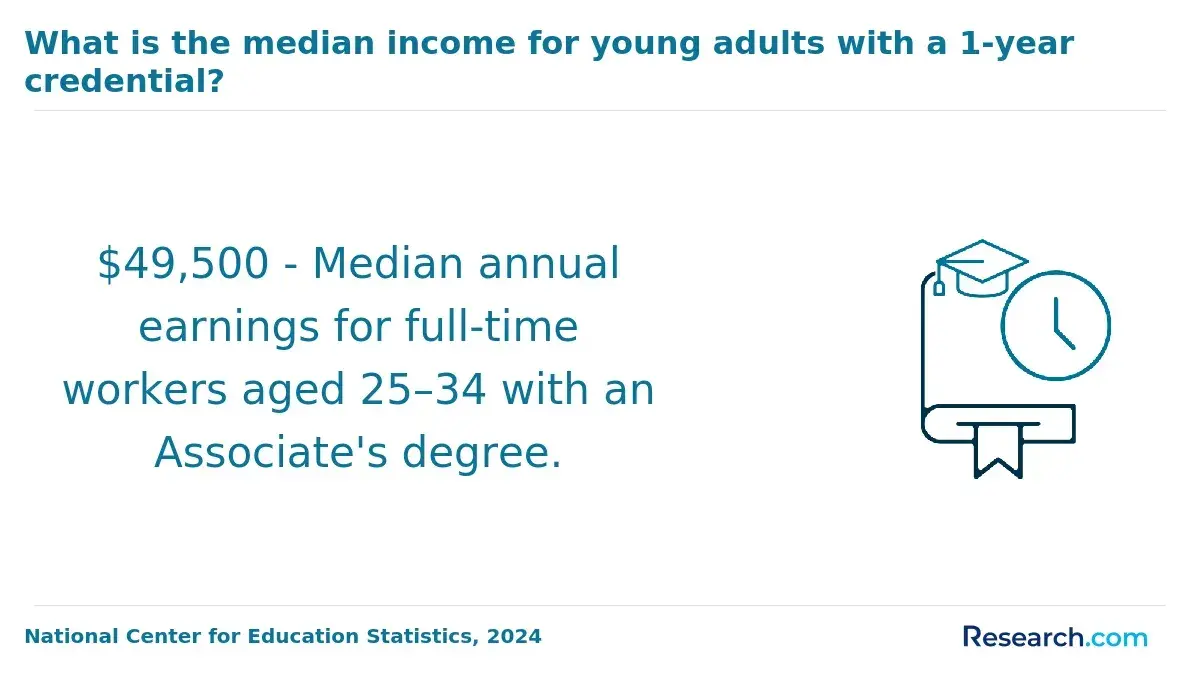
Financially, opportunity cost looms large. Pursuing full-time studies postpones earning potential, especially relevant given the median marketing salary of $88,400 reported by the CMO Ladder's 2025 U.S. Marketing Jobs Report. Accelerated programs or associate degrees reduce cost and duration but can limit eligibility for senior roles and specialized marketing fields like lifecycle marketing, which command premium salaries.
Key considerations include:
- Aligning program length with career urgency and employer expectations
- Evaluating the tradeoff between upfront investment and delayed income
- Ensuring curriculum matches targeted marketing competencies valued by employers
What certifications help you qualify for growth marketing jobs?
Growth marketing certification focuses on measurable skills like data analytics, customer acquisition, and digital campaign optimization-core demands from employers prioritizing rapid experimentation and attribution tracking. For instance, a SaaS firm recruiting growth marketers will expect demonstrable proficiency with tools and frameworks similar to the GA4 Google Analytics certification.
Certifications such as Google Analytics Individual Qualification (GAIQ), HubSpot Content Marketing, and Digital Marketing Institute's (DMI) Certified Digital Marketing Professional address targeted skill gaps critical for these roles, validating candidates' ability to interpret complex customer behavior data and optimize conversion funnels. Yet, practical experience remains indispensable; certifications alone rarely guarantee hiring without a portfolio demonstrating direct impact on revenue or retention metrics.
From a workforce perspective, budgeting certification investments strategically is important. Candidates might prioritize credentials focused on analytics or automation first, then supplement with SEO, Paid Media (e.g., Google Ads), or marketing automation (like Marketo Certified Expert) as job descriptions or interviews reveal gaps. This staged approach aligns skill acquisition with employer expectations and evolving platform changes, particularly around privacy and algorithm shifts.
The Content Marketing Institute's 2026 career outlook notes a 16% average pay increase for U.S.-based marketers over two years, with senior content roles in Gen X rising about 21%, confirming market preference for specialized, continuously updated expertise over generic qualifications.
What salary can growth marketing jobs pay?
Growth marketing salaries in 2026 vary significantly by role, industry, and experience, with entry-level positions starting near $55,000 and senior managers earning over $120,000. Social media marketing manager roles, especially in technology hubs, typically command median salaries around $75,000, exceeding $110,000 in major metropolitan areas or leading companies. Conversely, smaller firms or nonprofits offer closer to $50,000, illustrating how organizational scale and sector priorities shape compensation.
Performance bonuses linked to metrics like customer acquisition cost and conversion rates add 10-20% above base salary but require strong analytical skills and proven campaign optimization. Candidates boasting 3+ years of specialized experience-including certification in growth hacks, A/B testing, and automation-commonly secure 15-25% higher pay than those without, emphasizing the tangible value of continuous skill development.
Employers demand proficiency in tools such as Google Analytics, CRM software, and content management systems, influencing salary negotiations and role scope. This technical fluency often separates average applicants from those positioned for wage premiums.
Prospective candidates should weigh the cost and time investment for targeted training against the competitive market's variable returns. Practical experience coupled with measurable impact in campaigns remains pivotal for leveraging educational credentials into meaningful income gains within the growth marketing landscape.
How do you choose an accredited marketing program?
Choosing a marketing program without verifying accreditation risks investing time in a credential that may not meet employer expectations. Prioritize programs recognized by agencies approved by the U.S. Department of Education or the Council for Higher Education Accreditation, such as AACSB or ACBSP, as these assure curriculum rigor relevant to employer standards. Marketing managers earn a median wage of $161,030 annually according to the U.S. Bureau of Labor Statistics, with a projected 6% employment growth through 2034, equating to about 36,400 new jobs per year.
Program selection should reflect your target sector. For instance, growth marketers focusing on tech startups benefit from coursework in digital marketing and data analytics paired with internships offering practical experience. Those targeting consumer goods brands should seek strong branding and communications training. Programs lacking applied learning components often leave graduates at a disadvantage amid employer preference for measurable outcomes and real-world skills.
Working professionals must weigh program flexibility alongside quality. Part-time, online, or hybrid options can facilitate skill development without sacrificing accreditation or currency of content-particularly in fast-evolving digital marketing tools. Faculty with industry experience further enhance practical relevance.
Transparent career support services-ranging from networking to targeted resume coaching-directly influence post-graduation placement success. Assess these structures carefully as they represent significant differentiators in aligning educational investment with sustained workforce opportunities.
Other Things You Should Know About Marketing
A marketing degree provides foundational knowledge but is rarely sufficient alone for growth marketing roles. Employers prioritize practical experience with digital tools, data analysis, and customer acquisition strategies that many programs don't fully cover. Graduates should supplement their degree with internships, hands-on projects, or certifications focusing on real-world growth tactics to improve their job prospects.
Focusing on specialization in growth marketing tactics, analytics, or digital channels generally yields better employment outcomes than pursuing broad marketing knowledge. Employers demand skills that directly impact growth metrics-such as conversion optimization and channel performance analysis-making narrow but deep expertise more valuable during hiring. However, maintaining a baseline understanding of branding and customer psychology helps contextualize growth strategies effectively.
Employers often expect candidates to know Google Analytics 4, Google Tag Manager, and an A/B testing platform such as Optimizely or VWO. Basic SQL and Excel are also common requirements, because growth teams use them to track conversions, segment users, and measure campaign performance.
References
- Growth Marketing Career Path: Skills, Strategy & Roadmap to Leadership https://cxl.com/b2b-marketing-career-guide/growth-marketing-career-guide/
- Navigating Online Program Marketing in a Sea of Change | Carnegie https://www.carnegiehighered.com/online-program-marketing-without-opms/
- How to build a real growth marketing engine https://www.simon-kucher.com/en/insights/how-build-real-growth-marketing-engine
- The Ultimate Guide to Choosing the Right Business or Marketing Degree: A Pathway to Success https://urbeuniversity.edu/blog/the-ultimate-guide-to-choosing-the-right-business-or-marketing-degree-a-pathway-to-success
- What are the admission requirements for a Master's in Marketing in top UK and USA universities? https://mentr-me.com/question/what-are-the-admission-requirements-for-a-masters-in-mark
- Accredited Digital Marketing Courses https://digitalmarketinginstitute.com/educators/accreditation
- Best Growth Marketing Courses 2026: Reforge vs CXL vs Demand Curve vs Growth Tribe | Growth Method https://growthmethod.com/growth-marketing-course/
- Become an Growth Marketing Manager: Career Path Guide | Skills U https://skillsu.com/role/growth-marketing-manager
- Search https://www.cim.co.uk/learn-develop/qualifications/
- All 6 Types of Marketing Degrees: What Works Best for You | Brafton https://www.brafton.com/blog/content-marketing/types-of-marketing-degrees/