2027 Best Online Marketing Degrees for Marketing Analytics Careers

Co-Founder and Chief Data Scientist
Marketing professionals seeking to specialize in analytics must navigate a fragmented landscape of online degree options that vary widely in flexibility, rigor, and industry alignment. As workforce demand for data-savvy marketers grows-projected at a 20% increase by the U. S. Bureau of Labor Statistics over the next decade-many candidates wrestle with the tradeoff between accelerated timelines and depth of technical training. The 2024 National Center for Education Statistics report shows that 70% of adult learners prioritize programs offering part-time or asynchronous formats, reflecting a significant shift toward balancing ongoing employment with skill acquisition. This article evaluates top online marketing analytics degrees, focused on practical outcomes, to guide strategic educational decisions that align with career advancement goals.
Key Things You Should Know
- Programs emphasizing data science and predictive analytics see 22% higher placement in marketing analytics roles, but often require prior technical skills, creating a barrier for career changers without STEM backgrounds.
- Employers prioritize candidates with hands-on experience in real-time data platforms, making degrees with integrated internships or live projects 35% more competitive in hiring than theory-heavy curricula.
- The median cost for accredited marketing analytics degrees rose 14% since 2022, pushing many professionals to weigh immediate earning loss against long-term salary gains-posing significant timing and financial tradeoffs.
What is an online marketing degree for analytics careers?
An online marketing degree for analytics careers in the US positions graduates to meet the growing demand for data-driven marketing roles by combining marketing principles with rigorous quantitative training. These specialized programs stress applied analytics skills-including statistics, predictive modeling, and digital tools like SQL, Python, and Tableau-that differentiate candidates in competitive job markets. The best online marketing analytics programs for career growth integrate practical coursework with real-world applications, such as consumer behavior analysis or advertising spend optimization, which directly influence business outcomes.
For instance, a graduate employed in a financial services firm might leverage predictive analytics to uncover underperforming market segments and adapt campaigns via dynamic dashboard metrics, thereby improving ROI. Employment projections from the U.S. Bureau of Labor Statistics indicate a 13% growth for market research analysts through 2032, reflecting the sector's increasing reliance on precise, actionable data interpretation.
Candidates should weigh the balance of flexibility and discipline required for online formats, as mastering technical competencies often demands self-driven practice and applying theory to tangible projects or internships. This pragmatic approach matches employer expectations, which prioritize proficiency with analytics platforms alongside marketing insight.
For professionals considering accelerated learning options, exploring a fastest online project management degree can complement analytics expertise by enhancing project execution skills and broadening career versatility.
How do you verify accreditation for online marketing programs?
Confirming accreditation is a critical step when evaluating accredited online marketing programs in the United States, as it directly impacts credit transferability, educational quality, and employer acceptance. Regional accreditation-by agencies such as Middle States, New England, or the Western Association of Schools and Colleges-holds greater weight for marketing analytics roles than many national accreditations, which often lack equivalent rigor. Business-specific accreditations like AACSB or ACBSP further signal curricular alignment with data-driven marketing demands.
Students must scrutinize whether accreditation explicitly covers the online marketing program rather than assuming institution-wide validity. Requesting accreditation documentation from admissions representatives can prevent falling victim to misleading claims, especially prevalent in fully online offerings. For example, a candidate targeting healthcare analytics as a marketing data analyst should prioritize programs with recognized regional and business accreditations to ensure their data science skills meet hospital employer standards, avoiding credential rejection due to insufficient analytical preparation.
Given the projected 19% growth in demand for marketing data analysts from 2018 to 2028 (NC State Poole College of Management), aligning education with robust accreditation safeguards investments and employment viability. Verification extends beyond credentials to the program's practical relevance.
For those seeking a related educational pathway with proven structure, exploring an accelerated online project management degree can offer insights into accredited program formats emphasizing efficiency without sacrificing quality.
Which online marketing degree levels fit analytics careers?
Aligning educational choices to workforce realities means recognizing that online marketing degree programs for analytics careers typically bifurcate into bachelor's and master's levels with distinct professional value. A bachelor's in marketing, data analytics, or related fields builds fundamental analytical and digital tool competencies, positioning graduates for entry-level marketing analyst jobs. These roles average $62,829 annually, reflecting labor market entry points rather than leadership potential.
In contrast, a master's degree-such as an MBA with a marketing analytics concentration or a dedicated master's in marketing analytics-prepares individuals for managerial roles commanding salaries around $75,014, with top performers earning over $100,000. These advanced credentials signal an ability to interpret complex data and influence strategic decisions across business units, essential in sectors like e-commerce or finance where marketing budgets reach multi-million dollar levels.
Working professionals without prior analytics experience face steep learning curves in master's programs, but the payoff is significant for ascending into leadership. Bachelor's holders can still compete by coupling their degrees with strong analytical certifications and portfolios, especially within startups or smaller budget environments. Ultimately, degree selection depends on career timing, industry context, and salary targets based on market evidence from 2024 studies.
For individuals exploring advanced healthcare management trajectories alongside marketing analytics, a PhD in healthcare management online offers a specialized pathway. Choosing the best online marketing degree levels for marketing analytics hinges on integrating these considerations with practical outcomes.
Is an online marketing degree as credible as campus study?
An online marketing degree holds comparable credibility to campus study when programs align closely with labor market needs and emphasize quantifiable skills. Employers increasingly focus on candidates' practical competencies, such as proficiency with customer segmentation tools like Tableau or Google Analytics, rather than the education delivery mode. Reflecting this, graduates from Western Governors University's online School of Business report an average salary increase of $11,813 post-degree, confirming tangible career impact.
Hiring managers in retail analytics, digital agencies, and financial services sectors prioritize applied data skills, making the value of an online marketing degree comparable to traditional campus programs when the curriculum includes analytics-focused coursework. However, online students face tradeoffs including less organic networking and limited access to internships, which require deliberate efforts such as pursuing virtual opportunities and engaging with marketing groups on platforms like LinkedIn to bridge those gaps.
Flexibility is a distinctive advantage of online programs, especially for professionals aiming to pivot into analytics-heavy marketing roles without leaving their current jobs. Given the rising premium on analytics competencies, selecting programs offering real-time tool training and data projects substantially improves employability. Prospective students considering online degree social media marketing pathways should weigh these factors carefully to navigate the subtleties of self-discipline and industry alignment.
In sum, evaluating the online marketing degree's credibility involves balancing program rigor, workforce relevance, and personal capacity to compensate for fewer in-person experiences, rather than relying solely on traditional campus prestige.
What coursework prepares students for marketing analytics jobs?
Marketing analytics education demands proficiency in quantitative methods, data tools, and translating complex datasets into actionable business strategies. Coursework covers statistics, data mining, and predictive analytics with technical training in SQL, Python, or R, focusing on extracting insights rather than theoretical knowledge alone. Consumer behavior and segmentation classes prepare students to apply findings directly to campaign design, while digital marketing platforms and automation tools emphasize performance measurement across channels.
Practical challenges differ by sector: for instance, retail analysts prioritize time-series forecasting to predict demand swings, whereas financial services roles emphasize customer lifetime value adjusted for risk. Programs with project-based learning simulate these conditions, testing students' ability to navigate diverse datasets and cross-department collaboration.
Reporting insights clearly to non-technical stakeholders is another critical skill, often covered via data visualization and communication coursework. Career-oriented students must weigh program costs against outcomes; Louisiana State University's online BS in Marketing with a concentration in Marketing Analytics illustrates this tradeoff, reducing tuition from $53,400 to $13,350 by maximizing credit transfers-significantly enhancing return on investment for working professionals.
- Technical proficiency in database and programming languages
- Application of statistical models to real-world marketing problems
- Effective communication of analytic findings to varied teams
- Financial implications of program costs balanced with career impact
What are the admissions requirements for online marketing programs?
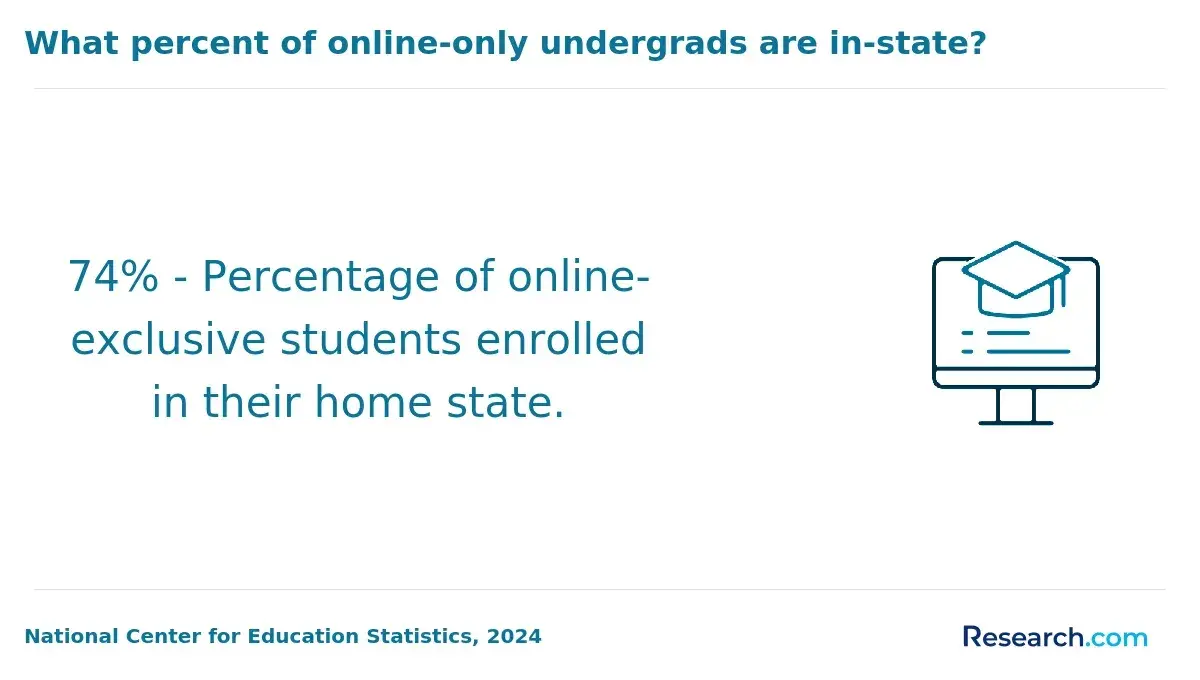
Online marketing programs emphasize academic readiness and relevant professional experience over geographic residency, reflecting the demand for practical data and analytical skills in hiring. Applicants generally need a bachelor's degree in marketing, business, economics, or a similar field; those with unrelated degrees must validate quantitative competencies via coursework or work history. GRE and GMAT tests are often optional but may be required by competitive programs to confirm analytical abilities.
Work experience expectations differ by program level: undergraduate tracks typically admit candidates with a high school diploma or equivalent, while master's programs expect 1 to 3 years of marketing or analytics-related professional experience. This ensures alignment with employer demand for candidates who can apply data interpretation to real-world business challenges.
Core prerequisites often include statistics, data analysis, and programming languages like Python or R, crucial for marketing analytics roles. Applicants should prepare statements of purpose and secure recommendations attesting to analytical and communication skills.
Tuition structures influence accessibility; for example, Rutgers Business School's flat tuition model for online marketing programs eliminates traditional residency-based cost differences, easing financial burdens for out-of-state working professionals. This shift affects decisions about program selection based on cost considerations rather than location.
Prospective students must rigorously assess how their academic background and professional experience align with these requirements to ensure readiness for data-intensive marketing careers and employer expectations.
How long does an online marketing degree take to finish?
Choosing to pursue an online marketing degree requires careful consideration of time investment versus career outcomes. Associate degrees typically span two years but may restrict access to mid-level roles like marketing manager, positions with reported New York salaries averaging $103,415. Bachelor's degrees, generally four years long, align better with employer expectations for these roles, particularly due to their deeper focus on analytics and strategic skills. Accelerated tracks or part-time enrollment can alter this timeframe, though students must weigh the risks of condensed pacing against the demand for sustained proficiency in tools like Google Analytics and SQL.
Employers prioritize demonstrable skills in data-driven marketing over the speed of degree completion, but delays or shortcuts that undermine mastery of core analytics can limit job prospects in competitive environments. Some professionals with relevant backgrounds opt for graduate certificates or accelerated programs to shorten timeframes, yet these paths demand significant self-motivation and prior knowledge.
Key logistical tradeoffs include balancing coursework with work obligations-part-time study may double duration but maintain income stability-and accounting for practical components such as internships, which, while time-consuming, enhance workplace readiness.
- Associate degrees usually require about two years, potentially limiting advanced role eligibility
- Bachelor's degrees often necessitate four years but offer stronger analytics and strategic marketing preparation
- Part-time or accelerated options impact timeline and workload, influencing learning depth and career timing
- Internship and capstone projects extend duration but are critical for hands-on experience
These time considerations must be assessed against local salary data and hiring norms to ensure the educational pathway chosen substantively supports desired marketing career objectives.
What jobs can you get with a marketing analytics degree?
Degrees in marketing analytics prepare graduates for roles that extend well beyond raw data interpretation, emphasizing actionable insights that influence strategy with measurable impact. Employers in retail, healthcare, and B2B sectors expect specialists to harness tools like SQL, Python, and Tableau while tailoring analyses to industry-specific challenges such as regulatory compliance or multi-touch attribution. Success hinges less on academic credentials alone than on demonstrated proficiency in real-time data handling and sector-aware modeling.
For example, a marketing analytics professional in retail must translate customer purchase patterns into personalized promotions that directly increase sales, requiring not only technical skills but also a clear understanding of consumer behavior dynamics. Healthcare marketing analysts navigate stringent regulations while optimizing campaign targeting, which demands a balance between compliance expertise and data fluency. In B2B environments, the ability to evaluate complex lead generation funnels and CRM data is critical.
Market demand measured by sources such as PwC's data-highlighted in the Marketing Analytics Degrees guide-is substantial but competitive, with approximately 2.7 million analytics job postings identified by 2020. Candidates must bridge the theory-practice gap through internships or projects, continuously adapting to evolving analytics platforms and integrating marketing data within broader business intelligence frameworks.
Key employer expectations include advanced analytical techniques, agile tools proficiency, and domain-specific experience, factors that often dictate successful career pivots or advancement within marketing disciplines.
How much do marketing analytics professionals earn?
Salary outcomes for marketing analytics professionals vary sharply based on education, experience, and sector, with U.S. roles ranging from $65,000 for entry-level analysts to over $110,000 for senior or specialized positions. The practical tradeoff between pursuing a full degree versus targeted certificate programs revolves around how deep a candidate's expertise needs to be versus how quickly they must acquire actionable skills.
For example, mid-level analysts shifting into analytics from broader marketing roles often realize a 15-25% pay increase after completing accredited certifications emphasizing SQL, Python, and data visualization. Yet, leadership roles typically demand advanced degrees or equivalent experience, since nuanced decision-making and complex analysis remain hard to replicate via short-term programs.
Geographic location also plays a notable role: metropolitan areas like New York and San Francisco offer salaries 20-30% higher due to increased demand and living costs. Employers in sectors such as technology, finance, and healthcare prize candidates blending data science competency with marketing savvy.
- Entry-level salaries typically from $65,000 to $75,000 for bachelor holders.
- Master's or professional certificates often boost earnings above $90,000.
- Senior roles routinely surpass $110,000, especially in high-demand metropolitan hubs.
Investing in credentialed, skills-focused learning accelerates employability when paced strategically against long-term career ambitions and market realities.
Which certifications strengthen a marketing analytics career?
Data analytics and platform-specific certifications significantly affect hiring decisions and salary potential in marketing analytics by demonstrating measurable skills that meet employer demands. For example, Google Analytics and Adobe Analytics certifications confirm the ability to interpret consumer data across various industries, while the Certified Analytics Professional credential offers a precise signal of expertise in advanced statistical techniques and predictive modeling. This distinction matters when employers seek candidates who can not only gather data but also translate it into actionable strategies that increase revenue.
A practical scenario illustrates these differences: a media analyst in a digital advertising agency will find value in certifications like Tableau Desktop Specialist to produce effective visualizations, enabling quicker, data-driven client decisions. Meanwhile, a marketing manager at a consumer packaged goods company benefits more from Salesforce or HubSpot certifications, focusing on customer segmentation and campaign automation to refine marketing execution. According to Western Governors University, these roles show comparable average salaries-$72,347 and $71,857 respectively-highlighting that specialized analytics skills correlate with competitive compensation.
Choosing the right certification involves tradeoffs between depth and timing. Entry-level analysts gain from targeted credentials like Google Analytics within six months, while mid-career professionals should expand to multi-platform credentials combined with fundamentals in data science to align with leadership expectations. Employers increasingly expect portfolios or documented projects alongside certifications to confirm applied skills rather than theoretical knowledge alone.
Other Things You Should Know About Marketing
A strong online marketing degree for marketing analytics careers should include statistics, data visualization, digital marketing analytics, consumer behavior, and marketing research. Many programs also require Excel, SQL, and Google Analytics training, plus a capstone project that uses real campaign data to measure performance and ROI.
Programs offering direct industry partnerships or internships deliver tangible advantages in employment outcomes. These experiences provide exposure to actual marketing data challenges, allowing students to apply analytical tools in business contexts and build professional networks. Employer demand for candidates with practical experience is high, so prioritize programs with embedded experiential learning over purely theoretical curricula, especially if you lack prior work experience in marketing analytics.
An online degree offers comprehensive knowledge and recognized credentials but requires significant time and financial investment. Specialized certifications target specific skills like Google Analytics, SQL, or Tableau and are quicker and cheaper to complete, enhancing immediate employability in niche roles. Ideally, combine a degree with relevant certifications to cover both strategic understanding and technical proficiency-a degree alone may leave skill gaps, while certifications without a degree might limit advancement potential in analytical marketing careers.
References
- Bachelor’s degree in Management: Digital Marketing https://ww.studyinpoland.pl/en/programme
- Apply to the latest Marketing data analyst jobs https://www.dataanalyst.com/industry/marketing
- Salary Marketing Analyst - Poland https://www.pensjometr.pl/en/salaryinfo/marketing-advertising-pr/marketing-analyst
- Marketing Analytics Degree â Online Marketing Degree | IWU https://www.indwes.edu/program/bs-marketing/marketing-analytics/
- Best IT Training & Placement Company in India | Tops Technologies https://www.tops-int.com/blog/how-long-does-it-take-to-learn-digital-marketing-properly-in-india
- The 5 best Digital Marketing Analytics courses https://xd-i.com/en/digital-marketing-en/digital-marketing-analytics/
- How to Become a Marketing Analyst: The Complete Career Guide https://improvado.io/blog/marketing-analysts-skills
- 15 Marketing Certifications to Build Must-Have 2025 Skills https://www.cmswire.com/digital-marketing/10-marketing-certifications-that-can-help-you-earn-a-better-salary/
- How to become a marketing analyst | edX https://www.edx.org/become/how-to-become-marketing-analyst
- Undergraduate Marketing Analytics Program at Bryant University https://www.bryant.edu/undergraduate/academics/undergraduate-programs/marketing-analytics