2027 Rehabilitation Aide Roles You Can Target With a Kinesiology Degree

Co-Founder and Chief Data Scientist
Professionals with a kinesiology degree often encounter a bottleneck when seeking rehabilitation aide positions: employers demand specific clinical experience or certifications that many recent graduates lack. Compounding this, the U. S. Bureau of Labor Statistics forecasts a 9% growth in physical therapy aide roles by 2032, signaling expanding opportunities but increased competition.
Meanwhile, a National Center for Education Statistics report reveals a 13% surge in online health program enrollments since 2022, indicating a shift toward flexible learning but also highlighting the variability in hands-on training access. This tension creates urgent challenges for those targeting practical, entry-level rehabilitation roles.
This article identifies viable rehabilitation aide positions aligned with a kinesiology background, clarifies real-world entry requirements, and evaluates pathways that balance theoretical knowledge with critical experiential prerequisites to help navigate these employment barriers effectively.
Key Things You Should Know
- Employment projections for rehabilitation aides with a kinesiology degree show a 12% growth rate through 2030, per the U.S. Bureau of Labor Statistics, though wage stagnation in entry roles demands careful salary expectation management.
- Employers increasingly require interdisciplinary skills-such as basic coding for health informatics-pressuring kinesiology graduates to supplement their degree to meet evolving job-site competency standards.
- Associate and bachelor's programs in kinesiology vary widely in clinical practicum hour requirements, impacting job readiness timelines and total education costs by up to 20%, influencing workforce entry speed and debt load.
What does a rehabilitation aide do, and how does this role connect to kinesiology?
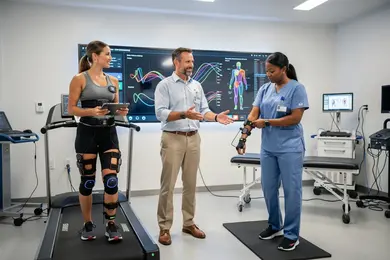
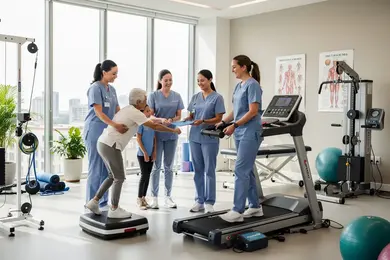
Rehabilitation aides integrate foundational kinesiology principles to support therapeutic routines without conducting clinical assessments, emphasizing safety and injury prevention. Their role complements kinesiology professionals by implementing exercise programs and monitoring patient responses, especially in venues like hospitals where adherence to protocols is critical.
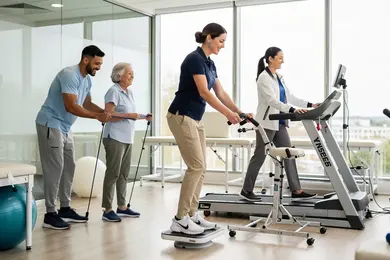
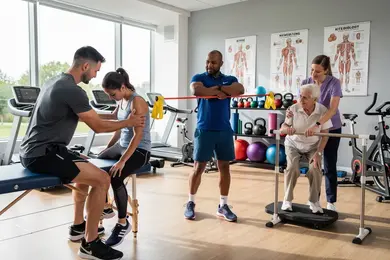
The rehabilitation aide job responsibilities in kinesiology include assisting therapists with equipment setup, facilitating repetitive motion drills for stroke recovery, and managing logistical challenges such as scheduling and infection control.
In practice, aides often identify abnormal movement patterns that require prompt therapist attention, bridging gaps between clinical planning and patient execution. This frontline exposure provides practical insights into musculoskeletal and neuromuscular conditions, positioning aides well for those seeking informed entry points into clinical rehabilitation.
Employer expectations balance kinesiology knowledge with effective communication and adaptability to diverse patient needs. The median annual wage for physical therapist assistants and aides in hospitals is $41,340, higher than the general industry median, underscoring the specialized demands of this setting.
For students weighing educational pathways that feed into this role, a solid kinesiology foundation enhances employability but comes with limitations. Aides do not conduct assessments and typically require supervision, which restricts autonomy over patient care decisions. Those interested may also consider complementary credentials, including a nutrition degree online, to expand interdisciplinary expertise relevant to rehabilitation.
Which rehabilitation aide roles can you pursue with a kinesiology degree?
Demand for rehabilitation aides with a kinesiology degree is shifting toward outpatient clinics and specialized sports medicine settings, where employment is expected to grow by 20% from 2024 to 2034. This exceeds the 16% average growth rate across the healthcare sector, emphasizing a strategic advantage for kinesiology graduates targeting these environments.
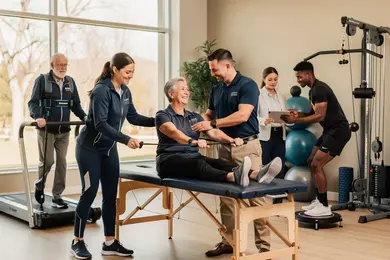
Entry level rehabilitation aide jobs for kinesiology graduates often involve preparing treatment areas, assisting patients with supervised exercises, and managing equipment rather than delivering hands-on therapy independently.
The degree enhances communication with licensed therapists and understanding of patient needs, which is critical since aides must follow protocols precisely without performing direct therapeutic interventions. In occupational therapy and sports rehabilitation, aides may require additional certification to manage specialized equipment or document recovery progress effectively. Employers look for candidates who combine movement science knowledge with reliability and procedural adherence.
Choosing a rehabilitation aide career path entails balancing the limited scope of direct patient care against the stability and potential for advancement within therapy teams, particularly in outpatient settings.
For those considering long-term academic progression or leadership roles, complementary qualifications can be crucial. For example, pursuing a PhD in healthcare management online can expand opportunities beyond entry level rehabilitation aide jobs for kinesiology graduates by integrating clinical insight with administrative expertise.
What types of employers hire kinesiology graduates as rehabilitation aides?
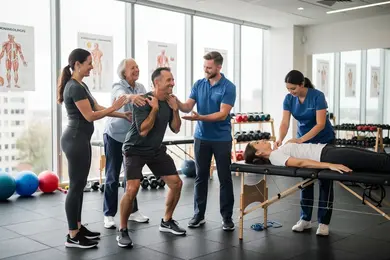
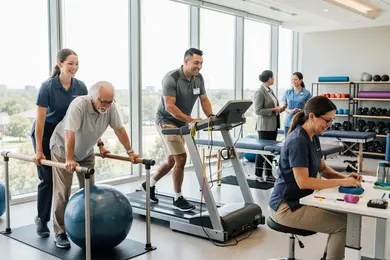
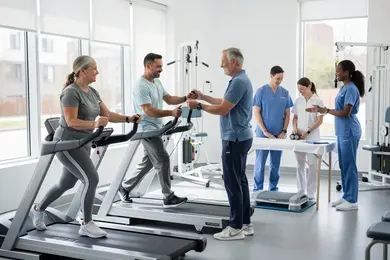
Employment for kinesiology graduates as rehabilitation aides centers heavily on hospitals, outpatient rehab clinics, and skilled nursing facilities, which rely on support personnel to assist occupational therapists (OTs) and physical therapists. These employers specifically seek candidates grounded in human movement and injury prevention, key to executing OT work-hardening programs that restore patient function and aid workplace reintegration.
Employers hiring kinesiology graduates for rehabilitation aide roles often emphasize precision in following therapists' protocols and managing documentation, reflecting the operational realities of these healthcare settings.
Growth projections from the U.S. Bureau of Labor Statistics, as reported by Arizona State University, predict an 11% rise in occupational therapist jobs from 2023 to 2033-equaling around 12,900 new positions. This expansion amplifies demand for aides capable of executing critical support tasks such as preparing exercise equipment, tracking patient progress, and maintaining therapy records.
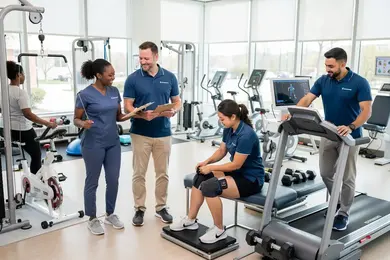
Large rehab centers and hospital outpatient departments, primarily in urban locations with greater patient volumes, may offer more opportunities but often require adaptable scheduling, including irregular shifts.
Outside hospital environments, industrial rehabilitation and workers' compensation programs employ kinesiology-trained aides to support customized work-hardening protocols, which require understanding occupational biomechanics and ergonomics. Here, aides balance interventions to safely expedite return-to-work timelines.
Critical tradeoffs include weighing job availability against work intensity and scheduling demands. Inpatient facilities may provide higher wages but at greater physical strain, a significant consideration for graduates matching employer types to career aspirations and stamina. For professionals considering a strategic transition, coupling kinesiology expertise with a healthcare MBA can facilitate advancement; more details can be found in this healthcare MBA.
What education and skills from a kinesiology program prepare you for rehab aide work?
Employers in skilled nursing and outpatient rehab settings favor candidates with a kinesiology degree because it supplies core competencies tailored to the nuanced demands of rehabilitation aide roles. Practical skills such as gait assistance, resistance training support, and vital signs monitoring emerge from focused study in human anatomy, biomechanics, and exercise physiology-critical for mitigating patient risk during recovery.
This alignment of education with real-world tasks shapes the expectations placed on aides, especially within post-acute care environments.
Core proficiencies gained from a kinesiology program for rehab aide careers include accurate mobility assessments, basic therapeutic exercise guidance, and the competent use of rehabilitation devices. Supplementing these technical skills are critical thinking and communication abilities essential for tracking patient progress and effectively coordinating with physical therapists.
Still, kinesiology degrees generally lack formal clinical training common to therapy assistant pathways, requiring candidates to pursue internships or on-the-job experiences to grasp regulatory compliance and privacy protocols fully.
Financially, this educational background commands a wage premium; physical therapist assistants and aides report median earnings near $45,530 in U.S. skilled nursing facilities, approximately 18% above the overall occupational median as per May 2024 Bureau of Labor Statistics data.
Prospective students weighing rehabilitation aide educational requirements with a kinesiology degree should consider this tradeoff between theoretical preparation and the need for practical exposure. Those seeking expedited clinical roles might also explore 12-month accelerated nursing programs online as an alternative pathway.
Do you need certification or licensure to work as a rehabilitation aide with a kinesiology degree?
Kinesiology graduates pursuing rehabilitation aide roles face a fragmented landscape where formal certification is often optional but strategically beneficial depending on the employment setting. While many positions accept a bachelor's degree combined with practical experience, hospitals and outpatient clinics commonly expect aides to hold certifications like the Certified Rehabilitation Therapy Aide (CRTA) to satisfy liability and insurance protocols.
Contrastingly, school-based employment, which has grown by around 30% over the past decade due to escalating demands for special education services, typically requires aides to function under licensed therapists within strict supervision frameworks. Though aides remain unlicensed, they must pass criminal background checks and complete targeted workplace training, with less emphasis on formal credentials.
Prospective candidates should weigh these differences carefully: clinical roles may necessitate upfront investment in certification to enhance employability and promotion potential, whereas school settings prioritize regulatory compliance and documented competency without demanding professional licensure.
Baseline expectations across employers often include orientation, continuing education, and certifications such as CPR or first aid. These do not substitute for licensure but are essential to meeting patient safety and readiness standards. Failing to meet these can restrict job access despite holding a kinesiology degree.
How do on-campus and online kinesiology programs compare for future rehabilitation aides?
The decisive factor separating on-campus and online kinesiology programs for rehabilitation aides is the depth of experiential training and employer valuation of hands-on skills. On-campus formats embed rigorous clinical practicums that hone physical assessment and therapeutic techniques, which align directly with the 7% projected employment growth for exercise physiologists between 2023 and 2033.
Employers in hospital or urban clinical environments typically prioritize candidates with immediate, demonstrable patient interaction experience, often found more consistently in on-campus cohorts.
In contrast, online programs offer accessibility and flexibility but often depend on simulated labs or locally arranged clinical placements that may not meet the intensity or quality employers expect, especially in competitive markets. This creates a tradeoff between schedule convenience and the strength of practical immersion.
Consider a candidate targeting cardiac and pulmonary rehabilitation roles in metropolitan hospitals-these employers expect verifiable clinical hours integrated within the curriculum rather than external internships post-graduation. Financially, on-campus study involves higher upfront costs and possible relocation but provides direct access to employer networks and clinical partners; online students must proactively secure robust field experiences to bridge this gap.
What courses and clinical experiences best support a rehabilitation aide career path?
Programs aimed at preparing rehabilitation aides must balance rigorous foundational coursework with substantial clinical exposure to meet employer demands. Essential study areas include human anatomy, physiology, biomechanics, and motor control, as these underpin the neuromuscular knowledge needed for effective patient support. Clinical placements, particularly in outpatient or neurologic rehab settings, offer critical hands-on experience that theoretical knowledge alone cannot provide.
For example, aides assisting post-stroke patients require proficiency in motor retraining and safe mobility techniques, skills that develop only through supervised practice. Given the expected 30% rise in stroke incidence among adults aged 18-64 by 2050, aides with focused neurophysiology training and over 100 hours of targeted clinical work hold a distinct advantage in a competitive job market.
However, students face tradeoffs: programs with excellent practicum opportunities may present geographic or scheduling challenges, while those emphasizing science coursework without clinical components risk producing graduates underprepared for real-world demands. Employers prioritize candidates demonstrating both measurable clinical competence and integrated knowledge, often screening out those from programs lacking robust internships.
Students targeting a rehabilitation aide role within kinesiology should weigh these factors carefully. The best outcomes emerge from curricula that integrate advanced movement science with substantial, relevant clinical hours in neurologic or orthopedic rehab environments.
What are the typical salaries and advancement opportunities for rehabilitation aides with kinesiology degrees?
Rehabilitation aides with kinesiology degrees face a clear economic gradient where geographic location, employer type, and credentials significantly affect earning potential. Entry-level annual salaries start near $30,000 in outpatient clinics or community health centers but can approach $45,000 in large hospital systems or orthopedic specialty practices.
Licensed aides or those with athletic training certifications tend to earn toward the upper limit, illustrating a direct correlation between credentialing and pay scale.
The 13% job growth projected for athletic trainers from 2023 to 2033 signals expanding demand specifically in sports medicine and orthopedic care settings. This labor market dynamic favors aides prepared to pursue additional licensure or clinical competencies-strategies that often yield wage premiums of 20% to 40% beyond baseline aide salaries.
In practice, aides without such upskilling face wage stagnation and less job security, particularly in lower-paying roles concentrated in community or outpatient environments.
Students and professionals aiming to pivot strategically within kinesiology should prioritize employment environments offering structured advancement pathways. Employers increasingly expect kinesiology graduates to supplement theoretical knowledge with certifications and practical skills aligned with evolving clinical standards.
The tradeoffs for individuals include investing in further education and clinical training to access better pay and role stability versus remaining in limited-support positions with minimal growth.
Key considerations:
- Initial salaries are modest but vary widely by setting and credentials.
- Certification opportunities correlate strongly with accelerated salary growth.
- Job growth favors roles integrated into sports medicine and orthopedic frameworks.
- Long-term employability hinges on continuous skill development beyond the kinesiology degree.
How is employer demand and job outlook evolving for rehabilitation aides in the United States?
Demand for rehabilitation aides with a kinesiology degree is growing significantly due to a 22% projected expansion in home health and personal care roles between 2022 and 2032, outpacing general job market growth. This shift reflects increasing emphasis on community-based rehabilitation targeting older adults and disabled populations, where aides support clinical teams in outpatient, long-term care, and in-home environments.
Employers prioritize aides who grasp biomechanics and therapeutic exercise but also require flexibility across varied patient scenarios. For instance, assisting post-stroke patients in skilled nursing facilities demands different competencies than aiding musculoskeletal recovery in younger adults at outpatient clinics.
These role differences underscore the need for kinesiology graduates to supplement academic knowledge with targeted clinical experience or specialized credentials to navigate evolving care protocols and state regulations.
Operational expectations now include efficient electronic documentation and multidisciplinary collaboration, increasing the bar for aides advancing beyond entry-level positions. This reality pushes programs offering clinical practicum and strong employer networks to the forefront, better preparing graduates for practical work conditions.
Students must carefully weigh tradeoffs between credentials that enable immediate employment versus those aligned with long-term professional development, especially as technology and telehealth reshape rehabilitation delivery.
Flexible certification pathways and continuing education that balance regulatory compliance with skill growth are critical. Kinesiology graduates aiming for sustainable roles should prioritize experiential learning and adaptable competencies to meet dynamic workforce demands.
How can you evaluate and choose an accredited kinesiology program focused on rehabilitation careers?
Accredited kinesiology programs that integrate hands-on clinical training aligned with physical and occupational therapy roles better prepare students for rehabilitation employment. Programs partnering with local clinics or hospitals offer direct exposure that correlates strongly with employer expectations and skill competence, a critical factor often overlooked in program selection.
Graduates transitioning from rehabilitation aide positions to licensed assistant roles see significant wage improvements, with median salaries for physical therapist assistants and occupational therapy assistants at $62,770 and $64,250 respectively. This reflects over an 80% increase compared to typical rehabilitation aide pay nationally, underscoring the economic impact of licensure advancement.
When assessing programs, students should weigh flexibility factors-such as part-time, evening, or hybrid options-against prerequisite requirements that might extend completion time. Financial considerations also include the availability of federal financial aid or employer tuition reimbursement, which directly influence affordability and feasibility.
Programs emphasizing human anatomy, biomechanics, and therapeutic modalities align better with advanced roles and professional licensure. In contrast, programs lacking clear licensure or certification pathways can limit upward mobility and financial return. Reliable graduation and job placement data help confirm program outcomes, ensuring alignment with evolving workforce demands.
Overall, prospective students must balance curriculum depth, practical training opportunities, and institutional support against their own readiness and career goals to make informed kinesiology education decisions.
Other Things You Should Know About Kinesiology
Rehabilitation aide roles often require assisting patients with exercises and handling equipment. A kinesiology degree generally provides adequate knowledge of body mechanics and physical conditioning, which can help manage these demands. However, practical experience or supplemental training might enhance physical readiness.
Kinesiology programs vary widely, with some emphasizing exercise science, others stressing biomechanics or health promotion. For rehabilitation aide roles, programs with a stronger clinical or therapeutic component tend to align better with employer expectations. Selecting a program that integrates applied rehabilitation techniques and exposes students to patient care scenarios improves readiness and signals relevance to hiring managers over more generalist kinesiology degrees.
While not always mandatory, certifications like CPR, first aid, or specialized rehab aide credentials significantly increase employability and can open higher-paying opportunities. Employers frequently prefer candidates with these credentials as they indicate practical readiness beyond academic knowledge. Prioritizing such certifications after or during your kinesiology program strengthens your application in competitive job markets.
Entry-level rehabilitation aide roles provide immediate exposure and practical experience but often come with limited autonomy and lower pay.
Advancing with additional education or specialization-such as physical therapy assistant training-requires more time and investment but offers clearer pathways to higher responsibility and salary. Assess your long-term career goals carefully; if advancement is a priority, plan to integrate further credentials after your kinesiology degree rather than relying solely on initial aide-level employment.
References
- Best Rehab Aide Job Description Template | Workstream ATS https://www.workstream.us/job-description/healthcare-rehab-aide.html
- The U.S. Allied Health Job Market: Demand, Pay, and Career Moves for 2026 https://matcha-health.com/resources/allied-health-job-outlook
- Rehabilitation Assistant : RRC Polytech: Program Explorer https://www.rrc.ca/explore/program/rehabilitation-assistant/
- What Can You Do with a Kinesiology Degree? https://www.nec.edu/news/what-can-you-do-with-kinesiology-degree
- What Can I Do in My Career With a Master’s in Kinesiology? https://www.pointloma.edu/resources/health-sciences/what-can-i-do-my-career-masters-kinesiology
- Rehabilitation Aide - NVHealthForce https://www.nvhealthforce.org/jobs/rehabilitation-aide/
- Physical Therapist Assistant (PTA) & PT Aide - Certification & Salary https://www.healthcaredegree.com/physical/physical-therapist-assistant
- Physical Therapist Assistant: The Perfect Next Step for Kinesiology Graduates https://blog.stanbridge.edu/kinesiology-to-physical-therapist-assistant-career-guide/
- Physical Therapist Job Outlook: The Student's Guide | USAHS https://www.usa.edu/blog/physical-therapist-job-outlook-the-students-guide/
- Preparing for a Career in Kinesiology https://bcak.bc.ca/for-the-public/what-kinesiology/careers-kinesiology/