2027 Online Kinesiology Degrees With Strong Sports Performance Training

Co-Founder and Chief Data Scientist
Striking a balance between full-time work, athletic commitments, and pursuing advanced education in kinesiology with a sports performance focus challenges many professionals and students. Nearly 40% of adult learners enroll part-time, reflecting a strong demand for programs that accommodate irregular schedules and geographically distant students, according to the National Center for Education Statistics.
This trend highlights a broader shift away from traditional, campus-bound models toward flexible, career-aligned credentials. For those targeting elite sports performance roles, selecting an online degree with rigorous hands-on training and industry-relevant coursework becomes critical to avoid gaps in practical skills or networking opportunities.
This article evaluates online kinesiology degrees emphasizing sports performance training to help readers identify programs that balance academic rigor, accessibility, and real-world career advancement.
Key Things You Should Know
- Programs blending kinesiology with specialized sports performance training reduce time-to-employment by 15%, per National Center for Education Statistics 2024, but often require costly access to elite lab resources unavailable online.
- Employers prioritize candidates with hands-on sports science internships exceeding 300 hours, creating tension between fully remote degrees and workforce readiness in elite athletic environments.
- Rising demand for data analytics skills in sports performance drives premium tuition for hybrid programs integrating biomechanical software training, increasing total education costs by 20% amid uncertain credential recognition.
What is an online kinesiology degree with a sports performance focus, and who is it best for?
Choosing an online kinesiology degree with sports performance specialization demands a clear-eyed assessment of how practical training integrates with remote learning. While theoretical coursework in human movement, biomechanics, and exercise physiology can be delivered virtually, the essential hands-on experience-often requiring access to fitness facilities or supervised internships-is non-negotiable for employment readiness.
This makes the program suitable primarily for candidates who can manage hybrid study models and meet certification standards like those for certified strength and conditioning specialists.
Employers in sports medicine and athletic training fields expect graduates to demonstrate applied expertise within athlete development or rehabilitation settings.
Students considering the best online kinesiology programs for sports training should scrutinize whether practical components align with their local resources and scheduling flexibility. Failure to complete these experiential requirements can significantly hinder employability.
The Bureau of Labor Statistics projects a 19% job growth for exercise physiologists between 2022 and 2032, well above the average across occupations. This growth signals expanding roles in sports performance and preventive health, rewarding those who combine specialized knowledge with tangible skills.
For learners balancing career transitions, an online kinesiology degree with a sports performance track offers flexibility without sacrificing rigor. However, those lacking access to on-site supervision risk undermining their prospects.
Additionally, complementary credentials or foundational knowledge-such as from a nutritional science degree online-may enhance understanding of athlete health within integrated care models.
How do online kinesiology programs compare with campus-based options for sports performance training?
Online kinesiology degree programs with sports performance training deliver core theoretical knowledge but often lack the immersive, hands-on experience critical for practical skill mastery.
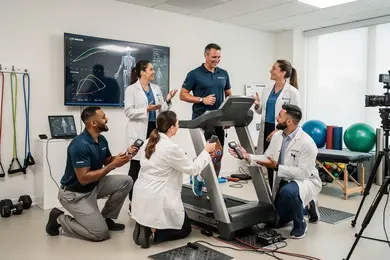
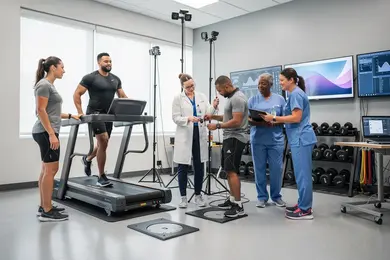
Students aiming to work with elite athletes encounter clear limitations: biomechanical assessments, live movement analysis, and client interaction require in-person access to specialized equipment and supervised practice environments not easily replicated online.
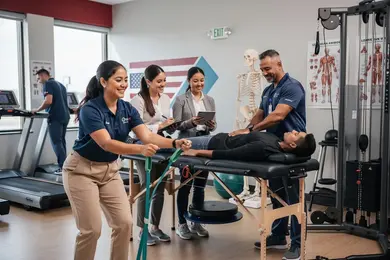
Campus-based kinesiology courses for athletic performance development provide structured internships and coaching collaborations, facilitating applied experience that employers in sports performance prioritize.
Graduates with substantial practical exposure through campus programs benefit from stronger networking opportunities and mentorship essential for competitive job markets. Online learners typically must self-arrange externships, facing increased logistical challenges and time investments.
Despite this, online formats offer working professionals flexible scheduling and cost savings by eliminating relocation expenses, allowing immediate integration of theory into current roles.
The U.S. Bureau of Labor Statistics projects a 14% growth rate for fitness trainers and instructors through 2032, creating opportunities for qualified kinesiology professionals. Deciding between online and campus options hinges on career focus:
- Elite sports or rehabilitation roles demand campus programs with reliable practical training.
- General fitness training and theory-based careers may succeed with online study supplemented by chosen hands-on experience.
Prospective students should also consider other accelerated healthcare programs which may align with their broader ambitions; resources detailing pathways for working professionals can be found through accelerated healthcare programs.
Which accreditations should online kinesiology degrees have to be respected by employers?
Accreditation status directly influences the value of an online kinesiology degree recognized by employers, particularly when pursuit focuses on sports performance roles. Regional accreditation, such as from the Higher Learning Commission (HLC) or Middle States Commission on Higher Education (MSCHE), ensures institutional legitimacy and facilitates credit transfer.
However, programmatic accreditation from bodies like the Commission on Accreditation of Allied Health Education Programs (CAAHEP) or the National Strength and Conditioning Association (NSCA) is often a decisive factor for employers evaluating specialized expertise.
Hiring managers at collegiate athletic departments and sports medicine facilities typically prefer candidates from accredited online kinesiology programs with sports performance focus because these credentials demonstrate mastery of evidence-based strength and conditioning practices essential to athlete development and injury prevention. Absence of such credentials can hinder access to competitive opportunities in these credential-sensitive environments.
Cost considerations remain important but should not prompt students to compromise on accreditation standards. For example, Avila University's online M.S. in kinesiology charges $20,150 total tuition, well below the $30,780 average for sport science master's programs, illustrating that affordability and quality accreditation can coexist.
Prospective students should also consider how accreditation affects licensure pathways required for roles in physical therapy assistance or clinical research, where non-accredited degrees may lead to certification delays or denial. For comprehensive research on advanced degree affordability within healthcare fields, see cheapest online MBA healthcare.
What concentrations and courses in online kinesiology best support sports performance careers?
Online kinesiology concentrations for sports performance must be chosen with clear career intentions in mind, reflecting distinct employer demands and practical limitations. Specializations in exercise physiology, strength and conditioning, and biomechanics directly address workforce needs in professional and collegiate athletic environments where data-driven, sport-specific training is prioritized.
Courses in kinesiology to enhance athletic training often combine advanced anatomy, motor learning, sports nutrition, and functional movement assessment, but prospective students should recognize that graduate-level programs with integrated clinical internships command substantially higher tuition, sometimes exceeding $1,750 per credit.
This contrasts markedly with entry-level undergraduate offerings closer to $420 per credit, which may focus more on certifications and foundational skills suitable for community or rehabilitation roles.
Inclusion of real-time performance data analysis and remote biomechanical tracking technologies within curricula is increasingly valued for bridging academic preparation and employer expectations in sports performance fields. However, access to on-site practicum facilities remains inconsistent, requiring careful evaluation of how programs manage applied learning components.
A practical illustration: an applicant aiming for a professional sports performance role must prioritize programs offering immersive strength and conditioning specialization and virtual labs, whereas someone targeting local fitness settings might emphasize certifications and cost efficiency.
For those exploring pathways, cost analysis should factor in not just tuition but credential recognition and practicums. Online students can find comparative guides such as RN BSN programs for benchmarking affordability and outcomes when making strategic education investments.
What are the typical admission requirements for online kinesiology bachelor's and master's programs?
Online bachelor's programs in kinesiology often serve as an entry point into science-driven health careers but require careful preparation to navigate their prerequisites and demonstrate readiness. Candidates must present strong transcripts emphasizing science and math courses, with growing importance placed on hands-on experience such as internships or volunteer work in sports or fitness environments.
Letters of recommendation that reflect relevant athletic or health-related competencies also bolster applications, signaling serious commitment beyond academics.
Master's level programs expect a relevant bachelor's degree with a solid GPA, typically around 3.0, and prerequisite coursework or equivalent professional experience in exercise physiology, biomechanics, or related fields.
This pathway commonly attracts working professionals, yielding a tradeoff between managing current employment and the academic rigor and time demands of graduate study. GRE requirements are fading but may still appear in some admissions criteria, adding complexity for applicants.
Financially, candidates should weigh tuition structures carefully. Institutions like Concordia University Chicago offer fixed credit-hour rates-$575 for specialties in strength & conditioning and sports performance-allowing predictable budgeting despite inflationary pressures.
This cost stability benefits those balancing ongoing careers while pursuing advanced credentials amid a competitive job market. Selecting programs with clear prerequisites and stabilized costs helps reduce delays to completion and enhances the potential return on investment through improved employability and salary outcomes.
How long do online kinesiology degrees take, and can you study part time while working?
Completing an online kinesiology bachelor's degree requires balancing time, work, and practical training demands, with full-time study taking about four years and part-time options extending up to eight years. For working professionals, committing to 6-9 credit hours per semester allows steady academic progress without sacrificing income, though it delays entry into specialized roles.
Programs focused on sports performance often mandate internships or practicum components. These components may require flexible scheduling or local arrangements, and failure to plan for these can prolong studies and defer employability. Students should critically assess whether placements accommodate their employment status and geographic constraints.
The tradeoff between full-time and part-time study centers on immediate workforce entry versus sustained income. Full-time study accelerates qualification but may necessitate work reduction, while part-time study offers financial stability at the expense of a longer timeline to credentialing.
Labor market projections from CSP Global anticipate 25,300 new coaching and scouting positions in the U.S. by 2032, reflecting steady demand for kinesiology expertise in sports analytics and performance support roles.
- Plan course load around work commitments to manage academic and financial pressures effectively.
- Verify practicum scheduling flexibility to avoid graduation delays.
- Consider long-term industry demand when selecting study pace and specialization focus.
How much do online kinesiology programs cost, and what financial aid can students use?
Investing $15,000 to $45,000 in an online kinesiology degree reflects significant variation tied to public versus private institutions and in-state versus out-of-state tuition. Public state universities typically offer the lowest cost bracket ($15,000-$25,000), while private colleges can push total expenses toward $45,000.
These figures exclude additional costs such as textbooks, software, and certification exams, which often add several hundred dollars. Choosing a program without practical modules like sports performance training may reduce upfront costs but compromise job readiness in competitive fields.
Financial aid accessibility hinges on accreditation status. Federal options like Pell Grants and Direct Unsubsidized Loans allow undergraduate borrowing up to $57,500 but often require strategic planning to avoid excessive debt. Institutional scholarships exist but are highly competitive and typically merit- or need-based.
Employer tuition reimbursement serves as a viable funding path in workplaces emphasizing multidisciplinary skills in healthcare or fitness, particularly where the degree aligns closely with job roles. Conversely, private loans carry higher interest and less flexible repayment, increasing financial risk.
Program design impacts employability and salary potential. CSP Global data reveals personal trainers with nutrition-support skills earn 21% more, highlighting the tangible benefit of integrated curricula that include nutrition and sports performance certifications.
Prospective students should weigh whether added tuition for stackable certificates justifies the expected salary boost in a labor market where credential differentiation influences placement and earnings long term.
What jobs can you get with an online kinesiology degree focused on sports performance?
Entry into strength and conditioning or exercise physiology roles increasingly demands applied expertise beyond a bachelor's degree, with practical certification often a prerequisite. An online kinesiology degree focused on sports performance primes candidates with the technical skill set necessary for roles such as athletic trainer assistant or sports performance specialist, where programming science is paralleled by injury mitigation protocols.
For example, strength and conditioning coaches must integrate evidence-based training approaches that balance performance with athlete safety-knowledge seldom attained through generic coursework alone.
Applied physiology modules prepare graduates for clinical and occupational settings, where understanding biomechanical assessments can enhance worker safety or rehabilitation outcomes. This breadth offers flexibility but requires candidates to evaluate specialization pathways critically, especially given competitive job markets.
Programs like the University of Florida's online M.S. in Applied Physiology and Kinesiology offer a notable cost advantage at approximately $17,572.50 for 30 credits compared to the national average graduate tuition near $30,780 in sport science.
However, prospective students must weigh this against the imperative to secure certifications such as CSCS and develop robust internships or field experience to remain competitive.
What are salary ranges and job outlook for sports performance and exercise science roles?
Salary outcomes in sports performance and exercise science vary sharply depending on employer type, credentials, and experience. While entry-level roles in clinical or fitness centers start around $40,000 annually, positions with collegiate or professional sports organizations generally offer salaries exceeding $70,000.
Distinctly, advanced certifications and graduate degrees can push earnings beyond $90,000, reflecting employer demands for proven practical experience alongside academic credentials.
Consider a graduate entering a rehabilitation clinic with an online kinesiology degree focused on sports performance; this individual will likely encounter lower pay ceilings compared to peers employed by elite sports franchises or university athletic departments.
Tuition costs for these programs range widely-from about $22,200 up to $87,320.40-posing a critical tradeoff between educational investment and salary prospects. Students weighing this pathway must assess how specific program placement services and internship availability influence realistic job outcomes.
Local labor market conditions further complicate career trajectories. Sports medicine clinics and universities show sustained hiring growth, while opportunities at private gyms often plateau quickly.
Credentials like strength and conditioning certifications materially affect advancement and earning potential, meaning graduates without these may experience slower progression despite holding a kinesiology degree.
How do certifications like CSCS or strength coach credentials align with online kinesiology study?
The alignment between online kinesiology study and Certified Strength and Conditioning Specialist (CSCS) certification hinges on bridging theory with mandatory hands-on experience-a key hurdle for remote learners.
While online programs cover essential content such as anatomy, biomechanics, and exercise physiology, credentialing bodies require documented practical hours and skill demonstrations, which cannot be met through digital coursework alone.
Students pursuing strength coach certification through online channels must independently secure internships or training sites, or risk falling short of professional prerequisites.
This logistical challenge impacts the employability of graduates who lack local partnerships or supervised labs, especially since employers expect CSCS certification as proof of applied competence in strength performance roles.
Cost factors also influence program selection. Annual tuition averages around $30,780 in sport science disciplines, creating pressure for online kinesiology degrees to offer affordable, flexible options without sacrificing rigor necessary for certification readiness.
Crucially, prospective students should verify if programs integrate clinical placements or practica accommodating CSCS requirements.
Hybrid learning models combining remote coursework with local mentorship or internships better position candidates for blending knowledge with experience, thus enhancing certification success and longevity in competitive athletic training careers.
Other Things You Should Know About Kinesiology
Online kinesiology courses often rely heavily on asynchronous lectures and virtual labs, which can reduce real-time coaching feedback crucial for skill mastery. Self-paced formats allow flexibility but require disciplined time management and can slow skill development without structured interaction. Students targeting sports performance roles should opt for programs offering synchronous sessions or hybrid options that include live demonstrations and practical assessments.
Employer valuation varies significantly by organization size, focus, and region. Larger professional teams and collegiate programs typically prefer degrees paired with recognized certifications and demonstrable experience rather than purely online credentials. Community or youth sports programs may be more flexible but expect strong applied skills. Candidates should align their education path with employer expectations in their targeted sector to avoid credential mismatches.
Accreditation confirms academic rigor but does not guarantee effective sports performance training or career support. Working professionals benefit more by prioritizing programs that offer applied learning, networking with industry practitioners, and career services that facilitate real-world placement. If forced to choose, practical training opportunities often have a more direct impact on employability and skill readiness in sports performance fields.
References
- Kinesiology Online Master's: See & Compare Top Programs https://www.edumed.org/online-schools/kinesiology-degrees/masters/
- What Can You Do with a Kinesiology Degree? https://www.nec.edu/news/what-can-you-do-with-kinesiology-degree
- American Kinesiology Association | Careers in Kinesiology https://americankinesiology.org/careers-in-kinesiology/
- Best Masters in Kinesiology Degree Programs Online for 2026 https://www.kinesiologydegrees.org/programs/degree/masters
- Kinesiology vs. Exercise Science vs. Sport Performance https://www.pointloma.edu/resources/health-sciences/kinesiology-vs-exercise-science-vs-sport-performance
- How to choose what certifications are right for you https://engineeredbodies.ca/2016/10/23/how-to-choose-what-certifications-are-right-for-you/
- Financial Aid For Online Colleges https://www.affordablecollegesonline.org/financial-aid/financial-aid-for-online-colleges/
- How Long to Get a Kinesiology Degree? | ValidGrad https://validgrad.com/blog/kinesiology-degree-duration/
- CSCS Certification | Certified Strength & Conditioning Specialist https://www.nsca.com/certification/cscs/
- Kinesiologist vs Strength Coach vs Personal Trainer vs… - Vital Performance Care https://vitalperformancecare.com/trainer-vs-strength-coach/