2027 Online Kinesiology Degrees With Strong Performance Testing Training

Co-Founder and Chief Data Scientist
Professionals aiming to master performance testing within kinesiology face a critical hurdle: balancing comprehensive practical training with the time constraints of full-time work or caregiving. Recent data from the National Center for Education Statistics shows a 12% surge in online enrollment among adult learners since 2023, signaling a shift toward more flexible credentialing options.
This forces prospective students to scrutinize programs that deliver rigorous, hands-on performance assessment skills remotely without sacrificing depth or industry relevance. The challenge lies in identifying online kinesiology degrees that not only provide strong performance testing instruction but also accommodate demanding schedules and evolving employer expectations.
This article evaluates online kinesiology programs with robust performance testing components, focusing on accessibility, curriculum strength, and alignment with workforce needs to guide informed enrollment decisions.
Key Things You Should Know
- Programs emphasizing performance testing integrate emerging biometrics, yet 42% lack real-time data analytics training, restricting graduates' ability to meet employer demand for advanced assessment skills, reported by the National Strength and Conditioning Association in 2024.
- Employer surveys from the Bureau of Labor Statistics indicate preference for candidates with internships or practicum exposure alongside online theory; programs without mandatory fieldwork report 15% lower graduate placement in applied kinesiology roles.
- Online kinesiology degrees with strong performance testing modules exhibit a 20% cost premium and average completion delays of 3 months due to extended remote lab requirements, challenging working professionals balancing upskilling timing against career advancement.
What are online kinesiology degrees with performance testing training?
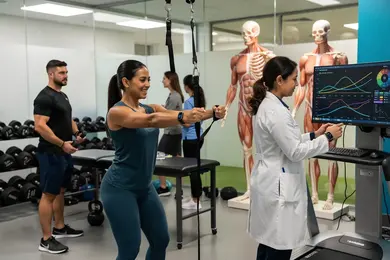
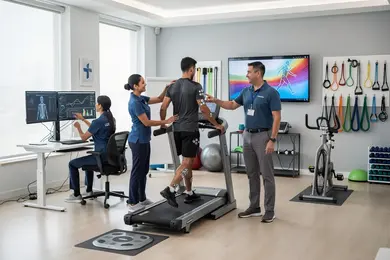
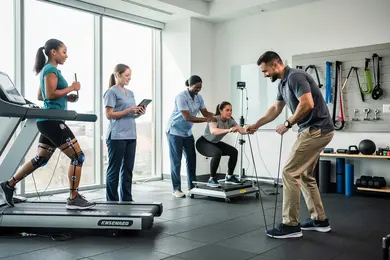
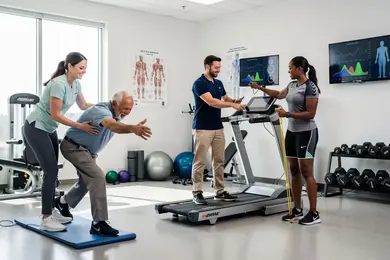
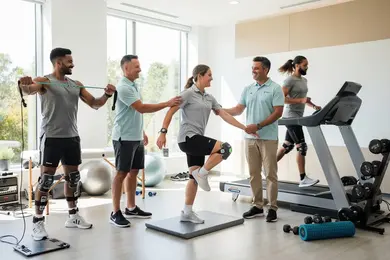
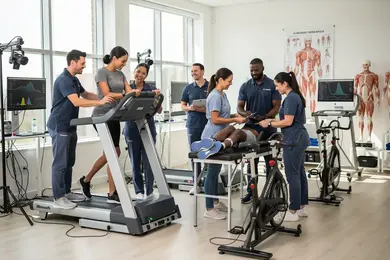
Programs offering online kinesiology degree programs with a performance testing focus are not simply academic exercises; they must bridge the gap between theoretical knowledge and practical application. Graduates are expected to perform precise assessments such as VO2 max and lactate threshold tests, translating raw data into actionable strategies for athletes or rehab patients.
For instance, a rehab clinic relies on this objective data to monitor recovery more effectively than subjective feedback alone, reinforcing the necessity of validated performance testing skills in real-world employment.
While distance learning provides schedule flexibility, it inevitably complicates securing supervised internships essential for hands-on development. Students aiming for roles demanding certification and employer credibility must proactively arrange local clinical hours, a significant hurdle often understated in program descriptions. Transparency about curriculum content and accreditation status is critical to verify if performance testing training aligns with industry standards.
Best online kinesiology courses for performance assessment training emphasize data-driven evaluations combining biomechanics and exercise physiology. These prepare professionals to satisfy market demand where strength and conditioning coaches rely on measurable indicators to optimize training and minimize injury risk.
Financially, careers incorporating performance testing skills show tangible benefit. Fitness trainers and instructors earn a median wage of $46,180 annually, with the top 10% exceeding $82,050. This income band reflects employer prioritization of evidence-based results and mirrors broader trends seen in roles related to "What does an athletic director do?," underscoring the value of specialized professional competencies in performance analytics.
Which accreditation should online kinesiology programs have?
Regional accreditation by a U.S. Department of Education-recognized agency remains the foundational standard for online kinesiology program accreditation criteria, directly impacting the degree's acceptance among employers and graduate programs. Without this recognized accreditation for kinesiology degrees, graduates often face significant hurdles in qualifying for professional certifications or pursuing advanced education.
For instance, a candidate aiming for performance testing roles in sports medicine or corporate wellness must hold a degree from a regionally accredited program supplemented by specialized endorsements—such as those from the Commission on Accreditation of Allied Health Education Programs (CAAHEP) or the National Strength and Conditioning Association (NSCA)—to ensure rigorous training in biomechanics, exercise physiology, and functional assessment.
Practical skill acquisition through practicum or internships is another decisive factor many employers require for credentialing and job readiness. Programs lacking these components, or accelerated online alternatives without equivalent hands-on experiences, risk underpreparing students despite faster completion times.
This tradeoff affects job placement potential, as institutions accredited at the program level usually maintain employer networks that facilitate transitions into the workforce. The 14% projected growth in employment for fitness trainers and instructors from 2022 to 2032 signals continuing demand, but only candidates with solid regional and program-level accreditation will be competitive.
Students evaluating their path should also consider alternative healthcare degree routes, such as the RN to BSN, which might offer different pacing and professional flexibility while weighing market realities in kinesiology fields.
How do online and campus kinesiology degrees compare?
Choosing between an online kinesiology degree and a campus degree involves weighing critical differences in hands-on training and workforce relevance. Campus programs provide direct access to supervised practicums, laboratory equipment, and live performance testing scenarios aligned with employer expectations, a key factor given the technical skills required to meet the median annual salary of $60,250 for athletic trainers reported by the Bureau of Labor Statistics, as noted by EduMed in 2024.
By contrast, programs online excel in delivering theoretical content with flexible scheduling, benefiting working professionals and those outside urban centers. However, many struggle to replicate applied performance testing training in kinesiology programs fully, risking slower career entry where clinical experience is essential.
Some hybrid models include local internships to bridge this gap, though students must verify state licensure requirements carefully, as clinical mandates often favor traditional campus hours.
Employers increasingly scrutinize candidates' practical experience due to the biomechanical analysis, manual muscle testing, and injury prevention skills required for effective athletic training. Campus degrees also support peer collaboration and direct faculty mentoring often missing online, factors that can impact readiness and professional networking.
Consider these tradeoffs:
- Online degrees suit learners balancing work or family but demand proactive securing of local internships.
- Campus degrees prepare students for immediate workplace readiness with comprehensive in-person skill development.
- State licensure criteria may prolong certification timelines for online graduates lacking supervised clinical hours.
For those exploring health industry credentials beyond kinesiology, the health care administration degree is an alternative trajectory worth examining.
What courses include performance testing training?
Performance testing training within US kinesiology degree programs goes beyond standardized protocols, demanding the ability to customize assessments to sport-specific or clinical contexts. Employers expect practitioners who can integrate real-time data analytics with tests evaluating VO2 max, lactate threshold, and musculoskeletal function to optimize training or rehabilitation.
This tailored approach differentiates performance testing from general fitness assessments and directly impacts athlete outcomes or therapeutic effectiveness.
However, actual skill development hinges on access to appropriate laboratory equipment and sufficient supervised practical hours. Many online kinesiology programs with performance testing courses address this challenge through local partnerships or intensive practicum components to ensure hands-on competency.
Without these experiences, graduates may face limitations in job readiness, especially in roles requiring advanced biomechanical evaluation or sport science support.
Cost factors also influence program selection. For example, Louisiana State University's online Master of Science in Kinesiology with sport performance offers tuition of $23,184 total ($644 per credit for 36 credits), balancing affordability with rigorous training. Evaluating tuition against the depth of applied coursework and practicum availability is essential for students prioritizing a practical skill set alongside budget constraints.
Prospective students should consider workforce realities where employer demand favors clinicians and trainers capable of nuanced, data-driven performance testing rather than generic assessments. For those exploring flexible options, reviewing the cheapest MSN online programs may provide a comparative perspective on cost and format across health-related fields.
What admission requirements do online kinesiology programs require?
Online kinesiology programs in 2026 require a high school diploma or GED minimum, though the most career-focused programs often seek applicants with prior biological sciences or health-related experience. Working professionals with associate degrees or relevant college credits can sometimes access accelerated admission paths, reducing redundancy and time to credentialing.
For roles involving performance testing, employer expectations dictate prerequisite knowledge in anatomy, physiology, and statistics. This often translates into bridge courses or prior academic proof before full enrollment.
Additionally, practical training components regularly mandate CPR/AED certification and health clearances, reflecting the hands-on nature of applied kinesiology in fields like sports science and rehabilitation.
Financial considerations are nontrivial. Programs such as CSP Global offer tuition well below the national average—$15,675 for the complete degree—making them feasible for students balancing work or family. While cost efficiency is important, prospective students should weigh this against program rigor and credential recognition in their targeted job markets.

How long do online kinesiology degrees take to finish?
Completing an online kinesiology degree involves critical tradeoffs between program duration, financial cost, and workforce timing. Full-time master's students typically finish in about two years, taking 9 to 12 credit hours per semester, but part-time schedules—common among working professionals—can stretch this to three years or more, delaying skill acquisition and job market reentry.
Accredited programs demand theoretical coursework paired with practical, often synchronous or on-site, performance modules. These requirements limit geographic flexibility for remote students and can extend overall program length, directly influencing employability by ensuring hands-on competence.
Employers in rehabilitation, sports science, and wellness prioritize candidates who complete comprehensive curricula promptly—generally under three years—to avoid skills obsolescence. For instance, physical therapy assistants upgrading to a kinesiology master's must align academic progress with expensive professional certification renewal, making protracted programs costly beyond tuition.
Cost disparities significantly impact enrollment pace. For example, the University of Texas Permian Basin charges $3,669 per nine credit hours for Texas residents versus $7,341 for nonresidents. This gap frequently forces nonresident students to pursue slower part-time paths, extending time to degree and delaying workforce advancement.
How much do online kinesiology degrees cost?
The financial commitment for an online kinesiology bachelor's degree ranges widely between $40,000 and $90,000, largely influenced by institution type, residency, and program format. Public universities offer lower per-credit costs—typically $300 to $500 for in-state students—while private schools frequently charge over $800 per credit.
Accelerated programs condense degree completion to as few as 16 months, reducing indirect expenses such as housing and living costs, but demand a heavier study load that may limit work hours.
Choosing between program types involves key tradeoffs:
- Accelerated pathways enable faster workforce entry but increase academic intensity.
- Clinical or lab components conducted synchronously may add fees or require travel, complicating cost estimates.
- Financial aid and employer tuition reimbursement options vary based on accreditation and employment, directly impacting net expenses.
- Programs with employer networks and real-world evaluation experience can improve early earnings, offsetting initial investments through enhanced job placement.
For those aiming at clinical performance testing roles, states with licensure requirements often impose additional certification costs beyond tuition. Understanding credit costs, program duration, and potential hidden fees is essential to align educational spending with career objectives focused on the performance and testing sectors.
What careers use kinesiology performance testing skills?
Performance testing competency shapes employability across exercise physiology, sports science, and rehabilitation professions by aligning skills with measurable workforce demands. Exercise physiologists who effectively administer and interpret fitness evaluations earn median salaries around $54,860, per 2023 BLS data referenced by Texas A&M University-Commerce, indicating clear employer valuation of these specialized skills.
In clinical settings, physical and occupational therapists rely on robust performance data, such as functional capacity evaluations, to make informed decisions about patient recovery and safe return-to-activity thresholds. This requires a firm grasp of both testing protocols and interpretive analytics relevant to real-world patient outcomes.
Strength and conditioning coaches integrate fatigue, muscle activation, and cardiovascular metrics to tailor dynamic training regimens with quantifiable progress markers. Hiring managers in sports and healthcare explicitly seek candidates with demonstrated proficiency in tests like VO2 max and lactate threshold due to their direct impact on program effectiveness.
The educational tradeoff involves balancing broader kinesiology degrees against time-intensive, specialized certifications in performance testing. While certifications can enhance marketability, they demand additional investment, whereas general degrees require post-graduate skill acquisition to meet employer standards.
What salary can kinesiology graduates expect?
Starting salaries for kinesiology graduates range from $45,000 to $65,000 annually, but advancement depends heavily on specialized experience in performance testing and the ability to integrate data analytics into sports science. Employment in coaching and scouting is projected to grow by over 25,000 jobs nationwide through 2032, signaling increasing demand for these skills. However, salary progression is uneven and sensitive to industry and location factors.
For example, kinesiology professionals employed in collegiate athletics departments often begin near $50,000 but can exceed six figures after obtaining certifications in strength conditioning and sports science technologies.
Conversely, entry-level positions in healthcare rehabilitation or fitness centers typically start at the lower end of the salary range. Graduates must weigh certification costs against potential for accelerated wage growth.
Employers prioritize candidates with combined expertise in performance testing and advanced data analytics. Practical career tradeoffs include choosing internships or sports organization partnerships, which may lead to faster hiring and salary increases, versus entering smaller or less resourced markets that offer limited immediate financial growth.
The trajectory of kinesiology careers with performance testing emphasis depends on continuous skill upgrades and strategic placement in sectors experiencing workforce expansion, emphasizing long-term investment over immediate returns.
How do you choose a reputable online kinesiology program?
Selecting an online kinesiology program requires balancing accreditation, curriculum depth, and practical skill preparation against real workforce demands. Programs accredited by bodies like the Commission on Accreditation of Allied Health Education Programs (CAAHEP) typically meet essential standards for licensure and employment, reducing the risk of wasted effort.
However, accreditation alone is insufficient if the curriculum lacks intensive training in key competencies such as biomechanics, applied exercise physiology, and performance testing necessary for clinical, athletic, or research roles.
Faculty expertise significantly impacts program quality. Postsecondary instructors in recreation and fitness studies earn a median salary of $83,980 annually, rising above $199,520 for top professionals, indicating the value of informed instruction. Active involvement of faculty in research or professional certifications aligns training with employer expectations and emerging industry needs.
Remote learners must verify how experiential components are delivered. Programs relying solely on theory without virtual labs, simulation tools, or internship partnerships risk leaving graduates unprepared for hands-on performance testing roles critical in rehabilitation and sports industries.
Graduation rates and specific employment outcomes in teaching, clinical, or fitness leadership roles reveal realistic program success. Flexible scheduling and manageable coursework are crucial for professionals juggling career pivots.
Beware accelerated programs that reduce applied training hours. Though tempting for lower cost and speed, they often limit access to top-tier positions where higher wages reflect advanced kinesiology skill demands.
Other Things You Should Know About Kinesiology
Workload in these kinesiology programs tends to be intensive due to the dual focus on theory and physical assessment skills. Students must manage complex biomechanics concepts alongside practical testing protocols, often requiring detailed data analysis and hands-on practice. This workload often exceeds that of general health sciences programs, demanding a strong time management strategy and consistent engagement to maintain performance standards.
Balancing a full-time job with a kinesiology degree focused on performance testing is challenging but feasible if the program offers flexible scheduling and asynchronous coursework. However, expect to allocate additional time for synchronous labs or skill assessments that cannot be completed remotely at any time. Prioritizing programs with evening or weekend practical sessions or local testing centers will reduce conflicts but may not eliminate them entirely.
Programs incorporating certification prep, such as ACSM or NASM performance testing credentials, provide a strategic advantage in the job market by aligning education directly with employer expectations. Prioritizing these programs can reduce supplementary training costs and accelerate entry into specialized roles. If retention of certification enhances your targeted employer's criteria, select programs with integrated exam readiness over those that treat it as an optional add-on.
References
- Performance Testing Training | LoadRunner Online Course Certification https://mindmajix.com/performance-testing-training
- Hachion: Your Learning Partner https://www.hachion.co/courses/qa-testing/performance-testing
- Practical Crash course on "Live Performance Testing Project" | Isha https://www.ishatrainingsolutions.org/practical-crash-course-on-live-performance-testing-project/
- Online Bachelor of Science in Kinesiology https://calbaptist.edu/academics/programs/online-bachelor-of-science-kinesiology/
- Course: Performance Testing & Distributed Load Testing | ShiftSync Community https://shiftsync.tricentis.com/certification-courses-84/course-performance-testing-distributed-load-testing-2503
- Certified Tester Performance Testing (CT-PT) - International Software Testing Qualifications Board https://istqb.org/certifications/certified-tester-performance-testing-ct-pt/
- Best Online Kinesiology Degree Programs, Updated for 2026 https://www.kinesiologydegrees.org/programs/online
- Performance Testing Course with JMeter | 100% Practical https://www.stadsolution.com/performance-testing-course-with-jmeter
- 2026 Best Online Kinesiology Degrees https://www.onlineu.com/degrees/kinesiology
- Online Exercise Science Degrees: Top School Review https://www.edumed.org/online-schools/exercise-science-degrees/