2027 Online Kinesiology Degrees With Strong Movement Screening Training

Co-Founder and Chief Data Scientist
For professionals seeking to excel in movement screening, balancing work demands with specialized education remains a pressing obstacle. As the Bureau of Labor Statistics projects a 14% growth in kinesiology-related roles over the next decade, the urgency to acquire advanced skills without pausing careers intensifies.
However, many programs lack flexible pacing or targeted practical modules, making skill acquisition inefficient or disconnected from real-world applications. With adult learners now constituting over 40% of online degree enrollments, accessibility and relevance define program value more than ever. This article evaluates online kinesiology degrees emphasizing strong movement screening training to guide informed choices that optimize career progression and hands-on competency.
Key Things You Should Know
- Online kinesiology degrees with integrated movement screening reduce geographic barriers but often extend program length by 20% on average, affecting total opportunity cost for midcareer students, per 2024 National Center for Education Statistics data.
- Employers in physical therapy and sports science report 62% stronger preference for candidates from programs offering certified movement screening competencies, underscoring alignment with shifting clinical workflow demands found in the 2024 Allied Health Workforce Report.
- Tradeoffs between asynchronous online coursework and hands-on movement screening practice create skill proficiency gaps in 38% of graduates, increasing employer-sponsored remediation costs and influencing hiring outcomes, according to the 2024 Occupational Training Efficacy Study.
What is an online kinesiology degree with a strong movement screening focus?
Online kinesiology degree programs with movement screening specialization equip graduates with skills to assess and intervene on human movement impairments remotely, a rising need across healthcare and corporate sectors. While foundational kinesiology knowledge remains critical, practical competence in functional movement screening, gait analysis, and biomechanical evaluation distinguishes candidates, especially in roles demanding minimal on-site supervision.
Distance learning kinesiology courses focused on movement assessment techniques often combine interactive modules with virtual labs, yet they rarely replace the hands-on experiences essential for certification or clinical readiness. For instance, a physical therapist assistant trained online can conduct video-based joint function screenings to tailor early interventions, yet must still seek in-person mentorship to meet credentialing requirements.
Workforce demand for professionals skilled in movement screening is strong; the U.S. Bureau of Labor Statistics projects an 11% employment rise for exercise physiologists through 2032.
However, navigating diverse state licensure standards and employer expectations requires careful program selection emphasizing accredited curricula and clinical internships. Graduates should weigh the balance between flexible online education and the necessity of supplementary hands-on practice to enhance employability.
Aside from kinesiology, students exploring complementary health fields might consider a nutrition degree online, which can enhance understanding of holistic wellness when paired with movement expertise.
How do online kinesiology programs teach and assess movement screening skills remotely?
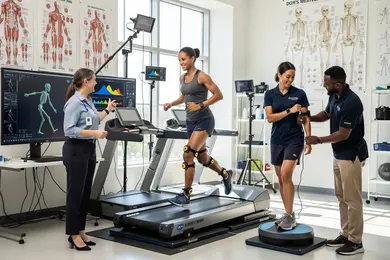
Online kinesiology programs focused on movement screening techniques attempt to replicate the hands-on nuances of functional assessment but face inherent constraints linked to remote delivery. Students engage with synchronous video demonstrations and interactive software that require recording and analyzing client movements, often supplemented by wearable sensor data or motion capture technology to quantify technique accuracy.
Realistically, proficiency hinges on students securing diverse clients or practicum sites, which remains a critical hurdle for building diagnostic confidence in remote settings.
These programs incorporate scenario-based assessments where students interpret movement abnormalities and propose corrective strategies tailored to specific environments such as rehabilitation or athletic training. This sharpens clinical reasoning beyond rote memorization, addressing employer priorities for graduates ready to navigate the complexity of real-world screening.
Live virtual practicums or collaborations with local providers are common, helping to bridge remote theoretical learning with applicable skill development.
Tradeoffs include variability in internet quality and device access, alongside inconsistent instructor feedback, all affecting learning fidelity. Despite such challenges, industry data suggest that remote-trained kinesiology professionals using functional movement screening report improved client retention and better outcomes in pain management and performance-indicating tangible workplace relevance when programs maintain rigorous standards.
Prospective students weighing an online kinesiology program should consider these operational realities against their career goals and existing resources. For those interested in expanding their healthcare credentials more broadly, exploring a degree in healthcare administration can offer complementary skills targeting leadership roles in health-focused organizations.
Which accreditation and program quality indicators matter for online kinesiology degrees?
National or regional accreditation from recognized U.S. bodies such as the Higher Learning Commission forms the baseline quality expectation for online kinesiology degree accreditation standards.
Beyond institutional recognition, programs require programmatic endorsements-like those from the Commission on Accreditation of Allied Health Education Programs (CAAHEP)-to validate curriculum rigor in movement screening and applied biomechanics. Employers increasingly demand candidates trained in evidence-based assessment methodologies, biomechanical analysis, and functional movement screening, as these capabilities directly impact workplace performance.
Students evaluating quality indicators for kinesiology programs in the US should prioritize curricula that integrate interactive simulations, virtual labs, or hybrid clinical experiences, as these translate to practical, job-ready skills. Programs lacking these applied components often hinder timely certification and entry into an evolving job market emphasizing hands-on expertise.
Graduates who align coursework with current industry standards, including faculty expertise in movement diagnostics, improve competitiveness in job fields like personal training, which the U.S. Bureau of Labor Statistics projects to grow by 13% with median salaries around $60,000. Additionally, logistical factors such as flexible clinical hour options and structured certification preparation significantly affect employability outcomes.
For professionals considering a pivot, evaluating pathways in conjunction with these criteria is crucial. Exploring related fields, such as a healthcare administration degree, may provide strategic alternatives that complement kinesiology skills and broaden career trajectories.
What courses and lab experiences cover movement screening in these kinesiology programs?
Movement screening techniques in online kinesiology courses rely heavily on integrating virtual labs with coursework to replicate practical skill development. Core subjects like biomechanics, functional anatomy, and musculoskeletal evaluation converge with specialized injury prevention protocols to train students remotely.
However, these programs' reliance on motion capture software and remote video assessments cannot fully substitute hands-on experience, which is critical for developing tactile proficiency.
Students often perform gait analysis or functional screening tests on household volunteers, submitting videos for faculty evaluation. This method cultivates the ability to analyze kinematic data and adjust techniques remotely, preparing them for telehealth and other digital-first work environments. Yet, practical lab training for movement screening in kinesiology programs varies considerably, with some programs requiring partnerships for in-person practicums to meet state licensing standards.
Logistically, students pursuing online kinesiology degrees must ensure access to reliable broadband and compatible motion analysis tools. Notably, balancing online coursework with in-person clinical internships enhances applied competencies, a strategic advantage in fields where employer expectations prioritize hands-on evaluation skills.
Tuition for online kinesiology bachelor's degrees averages about $410 per credit-approximately 20% less than on-campus costs-offering financial efficiency but often limiting direct instructor interaction. These tradeoffs affect readiness for careers in athletic training, ergonomic assessment, or physical therapy support, where confidence in complex movement screening is essential.
Prospective students interested in comparable healthcare advancement pathways might consult RN to BSN online programs for parallel models of cost-effective online learning.
How do online kinesiology degrees compare with campus programs for hands-on practice?
Online kinesiology degrees confront a tangible challenge: replicating the depth of hands-on training central to skill development in clinical and athletic roles. While theoretical knowledge transfers adequately through virtual platforms, the absence of supervised, physical interaction risks underpreparing students for workforce expectations, particularly in manual muscle testing, biomechanics assessment, and palpation techniques.
The adoption of the FMS Level 1 online certification by over 200 universities attempts to standardize movement screening competencies within remote curricula, offering one method to mitigate practical gaps.
However, campus-based programs maintain a definitive advantage by providing immediate access to labs, specialized equipment, and real-time instructor guidance-elements critical to honing nuanced physical assessment skills. For example, students targeting careers in rehabilitation or athletic training benefit substantially from repeated live subject interaction, which online programs cannot consistently replicate.
Online learners often must independently secure local internships or practicums to fulfill hands-on requirements, introducing logistical complexities that may delay graduation and vary in quality. Employers increasingly demand verified practical experience alongside theoretical grounding, rendering sole reliance on virtual simulations insufficient for many kinesiology positions.
Key factors in choosing between formats include:
- Ability to arrange and commit to off-campus practical training if enrolled online.
- Proximity to professional networks and facilities offering externships.
- Career orientation toward research/administration versus clinical or movement specialist roles.
Those focusing on clinical pathways should prioritize programs embedding supervised, in-person experiences. Conversely, candidates pursuing administrative or research-focused positions might leverage the flexibility of online study augmented by recognized certifications like the FMS Level 1 to maintain market relevance.
What admission requirements and prerequisites do online kinesiology programs typically expect?
Meeting admission requirements for online kinesiology programs involves more than holding a diploma or degree; it requires concrete evidence of foundational knowledge in biology, anatomy, and physiology, with some programs adding chemistry prerequisites.
Graduate applicants must typically present a relevant bachelor's degree and demonstrate competency through coursework or certifications. Programs enforcing a minimum GPA around 2.5 to 3.0 set a baseline for academic readiness that directly impacts student success and employability outcomes.
The integration of video-based motion analysis platforms in about 76% of university kinesiology online or hybrid programs represents a significant shift toward digital fluency. Employers expect graduates to competently interpret digital movement data remotely, a skill increasingly critical in occupational and clinical rehabilitation roles.
This technological pivot means students must secure reliable internet and often have access to high-definition video equipment, adding logistical and financial considerations when choosing programs.
Beyond technical aptitude, programs frequently require personal statements and letters of recommendation to assess alignment with kinesiology's applied focus. Background checks or health clearances may become mandatory, especially where internships are part of degree completion. Choosing a program without such experiential components may limit practical readiness in real-world job settings.
How long do online kinesiology degrees take and what do they usually cost?
Choosing an online kinesiology degree requires balancing program duration, cost, and the specific competencies employers seek in movement screening and assessment roles. While a traditional bachelor's spans about four years full-time, working adults often extend studies up to six years, potentially delaying advancement despite lower immediate costs. Conversely, accelerated formats allow faster workforce entry but usually come at a premium.
Associate degrees or certificates focusing on kinesiology fundamentals and movement screening can be completed in two years or less, appealing to those prioritizing speed over depth. However, these shorter programs may limit eligibility for advanced or specialized roles.
Tuition for fully online bachelor programs varies widely from $15,000 to $40,000, influenced by institution type and the inclusion of specialized labs or practicums. Hidden expenses such as textbooks and software, which add $1,000-$3,000 annually, must be factored into total education costs.
More than 60% of online kinesiology students today are working adults seeking to pivot into fitness assessment or coaching. For this demographic, flexibility and applied skill training are paramount, as employers increasingly demand evidence-based competencies rather than purely theoretical knowledge.
- Longer programs may delay earning potential but often provide comprehensive skill development.
- Accelerated pathways speed up entry into mid-level roles but at a higher financial cost.
- Financing options like employer tuition reimbursement can ease upfront burden but require careful evaluation of career timelines.
What careers rely on movement screening training from a kinesiology degree?
Employers in clinical and sports environments rely heavily on movement screening competencies acquired through a kinesiology degree to mitigate injury risks and optimize performance. A physical therapist, for instance, uses biomechanical assessments to customize rehab protocols, whereas a strength and conditioning coach depends on movement data to prevent athlete overtraining.
These real-world applications demonstrate that practical screening skills directly influence job effectiveness and client outcomes.
Professionals certified with Functional Movement Systems (FMS) Level 1 and 2 are 2.5 times more likely to pursue further specialization in corrective exercise or strength training within two years, highlighting how movement screening serves as a strategic foundation rather than a terminal skill. However, access to current screening technologies, ongoing certification, and applied proficiency remain barriers for many graduates aiming to meet employer expectations.
Employers prioritize candidates who integrate objective movement analysis with evidence-based program design, especially in high-injury settings like sports clinics or occupational health. Students who select kinesiology programs featuring extensive movement screening combined with hands-on clinical experience shorten the time between graduation and effective workplace contribution.
Without this focus, individuals often face slower career progression and limited roles confined to general fitness instruction.
Students and professionals planning a pivot or advancement should assess how a kinesiology curriculum aligns with these practical demands rather than theoretical knowledge alone. The long-term employability and career trajectory hinge on demonstrated screening competence within applied workflows, reflecting tangible value in the allied health and fitness labor markets.
What are typical salaries and job outlook for roles using movement screening expertise?
Career outcomes in movement screening depend heavily on the depth of clinical education and credentialing beyond entry-level kinesiology. Athletic trainers focusing on movement quality assessment typically earn between $49,000 and $55,000 annually, with hospital or professional sports specialists reaching upwards of $65,000. Physical therapists who embed movement screening into rehabilitation commands of about $80,000, reflecting a higher licensure tier and broader clinical responsibility.
The labor market for these roles is expanding at 15% growth over a decade, notably outstripping average occupational projections. This demand stems largely from employer prioritization of movement screening skills in injury prevention and performance optimization across collegiate athletics, physical rehabilitation, and corporate wellness sectors.
Key hiring differentiators include precise risk identification through screening that informs customized intervention strategies. However, candidates must navigate tradeoffs: advanced credentials like Board of Certification (BOC) for athletic trainers or professional licenses for physical therapists are often prerequisites for sizeable salary and upward mobility. Without these, screening skills alone yield limited progression.
Employers expect effective communication of screening results within multidisciplinary teams and increasingly require familiarity with billing codes and insurance processes as part of revenue cycle considerations. Realistically, an integrative skill set combining hands-on assessment with data interpretation and credential alignment shapes long-term career potential in kinesiology-related disciplines.
How do certifications like FMS or CSCS align with online kinesiology study?
Employers in fields such as sports performance and rehabilitation increasingly expect kinesiology graduates to pair theoretical knowledge from online degrees with hands-on certifications like FMS (Functional Movement Screen) and CSCS (Certified Strength and Conditioning Specialist). More than 70% of top online kinesiology programs now integrate specialized content on functional movement assessment or biomechanics labs, but these digital modules alone rarely suffice for real-world application.
For example, a graduate aiming to become a strength coach within collegiate athletics typically must obtain the CSCS credential to verify competencies in program design and movement evaluation that go beyond classroom theory. Conversely, FMS certification addresses clinical and rehabilitation needs by developing applied skills to recognize dysfunctional movement patterns. Without such certifications, candidates may face limitations demonstrating practical proficiency.
This creates a common challenge: aligning online curricula with the experiential requirements of recognized credentials often demands additional investment in workshops, internships, or local lab access. Students should ensure their kinesiology program quantitatively covers movement screening and plan for certification acquisition post-degree to meet employer expectations in biomechanical assessment contexts.
The dual focus on coursework and certification reflects employer priorities for reliability in standardized assessments under practical conditions. Failure to bridge this divide can hinder employability, making the pursuit of certifications a critical component of an effective career strategy.
Other Things You Should Know About Kinesiology
Yes. Even with strong virtual simulation tools, employers expect graduates to demonstrate practical, hands-on proficiency in movement screening. Programs that offer hybrid models, in-person practicums, or partnerships with local clinics provide a significant advantage. When choosing an online program, prioritize those with structured, supervised in-person components to ensure marketable skills and smoother job transitions.
Online kinesiology degrees require managing both rigorous theoretical coursework and skill-intensive labs or practicums. Students must balance asynchronous learning with scheduled live sessions, plus arrange for local practical experiences, which adds logistical complexity. Evaluating program flexibility and support services is critical to avoid burnout and ensure consistent progress toward skill mastery.
Specializing in movement screening narrows some career paths but strengthens opportunities in rehabilitation, athletic training, and ergonomic assessment sectors. However, this focus may reduce eligibility for broader roles in health promotion or fitness management that require a wider kinesiology foundation. Students should assess if their career goals align with movement screening's niche before committing to a specialized program.
References
- Kinesiology Program Quality Indicators | Washburn University https://www.washburn.edu/academics/college-schools/arts-sciences/kinesiology/quality-indicators.html
- Corban University Launches New Fully Online Master of Science in Kinesiology Program | Corban University https://www.corban.edu/corban-master-science-kinesiology-program/
- How to choose what certifications are right for you https://engineeredbodies.ca/2016/10/23/how-to-choose-what-certifications-are-right-for-you/
- Best Exercise Science Careers - Let's Find out! https://www.ptpioneer.com/personal-training/exercise-science-careers/
- Fundamentals of Kinesiology | Free Online Course | Alison https://alison.com/course/fundamentals-of-kinesiology
- Online Kinesiology Degree Programs: Review Top Schools https://www.edumed.org/online-schools/kinesiology-degrees/
- Job analysis specialists: Salary, career path, job outlook, education and more - RaiseMe https://www.raise.me/careers/business-and-financial/compensation-benefits-and-job-analysis-specialists/job-analysis-specialists/
- Bachelor's in Kinesiology Program Online | Montreat College https://www.montreat.edu/online/kinesiology/
- Top 20 Careers With a Master’s in Exercise Science | PLNU https://www.pointloma.edu/resources/health-sciences/top-20-careers-masters-exercise-science