2027 Online Kinesiology Degrees With Strong Biomechanics Training

Co-Founder and Chief Data Scientist
Balancing rigorous biomechanics training with flexible scheduling remains a critical hurdle for aspiring kinesiologists seeking to advance in clinical, research, or athletic settings. Traditional programs often demand in-person attendance that conflicts with working adults' schedules, limiting access precisely when demand for practical, biomechanical expertise grows.
The National Center for Education Statistics reports a 12% increase in adult enrollment in fully online health science degrees over the past two years, spotlighting shifting preferences for remote learning that accommodates career mobility and ongoing employment. This article examines online kinesiology programs with robust biomechanics curricula that align learning flexibility with workforce expectations, helping professionals navigate education choices with immediate career impact.
Key Things You Should Know
- Only 24% of U.S. kinesiology graduates with biomechanics emphasis gain employment in specialized clinical or research roles within 12 months, per 2024 Bureau of Labor Statistics, highlighting significant credential-value tradeoffs compared to broader health sciences.
- Healthcare and sports performance employers prioritize hands-on biomechanics skills combined with digital motion analysis, constraining purely theoretical online programs and prompting demand for hybrid learning models, according to a 2024 National Occupational Report.
- Programs costing above $30,000 on average increase access barriers for working professionals, extending time-to-completion due to part-time pacing; this delays workforce reentry and depresses immediate income gains, per 2024 NCES data.
What is an online kinesiology degree with a biomechanics focus, and who is it best for?
An online kinesiology degree with biomechanics specialization offers distinct advantages for professionals who need flexibility but must also navigate practical skill acquisition constraints. For example, a physical therapy assistant advancing toward exercise physiology or a strength and conditioning coach seeking deeper biomechanics training will find targeted knowledge in digital coursework combined with applied data analysis.
However, these best online kinesiology courses focused on biomechanics training often depend on virtual labs or hybrid options; absence of hands-on practice can delay readiness for roles requiring direct biomechanical testing capabilities.
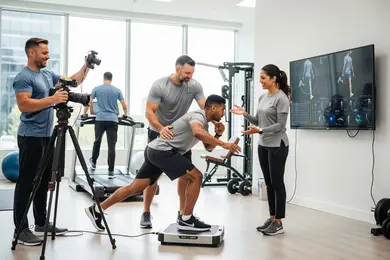
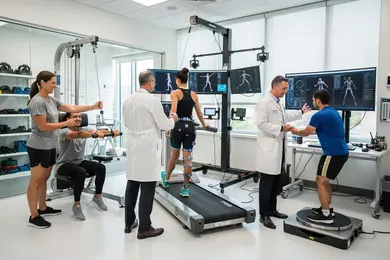
The curriculum integrates movement mechanics with digital tools such as motion capture and force analysis, enabling students to evaluate joint angles and muscle activation patterns critical to clinical, sports, and ergonomic employers. Yet students should weigh whether remote programs provide sufficient supervised internships or partnerships facilitating in-person experience, since some roles demand licensure or certification tied to accredited experiential components.
Labor market data projects a 10% growth for exercise physiologists over a decade, signaling robust demand for professionals conversant with biomechanical insights in healthcare and wellness fields. Applicants lacking local lab access must prioritize programs with regional clinical placements or virtual simulation to minimize skill gaps and employer pushback.
Given these factors, those considering online kinesiology degree programs with biomechanics specialization must balance convenience against long-term competency, lining up educational choices with career pivot goals. For a broader comparison of delivery modes and program quality, consult online exercise science degrees.
How do online kinesiology programs compare with campus-based options for biomechanics training?
Online kinesiology degree programs with comprehensive biomechanics training can approximate the theoretical rigor of campus-based curricula but often lack critical hands-on components that directly impact skill readiness.
While virtual labs and motion analysis software help simulate practical work, they cannot fully substitute the tactile experience gained through access to specialized biomechanics labs, which remains a key differentiator for campus versus online kinesiology programs for biomechanics specialization.
Employers hiring exercise physiologists-whose median wage stood at $58,160 in 2024 according to the U.S. Bureau of Labor Statistics-prioritize demonstrated practical skills and internship experience. Campus programs typically embed these opportunities, offering direct mentorship and nuanced motor assessment techniques needed for clinical or athletic roles.
Online students, by contrast, must be proactive in securing local internships or lab experience to reach comparable competencies, which can delay workforce integration.
Decision factors include:
- Working professionals gain scheduling flexibility from online programs but face increased pressure to independently source applied learning.
- Candidates aiming for hospital or research-driven roles should consider campus pathways for richer hands-on training and networking access.
- Online pathways reduce geographic and financial barriers yet require strategic planning to meet employer expectations around practical biomechanics skills.
This tradeoff means that online kinesiology biomechanics training demands careful integration of external experience to avoid limiting eligibility for competitive, skill-sensitive positions. For those considering further credentials, such as healthcare PhD programs online, understanding these nuances ensures alignment with long-term career goals and real workforce demands.
Explore in-depth options and program insights at healthcare PhD programs online.
Which types of online kinesiology degrees offer the strongest biomechanics curriculum?
Online kinesiology degree programs with biomechanics specialization demand a curriculum grounded in extensive human anatomy, physiology, and applied biomechanics, setting exercise science tracks apart with their analytical rigor. Practical engagement through motion capture software and force plate data integration equips students with skills directly applicable to roles such as physical therapy aides or athletic trainers, where precise biomechanical assessment is essential.
This contrasts with general health or wellness-focused kinesiology paths that largely provide introductory biomechanics, sufficient for fitness instructing but lacking in the depth required for technical biomechanical roles.
The best online kinesiology courses for biomechanics training therefore tend to incorporate lab-simulated or hybrid practical sessions, which not only bolster transferable skills but also mitigate challenges around credit transfers and program completion timelines often encountered in more theoretical tracks. Graduates prioritizing clinical or sports technology careers should weigh these factors carefully against the relatively lighter prerequisites of generalist programs.
Considering the U.S. Bureau of Labor Statistics' projection of 13% job growth for fitness trainers and instructors through 2032, those focused on biomechanics benefit from enhanced employability in both performance and rehabilitation sectors. Prospective students evaluating pathways would also benefit from resources like an affordable online master's in healthcare administration to broaden administrative skill sets complementing their technical expertise.
What biomechanics courses and lab experiences can you expect in an online kinesiology program?
Online kinesiology programs with biomechanics lab courses stress applied practice through virtual labs simulating real equipment such as motion capture software and force plate analysis. Students engage in intricate assessments involving joint angles and muscle force, critical for evaluating human movement in rehabilitation or athletic training contexts.
Yet, the lack of physical lab access creates a training gap that some employers note, which necessitates hybrid learning opportunities or internships to develop hands-on proficiency.
Programs emphasize software platforms like Vicon or Qualisys to mimic practical biomechanics analysis, a key competency for roles in sports science, physical therapy, and occupational health. This blend of theoretical knowledge and case study application helps students interpret 3D motion data to pinpoint inefficient movement patterns, a skill highly relevant for reducing injury risks in clients.
The labor market reflects these demands: the U.S. Bureau of Labor Statistics projects over 45,000 job openings for fitness trainers and instructors from 2022 to 2032, highlighting the importance of biomechanics training and practical lab experiences in online kinesiology degrees. Candidates who demonstrate practical biomechanical analysis and collaborative virtual lab experience align more closely with employer expectations in clinical or athletic settings.
Prospective students should also consider program variability, comparing offerings carefully—see, for example, insights on WGU vs Chamberlain—to verify the balance between accessible content, lab simulation quality, and employer alignment for a realistic career pivot or advancement in kinesiology.
How can you verify that an online kinesiology program is properly accredited and respected?
Employers in biomechanics-intensive roles prioritize candidates with verified hands-on experience and credentials from properly accredited kinesiology programs. Regional accreditation by agencies recognized by the U.S. Department of Education-such as the Higher Learning Commission or Middle States Commission-is essential to assure fundamental academic standards.
Beyond institutional accreditation, endorsement from specialized bodies like the Commission on Accreditation of Allied Health Education Programs (CAAHEP) or the National Strength and Conditioning Association (NSCA) signals rigorous training in biomechanics and applied kinesiology.
Programs lacking such accreditation often focus heavily on theory without sufficient lab or motion analysis components, limiting graduate competitiveness in clinical or sports science settings. For example, physical rehabilitation clinics require applicants with documented biomechanics lab work, which is typically detailed only in accredited program curricula.
State licensing requirements further influence program selection, as licensure-qualifying pathways demand specific credit hours and curriculum content that accredited programs explicitly disclose. Prospective students should also consider financial feasibility; a mid-range cost model like Texas Tech Online's rate of $415-$500 per credit hour provides a useful benchmark for balancing tuition affordability with institutional credibility.
Finally, use resources such as the U.S. Department of Education's accredited institution database to confirm official accreditation. Without this transparency, degrees risk diminished employer recognition, credit transfer difficulties, and loss of access to federal financial aid.
What are the typical admission requirements for online kinesiology degrees emphasizing biomechanics?
Admission into online kinesiology programs focusing on biomechanics hinges on more than academic credentials; it requires proven capacity to handle technically rigorous content and hands-on application. Candidates typically need a bachelor's degree in kinesiology, exercise science, or related disciplines with a minimum 3.0 GPA.
Beyond grades, programs emphasize evidence of relevant work or research experience in biomechanics or applied physiology, crucial for mastering human movement analysis and lab-based techniques.
Standardized tests like the GRE are still requested by many programs, though there is a gradual shift toward waivers to broaden access. A carefully crafted statement of purpose that aligns career objectives with biomechanics domains such as rehabilitation science or ergonomics offers an important filter for admissions committees evaluating practical fit.
Real-world accessibility to biomechanical labs remains a significant barrier, especially for remote learners without local partnerships. For example, a physical therapy professional seeking to leverage research skills must prioritize programs with assured remote or nearby lab opportunities, as this directly impacts employability in data-driven roles.
Cost considerations also influence choices, with institutions like the University of Florida offering a 30-credit online M.S. in Applied Physiology and Kinesiology at $17,572.50, representing a comparatively efficient investment for those weighing tuition against expected outcomes.
How long do online kinesiology programs take, and what do they cost compared to campus options?
Online kinesiology graduate programs generally match the 1.5 to 3 years duration of traditional campus options but offer greater flexibility for working professionals to pursue studies part-time. Full-time online tracks often complete within 18 to 24 months, aligning with typical on-campus master's timelines. This pacing flexibility is critical for those balancing employment, though it can extend total completion time.
The financial impact extends beyond tuition. For example, Avila University's online M.S. in kinesiology charges $20,150 in total tuition, a figure frequently lower than comparable on-campus degrees once housing, commuting, and ancillary campus fees are factored in. This cost differential is significant for students needing to manage upfront investment while minimizing debt.
Tradeoffs involve access to specialized lab resources or biomechanical equipment that some campus programs provide more readily. Students focused on biomechanics must examine how online curricula incorporate hands-on training, whether through local partnerships or hybrid formats, as employers in physical therapy and rehabilitation increasingly expect practical experience.
The balance for prospective students boils down to evaluating:
- Duration flexibility against part-time extension.
- Clear tuition savings versus potential limitations in in-person networking.
- Extent of practical biomechanics exposure relevant to employer standards.
These considerations determine whether an online kinesiology degree is a strategic investment for accelerated, affordable career pivots within the evolving health and sports science fields.
What careers in biomechanics and human performance can you pursue with this online degree?
Biomeschanics expertise via an online kinesiology degree aligns with specific workforce demands in rehabilitation, sports, and occupational health, where applying movement science directly impacts injury prevention and therapy design.
Professional sports organizations exemplify these needs by employing biomechanics specialists to analyze athlete motion, requiring deep integration of data interpretation and applied physiology. This technical focus is a vital aspect that graduates must anticipate, particularly because clinical roles often mandate certification beyond the degree.
Proficiency in tools such as motion capture technology and musculoskeletal anatomy is essential for roles spanning from biomechanist to ergonomist and exercise physiologist. These positions diverge in setting and function: biomechanists contribute to R&D and medical device innovation, ergonomists focus on workplace injury reduction through consulting, and exercise physiologists emphasize personalized health programs in clinical or corporate environments.
Given the projected 10% growth through 2034 reported by the U.S. Bureau of Labor Statistics, demand for these professionals is substantial but hinges on hands-on experience.
Online programs must incorporate local practica or virtual labs to ensure skill transferability, a key criterion often overlooked by prospective students. Accelerated pathways, such as the University of Florida's M.S. in Applied Physiology and Kinesiology, offer faster credentialing options but require readiness for intensive study and often cannot fully replace in-person experience.
Strategic selection of an online kinesiology program emphasizes balancing credentialing timelines, practical experience acquisition, and disciplinary depth to meet varied employer expectations effectively.
What salary ranges and job outlook can kinesiology graduates with biomechanics training expect?
Graduates with biomechanics expertise entering the workforce in 2026 face nuanced salary realities shaped by specialization and sector. Starting pay generally ranges from $50,000 to $70,000, with mid-career salaries between $75,000 and $95,000. Those working in focused areas like ergonomic analysis or sports technology typically secure higher salaries due to technical demands, while academic or clinical research roles commence near $48,000 but grow with advanced credentials and publications.
Industry growth at 8% through 2032 outpaces many fields but varies by application: healthcare and sports science drive consistent demand, whereas manufacturing and prosthetics design experience volatility tied to innovation cycles and funding. This variability requires workers to update skills continuously to remain competitive.
Cost versus return remains a pivotal consideration. For example, an online B.S. in Kinesiology at Culver-Stockton College costs about $35,000 to $44,000 in tuition, depending on credit load. Prospective students must assess this investment against expected entry-level earnings, notably in regions or sectors with lower wage scales.
To enhance employability, candidates should prioritize competencies in data analytics, motion-capture technology, and interdisciplinary areas linking biomechanics with health informatics or sports performance. Engaging with professional associations also improves access to higher-paying R&D and rehabilitation opportunities.
How should you choose the best online kinesiology program for your biomechanics career goals?
Employers in rehabilitation clinics, sports science, and ergonomic consulting prioritize kinesiology graduates with direct biomechanical skills over those with solely theoretical knowledge. A kinesiology program's value hinges on its depth of applied biomechanics training and access to hands-on labs or internships involving motion capture technologies, musculoskeletal modeling, and strength testing protocols-skills that drive hiring decisions.
Graduates who lack this practical exposure face significant hurdles entering biomechanics-focused roles despite growing job demand.
For instance, a working physical therapy professional requires part-time or asynchronous coursework plus local or virtual lab options to fulfill practicum requirements without interrupting employment. Without flexible designs tailored to these constraints, candidates risk delayed completion or inadequate skill development.
The University of North Dakota projects a 10% job increase in kinesiology careers from 2022 to 2032, but this growth primarily benefits those with specialized biomechanics competencies. Prospective students must scrutinize programs for explicit biomechanics curriculum mapping, measurable skill outcomes, and collaborative research or industry partnerships.
Accreditation by recognized kinesiology or exercise science bodies and transparent graduate employment data for biomechanics roles further validate a program's market relevance.
Neglecting these aspects can lead to investing in degrees that lack biomechanical rigor or employer recognition, limiting long-term career prospects.
Other Things You Should Know About Kinesiology
Yes, practical experience is critical because biomechanics relies on applying theory to real human movement and data interpretation. Many online programs include virtual labs or partnered local internships, but the availability and quality of these opportunities vary widely. Prospective students should prioritize programs with structured, verifiable hands-on components, as purely theoretical training limits employability in clinical, research, or sports performance roles.
An online kinesiology degree with biomechanics training in 2027 ensures practical skill application through virtual labs, simulation software, and mandatory in-person residencies. These elements are designed to mimic real-world biomechanics scenarios, providing students with hands-on experience necessary for mastering complex concepts in a virtual setting.
Most kinesiology programs, including those online, do not directly prepare students for clinical certification or licensing such as physical therapy or athletic training. This creates a tradeoff for students seeking immediate professional credentials. If certification is the goal, priority should be given to programs that explicitly align their curricula with certification prerequisites or offer clear pathways to accredited clinical training.
Employers increasingly accept online degrees if the program's accreditation and coursework rigor meet industry standards, but biases remain in more traditional or clinical settings. Graduates from programs with strong practical components and recognized accreditation demonstrate better employment prospects. For career advancement in biomechanics research or applied human performance, students should prioritize programs with well-documented employer networks and alumni outcomes.
References
- What Is College Accreditation? How to Check If a School Is Legit https://abound.college/finishcollege/advice/accreditation-why-is-it-so-important/
- Online Bachelor of Science in Kinesiology https://calbaptist.edu/academics/programs/online-bachelor-of-science-kinesiology/
- Are Online Degrees Accredited? How to Identify Quality Distance Learning Programs https://www.umassglobal.edu/blog-news/online-degrees-accredited-identify-quality-distance-learning-programs
- What Can You Do With a Kinesiology Major? | USAHS https://www.usa.edu/blog/what-can-you-do-with-a-kinesiology-major/
- Kinesiology Accreditation https://www.ccupeka.org/accreditation/kinesiology/
- Online Kinesiology Degree Programs: Review Top Schools https://www.edumed.org/online-schools/kinesiology-degrees/
- Bachelor's in Kinesiology Program Online | Montreat College https://www.montreat.edu/online/kinesiology/
- What is kinesiology and why should you study it? https://brive.com/blog/studies/kinesiology-degree/
- Bachelor's Degree in Human Performance https://www.utpb.edu/academics/programs/human-performance/bs-human-performance
- Kinesiology and Exercise Science Salaries https://teach.com/online-ed/healthcare-degrees/online-bachelors-kinesiology-exercise-science/how-much-do-kinesiologists-make/