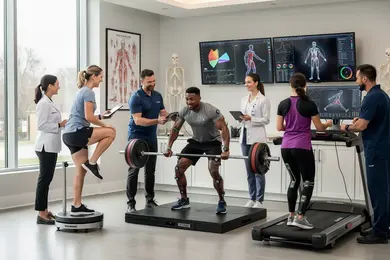
2027 Online Kinesiology Degrees With Movement Science Career Alignment

Co-Founder and Chief Data Scientist
Choosing an online kinesiology degree while balancing a current job and family responsibilities remains a critical hurdle for many professionals aiming to enter or advance in movement science careers. Nearly 60% of adult learners pursuing higher education now seek flexible, asynchronous formats, according to the National Center for Education Statistics, reflecting systemic shifts in accessibility and time management demands.
Yet, program rigor, clinical training alignment, and employer recognition vary widely, complicating decisions. Many applicants struggle to identify options that truly accommodate their schedules without sacrificing essential practical exposure. This article examines how contemporary online kinesiology degrees match movement science career requirements and guides prospective students through the nuances that impact long-term success.
Key Things You Should Know
- Online kinesiology degrees in 2026 face a credentialing tradeoff: 62% of employers prefer candidates with in-person clinical internships, limiting fully remote graduates' immediate job prospects, per National Association of Kinesiology Employers data.
- The growing integration of movement science into rehabilitation sectors demands hybrid skill sets; 68% of rehabs prioritize applicants combining kinesiology theory with hands-on lab experience, reshaping hiring criteria nationwide.
- Program costs vary widely, with total expenses ranging from $15,000 to $45,000; students postponing degree completion risk outdated curriculum in a field evolving 15% faster than standard healthcare disciplines, according to the Bureau of Labor Statistics.
What is an online kinesiology degree with a movement science focus, and who is it best for?
An online kinesiology degree program with a movement science specialization provides targeted skill sets in biomechanics, motor control, and physiology tailored for roles demanding applied physical function expertise. This pathway suits professionals, such as athletic trainers, seeking to enhance movement analysis skills without interrupting their active careers.
For instance, a working trainer can integrate evidence-based strategies immediately into practice, balancing ongoing employment with education.
Such programs emphasize practical applications validated by scientific principles, with components like virtual labs, case studies, and internships. Compared to generic kinesiology curricula, the movement science focus aligns with employer demands for clinical or fitness professionals skilled in injury prevention and motor function assessment.
The best candidates for online kinesiology and movement science degrees typically navigate challenges tied to securing local practicum placements, vital for certifications requiring hands-on experience. Program flexibility hinges on this access, which often represents a critical roadblock for remote learners. Employers expect graduates to demonstrate competence in both theoretical understanding and hands-on intervention techniques.
Financially, graduates in kinesiology and exercise science see stable market conditions, with a median annual salary around $60,000 and an unemployment rate near three percent, reinforcing consistent demand.
Prospective students should carefully evaluate these factors when considering an online degree in exercise science to ensure that curriculum and practicum elements realistically support workforce readiness.
How do online kinesiology programs compare to campus-based options for movement science students?
Online kinesiology degree programs versus campus-based programs present distinct challenges that affect skill acquisition and employability in movement science careers. Campus programs integrate supervised labs, faculty guidance, and in-person internships, enabling immediate practical learning essential for roles like exercise physiologists or strength coaches.
Online programs, while theoretical equivalents, often require students to independently secure local practicum placements, potentially delaying hands-on experience and limiting access to employer networks.
Employers prioritize demonstrable practical competencies alongside foundational knowledge. The projected 10-14% job growth in kinesiology-related fields through the mid-2030s increases competition for candidates with verified skills and professional connections typically fostered by campus cohorts and career services.
Online kinesiology degrees offer flexible scheduling and avoid relocation costs, making them viable for professionals balancing work and education. However, this flexibility demands greater self-direction to meet clinical requirements and build relevant networks without campus-based support.
Prospective students should evaluate local internship availability, program support for placements, and employer recognition in their target labor market. Direct inquiries to regional employers about credential preferences and practical experience obligations clarify which pathway aligns better with specific career goals in movement science.
For those considering related nursing pathways, exploring what is the easiest RN to BSN online program may offer insights into the practical balancing of online education and clinical experience requirements.
Which accreditation and program quality standards matter most for online kinesiology degrees?
Accreditation is the primary factor differentiating credible online kinesiology programs from less rigorous options, affecting both employer perceptions and eligibility for certifications. Regional or national accreditation from bodies approved by the U.S. Department of Education ensures programs maintain curriculum rigor, employ qualified faculty, and sustain institutional stability.
For students targeting specific concentrations, such as movement science, alignment with standards like the Commission on Accreditation of Allied Health Education Programs (CAAHEP) is a practical advantage, confirming courses cover essential anatomy, biomechanics, and exercise physiology relevant to workforce expectations. This emphasis on accreditation standards is a key component of online kinesiology degree accreditation standards evaluations.
Beyond accreditation, the integration of applied learning-virtual labs or structured internships-directly influences employability, particularly in clinical fields such as physical therapy assistance. Some remote programs underdeliver on hands-on practicums, presenting tangible risks when evaluating the quality assurance for online kinesiology programs. Students must proactively assess whether a curriculum offers supervised in-person experiences or alternative verifiable practical training.
Cost remains an important, but often nuanced, consideration. The average annual tuition for an online bachelor's in kinesiology is around $10,467, approximately $2,250 less than traditional on-campus routes. However, savings can be offset by additional expenses for certifications or supplemental in-person training. This tradeoff demonstrates why employer hiring practices increasingly prioritize accredited credentials in conjunction with documented experience over mere degree completion.
Those comparing healthcare programs may find value reviewing healthcare administration online options as well, given overlapping competencies and cost factors across allied health fields.
What concentrations and movement science specializations are available in online kinesiology programs?
Selecting a concentration in an online kinesiology program directly shapes employability and professional readiness by aligning skills with specific labor market demands. Movement science specializations in online kinesiology degrees like exercise physiology, biomechanics, and motor control target distinct roles-from clinical fitness assessment to sports technology development or rehabilitative therapy.
For instance, biomechanics expertise is crucial for positions involving mechanical analysis in physical therapy research, while motor control specializations are increasingly sought in rehabilitation or adaptive physical activity sectors where neural-muscular coordination knowledge improves patient outcomes.
Programs emphasizing community health kinesiology or behavioral sciences suit public health or wellness coaching careers, which rely less on technical proficiency and more on population-level interventions.
Employers now prioritize candidates with domain-specific expertise over generalists, especially in emerging subfields such as wearable tech analysis or injury prevention science. This practical distinction matters for students evaluating online kinesiology program movement science concentrations in relation to workforce relevance.
Logistical factors also affect specialization choice, including the availability of clinical placements and mentorship critical to licensure requirements in many states. Working professionals benefit from programs offering flexible practicum options adapted to local healthcare or fitness facilities, easing the challenge of gaining hands-on experience without relocation.
Economic considerations reflect the return on investment: Concordia University Chicago's 2025 analysis shows average annual tuition varies from $16,808 public to $30,988 private, with graduates recovering costs within 3-5 years. Choosing concentrations connected to stable salary trajectories is therefore essential. For related healthcare pathways, RN to BSN online programs provide a comparative example of balancing cost and career outcomes.
What courses and skills are typically included in an online kinesiology curriculum?
Choosing an online kinesiology program requires weighing the balance between foundational science and practical application, as employers prioritize candidates who demonstrate both theoretical understanding and functional skills. Core coursework in anatomy, biomechanics, and exercise physiology frames the biological basis of movement, but proficiency in movement analysis technologies like motion capture and wearable sensor data is increasingly essential for clinical or research roles.
Programs that integrate real-world scenarios-such as designing athlete-specific conditioning plans or injury prevention protocols-better prepare graduates for strength and conditioning, rehabilitation, or applied sports science careers. For instance, strength and conditioning specialists starting at approximately $68,089 can expect salary growth near $98,564 mid-career, a reflection of the value placed on applied expertise in enhancing athletic performance and reducing injury risk.
Key considerations for prospective students include access to practicum or internships, which often represent the line between academic knowledge and employability in a competitive labor market. Graduates lacking hands-on experience may find limited advancement despite strong theoretical backgrounds.
- Essential courses: anatomy, biomechanics, exercise physiology, motor control, statistics, research methods
- Applied skills: functional assessments, tailored conditioning programs, injury prevention
- Technical competence: motion capture software, wearable sensor interpretation
- Salary outlook: $68,089 entry-level to $98,564 mid-career in strength and conditioning roles
Careful program selection grounded in employer expectations and practical experience opportunities is crucial for those targeting sustainable careers in kinesiology fields.
What are the common admission requirements for online kinesiology bachelor's and master's programs?
Admission requirements for online kinesiology bachelor's programs typically center on foundational academic credentials but have tangible implications for student success and workforce readiness. Beyond a high school diploma and minimum GPA benchmarks-often between 2.5 and 3.0-applicants encounter expectations for prerequisite science coursework and often must submit personal statements and recommendation letters.
This filters for candidates with baseline scientific literacy and genuine exposure to physical education, which employers value given kinesiology's applied nature.
At the master's level, admission criteria sharpen around professional preparedness and academic capability, usually demanding a relevant bachelor's degree with a GPA near 3.0, practical experience, and sometimes GRE results. These requirements reflect employer preference for candidates who combine theory and applied skills, especially in specialized niches like clinical rehabilitation or wellness program design.
Applicants shifting careers face added challenges such as bridging knowledge gaps and handling the self-directed demands of remote clinical placements. Choosing a program aligned with one's real-world goals can markedly influence time-to-completion and employability, particularly where bachelor's degree holders dominate entry-level roles.
In this context, comprehension of program prerequisites and realistic evaluation of personal readiness become crucial to avoid costly delays or limited labor market returns.
How long do online kinesiology degrees take, and what do they cost to complete?
Choosing an online kinesiology degree involves weighing duration, cost, and program design against tangible career impact. Full-time programs generally span four years, but part-time paths-often necessary for working adults-can extend well beyond six years, affecting income flow and professional momentum. Transfer credits and practicum requirements add variability, shaping how quickly students gain applicable skills for the workforce.
Cost differentials reflect institutional type and residency: public universities typically charge $6,000 to $15,000 annually for in-state students, versus $20,000 to $40,000 or more at private or out-of-state institutions. Total tuition can range from $24,000 to $120,000, not counting extra fees for technology, textbooks, or certifications, all of which must be factored into financial planning.
Employment outcomes stress program quality over sticker price. For example, Oregon State University's online BS in Kinesiology graduates report median salaries near $61,000, signaling that accreditation and curriculum alignment with workforce demands influence earning potential more than program cost alone.
Individuals targeting swift career shifts might consider accelerated or competency-based options despite higher per-credit costs, while others balance extended timelines and lower term fees against their current job commitments. These trade-offs affect cash flow and work-life balance as much as final qualification.
Prospective students should critically assess how each program's length, cost structure, and outcome data integrate with their professional goals and financial realities.
What careers can a movement science-aligned kinesiology degree prepare you for?
Pursuing a movement science-aligned kinesiology degree often directs graduates into roles centered on optimizing human function through biomechanical insight and applied movement principles. Success in these fields hinges not only on theoretical knowledge but also on practical skillsets validated by clinical internships and certifications like CPR or Certified Strength and Conditioning Specialist.
For instance, an exercise physiologist uses muscle activation and energy expenditure data to tailor programs addressing chronic illnesses such as diabetes or heart disease, highlighting the blend of science and individualized care required.
Employment sectors vary from healthcare-supporting rehabilitation and injury prevention alongside licensed therapists-to corporate wellness, where kinesiology professionals reduce ergonomic risks impacting insurance costs and absenteeism. Sports science research roles demand proficiency with biomechanical technologies, such as motion capture, to refine athletic training and injury prevention protocols.
However, candidates must navigate state-specific licensure complexities and maintain continuing education to remain competitive. Online kinesiology programs, which show acceptance rates between mid-70% and mid-90%, are moderately selective, signaling a balance between accessibility and rigor. Employers consistently prioritize hands-on experience and industry-recognized certifications, underscoring the importance of aligning educational pathways with concrete workforce expectations.
What salary ranges and job outlook can kinesiology and movement science graduates expect?
Graduates with kinesiology and movement science degrees face a salary range heavily influenced by their sector and certifications, with entry-level roles near $40,000-$55,000 and specialized mid-career jobs reaching $85,000 annually.
Variations stem from employment settings and credentialing: for instance, clinical exercise physiologists or occupational therapists command higher pay due to additional licensure, while personal trainers' earnings fluctuate based on client retention and location, averaging around $50,000.
Employment growth projections of 13% through 2032 for personal trainers, driven by telehealth, remote coaching, and wellness apps, reshape workforce demands. Employers expect proficiency in virtual coaching tools and data-driven program design, highlighting the need for curricula that integrate these competencies. However, job stability and income security differ significantly between sectors.
Healthcare-focused kinesiology professionals typically find more stable, salaried positions but require licensure and may endure longer credentialing timelines. Fitness and wellness career paths offer flexible, often remote work but present variable income tied to commission and client engagement. Practical career decisions involve balancing these tradeoffs:
- Assessing the value of private certifications and digital engagement expertise
- Understanding licensure requirements for healthcare roles
- Weighing income stability against flexibility
Prospective students should critically evaluate program offerings for telehealth technologies, business skills, and real-world integration to navigate the evolving kinesiology job market effectively.
How can you choose a reputable online kinesiology program that fits your career goals?
Selecting an online kinesiology program demands precise alignment between curriculum and intended career outcomes, as different specialties require distinct expertise. For instance, a professional aiming for sports science roles must prioritize coursework in exercise physiology and biomechanics over broad kinesiology surveys to meet employer expectations effectively.
Graduates targeting clinical rehabilitation should similarly seek programs with application-focused content relevant to therapeutic environments.
Beyond curriculum, accreditation and professional affiliations serve as essential indicators of program legitimacy and industry acceptance. Candidates working full-time need to verify that program delivery balances asynchronous learning with synchronous labs or internships, since practical experience is not optional in kinesiology-related jobs. Without this balance, graduates may find their qualifications less competitive.
Financial and labor market considerations are equally critical. Concordia University Chicago's 2025 ROI analysis reveals typical expenses near $87,000, reduced to about $47,000 after aid, with mid-career earnings exceeding $70,000. This nuanced data reflects the investment-risk dynamic faced by students evaluating long-term outcomes rather than surface-level cost figures.
Prospective students should also scrutinize how programs support certification requirements and state licensure pathways specific to their career goals. Additionally, effective alumni networks and employer partnerships often translate into tangible internship and employment opportunities, which can be decisive for navigating a crowded kinesiology job market.
Other Things You Should Know About Kinesiology
Hands-on lab work is a critical component in kinesiology education because employers expect graduates to demonstrate practical skills with human movement analysis and assessment tools. Most online programs must incorporate in-person labs or internships, either through local partnerships or occasional campus visits, to meet accreditation and workforce readiness standards.
Prospective students should prioritize programs with clearly defined and accessible hands-on components to avoid gaps in applied experience that could hinder employability.
Online kinesiology programs often offer asynchronous coursework, but lab schedules and internships can require fixed time commitments, limiting full flexibility. Students with full-time jobs must evaluate programs by the predictability of their in-person requirements and the availability of evening or weekend options. Prioritizing programs with comprehensive online simulations and flexible practicum arrangements can reduce conflicts and support sustained academic progress while working.
In 2027, most online kinesiology degrees align coursework with movement science careers but may not require specific certifications. While certifications can enhance resumes, focusing on comprehensive programs that include experiential learning or virtual labs can ensure graduates gain practical skills relevant to their career paths in movement science.
Employer acceptance of online kinesiology degrees varies, often depending on program reputation and clinical training quality rather than delivery mode alone. Employers prioritize graduates' practical competencies and verified experience over whether coursework was completed online. Candidates should seek programs with strong employer connections and demonstrable experiential components to overcome any bias against online education in movement science-related roles.
References
- 2026 Best Online Kinesiology Degrees https://www.onlineu.com/degrees/kinesiology
- What Can You Do with a Kinesiology Degree? https://www.nec.edu/news/what-can-you-do-with-kinesiology-degree
- What is kinesiology and why should you study it? https://brive.com/blog/studies/kinesiology-degree/
- Bachelor's Degree in Kinesiology | UT San Antonio | Undergraduate Program in Kinesiology | Earn Your Degree (MS) in Kinesiology https://future.utsa.edu/programs/undergraduate/kinesiology/
- Best Online Kinesiology Degree Programs, Updated for 2026 https://www.kinesiologydegrees.org/programs/online
- Kinesiology Program Quality Indicators | Washburn University https://www.washburn.edu/academics/college-schools/arts-sciences/kinesiology/quality-indicators.html
- Online Bachelor’s in Kinesiology and Exercise Science Programs https://teach.com/online-ed/healthcare-degrees/online-bachelors-kinesiology-exercise-science/
- Kinesiology Online Master's: See & Compare Top Programs https://www.edumed.org/online-schools/kinesiology-degrees/masters/