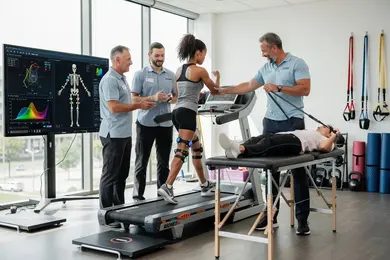
2027 Online Kinesiology Degrees With Exercise Science Career Alignment

Co-Founder and Chief Data Scientist
Professionals seeking to transition into exercise science often confront the challenge of balancing career advancement with ongoing work and personal commitments. The rigidity of traditional programs imposes barriers on timely degree completion, hindering critical workforce mobility in a sector projected to grow 10% by 2032, according to the U. S. Bureau of Labor Statistics.
This growth intensifies competition, making program flexibility and relevant curriculum alignment essential factors for employability. Moreover, the rise of adult learners enrolling online-now over 40% of total higher education enrollments per NCES data-reflects a systemic shift toward accessible education models tailored for working professionals.
This article evaluates online kinesiology degrees that align with exercise science careers, focusing on program structure and career outcomes to guide informed decisions for strategic advancement.
Key Things You Should Know
- Online kinesiology degrees in 2026 present a cost-efficiency tradeoff: programs average $18,000 tuition but often omit critical clinical internships, leading to delayed certification eligibility and extended workforce entry.
- Employers prioritize candidates with accredited exercise science clinical hours; lack of verified practical experience from many online degrees narrows job placement rates by up to 22%, based on 2024 labor market surveys.
- Program availability peaks unevenly-most accelerated tracks require 24 months minimum, restricting mid-career professionals' pivot timelines amid rising demand projected at 11% growth through 2032 by the Bureau of Labor Statistics.
What is an online kinesiology degree with an exercise science focus, and who is it best for?
Choosing an online kinesiology degree program with an exercise science focus demands careful consideration of how the curriculum aligns with specific career pathways in health and fitness. These programs prioritize scientific rigor in human movement, physiology, and biomechanics, balancing theoretical foundations with applied skills like injury prevention and chronic disease management.
The practical challenge lies in replicating hands-on training remotely through virtual labs or local internships, which are critical for employer-expected competencies in clinical and corporate wellness environments.
A working adult, for example, seeking to move into cardiac rehabilitation benefits from specialized coursework tailored to cardiovascular health, allowing for immediate application in clinical exercise prescription.
Professionals targeting roles such as physical therapy assistants or health program coordinators will face scrutiny over program accreditation and quality of experiential learning, factors directly impacting eligibility for certifications like ACSM or NASM and long-term employability.
The median wage of approximately $71,000 for kinesiology and exercise science graduates confirms reasonable financial returns but underscores the value of selecting programs with robust practicum opportunities. Success in these online kinesiology degree programs with exercise science careers demands not only discipline and digital communication skills but often resourcefulness in securing suitable local partnerships for clinical hours.
Students evaluating options should also compare interdisciplinary degree choices when flexibility is paramount; for instance, those interested in nutrition might explore nutrition school online programs as an alternative complement to exercise science knowledge.
How do online kinesiology and exercise science degrees compare to on-campus programs?
The decision between online kinesiology degree programs versus traditional on-campus kinesiology programs in North America hinges on how well students can handle the distinct challenges in experiential learning and professional networking.
On-campus programs embed supervised exercise testing, biomechanics labs, and peer collaboration into their curricula, delivering immediate hands-on experience that employers in fitness and rehabilitation sectors highly value. By contrast, fully online kinesiology courses shift the responsibility to students to independently secure practicums or clinical internships, often complicating timely skill acquisition and potentially delaying workforce readiness.
These limitations translate into tangible career outcomes. Exercise science career outcomes from online kinesiology courses compared to campus-based education reveal a critical distinction: on-campus graduates benefit from integrated career services and employer networks that ease their transition into roles demanding clinical judgment and client interaction.
Meanwhile, online learners must demonstrate equivalent applied skills through self-directed internships to remain competitive in a market projecting 13% job growth for personal trainers and fitness professionals according to the U.S. Bureau of Labor Statistics.
Prospective students evaluating this pathway should weigh:
- The flexibility of remote learning against the logistical hurdles in securing practical experiences.
- The immediacy of peer and instructor collaboration available on campus versus a more isolated online environment.
- Access to employer connections and structured career support exclusive to many physical programs.
Those considering this field might also explore online RN programs for non nurses in Florida to compare flexible models in allied health education that balance theory and practice differently.
Are online kinesiology degrees respected and properly accredited for exercise science careers?
Online kinesiology degrees with proper accreditation for exercise science careers must meet rigorous standards including regional accreditation and approval by bodies such as the Commission on Accreditation of Allied Health Education Programs (CAAHEP) or the National Strength and Conditioning Association (NSCA).
Without this, graduates often face diminished recognition from employers and certification boards, especially for roles requiring licensure like physical therapy assistants or certified strength and conditioning specialists.
Employers prioritize measurable outcomes and program reputation over the delivery mode. For instance, Oregon State University's online BS in Kinesiology graduates achieve a median salary of $60,964, demonstrating that strong program alignment maximizes employment prospects.
Conversely, online kinesiology programs lacking transparent outcomes or employer connections risk producing graduates who struggle to compete against those from more established, campus-based programs. Students considering an online kinesiology program should verify accreditation, clinical practicums, and alignment with certification requirements before enrolling.
Practical training is essential for those targeting exercise physiology or rehabilitation careers, as online programs without integrated clinical placements often necessitate additional training, limiting immediate job opportunities. Employers increasingly rely on certifications or internships alongside degrees, making supplementary experience vital in some cases.
For students evaluating educational options, this means balancing flexible online pathways with verified program rigor and strong employment outcomes. A related example includes the broader market for health administration degrees, where affordability and credibility intersect; those interested in similar healthcare fields may explore a health administration degree to weigh alternatives.
What types of kinesiology and exercise science degrees can you earn fully online?
Fully online kinesiology and exercise science degrees primarily cater to learners balancing work or family commitments, but they come with important caveats affecting employability and practical skill acquisition. The most widely available is the bachelor of science in kinesiology or exercise science, which builds core competencies in human movement, biomechanics, and physiology through virtual labs and simulations.
However, students must navigate hybrid requirements like local internships to secure certifications, a critical factor given employer preference for hands-on experience.
Consider a working professional pivoting to corporate wellness: opting for an online program emphasizing occupational health and fitness management alongside accessible local practicum opportunities directly supports that career transition. Conversely, online master's degrees often serve clinical or leadership aspirants in sports medicine, yet these programs generally demand in-person clinical components that limit fully remote completion.
The average tuition for online bachelor's kinesiology degrees stands at $10,467 annually, roughly $2,247 less than traditional on-campus options. These savings, combined with reduced commuting and housing expenses, factor heavily into decision-making. Still, prospective students must weigh accreditation strength, practicum quality, and institutional reputation over cost alone.
Exercise science online degree programs with career focus frequently require balancing remote coursework with real-world experience, a tradeoff prospective students should assess meticulously to align educational outcomes with workforce demands.
For those comparing affordability alongside program structure, the cheapest fastest RN to BSN online pathway exemplifies the complexity of selecting online degrees that combine cost-effectiveness with rigorous credentials.
What courses and concentrations are typical in an online kinesiology program?
Online kinesiology programs often challenge students to bridge the gap between scientific theory and applied practice, a critical factor for employability in exercise science roles. Coursework typically includes human anatomy, physiology, biomechanics, and motor learning, forming a necessary foundation for accurate movement analysis in clinical, athletic, or rehabilitation contexts.
However, the lack of in-person labs or clinical placements in fully online formats can complicate the acquisition of hands-on skills, requiring students to pursue local internships or certification programs to remain competitive.
For example, aspiring athletic trainers must navigate mandatory practicum experiences that many online programs integrate but cannot fully deliver virtually. Employers value candidates who combine rigorous scientific knowledge with practical, real-world competencies, highlighting a key tradeoff in remote kinesiology education.
Regional workforce demands significantly influence program relevancy. Areas like San Antonio, TX; University, FL; and Bloomington, IN are strong kinesiology hubs offering concentrated graduate training aligned with local industry needs. Students outside these regions must seek programs with extensive national partnerships or robust virtual clinical networks to offset geographic limitations.
Course options frequently extend into specialized areas such as injury prevention, nutrition, rehabilitation science, leadership, and program development-each mapping to distinct career pathways. Understanding how these concentrations fit with occupational goals is essential, as kinesiology spans diverse roles from healthcare support to management, with differing expectations around credentials and applied skills.
What are the usual admission requirements for online kinesiology and exercise science programs?
Admission requirements for online kinesiology and exercise science programs typically demand a bachelor's degree from an accredited institution plus a minimum GPA around 2.5 to 3.0. Evaluators place significant weight on prerequisite coursework in anatomy, physiology, biology, and chemistry, with some programs still requiring GRE scores unless an applicant has relevant experience or advanced credentials such as ACSM certification.
This prerequisite rigor reflects employer expectations for both theoretical understanding and practical skills in healthcare, sports, and fitness sectors.
Applicants without foundational science background often face extended program timelines and increased tuition due to necessary preparatory courses. For working professionals pivoting careers, this means added financial and scheduling challenges, sometimes influencing whether to pursue a lower-cost program with longer duration or a higher-cost, accelerated option.
Programs usually request a personal statement and letters of recommendation to assess alignment with kinesiology competencies and professional motivation.
Online kinesiology master's program tuition ranges widely-per-credit costs can vary between $230 and $475-reflecting institutional selectivity and resources. Candidates must weigh upfront qualification demands and long-term program costs; entering a lower-cost school might necessitate extra coursework, delaying graduation, while premium programs demand stronger admission profiles but potentially shorten time to credential.
- Prerequisite coursework quality influences employability in practical kinesiology roles.
- Personal statements and references validate commitment beyond academic metrics.
- Cost variation links closely with program speed and complexity of entry requirements.
How long do online kinesiology degrees take, and what do they cost?
An online kinesiology degree's duration and cost require careful decision-making based on program level, delivery format, and career goals. Associate programs, usually two years, provide foundational knowledge for entry-level roles, while bachelor's degrees often span four years but may be shortened to three with credits or intensive study. Master's degrees, essential for specialized exercise science or strength and conditioning roles, typically demand 1.5 to 2 years full-time online study.
Tuition costs vary sharply: public in-state undergraduate options range from $6,000 to $15,000 annually, whereas private and out-of-state students pay between $20,000 and $45,000. Graduate studies can escalate to $15,000-$40,000 per year due to specialized coursework and practicum fees tied to certification preparation.
Choosing programs involves balancing affordability with essential experiential elements like supervised internships and laboratory access. Lower-cost paths may limit these opportunities, potentially slowing career growth. For strength and conditioning coaches, mid-career salaries average around $68,089, rising to $98,564 with advanced credentials and experience, demonstrating measurable ROI for investment in quality programs.
Working students should prioritize flexible scheduling and online resources to avoid extended completion times. Career changers targeting clinical or research positions must anticipate the need for graduate-level credentials beyond a basic kinesiology degree to meet employer expectations in exercise science.
What exercise science and kinesiology careers can you pursue with an online degree?
Online kinesiology degrees can position graduates for roles closely tied to exercise science and rehabilitation, but their immediate utility depends heavily on supplemental certifications and local clinical experience. For instance, working as an exercise physiologist in a cardiac rehab clinic requires both theoretical grounding and practical skills to tailor recovery programs effectively.
Common entry roles include strength and conditioning coach, physical therapy assistant, and occupational therapy aide, though many specialized allied health careers in physical therapy or athletic training necessitate graduate education or professional licenses beyond the bachelor's degree. Employers increasingly value candidates who combine academic knowledge with hands-on practicum experiences.
Graduates often find opportunities within healthcare, fitness centers, or community health settings, designing physical activity programs for diverse populations-from aging adults to athletes. Yet, a 3% unemployment rate (Concordia University Chicago 2025 degree ROI analysis) underlines a competitive but viable market with strong labor alignment.
For better career outcomes, students should prioritize programs offering pathways to certifications like ACSM or NASM and electives focusing on chronic disease prevention or sports performance analytics. Without recognized credentials or practical hours, opportunities often remain limited to entry-level fitness roles rather than specialized health professions.
What salary ranges and job outlook can graduates in kinesiology and exercise science expect?
Starting salaries for graduates with kinesiology and exercise science degrees generally range from $40,000 to $55,000 annually, influenced heavily by geographic location and industry sector. Those entering hospital or rehabilitation roles, such as exercise physiologists, typically earn toward the lower end, while positions in corporate wellness or higher education tend to command higher pay.
Mid-career professionals frequently see salaries between $70,000 and $85,000, reflecting experience, certifications, and workplace setting.
Job growth in exercise-related fields is projected at approximately 12% through 2032, outpacing the national average and reflecting sustained demand driven by preventive health priorities and chronic disease management.
Employers generally mandate at least a bachelor's degree paired with relevant certifications. Consequently, program cost and reputation are key considerations for prospective students. Online kinesiology degrees vary notably in tuition-from $11,760 at Oregon State University to $24,780 at Arizona State University Online-highlighting opportunities to balance quality and affordability.
Salary trajectories depend significantly on additional certifications or advanced degrees, especially for clinical or research roles. For example, an exercise physiologist employed by a metropolitan hospital can earn 20-30% more than a counterpart in smaller outpatient or community centers. This disparity underscores the importance of aligning program choices with targeted career goals and local labor market conditions to optimize long-term financial and professional stability.
How do online kinesiology programs support licensing, certification, and graduate school preparation?
Online kinesiology programs primarily serve individuals aiming for national certification and licensure, but they often face inherent limitations related to hands-on experience and supervised practice hours.
While coursework aligns closely with requirements for credentials like the Certified Exercise Physiologist (CEP) and ACSM's Certified Personal Trainer, remote learners must proactively arrange local internships or practicums to satisfy supervised experience mandates-a frequently underestimated hurdle.
The curriculum's inclusion of anatomy, biomechanics, exercise science, and research methods prepares students for graduate school prerequisites but also addresses employer expectations for candidates holding recognized certifications alongside degrees. Employers increasingly prioritize demonstrated competency through certifications that programs support with targeted exam preparation and continuing education.
For working professionals, asynchronous coursework combined with virtual labs offers flexibility but may not fully replace in-person training required in some states or by certain employers. The tradeoff between convenience and comprehensive skill acquisition means prospective students should evaluate how regional licensing requirements and job market demands align with program design.
Recent analyses forecast a 10-14% expansion in kinesiology-related preventive health roles, emphasizing the importance of credentials grounded in evidence-based practice. Graduates who navigate these practical constraints and secure both academic qualifications and applicable certifications position themselves more competitively for evolving employer needs.
Other Things You Should Know About Kinesiology
Online kinesiology programs offer flexibility but often demand rigorous self-discipline due to compressed course schedules and overlapping assignments. Working professionals must realistically assess their available time since many programs require 15-20 hours weekly beyond live sessions to engage with complex scientific content and project-based learning.
Selecting programs with asynchronous options and clearly outlined pacing allows for better integration with professional and personal commitments.
Not all online kinesiology degrees require internships or clinical placements, but those that do often provide a significant advantage in employer evaluation. Practical experience is a critical differentiator for exercise science roles, and completing an accredited internship can bridge gaps between online coursework and workplace readiness.
Students should prioritize programs with strong partnerships for local placements or virtual practicum options to enhance their resumes and networking opportunities.
Employers increasingly accept online kinesiology degrees if they come from accredited institutions and include applied learning components, but they scrutinize candidates for direct hands-on experience regardless of the delivery format.
Graduates without documented practical training may face limited entry-level job prospects or need supplementary certifications. Prioritizing programs with built-in experiential learning and transparent outcomes reporting improves competitiveness in the job market.
References
- Bachelor's Degree in Kinesiology | UT San Antonio | Undergraduate Program in Kinesiology | Earn Your Degree (MS) in Kinesiology https://future.utsa.edu/programs/undergraduate/kinesiology/
- Online Exercise Science Degrees: Top School Review https://www.edumed.org/online-schools/exercise-science-degrees/
- Bachelor's in Kinesiology Program Online | Montreat College https://www.montreat.edu/online/kinesiology/
- 2026 Best Online Exercise Science Degrees https://www.onlineu.com/degrees/exercise-science
- Kinesiology and Exercise Science Careers Guide https://teach.com/online-ed/healthcare-degrees/online-bachelors-kinesiology-exercise-science/career-outlook/
- Best Online Kinesiology Degree Programs, Updated for 2026 https://www.kinesiologydegrees.org/programs/online
- Careers in Exercise Science: Kinesiology vs. Exercise Science Degree https://online.maryville.edu/online-bachelors-degrees/exercise-science/careers/kinesiology-vs-exercise-science-degree/
- How to Become a Kinesiologist - Education & Certification https://www.medicaltechnologyschools.com/kinesiologist/how-to-become-a-kinesiologist