2027 Online Kinesiology Degrees With Exercise Physiology Career Alignment

Co-Founder and Chief Data Scientist
Professionals seeking to pivot into exercise physiology often confront a confounding bottleneck: how to gain the necessary credentials without sacrificing ongoing employment or personal commitments. The Bureau of Labor Statistics projects a 10% growth in related healthcare and exercise science roles over the next decade, intensifying competition and pressuring candidates to acquire specialized skills promptly.
Meanwhile, the National Center for Education Statistics reports that over 45% of undergraduate enrollments now consist of adult learners pursuing flexible online options, signaling a decisive shift toward accessibility but also raising questions about program quality, networking opportunities, and employer recognition.
This article evaluates fully online kinesiology degrees aligned with exercise physiology careers, focusing on program structure, flexibility, and labor market relevance to guide strategic enrollment decisions.
Key Things You Should Know
- Growth in online kinesiology degrees aligns with a 15% projected employment increase in exercise physiology jobs by 2030, per BLS, but remote delivery often limits hands-on clinical internship access, delaying licensure readiness.
- Employers increasingly demand certifications beyond degree attainment; programs lacking integrated ACSM or NASM credentials yield graduates facing competitive hiring disadvantages in sports medicine and rehabilitation sectors.
- Cost variance across programs-ranging from $12K to over $40K per degree-creates access tradeoffs affecting working professionals balancing tuition debt against accelerated career pivot timelines, as evidenced by recent NCES pricing data.
What is an online kinesiology degree with an exercise physiology focus, and who is it best for?
Choosing an online kinesiology degree program with an exercise physiology specialization requires weighing practical challenges against career benefits. These programs emphasize a deep understanding of human movement, anatomy, and metabolic functions, preparing graduates to design evidence-based exercise regimens for populations ranging from athletes to chronic disease patients.
However, success demands self-discipline and reliable access to local facilities for mandatory hands-on training or internships, which are critical for mastering clinical competencies.
Employers in healthcare and fitness sectors prioritize candidates who complement academic credentials with professional certifications. For students pursuing the best online kinesiology courses for exercise physiology careers, planning for concurrent or immediate post-graduation credentialing is often indispensable to meet workplace standards.
Workforce data underscores this pathway's viability: Concordia University Chicago's ROI analysis indicates that graduates with a bachelor's in kinesiology and exercise science have a median annual salary near $71,000. This figure suggests competitive compensation relative to non-applied majors, especially for roles like clinical exercise physiologists or cardiac rehabilitation specialists.
Consider a working nurse aiming to pivot into cardiac rehabilitation. Enrolling in an online kinesiology degree online program with a focus on exercise physiology provides targeted clinical knowledge and exercise prescription skills essential in that niche. Ultimately, this approach suits students seeking technical expertise where in-person programs are inaccessible or impractical, but it requires realistic preparation for rigorous self-management and credentialing demands.
More information on program options is available at kinesiology degree online.
How do online kinesiology programs compare with campus-based options for exercise physiology training?
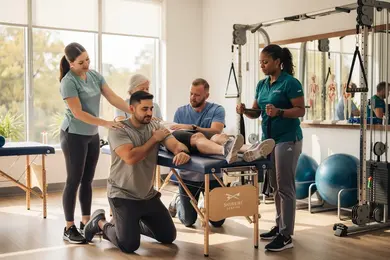
Online kinesiology degrees versus traditional campus programs for exercise physiology reveal crucial distinctions in how practical training is delivered, with significant career implications. While online programs offer flexibility attractive for working adults, they often place the onus on students to secure local clinical placements independently, a critical component for meeting employer expectations in hands-on competencies.
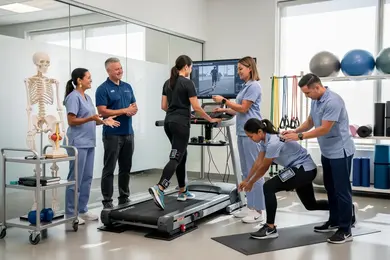
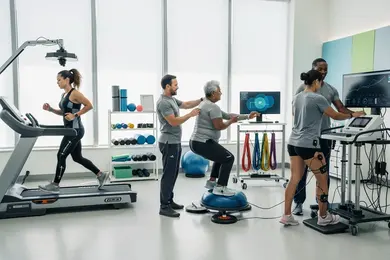
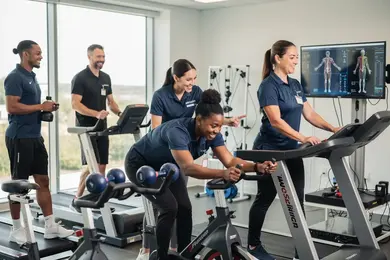
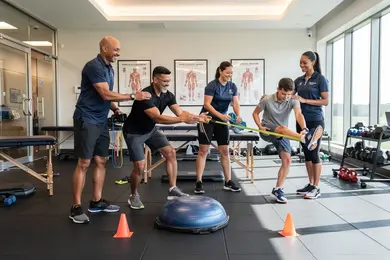
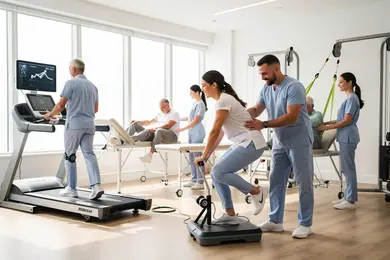
Campus-based programs seamlessly incorporate supervised labs, direct patient interaction, and equipment training, which align closely with certification requirements and employer demands in settings like cardiac rehabilitation or sports performance. Online kinesiology education for exercise physiology careers thus requires students to navigate external practicum arrangements without the consistent institutional support found on campus, risking delays or uneven clinical experience quality.
Employers prioritize candidates with documented internship hours and verifiable clinical skills, especially given the U.S. Bureau of Labor Statistics projects a 10-14% job growth in exercise physiology roles-well above the average growth rate. Graduates from online options lacking robust practicum components may face practical disadvantages entering the workforce despite holding similar theoretical knowledge.
For professionals pivoting careers, this means evaluating whether an online curriculum includes partnerships with local health centers or mentorship frameworks, avoiding the pitfalls of self-arranged internships that can prolong certification timelines. Strategic selection impacts time to employment and readiness for clinical exercise physiology roles.
Insights comparable to those in accelerated healthcare programs apply, emphasizing the nuanced tradeoffs between flexible delivery and assured practical training.
What accreditation and program quality standards should online kinesiology students look for?
Accreditation from a recognized regional body remains the minimum requirement when assessing online kinesiology program accreditation standards. Without such validation, graduates risk limited eligibility for certification exams and state licensure, which directly impacts employability in clinical or rehabilitation environments.
Programs with specialized accreditation, such as from the Commission on Accreditation of Allied Health Education Programs (CAAHEP), offer stronger alignment with workforce competencies and increase access to advanced credentials.
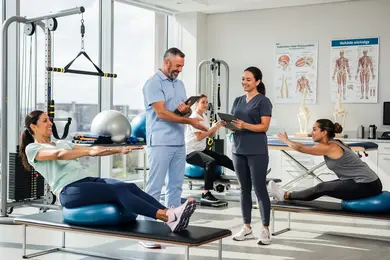
Quality assurance for kinesiology degree programs depends heavily on curriculum rigor and faculty expertise. Comprehensive instruction in anatomy, physiology, biomechanics, and exercise prescription, reinforced by hands-on practicums or documented supervised clinical hours, is essential. Such practical components differentiate candidates in hiring processes, where employers increasingly expect evidence of applied skill development even for online learners.
The U.S. Bureau of Labor Statistics forecasts a 14% employment increase for fitness trainers and instructors over the decade, emphasizing demand for programs integrating career support and up-to-date certification preparation. Prospective students must weigh tradeoffs such as credit transferability and scheduling flexibility, as programs without specialty accreditation may constrain career pathways beyond entry-level roles.
Choosing an online kinesiology program without adequate accreditation can effectively narrow post-graduation options and reduce labor market advantage. Those considering a broader healthcare management pivot might explore MBA healthcare paths that complement kinesiology expertise with strategic leadership skills.
Which types of kinesiology degrees best align with exercise physiology careers?
Exercise physiology kinesiology degree programs in North America that lack targeted coursework in metabolic assessment and rehabilitation often leave graduates underprepared for clinical hiring demands. Employers in hospitals, rehab centers, and specialized clinics seek candidates with focused skills in cardiovascular, pulmonary, and musculoskeletal systems applied directly to patient care. General kinesiology degrees without this specificity delay readiness and limit entry-level opportunities.
Online kinesiology degrees intending to prepare students for exercise physiology roles must integrate lab-based or partnered clinical experiences to meet certification criteria. Absence of hands-on clinical exposure typically creates workforce entry barriers, forcing graduates to pursue additional training or certifications.
Salary data from Concordia University Chicago's kinesiology ROI report confirms that exercise physiologists start near $58,160 annually, advancing to about $70,000 mid-career.
This contrasts with a broader kinesiology field median of $71,000, which often reflects less specialized but more diverse job functions including management and coaching. These figures illustrate a tradeoff between specialized exercise physiology training and occupations requiring broader kinesiology knowledge and flexibility.
Professionals pivoting mid-career with clinical backgrounds should prioritize degrees emphasizing rigorous exercise testing, prescription, and certification pathways. Those targeting sports performance or wellness industries benefit from programs blending biomechanics, nutrition, and exercise physiology to meet industry-specific employer expectations.
Selection depends on evaluating curriculum depth, practicum quality, and licensure alignment within exercise physiology kinesiology degree programs in North America.
Prospective students comparing options may also explore Capella RN to BSN vs Chamberlain RN to BSN pathways for insight into structuring career-relevant education delivered online.
What courses and hands-on experiences are included in online exercise physiology curricula?
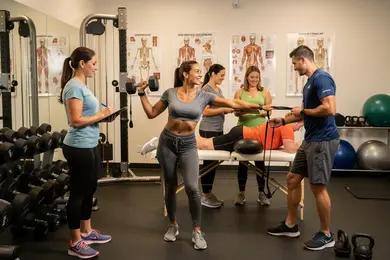
Online exercise physiology curricula in 2026 demand integration of in-depth interdisciplinary coursework with mandatory practicum components that reflect employer skill expectations. Students face a critical challenge: securing supervised internships at clinical or performance settings, such as rehab centers or hospitals, to fulfill hands-on requirements essential for developing proficiency in patient assessment and exercise prescription.
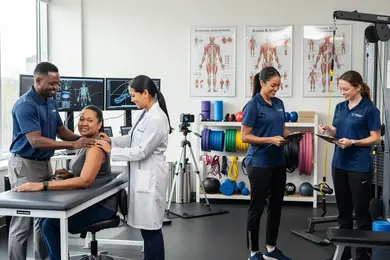
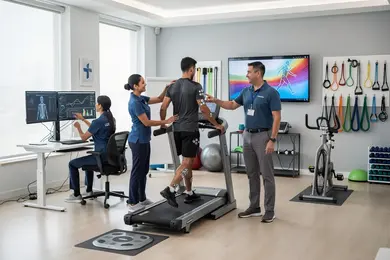
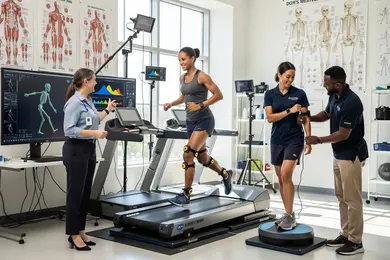
This practical exposure isn't optional; it directly affects graduates' eligibility for state licensure and job readiness in sectors like cardiac rehabilitation or outpatient care. While coursework includes advanced anatomy, biomechanics, cardiovascular and respiratory function analysis, and nutrition's influence on performance, the real differentiator is clinical experience using diagnostic devices like metabolic carts and ECGs.
Online formats offer an average annual savings of $10,467 minus roughly $2,250 compared to traditional campus programs, but these financial benefits can be offset by the logistical complexity of arranging local practicums. These delays may extend program duration and undercut experiential learning depth, critical for roles where clinical judgment is tested.
What are typical admission requirements, program length, and credit loads for these online degrees?
Admission to online kinesiology degrees tailored for exercise physiology careers typically hinges on a high school diploma or GED, with competitive programs often demanding a GPA of 2.5 to 3.0 and prerequisite science courses such as biology or anatomy. Applicants changing careers may leverage prior college credits or relevant work experience to navigate these requirements more flexibly.
Degree completion usually requires 120 to 130 credits, integrating core subjects like biomechanics, motor learning, and health promotion. Electives targeting rehabilitation or sports science enable specialization aligned with roles such as clinical exercise physiologist or fitness coordinator. Graduates from programs like Oregon State University's online Bachelor of Science in Kinesiology have reported median salaries near $61,000, indicating substantive market value tied to curriculum rigor.
Program lengths vary from three to six years depending on full- or part-time enrollment and pacing adjustments. Full-time students often manage 12 to 18 credits per semester, while part-time tracks reduce credit loads but extend duration, impacting workforce reentry timing. Accelerated options demand a high weekly commitment, which may not suit working professionals balancing other obligations.
How much do online kinesiology degrees cost, and what financial aid options are available?
Online kinesiology bachelor's degrees present a significant financial commitment, often ranging from $15,000 to $45,000 depending on public versus private status, residency, and program focus. Degrees closely aligned with exercise physiology skew higher due to additional hands-on training requirements. Students need to account not only for tuition but also for extra costs such as exam fees, licensure prep, and technology needed for synchronous labs.
These expenses, coupled with the necessity of clinical practicums, mean long-term financial planning is essential.
Federal Pell Grants can offset some tuition-up to $7,395 annually for eligible undergraduates-while Direct Subsidized and Unsubsidized Loans cover remaining gaps, deferring repayment until after graduation. Employer tuition reimbursement offers a valuable avenue for professionals pivoting mid-career, but careful evaluation is necessary to weigh tuition support against opportunity costs including possible lost wages from required live sessions.
Consider this tradeoff: Concordia University Chicago reports an unemployment rate near 3% for online kinesiology graduates, indicating strong job absorption; however, higher upfront investment may be justified only if one can manage or offset offset these opportunity costs. Institutional scholarships can reduce tuition by 10-30%, but students must also anticipate supplemental expenses and budget accordingly to prevent unexpected financial strain during program completion.
What careers can you pursue in exercise physiology with an online kinesiology degree?
An online kinesiology degree primarily positions graduates for roles where clinical competence intersects with health data analysis and interdisciplinary collaboration. For instance, clinical exercise physiologists must develop and adjust treatment plans for patients with chronic conditions, requiring credentials such as the ACSM Certified Clinical Exercise Physiologist license and supervised clinical hours.
This licensing requirement and real-world clinical experience often dictate employability, making program selection with practicum alignment crucial.
Graduates targeting corporate wellness or rehabilitation settings face differing demands: employers expect skills in behavioral coaching and teamwork with therapists, respectively, underscoring the need for flexible but robust training pathways. Those shifting from fitness careers gain an advantage through enhanced physiological assessment knowledge but encounter licensing and clinical exposure tradeoffs that can complicate purely online study routes.
Financially, the degree's average annual cost-approximately $16,808 at public institutions and $30,988 at private ones-typically nets a lifetime ROI near 2,000% within five years, assuming strategic certification and specialization. However, additional certifications for cardiac or metabolic specialties add expense and time, highlighting a tension between marketability and upfront investment.
Professionals must weigh state-specific licensure nuances and employer preferences for hybrid or in-person clinical training, often making local internships indispensable complements to online coursework.
What are salary ranges and job outlook for exercise physiologists and related roles?
Exercise physiology careers in 2026 present a nuanced financial and educational tradeoff: median salaries range from $50,000 to $75,000, with specialized positions in rehabilitation or private practice reaching $85,000 to $95,000.
However, career progression hinges on targeted certifications like the Certified Strength and Conditioning Specialist (CSCS), which can boost salaries 15-25% within the first year by addressing specific employer demands in athletic performance and clinical rehab. This credential distinction markedly separates compensation tiers, especially when paired with hands-on experience or advanced degrees.
Hospital-based clinical exercise physiologists may reach $70,000 but face a salary plateau without additional certifications, whereas strength coaches in collegiate or pro sports sustain higher earnings and job stability through credential stacking. Practical employment outcomes favor candidates who combine evidence-based programming skills with verifiable clinical competency, often proven via internships or residencies.
Regional labor market fluctuations create uneven job availability and wage growth, making local research critical before committing. For example, cardiac rehab or wellness coaching roles commonly start near $45,000 but quickly increase with clinical certifications, reflecting diverse demand across subfields.
- Salary ranges depend heavily on specialization and certifications.
- CSCS drives significant early-career salary lifts.
- Internship and residency experience remain key hiring criteria.
- Geographic factors often dictate job opportunity and wage ceilings.
Do exercise physiologists need certification or licensure, and how do online programs help you qualify?
Certification or licensure dictates the practical scope for exercise physiologists, with state mandates often shaping employability more than degree credentials alone. For instance, Georgia, North Carolina, and Oklahoma legally require licensing to practice, particularly within clinical settings and insurance frameworks, making the Certified Clinical Exercise Physiologist (CEP) credential a baseline for clinical employment.
This regulatory landscape means that choosing an online kinesiology program without confirming alignment to specific state licensure criteria risks credential obsolescence and limited job opportunities.
Online degree programs tailored for exercise physiology incorporate essential clinical practicum hours and align coursework with certification exams from bodies like the American Society of Exercise Physiologists and the American College of Sports Medicine. These features mitigate the geographic and scheduling barriers common among working professionals, enabling students to integrate supervised experience crucial for certification eligibility.
Deciding between programs involves tradeoffs, such as prioritizing telehealth practice modules for roles in remote chronic disease management versus ensuring strong clinical licensure support for hospital-based positions. Without a clear focus on certification-readiness tied to real-world employer requirements, graduates may face restricted practice scopes despite completing a degree.
This highlights the necessity of validating that online kinesiology curricula are accredited and legally compliant within the student's target employment locale.
Other Things You Should Know About Kinesiology
Online kinesiology programs demand disciplined time management due to their rigorous science and applied content. Students working full-time often face challenges juggling lab simulations, internships, and coursework, leading to longer completion times or higher dropout rates. Prioritizing programs offering flexible scheduling or asynchronous learning reduces pressure, but candidates must realistically assess their current workload before committing.
Licensure and certification for exercise physiologists often require hands-on clinical hours and supervised practical experience not always available in online formats. Without meeting these requirements, graduates may face barriers entering clinical or medical settings. Prospective students should select programs that explicitly integrate or facilitate local clinical placements aligned with state licensure standards to avoid credential roadblocks.
For career advancement in exercise physiology, specialization-focused programs provide targeted skills but may limit flexibility if career goals shift. Broader kinesiology curricula offer versatility but risk insufficient depth for specialized roles demanding advanced physiological assessment skills. Candidates should evaluate their long-term plans and select programs balancing broad foundational knowledge with sufficient exercise physiology content to satisfy employer expectations.
References
- Online Bachelor’s in Kinesiology and Exercise Science Programs https://teach.com/online-ed/healthcare-degrees/online-bachelors-kinesiology-exercise-science/
- Online Bachelor of Science in Kinesiology https://calbaptist.edu/academics/programs/online-bachelor-of-science-kinesiology/
- Exercise Physiologist https://acsm.org/certification/get-certified/exercise-physiologist/
- 5 Creative Ways to Teach Exercise Physiology to Excite Students https://www.labster.com/blog/5-creative-ways-teach-exercise-physiology-excite-students
- Lt | Exercise Physiology Collection | Online Learning Software https://www.adinstruments.com/lt/exercise-physiology
- Online Exercise Science Degrees: Top School Review https://www.edumed.org/online-schools/exercise-science-degrees/
- Kinesiology - Exercise Science Focus A.S. - Transfer Degree https://www.clcillinois.edu/programs/biodv/kinesiology/kinesiology-exercise-science-focus-as-transfer-degree
- Online Kinesiology Degree – Bachelor's in Kinesiology – ECU Online https://online.ecok.edu/online-degrees/bs-bachelors-kinesiology/
- Exercise Physiologist Career https://explorehealthcareers.org/careers/sports-medicine/exercise-physiologist/
- Best Online Kinesiology Degree Programs, Updated for 2026 https://www.kinesiologydegrees.org/programs/online