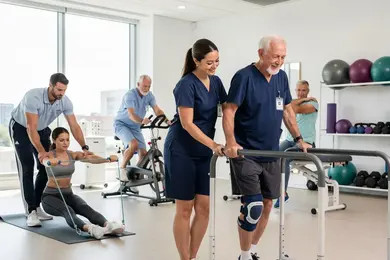
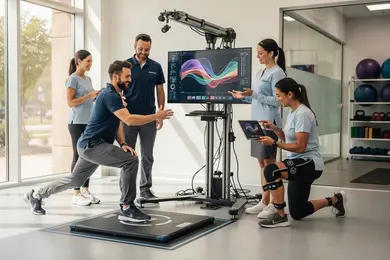
2027 Online Kinesiology Degrees With Applied Performance Projects

Co-Founder and Chief Data Scientist
Professionals aiming to lead innovative health and fitness programs face a persistent barrier: balancing rigorous academic requirements with full-time employment and personal responsibilities. Kinesiology students often struggle to access programs that combine theoretical knowledge with tangible applied performance projects, which employers increasingly demand for practical skill verification.
According to the National Center for Education Statistics, online enrollment for health-related bachelor's degrees grew by 12% from 2023 to 2024, demonstrating a significant shift toward flexible learning modalities that can accommodate working adults. Identifying programs that integrate applied projects online allows candidates to validate competencies without compromising career momentum. This article evaluates online kinesiology degrees with applied performance components, guiding readers to practical educational choices that align with career advancement and real-world readiness.
Key Things You Should Know
- Applied performance projects enhance skill validation but extend program duration by 15-20%, raising total tuition costs 10-12%, according to the National Center for Education Statistics, complicating timing for career changers.
- Employers in clinical and sports sectors prioritize candidates with project-based portfolios; the Bureau of Labor Statistics data shows a 9% higher hiring rate for graduates showcasing applied work, influencing early career outcomes.
- Online kinesiology degrees with applied projects face regional licensure variability, requiring students to navigate costly credentialing delays averaging 4-6 months per state per recent professional board reports.
What is an online kinesiology degree with an applied performance project, and who is it best for?
An online kinesiology degree with applied performance studies offers a crucial bridge between theoretical understanding and measurable outcomes, addressing employer demands for candidates who demonstrate practical skills. Students engaging in these programs typically undertake projects such as designing strength and conditioning protocols tailored for populations like elderly adults or athletes. This approach cultivates critical thinking, problem-solving, and data analysis abilities that graduates without hands-on components may lack.
Such degrees often appeal to those pursuing roles in fitness training, rehabilitation, sports performance, or occupational therapy support, where demonstrating real-world intervention impact is a competitive advantage. However, this structure requires significant self-discipline and access to facilities or equipment, which can present logistical challenges, particularly for individuals without prior experience or flexible schedules.
Employment projections support the value of practical experience: a median annual wage near $60,000 for fitness trainers and instructors combines with a 13% growth forecast from 2024 to 2034, highlighting tangible opportunities for graduates. Professionals aiming to pivot careers or validate existing credentials benefit by producing portfolio-worthy work under supervision, though time management and technical rigor remain barriers for some.
Prospective students exploring exercise science degrees online should weigh these factors carefully when selecting the best online kinesiology programs with practical performance projects to ensure alignment with career goals and personal circumstances.
How do online kinesiology degrees compare with campus programs for hands-on performance training?
Online kinesiology degrees with practical performance training face inherent limitations in replicating the depth of hands-on learning found in campus settings. Physical access to supervised laboratory environments is critical for developing advanced skills in biomechanics, exercise physiology, and motor learning-areas where real-time, tactile interaction cannot be fully substituted by remote methods. Employers prioritize graduates who demonstrate verified manual competencies and diagnostic precision, which on-campus programs more consistently facilitate through continuous, immersive lab work.
A physical performance specialist working with athletes in rehabilitation, for example, must refine manual techniques that are difficult to master through virtual simulations or infrequent, scheduled residencies. Remote learners often encounter logistical challenges securing local internships or practicums, potentially extending their programs and complicating geographic flexibility. Nevertheless, online formats serve working professionals by offering access to foundational and applied kinesiology theory with supervised fieldwork arranged locally, balancing flexibility against on-site exposure constraints.
Labor market projections from the University of North Dakota indicate a 10% growth in kinesiology and human performance occupations from 2022 to 2032, a rate exceeding average job growth. This trend accentuates employer demand for candidates with hands-on experience, creating a practical divide between traditional campus-trained and online degree holders. Prospective students should carefully assess these tradeoffs and plan for verified practical placements. For those considering pathways across health-related fields, reviewing comparative program data on best RN to BSN programs may provide useful context.
What accreditation and program quality standards should online kinesiology students look for?
Choosing an online kinesiology program requires prioritizing accreditation from regionally recognized agencies such as the Higher Learning Commission or the Southern Association of Colleges and Schools Commission on Colleges. Without meeting these standards, credits often have limited transferability, and employer recognition may be compromised. Beyond institutional validation, program-specific accreditation-like that from the Commission on Accreditation of Allied Health Education Programs (CAAHEP) or acknowledgment by the National Strength and Conditioning Association (NSCA)-affirms that practical competencies align with workforce expectations. This adherence to online kinesiology program accreditation standards remains vital for graduates targeting credible and competitive employment.
Program quality hinges on integrating applied learning, especially through practicums or hands-on projects that mirror real-world challenges in roles such as personal training. For example, students exposed to supervised biomechanics assessments or exercise prescription scenarios are better prepared for a workforce where the median personal trainer salary reaches $60,000, illustrating the tangible value of effective skill-building. Many programs without robust clinical placements or industry connections risk leaving students to pursue unpaid internships or commercialization without support.
Prospective students should evaluate whether curricula maintain alignment with contemporary best practices in injury prevention, exercise science, and rehabilitation. This focus governs ongoing relevance and employer demand across fitness and rehabilitation settings. For those comparing pathways or needing affordable options, exploring a healthcare administration degree online accredited might offer strategic alternatives. Ultimately, applying rigorous quality assurance criteria for kinesiology degrees online helps safeguard educational investments against uncertain labor market returns.
What are the typical admission requirements for online kinesiology bachelor's and master's programs?
Admission requirements for online kinesiology bachelor's programs tend to prioritize applicants with a solid academic foundation, typically a high school diploma or equivalent and a GPA between 2.5 and 3.0. This baseline reflects the science-intensive nature of such curricula, where prerequisite courses in biology or anatomy prepare students for rigorous study. While standardized tests like the SAT or ACT may sometimes be requested, numerous institutions have shifted to test-optional policies since 2024, reducing barriers for many candidates. For those aiming at master's level kinesiology programs-especially applied performance tracks-the expectations rise to a relevant bachelor's degree and a minimum GPA around 3.0, indicative of competitive admissions focused on clinical or research readiness.
Applications at the graduate level often include a detailed resume reflecting hands-on experience and sometimes professional credentials like the Certified Strength and Conditioning Specialist (CSCS), which can provide a practical edge. GRE tests are now increasingly optional but still required in select cases. Financially, prospective students must weigh substantial investments such as the University of Florida's online Master's tuition charging approximately $585.75 per credit. This should be balanced against realistic gains in sectors like sports performance, rehabilitation, or occupational health, where employer sponsorship and local clinical placement logistics add complexity. Those evaluating online kinesiology degree admission criteria should also factor in such operational tradeoffs to ensure a sustainable commitment over the full course of study.
A practical resource for students exploring affordable pathways is the cheapest RN to BSN online Texas, which offers a comparative lens on program cost-effectiveness within healthcare-related fields.
What courses and applied performance experiences are included in most online kinesiology curricula?
Online kinesiology programs increasingly prioritize applied knowledge over theory alone, responding to employer demand for graduates adept in both science and practical skills. Curricula typically cover human anatomy, biomechanics, exercise physiology, motor learning, and sports psychology, but value hinges on how effectively programs integrate real-world applications.
Remote lab simulations and data analysis using biometric datasets offer some hands-on experience, yet these approaches can fall short compared to in-person internships or practicums. For example, a student focused on rehabilitation sciences might collaborate with local clinics or utilize wearable tech to gather patient recovery metrics, directly linking academic concepts with occupational tasks.
Flexibility in online program design, as seen in offerings like West Chester University of Pennsylvania's M.S. in Exercise and Sport Science, helps working professionals juggle study and job responsibilities. However, absence of rigorous applied projects risks undermining graduates' competitiveness, especially in roles requiring exercise prescription or movement screening expertise.
Employers expect kinesiology graduates to interpret performance data and measure intervention outcomes reliably, necessitating coursework in research methods and statistics. Programs neglecting these components often limit a student's ability to secure positions in clinical and athletic environments where evidence-based practice drives decision-making.
- Core courses include advanced anatomy and neurophysiology relevant to movement and performance
- Applied components often require remote data collection or client-centered program design
- Capstone projects or practicums support integration of theory with workplace demands
How long do online kinesiology programs take, and what do they cost overall?
Choosing an online kinesiology degree demands evaluating how program length and cost intersect with professional goals and workplace demands. Accelerated master's programs, such as the University of Florida's M.S. in Applied Physiology and Kinesiology with a human performance concentration, can be completed within one year full time, benefiting those needing swift skill upgrades for roles like clinical rehabilitation or athletic training. However, this requires intense focus and limits flexibility.
Most master's kinesiology degrees span 1 to 2 years full time, with part-time options extending up to 3 years or more. Cost typically ranges between $15,000 and $40,000 overall, based on per-credit tuition, with added fees for hands-on projects or lab access that can increase expenses by $1,000 to $3,000. Public universities may offer lower rates for residents, but many waive residency for online students, equalizing costs.
Working professionals must also weigh opportunity costs: accelerated programs can fast-track licensing and salary increases but risk income disruption due to their rigorous schedule. Part-time paths allow income continuity but delay advancement into applied performance roles. Employer tuition support sometimes helps offset costs but often binds recipients to contractual work terms, restricting job mobility.
- Accelerated programs suit those prioritizing quick credentialing over schedule flexibility.
- Part-time programs better fit individuals needing steady income but require longer commitment.
- Hands-on project fees and equipment access can significantly affect total cost.
What careers can you pursue with an online kinesiology degree focused on performance?
The practical value of an online kinesiology degree focused on performance lies in its ability to prepare graduates for multi-faceted roles that demand both scientific understanding and applied skills. Employers in collegiate athletics and professional sports prioritize candidates who can develop data-driven, periodized training programs tailored to athlete needs. For example, a university strength and conditioning coach must interpret sport-specific metrics and design training cycles accordingly, necessitating expertise beyond textbook knowledge.
Performance analysts, a growing segment within this field, rely heavily on biomechanical tools and data analytics to enhance athlete output. Their effectiveness depends on proficiency with advanced movement tracking technologies and the aptitude to convert assessments into tactical guidance. Investment in sports science underscores why employers increasingly seek candidates equipped to interpret diverse physiological markers in real time.
Additional career options include occupational health specialists focusing on workplace wellness to reduce injury-related absence. Those pursuing clinical roles often require further certification, like exercise physiologist licensure, which involves added costs and timelines for credentialing.
Financially, LSU Online's M.S. in Kinesiology with Health Promotion and Sport Performance charges $644 per credit, totaling $23,184 for 36 credits. Prospective students must weigh this against typical entry-level salaries ranging from $45,000 to $65,000, which can increase substantially with experience and certification.
What are the salary expectations and job outlook for kinesiology and human performance roles?
Salary outcomes for professionals in kinesiology and human performance vary significantly based on credentials, setting, and specialization, ranging from about $45,000 in entry-level wellness coordination to $75,000 or more for licensed athletic trainers or physical therapy assistants. Notably, advanced certifications like the Certified Strength and Conditioning Specialist (CSCS) or state licensure often make the difference between stagnant roles and higher wage brackets. For example, physical therapy assistants with formal certification typically experience faster hiring and better pay compared to unlicensed exercise physiologists, who face restricted upward mobility without graduate education.
Employment growth in kinesiology-related fields is robust, with an estimated 10% increase projected over the next decade, driven largely by demand in physical therapy support and athletic training. This aligns with demographic shifts such as aging populations requiring rehabilitation services and expanding youth sports participation. However, candidates pursuing pure research or non-licensed exercise science positions should prepare for heightened competition and less job security.
Students and career changers should carefully evaluate these dynamics: licensure boosts employability but entails time and financial investment, whereas roles without certification typically offer less stability. Proactive networking within healthcare or sports organizations remains critical for breaking into higher-tier positions.
Do kinesiology graduates need certification or licensure for sports performance and related roles?
Licensure and certification requirements significantly shape career trajectories for kinesiology graduates entering sports performance and related fields. Positions such as athletic trainers or exercise physiologists typically demand state licensure and certifications from entities like the Board of Certification (BOC) or the National Strength and Conditioning Association (NSCA). For example, a graduate aiming to work as a high school athletic trainer must secure state licensure and BOC certification within six months post-graduation to meet employer mandates. Contrastingly, roles centered on fitness coaching may not legally require licensure but still rely on industry-recognized certifications to remain competitive.
Several workforce realities affect certification strategy:
- Employers prioritize certifications that prove applied competence more than general degrees.
- Graduates without proper credentials often face restricted job prospects or reduced earning potential in clinical or performance roles.
- Lack of alignment between program selection and certification requirements can lead to costly retraining or credential gaps.
Education providers offering flexible graduate programs, such as 100% online Master of Science in Exercise and Sport Science degrees with multiple entry points, cater to working professionals needing timely credential upgrades without career interruption. Graduates must carefully evaluate which certifications align with their career goals and employer expectations to avoid delays in workforce entry or ongoing credential maintenance burdens, particularly in performance-enhancement or clinical contexts.
How can you evaluate and choose the best online kinesiology program with applied projects?
Programs offering online kinesiology degrees with applied performance projects must be judged on their capacity to develop job-ready skills through real-world simulations rather than solely theoretical content. Graduates aiming for roles in rehabilitation, athletic training, or personal fitness coaching-which the U.S. Bureau of Labor Statistics projects to grow 13% between 2024 and 2034-face a competitive market that favors practical experience documented through realistic assessments.
Applied projects should incorporate current technologies and evidence-based methods, such as biomechanics labs, virtual coaching tools, or performance data analytics. This ensures alignment with industry standards and helps students build competencies critical for workplace integration. Faculty expertise with active professional roles is a strong indicator that the curriculum will maintain applied relevance beyond academic rigor.
From a workforce perspective, programs that include evaluation by external practitioners or provide direct partnerships with clinics and fitness organizations offer tangible advantages. For example, personal trainer certification candidates benefit more from projects involving client program creation and progress tracking than from abstract coursework. This hands-on focus addresses common employer concerns about skill gaps and supports smoother transitions into kinesiology careers.
- Verify applied projects mimic current field practices and use updated technology.
- Prioritize programs with external partnerships or graded internships.
- Expect measurable outcomes tied to applied work over theoretical knowledge.
Other Things You Should Know About Kinesiology
Employers increasingly recognize the value of applied projects in online degrees as they provide tangible evidence of skills beyond theory. However, the credibility of the degree depends on the institution's reputation and the rigor of applied components. Applicants should prioritize programs that offer verified performance assessments and internships, as these better demonstrate readiness for roles in performance assessment and intervention.
Specializing can strengthen technical expertise in areas like rehabilitation or sports conditioning but may limit flexibility in the job market. A broader curriculum with diverse applied performance projects tends to enhance adaptability and better prepares graduates for interdisciplinary roles. For career advancement and long-term versatility, students should prioritize programs offering comprehensive applied training over narrow specializations.
Applied projects require access to resources such as labs, equipment, or real-world practice settings, which can be limited in online formats. Students must proactively secure local opportunities or rely heavily on virtual simulations, which may not fully replicate hands-on practice. Evaluating programs based on their external placement support and the realism of their applied projects is crucial for ensuring meaningful skill development.
References
- Best Online Kinesiology Degree Programs, Updated for 2026 https://www.kinesiologydegrees.org/programs/online
- Exercise science program accredited by national organization | Lipscomb University https://lipscomb.edu/news/exercise-science-program-accredited-national-organization
- Online Kinesiology Degree Programs: Review Top Schools https://www.edumed.org/online-schools/kinesiology-degrees/
- Quality Standards and Accreditation of Distance Education Programs in a Pandemic - OJDLA https://ojdla.com/articles/quality-standards-and-accreditation-of-distance-education-programs-in-a-pandemic
- Kinesiology and Exercise Science Careers Guide https://teach.com/online-ed/healthcare-degrees/online-bachelors-kinesiology-exercise-science/career-outlook/
- Corban University Launches New Fully Online Master of Science in Kinesiology Program | Corban University https://www.corban.edu/corban-master-science-kinesiology-program/
- What Can You Do with a Kinesiology Degree? https://www.nec.edu/news/what-can-you-do-with-kinesiology-degree
- How Long to Get a Kinesiology Degree? | ValidGrad https://validgrad.com/blog/kinesiology-degree-duration/
- Kinesiology Accreditation Process https://www.ccupeka.org/accreditation/kinesiology-accreditation-process/
- Master of Science in Kinesiology https://online.avila.edu/degrees/healthcare/masters-kinesiology/