2027 Kinesiology Specializations With the Strongest Salary Growth

Co-Founder and Chief Data Scientist
Professionals pursuing career growth or pivoting within kinesiology face a confusing landscape of specializations, each promising high salary potential but varying sharply in demand, accessibility, and required credentials.
This challenge intensifies as more working adults enroll in online or hybrid programs, whose enrollment increased by over 12% since 2023 according to the National Center for Education Statistics, signaling a shift toward flexible learning but also amplifying competition for roles aligned with emerging specialties.
Employers increasingly value niche expertise tied to technological integration and preventive care, forcing candidates to carefully weigh specialization choices against long-term market viability. This article identifies kinesiology specializations with the strongest salary growth to inform strategic educational decisions aligned with workforce realities.
Key Things You Should Know
- Specializing in exercise physiology yields 18% salary growth potential but demands costly certifications delaying entry by 1-2 years, narrowing short-term earnings despite higher long-term gains, per 2024 Bureau of Labor Statistics data.
- Demand for neurokinesiology integration rises as 40% of employers prioritize candidates with interdisciplinary skills, forcing practitioners to balance technical specialization and broad applicability within constrained credential timelines.
- Workforce projections show adaptive sports kinesiology roles expanding 22% by 2028, yet limited accredited programs complicate timely qualification, pressuring candidates to opt for broader generalist tracks amid tight budget and time constraints.
Which kinesiology specializations are seeing the fastest salary growth in the United States?
The fastest salary growth in kinesiology specializations within the United States job market is shaped by practical trade-offs between clinical credentialing and technical skill investment.
Exercise physiology, projected by the Bureau of Labor Statistics to grow 9% from 2024 to 2034 with roughly 1,700 annual openings, demands certification or licensing and blends patient recovery with physical training. These roles are critical in medical settings managing chronic diseases and aging populations.
Rehabilitation kinesiology, with a focus on neurological and orthopedic recovery, benefits from expanded insurance reimbursements and integrative care models that prioritize functionality. Specialists in this area collaborate extensively with allied health professionals, allowing them to command higher salaries in specialized rehabilitation centers due to their multidisciplinary expertise.
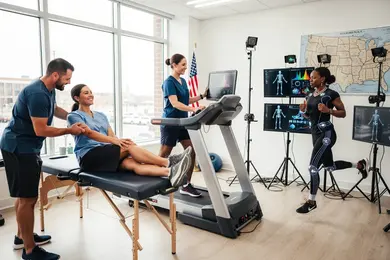
Sports biomechanics exemplifies the top paying kinesiology careers in the US job market by integrating wearable technology and biomechanical data analytics. Employers such as professional sports teams and private labs value specialists who can operate motion capture tools and interpret performance data to reduce injuries and optimize outcomes. However, this pathway requires significant technical education and ongoing skill development.
Choosing among these paths involves weighing the balance of clinical versus technical competencies, and roles that blend patient care with data-driven interventions tend to command the highest salary growth.
For those assessing academic options, it is essential to evaluate programs based on these workforce realities, such as those reviewed in the best online exercise science degree rankings.
What is the current salary range for top-paying kinesiology careers by specialization?
Top-paying kinesiology specializations in the US display a wide salary range reflecting the value of niche expertise and sector placement. Exercise scientists and strength-and-conditioning professionals typically earn between $60,000 and $85,000+, with the highest wages concentrated in collegiate and professional sports settings.
These roles benefit most from targeted certifications like the Certified Strength and Conditioning Specialist (CSCS), which markedly accelerate income growth-especially within NCAA Division I programs or pro teams.
Those pursuing the highest earning kinesiology career paths by specialization should expect differentiated salary progression based on credentials, skill application, and employer sophistication. For example, exercise scientists operating in private research or specialized rehabilitative centers leverage clinical and analytics competencies that boost pay over time, unlike positions in corporate wellness or general fitness where compensation starts lower and advances more slowly.
Geography and employer type further influence income potential. Urban hubs with major sports franchises or research universities consistently offer upper-tier salaries, whereas smaller colleges or community-based roles yield more modest returns. This spatial variance underscores the need to balance upfront educational costs and career certification efforts with expected returns.
Given this dynamic, kinesiology graduates must navigate practical tradeoffs, balancing credentials, applied expertise, and setting, to optimize their career investment. For professionals weighing advanced study, exploring healthcare PhD programs online may offer further specialization and salary leverage.
How does job outlook differ among major kinesiology specializations and career paths?
Job outlook across major kinesiology specializations in North America demonstrates significant variance influenced by credential demands and employer requirements. Clinical roles in physical and occupational therapy necessitate advanced degrees and licensure, offering steady growth driven by demographic aging and rehabilitation needs.
In contrast, exercise physiology jobs typically rely on certifications and expand more slowly, often within outpatient clinics and wellness centers.
Corporate wellness program director positions stand out for robust salary growth and wider opportunities, especially in hospital systems and large corporations prioritizing employee health.
According to the University of Chicago kinesiology salary trends report, wellness program directors earn between $70,000 and $95,000, reflecting increased emphasis on preventive care and chronic disease management. Candidates with a business or health administration background, possibly supplemented through an MBA healthcare degree, tend to be more competitive.
Sports performance and coaching roles face limited full-time openings and intense competition, often requiring niche expertise for advancement, resulting in slower salary growth outside of elite levels. Transitioning into research or academic kinesiology usually demands graduate study and publications but offers more predictable, incremental salary gains despite fewer positions linked to funding cycles.
Key practical tradeoffs include licensing timeframes, certification expenses, and market saturation. Evaluating salary growth trends among major kinesiology career paths highlights the value of aligning educational investments with realistic workforce prospects and credentialing hurdles.
What degrees and credentials do you need for high-earning kinesiology specializations?
Higher earnings in kinesiology hinge on acquiring targeted advanced degrees paired with credentials that meet employer demands for clinical expertise. Most clinical exercise physiologist roles require at least a bachelor's in kinesiology, exercise science, or a related health field, but positions commanding top salaries typically mandate a master's or doctoral degree.
Credentials such as the Certified Clinical Exercise Physiologist (CEP) or Registered Clinical Exercise Physiologist (RCEP) are frequently prioritized by employers seeking documented mastery of medical exercise testing and rehabilitation.
Considering credentials required for high-paying kinesiology careers, practical experience through supervised clinical internships embedded in graduate programs is often non-negotiable to gain licensure and competitive advantage within hospital and outpatient rehabilitation settings. By contrast, certifications oriented toward sports performance, like the Certified Strength and Conditioning Specialist (CSCS), align with less specialized roles and offer comparatively lower salaries.
The Bureau of Labor Statistics reported a median annual wage of $58,160 for exercise physiologists in May 2024, reflecting higher compensation linked to clinical specialization and advanced credentials. Candidates without these can face career wage stagnation unless redirecting toward entry-level fitness positions.
This underscores the need for carefully weighing the financial and time commitments of graduate degrees and certifications against tangible salary gains and career longevity in kinesiology advanced degrees for top salaries.
Prospective students should weigh these trade-offs realistically, including options like an online RN to BSN program if considering parallel healthcare pathways offering different returns on education investment.
How do online kinesiology programs compare with campus programs for advanced specializations?
Online kinesiology programs generally provide theoretical knowledge comparable to campus alternatives but fall short on practical training, networking, and employer recognition, elements critical for roles that demand hands-on experience and academic mentorship.
For example, advanced positions such as academic researchers or instructors, with salaries between $60,000 and $90,000 according to the University of Chicago kinesiology salary data, rely heavily on laboratory access and direct faculty engagement found mainly in campus settings.
Employers at research institutions prioritize candidates with immersive exposure to specialized equipment, real-time data collection, and collaboration. A professional targeting a tenure-track position benefits significantly from campus resources, including research labs and peer-reviewed publishing opportunities.
In contrast, purely online kinesiology students often face logistical hurdles and slower career progress due to limited direct access to these resources unless they pursue hybrid arrangements.
Those pursuing clinical or sports science tracks must secure practicum placements and certifications frequently integrated into campus curricula. Online learners often struggle to independently locate approved internships, affecting skill acquisition and eligibility for salary-enhancing credentials.
Choosing between immediacy and long-term career outcomes requires acknowledging that online pathways may necessitate additional investments in fieldwork and professional networking to reach parity with campus-based graduate employability as documented in recent industry analyses.
Which kinesiology specializations offer the best return on investment for tuition and time?
Specializations in kinesiology that integrate leadership and clinical application deliver faster, more substantial financial returns compared to fitness or coaching tracks. Roles such as program management or health initiative leadership reach $90,000+ salaries within five years, offsetting advanced education costs more rapidly.
For instance, program managers overseeing multidisciplinary teams typically command these higher wages, reflecting labor market demands for managerial and interdisciplinary skill sets.
Certifications in rehabilitation science and exercise physiology notably enhance employability in healthcare environments that prioritize measurable patient outcomes. Exercise physiologists working in cardiac rehabilitation programs benefit from salary premiums tied to specialized clinical credentials emphasized in occupational projections.
In contrast, pursuing sports coaching or general fitness training often results in slower salary growth and a return on investment extending beyond a decade, influenced by saturated markets and inconsistent employer demand. Fields combining biomechanics or data analytics with occupational health, however, show median salary doubling within seven years by leveraging technology skills critical to workforce trends.
Prospective students must weigh program accreditation and certification relevance carefully since recognized credentials correlate closely with starting salaries and job placement rates. Prioritizing specializations that marry management principles with evidence-based clinical abilities reduces wage stagnation risk and shortens the financial recovery time from tuition expenses.
What core courses and clinical experiences prepare students for high-growth kinesiology roles?
Core coursework and clinical experience in kinesiology fundamentally shape employability by emphasizing applied anatomy, biomechanics, and exercise physiology alongside motor control and health science statistics. These areas underpin the ability to design movement-based interventions relevant to rehabilitation, occupational health, and performance fields.
Specialized topics like neuromuscular rehabilitation or sports psychology are directly applicable in clinical or athletic settings, reflecting employer demand for evidence-driven protocols.
Practical exposure through clinical internships is often decisive for job placement and salary progression. For instance, experience gained in outpatient rehabilitation centers typically develops proficiency in outcome measurement and therapeutic exercise-skills that translate into higher-paying positions such as physical therapy assistance or wellness consulting.
Conversely, engagement with research environments hones data analysis capabilities suited for functional movement screening or injury prevention technology development.
Salary data from CareerExplorer reports a median kinesiology graduate income of $43,364, with a notable increase from $33,492 early in the career to $44,986 within five years. Employers commonly require 500+ clinical hours, and graduates strong in quantitative methods, such as advanced statistics and data analytics, are increasingly favored for roles involving health informatics and performance data interpretation.
Key practical implications for students include balancing coursework that supports both clinical proficiencies and analytic skills, prioritizing internships offering interdisciplinary team exposure and electronic health record experience to meet evolving industry needs and enhance marketability.
Are there licensure or certification requirements for specialized kinesiology careers with higher pay?
Higher pay in kinesiology increasingly hinges on targeted licensure or certification rather than general credentials. While entry-level roles may start near $48,595 annually, specialized tracks like clinical exercise physiology or physical therapy command credentials such as the Certified Exercise Physiologist (CEP) or state licensure, unlocking salary potential above the median $58,165 reported by PayScale for 2026.
For instance, working in orthopedic rehabilitation almost invariably requires a state physical therapy license, a costly and time-intensive credential. By contrast, positions in areas like corporate wellness or ergonomic consulting more commonly accept certifications such as Certified Worksite Wellness Specialist, which do not require formal licensing.
This creates a clear divide:
- Higher salaries and patient-facing roles demand rigorous certification, including ongoing continuing education units (CEUs).
- Lower barriers to entry can limit income and confine professionals to less clinically intensive environments.
Employers in clinical settings increasingly treat licensure as a baseline for hiring, using credential verification to mitigate liability and gauge competency. Career pivoters must weigh the upfront costs and time commitments of certification against the incremental salary and position opportunities beyond the basic kinesiology roles.
Without such credentials, comparable workforce experience may remain undervalued, restricting access to advanced roles where remuneration and professional influence rise substantially.
How can internships, residencies, and fellowships increase earnings in kinesiology specializations?
Practical training such as internships, residencies, and fellowships serve as critical differentiators in kinesiology by translating academic knowledge into employer-valued skills.
Entry-level kinesiology professionals earn an average annual salary of $47,831, with top earners reaching approximately $59,500 according to ZipRecruiter data from June 2025. The decisive factor for reaching higher salary brackets often lies in securing specialized experiential roles that validate applied competence and ease workforce entry.
An internship focused on sports performance analysis, for example, offers hands-on responsibilities rarely encountered in entry-level positions. Employers prioritize candidates with such experience because they reduce onboarding time and steep initial training costs, allowing quicker salary advancement.
Alternatively, residencies immerse candidates in clinical environments like rehab centers, where mastering patient protocols and decision-making skills justifies higher wages.
Fellowships targeting subspecialties, such as pediatric kinesiology or ergonomic consulting, can distinguish candidates for leadership or research functions, often resulting in compensation notably above basic entry levels. Yet, students must balance the financial and time commitments of typically unpaid or minimally paid internships against immediate earning needs.
Employers view these practical phases as risk reduction and proof of job readiness, but the strongest returns align with opportunities connected to reputable institutions or industry leaders. This strategic choice accelerates earning potential by enhancing resume value and signaling professional seriousness.
How should students compare and choose accredited kinesiology programs aligned with salary goals?
Program accreditation and alignment with specific professional requirements weigh heavily on salary outcomes in kinesiology-related careers. For example, students focusing on clinical rehabilitation must prioritize programs that meet physical therapy prerequisites, which typically command higher wages than general fitness roles. Regional accreditation affects eligibility for licensure and certifications demanded by employers, filtering out programs that lack rigor or industry recognition.
Labor market data confirms that specialization influences income growth. Skills in emerging fields like ergonomics or occupational health yield a measurable salary premium. According to Zippia, average kinesiologist wages increased from $52,336 in 2022 to $54,843 in 2025, a 4.8% rise, emphasizing that salary trends depend more on relevant skillsets than on degree titles alone.
Internship opportunities and employer partnerships are also critical. Clinical immersion within hospital settings usually translates into faster job placement and salaries 10-20% above those found in community-based roles.
Program duration and delivery format introduce tradeoffs: accelerated pathways shorten time to advanced salary brackets, while part-time studies improve affordability but may delay income escalation.
Prospective students should request alumni salary data and verified career outcomes from institutions or third-party databases to evaluate long-term earning potential, ensuring their educational choice drives tangible workforce advantages.
Other Things You Should Know About Kinesiology
Employers in kinesiology prioritize certifications that demonstrate practical skills aligned with their specific service offerings, such as sports performance or rehabilitation. Choosing certifications that require hands-on experience and measurable competencies improves job prospects more than general credentials. Candidates should focus on certifications recognized within their target industry segment to ensure relevance and competitive advantage.
Early specialization narrows learning but builds deeper expertise tied to high-growth roles, often leading to quicker salary advancement in focused fields like biomechanical analysis or exercise physiology. Conversely, a broad kinesiology foundation offers versatility, aiding transitions across subfields but may slow initial salary growth. Students aiming for rapid income gains should prioritize specialized programs with targeted clinical hours and proven employer connections.
In 2027, sports therapy and exercise physiology stand out for substantial salary growth. Sports therapy benefits from increasing athlete care demand, while exercise physiology's growth is tied to rising health awareness and preventive healthcare priorities.
Programs with established employer partnerships and robust internship pipelines consistently yield better employment and salary outcomes for kinesiology graduates. While school ranking reflects academic reputation, direct access to employers facilitates smoother job placement, especially in competitive specializations. For career advancement, students should prioritize institutions that provide integrated experiential learning and proven recruitment opportunities over purely prestige-based selection.
References
- Exercise Science Degree Programs & Career Guide 2025 https://www.nutritioned.org/exercise-science-degree/
- What Can You Do With a Kinesiology Major? | USAHS https://www.usa.edu/blog/what-can-you-do-with-a-kinesiology-major/
- Online Bachelor’s in Kinesiology and Exercise Science Programs https://teach.com/online-ed/healthcare-degrees/online-bachelors-kinesiology-exercise-science/
- Kinesiology Online Master's: See & Compare Top Programs https://www.edumed.org/online-schools/kinesiology-degrees/masters/
- What is the Career Outlook in Kinesiology? https://www.sports-management-degrees.com/faq/what-is-the-career-outlook-in-kinesiology/
- How to Become a Kinesiologist (Degree & Salary) - Natural Healers https://www.naturalhealers.com/blog/applied-kinesiology/
- How to Choose the Right Degree for Your Career Goals https://www.odljain.com/blog/how-to-choose-the-right-degree-program-for-your-career-goals.html