2027 Kinesiology Specializations That Best Match Human Performance Careers

Co-Founder and Chief Data Scientist
Choosing the right kinesiology specialization can mean the difference between stagnant job prospects and a dynamic career in human performance, yet many professionals face opaque program offerings that lack alignment with evolving industry needs. With the U. S. Department of Education reporting a 45% increase since 2021 in online enrollment among adult learners seeking career-relevant credentials, accessibility alone no longer guarantees workforce readiness.
Understanding which specializations prioritize applied biomechanics, exercise physiology, or data analytics directly impacts employability in competitive sectors like sports science, rehabilitation, and occupational health. This article clarifies the kinesiology specializations best positioned to advance careers in human performance by evaluating their practical application, labor demand, and educational pathways.
Key Things You Should Know
- Specializing in exercise physiology yields 23% higher average starting salaries versus general kinesiology, per 2024 Bureau of Labor Statistics, but limits immediate eligibility for sports coaching roles demanding diverse cross-certifications.
- Employers prioritize candidates with biomechanics expertise in human performance tech sectors, where 15% annual growth demands hybrid skills; this narrows entry options, favoring advanced quantitative training over broad kinase knowledge.
- Certification-heavy manual therapy tracks require 1.5- to 2-year post-bachelor apprenticeships, increasing costs and delaying workforce entry by up to 40%, challenging affordability for career-switchers mid-30s, as HR surveys reveal.
Which kinesiology specializations align most directly with human performance and athletic careers?
The most direct kinesiology specializations for athletic performance careers-exercise physiology, sports biomechanics, and strength and conditioning-each lead to distinct workforce realities shaped by employer demands and role requirements.
Exercise physiology, with a median annual wage of $58,160 as reported in May 2024, suits professionals tasked with monitoring and adapting physical responses in clinical, fitness, and sports settings, where a 9% job growth signals rising opportunity. However, the field often necessitates combining coursework with hands-on clinical internships to meet the expectations of employers prioritizing applied skills in performance outcomes.
Sports biomechanics merges mechanical analysis with data-driven assessment, preparing candidates for roles in motion analysis labs, coaching, and equipment design. These positions typically require proficiency in both biomechanical principles and analytics to satisfy the operational needs of professional teams and research centers engaged in real-time athletic optimization.
Strength and conditioning specialists shape athlete readiness through periodized training and injury prevention, but competition for positions is intense. Lacking certifications or real-world applied experience places graduates at a disadvantage when entering collegiate or professional sports environments.
Prospective students pursuing human performance careers with kinesiology focus should critically assess program partnerships with sports organizations and clinical access. Programs without direct industry collaboration often compel graduates to pursue additional credentials or entry-level work before career advancement is viable. For those evaluating entry into allied health fields as alternatives, online associate nursing programs may offer more defined pathways.
What degree levels in kinesiology best prepare you for human performance roles?
Choosing between bachelor's and master's degree levels in kinesiology for human performance careers hinges on role complexity and employer expectations rather than educational prestige alone. While a bachelor's degree equips candidates with core biomechanics and exercise physiology concepts qualifying them for entry-level roles like fitness specialists or rehabilitation aides, it often limits access to positions demanding clinical reasoning or leadership.
For instance, athletic training roles with a projected 13% employment growth over the decade and a median wage of $60,250 increasingly require master's credentials due to their integration of hands-on clinical internships and advanced injury prevention techniques.
Employers in specialized sectors-such as sports medicine clinics or elite athletic programs-favor master's-trained professionals, recognizing their preparedness for nuanced assessment and rehabilitation protocols.
This distinction also affects upward mobility; bachelor's degrees may suffice in corporate wellness but rarely lead to advancement in clinical or research-intensive human performance roles. Graduate degrees uniquely open pathways to positions like exercise physiologists working with military personnel, where sophisticated, individualized training regimens are essential.
Students evaluating the best kinesiology degrees for careers in human performance should weigh program length, practical experience requirements, and certification alignment. For those considering further advancement beyond master's training, options like a PhD in healthcare management online can expand leadership and research opportunities in this evolving field.
How do sports performance, strength and conditioning, and exercise physiology tracks differ?
Choosing between sports performance, strength and conditioning, and exercise physiology demands a clear understanding of distinct workforce realities and credentialing landscapes. Sports performance centers on athlete-specific development and competition readiness, making it competitive for roles within elite athletic teams and performance labs.
Strength and conditioning specialization in kinesiology programs targets improving muscular power and injury prevention, often requiring national certifications and practical coaching experience, which aligns closely with collegiate and professional sports settings.
Exercise physiology emphasizes the body's physiological responses to fitness and rehabilitation but requires advanced credentials or licensure for clinical roles, offering a pathway toward healthcare integration such as physical therapy or cardiopulmonary rehabilitation.
Practical hiring implications reveal divergent career mobility and salary prospects: strength and conditioning careers typically enter the job market faster but with median wages generally below those of physical therapists, who earned a median wage of $101,020 in May 2024 and face a robust 14% projected employment growth.
Exercise physiology's proximity to clinical contexts demands more education but can unlock higher-earning, healthcare-based roles. Sports performance specialists face intense competition tied directly to measurable athlete outcomes.
Students weighing these paths should consider credential timelines, labor market demand, and employer expectations carefully. Those seeking accelerated entry and broad applications may gravitate toward strength and conditioning, while those targeting a clinical healthcare role must plan for additional certifications.
Individuals interested in advanced professional options might explore options like a healthcare administration degree online accredited as a complementary credential. These distinctions highlight how differences between sports performance and exercise physiology careers critically influence strategic educational choices within kinesiology.
What courses and skills are emphasized in human performance-focused kinesiology programs?
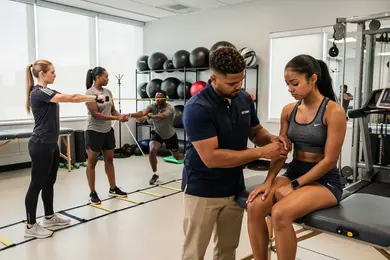
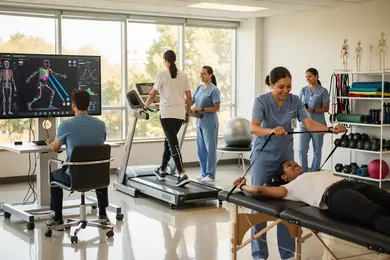
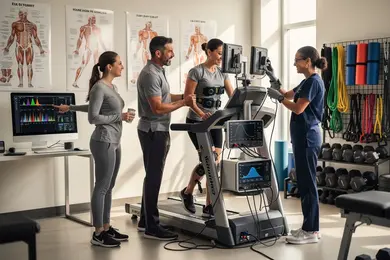
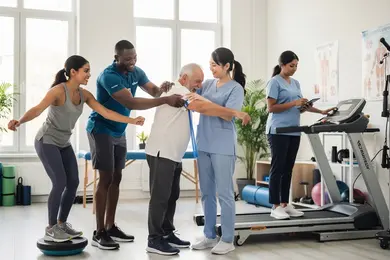
Human performance kinesiology curriculum centers on specialized training in biomechanics, exercise physiology, motor control, and sports nutrition to build expertise that meets employer expectations in athletic and occupational settings. Graduates gain competencies in data-driven movement analysis, wearable technology application, and personalized program design essential for roles in rehabilitation clinics, sports organizations, and ergonomics consulting.
This skill set aligns with real demands such as optimizing recovery protocols for elite athletes or formulating workplace injury prevention strategies, demonstrating the applied nature of these programs.
Programs emphasize integrating hands-on laboratory work with practical internships to bridge theory and applied practice. Strong analytical capabilities in statistics and research methods enable graduates to critically appraise emerging performance technologies and intervention effectiveness. Communication skills for interdisciplinary collaboration are integral, as human performance professionals often interact with medical personnel, coaches, and occupational health teams.
Those targeting clinical positions should consider incorporating therapeutic exercise prescription and diagnostic assessment courses, essential preparation for roles like physician assistants, which reported a median wage of $133,260 with a projected employment growth of 28% over a decade. Balancing the rigorous scientific foundation of kinesiology with the adaptability needed for evolving health environments requires ongoing professional development beyond graduation.
Prospective students would also find value in exploring options such as hybrid ABSN programs when considering complementary healthcare education pathways.
Skills developed in kinesiology for human performance careers extend beyond technical knowledge to include practical adaptability and strategic collaboration, positioning graduates for a range of specialized roles within competitive and dynamic labor markets.
How do online kinesiology programs for human performance compare with campus-based options?
Deciding between online and campus kinesiology programs requires weighing flexibility against the essential hands-on experiences employers demand in human performance fields. For occupations like occupational therapy, which offers a median annual wage of $98,340 and 11% employment growth through 2033 (U.S. Bureau of Labor Statistics), practical skills acquired through in-person clinical practicum or internships significantly influence hiring decisions.
Online programs, while accessible with asynchronous lectures and digital assessments, often cannot replicate the depth of supervised, tactile learning essential for biomechanical analysis or rehabilitation techniques.
Campus-based programs provide direct mentorship and controlled environments that enhance skill proficiency, especially for athletes pursuing sports performance careers where immediate feedback and observation matter. Peer collaboration and networking within local professional communities further improve employment prospects, a factor less accessible through purely virtual cohorts.
Students opting for online study should prioritize hybrid models that include mandatory clinical placements near their location - critical for licensure and market competitiveness in states with rigorous credentialing standards. Additionally, online pathways may limit eligibility for institutional scholarships typically reserved for on-campus attendance, presenting notable financial tradeoffs.
- Online programs offer increased scheduling flexibility but reduced real-world skill application.
- Campus programs excel in direct mentorship, equipment access, and professional networking.
- Hybrid formats with supervised clinical hours may best balance remote learning and hands-on training.
- Employer preference often favors demonstrated in-person clinical experience.
What accreditation and program quality indicators matter for human performance kinesiology majors?
Accreditation from bodies like the Commission on Accreditation of Allied Health Education Programs (CAAHEP) or regional agencies is a pivotal filter for kinesiology graduates aiming at human performance roles.
Employers and certification boards prioritize degrees from accredited programs to verify that candidates have undergone rigorous, evidence-based training aligned with standards such as those from the National Strength and Conditioning Association (NSCA) or the American College of Sports Medicine (ACSM).
Consider a graduate seeking work in an elite sports training environment: lacking hands-on experience with validated performance assessment tools entrenched in accredited curricula can severely limit job opportunities.
In contrast, programs devoid of current clinical or applied content tend to leave students underprepared, prolonging job searches and suppressing earning potential-even as median wages in clinical or chiropractic roles hover around $79,000 with projected growth at 10% through 2033, per U.S. Bureau of Labor Statistics data.
Programs that incorporate internships, lab research, and partnerships with healthcare or athletic institutions offer measurable advantages, yet transparency regarding graduation rates, licensure exam pass rates, and placement statistics remains essential.
Prospective students must assess these outcomes critically, alongside accreditation status and curriculum relevance, to avoid costly credential gaps. Often this means planning for complementary certifications like Certified Strength and Conditioning Specialist (CSCS) if not integrated into the degree, balancing upfront educational investment against long-term viability in competitive kinesiology fields.
Which human performance careers can you pursue with different kinesiology specializations?
Choosing a kinesiology specialization hinges on balancing practical career outcomes with licensing and credential complexities. Strength and conditioning graduates typically pursue roles such as certified strength coaches or personal trainers within professional sports or corporate wellness, earning between $68,089 and $98,564 as reported by Chicago State University's Exercise Science program.
However, competition for these urban-centric positions is intense, requiring not only technical skill but also strategic network building.
Biomechanics specialists face a narrower job market demanding advanced proficiency in motion capture and data analytics, often forcing candidates into graduate programs to remain competitive for roles in ergonomic consulting or movement analysis within manufacturing and healthcare.
Exercise physiology opens both clinical and non-clinical pathways, including cardiac rehabilitation and health program coordination, where certifications beyond a bachelor's degree and familiarity with medical testing are necessary. Meanwhile, sport psychology careers emphasize mental performance coaching and athlete support, requiring psychology credentials plus sport-specific experience, typically extending time to employment through internships.
Key trade-offs include:
- Industry stability and geographic demand vary widely, with exercise physiologists benefiting from broader healthcare needs nationwide compared to the locational concentration of strength and conditioning roles.
- Specialists lacking graduate credentials often hit advancement ceilings, making early investment in credentialing vital.
- Realistic assessment of employment landscapes and licensing requirements should guide specialization choices rather than assumptions about immediate job titles or income.
Source: Chicago State University Exercise Science data
What certifications and licenses are commonly required in human performance and sport careers?
Certification in strength and conditioning or exercise physiology is often non-negotiable for employment in athletic performance roles. The Certified Strength and Conditioning Specialist (CSCS) or Certified Exercise Physiologist (CEP) credentials function as de facto gates, particularly for positions linked to professional sports or military organizations.
In contrast, corporate wellness fields prioritize certifications like Certified Wellness Coach (CWC) or Certified Health Education Specialist (CHES), demanding a distinct skill set oriented around behavioral health and chronic disease management rather than athletic performance alone.
This differentiation illustrates a critical decision point for students considering kinesiology pathways: choosing certifications aligned with intended career sectors directly impacts employability and salary potential. For example, a coach moving from collegiate sports into wellness programs must invest time and money into acquiring new credentials tailored to workplace health, which can delay entry or advancement.
Licensing requirements further complicate career planning. While many human performance roles avoid formal licensure, compliance with state-specific regulations governs rehabilitation fields, often requiring physical therapy or athletic training licenses. Maintaining credentials also entails recurring costs and educational commitments:
- Initial certification expenses ranging from $400 to over $1,000 per credential
- Renewal cycles every 2-4 years requiring continuing education units (CEUs)
Candidates must weigh these financial and temporal investments against their long-term goals. Employers expect up-to-date certifications reflecting current industry standards, especially in specialized roles. The path to sustainable kinesiology careers involves strategic credential planning that balances immediate job requirements with evolving professional standards.
What are the typical salary ranges and job outlook for human performance professionals?
Human performance roles tied to kinesiology demonstrate a distinct wage gradient influenced heavily by specialization and credential depth. Entry-level positions in personal training and fitness instruction report median salaries near $46,180, primarily linked to fitness centers or wellness facilities, where competition compresses earning potential unless supplemented by niche certifications.
In contrast, applied research or clinical environments-such as corporate wellness or healthcare-based exercise physiology-can yield salaries ranging from $60,000 to $75,000, driven by demand for evidence-based performance strategies and advanced education.
Job location affects opportunity and compensation; urban areas with established sports medicine or research institutions offer higher wages but require robust qualifications. Conversely, assistant roles in community or youth sports may start below $40,000, reflecting lower barriers but limited upward mobility. Employers expect not only kinesiology expertise but strong data analysis and communication skills to translate theory into outcome-driven practice.
Strategically, pursuing recognized certifications, securing targeted internships, and specializing in emerging sectors like telehealth fitness or geriatric exercise science can significantly elevate positioning within the labor market. These routes address employer priorities for demonstrable client impact and extend earning potential beyond median benchmarks.
How should students compare and choose between kinesiology schools for human performance?
Employers in human performance sectors expect kinesiology graduates to demonstrate applied skills matched with workforce demands, which is reflected in job placement rates. Programs reporting approximately 85% employment within six months-and up to 90% in health-related fields based on Chicago State University's data-indicate a stronger alignment between curriculum and market needs.
This outcome reflects the advantage of selecting schools with specialized tracks such as sports performance or occupational ergonomics over broadly focused programs, which can require additional certifications or graduate education for niche roles.
Practical training opportunities directly influence employability. Students aiming for athletic training, for example, benefit from kinesiology programs providing accredited clinical practicum experiences, often required by employers. Strong internship components and partnerships with healthcare or sports organizations improve real-world readiness and professional networks.
Geographic location also affects job prospects; campuses near robust healthcare systems or wellness industries offer graduates a tangible advantage in immediate employment opportunities. Faculty actively engaged in applied human performance research or industry consultancy add value beyond textbook knowledge by connecting students to current practices and professional contacts.
Other Things You Should Know About Kinesiology
The value of a kinesiology degree depends on your career target within human performance. Specialized tracks aligned with employer needs-such as strength and conditioning or exercise physiology-offer more direct pathways, but require rigorous coursework and practical experience.
Programs vary widely in cost and time commitment, so prioritizing those with strong internship or clinical components improves job readiness and return on investment. If your goal is advanced practice or research, plan for graduate education beyond the bachelor's level to meet industry expectations.
Kinesiology programs focused on human performance tend to demand a high workload, balancing science, anatomy, physiology, and applied practice. Intense lab hours and fieldwork are common, requiring strong time management skills.
Programs that integrate applied experiences earlier enable better skill acquisition and employer confidence, but may extend time to degree completion. Students should weigh the academic rigor against their capacity for balancing work or personal commitments to avoid burnout that could delay graduation or weaken learning outcomes.
Interdisciplinary programs that incorporate nutrition, biomechanics, psychology, or data analysis provide a competitive edge by broadening practical competencies employers seek in human performance roles. However, these programs often have larger credit requirements, increasing time and tuition costs.
Prioritize programs that align interdisciplinary content with clear career outcomes rather than adding broad electives without application. Candidates focused on rapid entry to the workforce may benefit more by targeting programs with specific, applied human performance credentials.
In 2027, kinesiology specializations focusing on exercise science, sports psychology, and biomechanics are among the best suited for human performance careers. These areas offer comprehensive training in optimizing athletic performance, understanding mental and physical health, and applying scientific principles, aligning well with industry demands in sports and fitness sectors.
References
- Become a Certified Performance & Sport Scientist | NSCA https://www.nsca.com/certification/cpss/
- WHAT MAKES US DIFFERENT TO PT'S | Foundations Performance https://www.foundationsperformance.com.au/what-makes-us-different-to-pt-s
- American Kinesiology Association | Careers in Kinesiology https://americankinesiology.org/careers-in-kinesiology/
- Important differences between different health professionals https://vectorhealth.com.au/some-of-the-important-differences-between-different-professionals-in-the-health-fitness-and-sports-performance-realms/
- Is a Kinesiology Degree Right for You? | Corban University https://www.corban.edu/is-a-kinesiology-degree-right-for-you/
- Physiotherapist Salary and Job Outlook | Blys https://getblys.com/ca/blog/physiotherapist-salary-job-outlook/
- Kinesiology and Sports Studies (BS) General Kinesiology Emphasis https://www.etamu.edu/programs/general-kinesiology-bs/
- Online Kinesiology Degree Programs: Review Top Schools https://www.edumed.org/online-schools/kinesiology-degrees/
- Health & Human Performance Degree | UW-Platteville https://www.uwplatt.edu/department/health-human-performance
- Discover Exciting Career Options With a Health & Human Performance Degree https://www.salemu.edu/blog/health-human-performance-degree-careers/