2027 Exercise Physiologist Roles You Can Target With a Kinesiology Degree

Co-Founder and Chief Data Scientist
Individuals pursuing a kinesiology degree often confront the challenge of identifying viable exercise physiologist roles aligned with their specific skills and time constraints. With the National Center for Education Statistics reporting a 35% surge in adult learners enrolling in flexible, hybrid health science programs since 2022, timing and accessibility now shape career decisions more than ever.
This shift signals broader workforce demand for professionals who can adapt to evolving education formats without compromising employability. Such dynamics compel students to evaluate how particular roles match their learning pathways and long-term growth. This article outlines actionable exercise physiologist career targets tailored to diverse kinesiology backgrounds and goals.
Key Things You Should Know
- Labor statistics from the U.S. Bureau of Labor project a 14% growth in exercise physiologist roles by 2030, yet only 56% of kinesiology graduates secure relevant positions within two years, indicating intense field-specific competition.
- Employers prioritize certifications tied to clinical exercise testing over general kinesiology coursework, pressuring candidates to invest in additional credentials that extend education costs and delay workforce entry.
- Programs emphasizing applied biomechanics and metabolic assessment see higher employer demand, but such specialty training often requires longer, costlier study periods, creating barriers for working professionals seeking rapid advancement.
What does an exercise physiologist do, and how does a kinesiology degree prepare you?
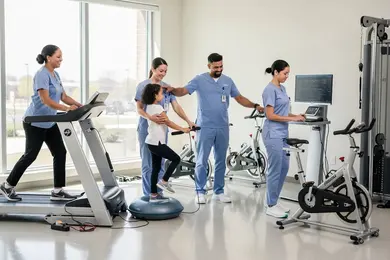
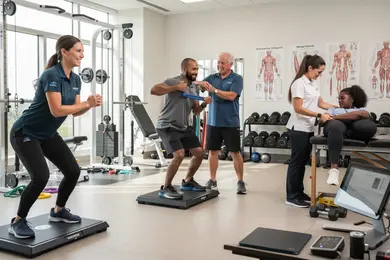
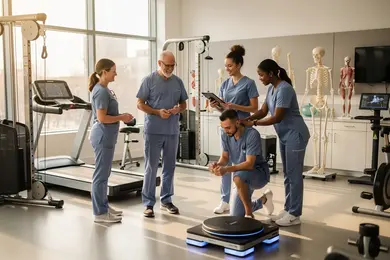
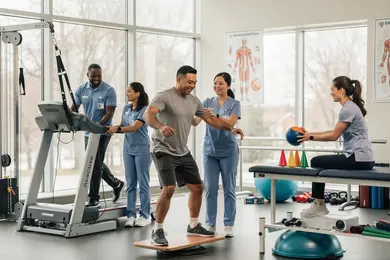
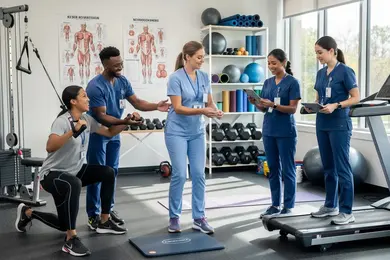
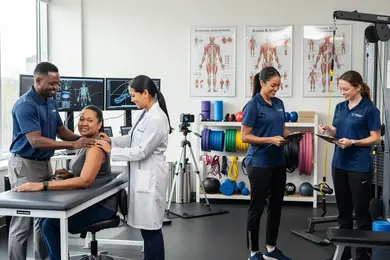
The exercise physiologist job responsibilities in kinesiology extend well beyond standard fitness training, requiring nuanced expertise to evaluate and design individualized programs that enhance cardiovascular capacity, muscular strength, and chronic disease management.
A kinesiology degree equips candidates with knowledge in anatomy, physiology, biomechanics, and motor learning, enabling them to develop evidence-based interventions tailored to clinical, corporate wellness, or sports medicine contexts.
Employers increasingly demand proficiency in functional assessments and physiological data interpretation. For instance, in cardiac rehabilitation, exercise physiologists must analyze heart rate variability and oxygen uptake trends to safely calibrate exercise intensity, which underscores how a kinesiology degree prepares exercise physiologists to perform tasks distinct from general fitness certifications.
Hands-on lab training and interdisciplinary collaboration within kinesiology curricula reduce onboarding challenges and promote immediate job effectiveness.
Projected employment growth of 9% from 2024 to 2034, alongside roughly 1,700 annual job openings, reflects rising demand for professionals versed in exercise science with clinical insight. Candidates should anticipate certification requirements and clinical internship prerequisites, especially for hospital settings.
Robust programs that integrate applied research methods and chronic disease frameworks develop competitive readiness aligned with employer expectations.
Real-world skills like adapting protocols for aging populations or leveraging technology-driven monitoring enable exercise physiologists to navigate insurance constraints and interdisciplinary teams effectively, securing both employment stability and measurable patient outcomes. Students exploring options may also consider an ASN program online for related allied health pathways.
Which exercise physiologist roles are directly open to graduates with a kinesiology degree?
Entry-level exercise physiologist jobs with a kinesiology degree typically revolve around roles such as fitness trainers, wellness coaches, and exercise specialists within corporate or community health settings. These positions require a foundational grasp of human movement and exercise protocols but often do not demand advanced certifications or graduate degrees.
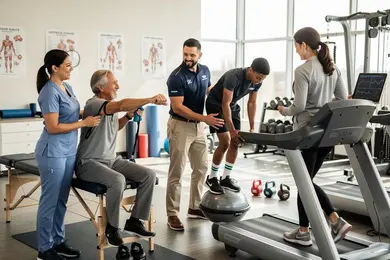
For example, rehabilitation centers and fitness facilities frequently employ kinesiology graduates to conduct routine exercise testing, create basic conditioning plans, and support licensed professionals.
Conversely, clinical exercise physiology careers for kinesiology graduates, especially hospital-based cardiac rehabilitation roles, now impose stricter hiring criteria.
More than 60% of these clinical positions require or prefer candidates with a master's degree plus ACSM Clinical Exercise Physiologist certification, presenting a tangible barrier to entry without further education. This shift highlights the widening divide between non-clinical and clinical roles within the field.
The practical implication is clear: kinesiology graduates interested in clinical specializations must anticipate additional credentialing to remain competitive, while those targeting wellness or fitness management can enter the workforce immediately but may encounter limited advancement prospects.
Key employer expectations include:
- Comprehensive knowledge of exercise testing and safety standards.
- Ability to develop evidence-based, individualized exercise plans in non-clinical environments.
- Effective client communication and motivational skills.
- Understanding that clinical rehabilitation roles generally mandate graduate study and certification.
For students weighing strategic educational investments, aligning degree choices with specific career outcomes is crucial. Some may explore related pathways such as a bachelors healthcare administration to diversify options within health services management.
What entry-level exercise physiology jobs can you get without a graduate degree?
Entry-level exercise physiology career options without a graduate degree primarily center on roles such as fitness trainers, rehabilitation aides, exercise technicians, and wellness coordinators. These positions emphasize foundational kinesiology knowledge but come with practical constraints, including limited autonomy in clinical decisions and modest starting salaries compared to advanced practitioners.
Employers often seek bachelor's-level kinesiology graduates to support program implementation under supervision in outpatient rehabilitation clinics, community health centers, and corporate wellness initiatives.
Positions like wellness program coordinators in large hospitals or corporations illustrate a pathway where early responsibilities develop leadership skills relevant for future advancement. According to a 2024 industry review, wellness program directors in these settings earn between $70,000 and $95,000 annually, indicating financial growth potential with experience and increased responsibility.
Candidates without graduate credentials face challenges that necessitate strategic credentialing, including certifications such as CPR, ACSM Certified Personal Trainer, or Certified Exercise Physiologist, which are often required for hospital or research-affiliated roles.
The sport performance and fitness sectors offer additional entry points through group exercise instruction and community-based health promotion, which prioritize communication and adaptability over graduate education.
Selecting workplaces with structured mentorship enhances practical skill acquisition crucial for long-term progress, especially in entry-level exercise physiologist jobs in the United States, where hands-on experience influences employability.
Ultimately, balancing immediate workforce entry against long-term career options without graduate studies requires targeted experience accumulation and credentialing. For those considering further education later, exploring master of healthcare administration programs can expand leadership opportunities within healthcare settings.
How do you become a clinical exercise physiologist starting from a kinesiology major?
Becoming a clinical exercise physiologist after a kinesiology degree involves more than academic coursework; navigating certification requirements in the United States requires strategic planning around clinical experience and credentialing.
The American Society of Clinical Exercise Physiology (ACSM-CEP) certification is often the key to licensure and employer recognition, demanding documented supervised clinical hours with patients managing chronic or cardiac conditions. This practical exposure typically extends 6-12 months post-graduation if the undergraduate program lacks integrated clinical components.
Most employers in hospitals, outpatient clinics, or cardiac rehab programs expect candidates to hold basic life support (BLS) or CPR certification alongside credentials, emphasizing hands-on preparedness over theoretical knowledge.
A clear tradeoff exists between initially lower entry-level salaries in clinical physiological roles and the requisite investment in supervised practice, which contrast with strength and conditioning roles that may offer higher pay but less clinical depth.
Advanced roles may require a master's degree in exercise physiology or related fields, but many professionals find part-time or assistant positions within clinical settings vital to accelerating employability. For those considering educational pathways beyond undergraduate kinesiology, evaluating offerings such as BSN to MSN online programs can inform decisions about healthcare-related advancement paths.
The career path to become a licensed clinical exercise physiologist after a kinesiology degree is marked by balancing certification demands, clinical hours, and market realities, requiring candidates to prioritize applied experience and maintain ongoing education to remain competitive.
What sports and performance-focused roles can kinesiology majors target in exercise physiology?
The strongest roles in exercise physiology for kinesiology majors-athletic training, strength and conditioning coaching, and performance physiology-demand proactive credentialing and hands-on experience paired with advanced technical knowledge.
Athletic trainers, who must secure certifications like the Board of Certification for Athletic Training, lead in workforce size and growth, driven by employer requirements emphasizing clinical competence and evidence-based care.
This field's 10-15% projected job growth through the early 2030s notably outpaces average U.S. employment trends, indicating robust demand particularly at amateur, collegiate, and professional levels.
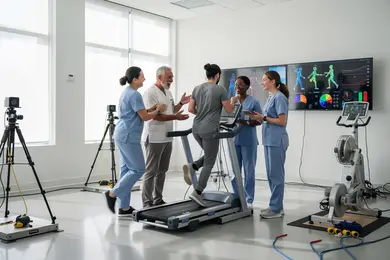
Strength and conditioning specialists operate at the intersection of biomechanics and sport-specific programming, requiring deep familiarity with contemporary tools such as velocity-based training and motion capture.
Most work in collegiate or professional sports settings, making certifications from bodies like the National Strength and Conditioning Association pivotal. The challenge lies in balancing evolving technology integration with hands-on regimen customization.
Performance physiologists provide detailed metabolic profiling and physiological testing-such as VO2 max and lactate threshold-to optimize athlete recovery and training loads. These roles often require graduate-level specialization or targeted certifications to meet the analytical demands of high-performance environments, complicating entry for those weighing immediate workforce entry against further education.
Students and professionals should recognize that securing these roles means navigating tradeoffs between credential acquisition timelines, practical internships, and field-specific adaptability in an increasingly competitive and technical job market.
How can a kinesiology degree lead to work in cardiac rehab and medical fitness settings?
Graduates with a kinesiology degree aiming for cardiac rehabilitation roles face a distinct set of employer expectations that separate this path from general fitness careers. Employers prioritize professionals capable of designing evidence-based exercise programs within strict clinical protocols tailored to cardiac patients with multiple comorbidities.
A typical practical learning element-clinical rotations or internships in hospital cardiac rehab units-equips candidates with essential skills such as ECG interpretation, blood pressure monitoring, and symptom management in real-time exercise scenarios.
Several workforce realities influence career outcomes:
- Most exercise physiologists function autonomously or within healthcare institutions, with a median annual wage around $58,160, reflecting the clinical specialization's value.
- Certifications in cardiac rehab or clinical exercise testing enhance employability and bargaining power for better salaries.
- Continuous education is mandatory due to evolving cardiac care guidelines, which demands commitment beyond degree completion.
- Independent practitioners face challenges like navigating insurance reimbursement and building referral networks from healthcare providers, essential for sustainable practice growth.
This pathway demands careful consideration of the balance between clinical rigor and entrepreneurial complexity, especially for those weighing hospital employment versus private practice.
What certifications do aspiring exercise physiologists need, and when should you earn them?
Securing certification is a decisive factor for kinesiology graduates aiming to enter or advance within the U.S. exercise physiology workforce. The American College of Sports Medicine Certified Exercise Physiologist (ACSM-CEP) credential or equivalent certifications such as the National Strength and Conditioning Association's Certified Special Population Specialist (CSPS) are baseline expectations for many employers.
These credentials require a bachelor's degree in kinesiology or a closely related field, so completing your degree before pursuing certification significantly enhances exam readiness and comprehension.
A common tradeoff involves timing: obtaining initial certification soon after graduation allows earlier entry into the job market but may restrict eligibility for specialized clinical roles that demand advanced certifications acquired through supervised experience.
For example, roles requiring Clinical Exercise Physiologist (CEP) certification often require post-degree clinical hours, delaying full qualification but opening higher-level opportunities.
Maintaining certification also requires ongoing commitment-ACSM mandates approximately 45 hours of continuing education every three years-highlighting that credential upkeep extends well beyond initial exams. Most candidates should allocate 3-6 months after graduation for focused exam preparation.
Regional labor market conditions can affect certification urgency. In British Columbia, for instance, projected growth and retirements create "good" job prospects, meaning credential currency may shorten hiring timelines and improve salary negotiations.
How do salaries and job outlook compare across different exercise physiologist career paths?
Salary and job prospects for exercise physiologists hinge largely on the chosen sector and credential level, creating a notable divide in career outcomes. Clinical exercise physiologists working in hospitals or rehab centers, typically requiring specialized certifications, earn median wages of $60,000 to $70,000. These roles benefit from healthcare reimbursements and more stable funding.
In contrast, those in corporate wellness or health coaching, often accessible with a bachelor's degree alone, see salaries closer to $40,000 to $55,000 but face limited growth due to budget constraints and market competition.
The job market projects 6-14% growth for exercise science roles through 2032, with clinical specializations-especially in chronic disease management and preventive care-outpacing general wellness positions.
Employers prioritize advanced credentials for clinical roles, which come with slower initial placement but greater long-term job security and salary potential. Meanwhile, community-based fitness jobs allow rapid entry but limit advancement and lifetime earning capacity.
Prospective kinesiology students must balance immediate salary benefits against credential investment and sector-specific hiring realities.
For example, pursuing cardiac rehabilitation demands certification and patience for placement yet leads to more secure career trajectories compared to wellness coaching, which offers quicker access but lower salary ceilings. Aligning educational choices with these practical workforce distinctions is key to maximizing the return on investment in this field.
What courses and concentrations in a kinesiology program best align with exercise physiology work?
Optimal pathways into exercise physiology within a kinesiology program are defined less by broad curricula and more by precise alignment with employer demands for technical fluency in physiological measurement and data analysis.
Employers in clinical and research settings now prioritize candidates with foundational knowledge in human anatomy, exercise physiology, biomechanics, and metabolic physiology, combined with specialized coursework in cardiovascular and respiratory systems, neuromuscular function, and energy metabolism.
This specialization is critical in roles such as cardiac rehabilitation, where proficiency in exercise testing protocols and interpreting physiological stress responses directly affects patient outcomes. Conversely, research roles with an emphasis on biomechanical analysis require expertise in motion capture and kinetics, illustrating distinct workflow requirements across subfields.
Practical skills developed through concentrations in clinical exercise testing, rehabilitation science, or sports performance strengthen employability but also require acceptance of the accompanying rigorous hands-on training often involving populations with chronic conditions or athletic performance demands.
Programs emphasizing lab rotations or faculty-led research projects are strategically advantageous, reflecting a nearly 40% uptick in graduates targeting data-driven research roles.
Decisive course selection focusing on quantitative and applied physiology skills offers a clear employment edge over generalized kinesiology tracks, underscoring the need for students to weigh the tradeoff between broader elective flexibility and specialized technical mastery.
How should you choose an accredited kinesiology program for an exercise physiology career?
Choosing an accredited kinesiology program requires prioritizing those aligned with recognized regional accreditation and endorsed by bodies like the Commission on Accreditation of Allied Health Education Programs (CAAHEP). Such validation ensures curricula meet evolving healthcare standards and match employer expectations for roles in clinical exercise physiology.
Programs linked to major research universities or supported by significant government-funded studies tend to provide richer clinical experiences and access to evidence-based practices, which are increasingly critical in healthcare hiring decisions.
Employment outcomes serve as a key metric: programs demonstrating strong graduate placement in specialties such as physical therapy or clinical exercise physiology correlate with higher starting salaries.
Workforce data from the U.S. Bureau of Labor Statistics paired with recent industry analyses project kinesiology graduates in specialized healthcare roles earning between $55,000 and $90,000 within a few years, with variation based on role seniority and specialization.
For professionals pivoting into clinical exercise physiology, program flexibility and relevant clinical internships are essential to minimize employment gaps and ensure licensure exam preparedness. Programs that incorporate certified coursework for professional exams directly influence credentialing success and long-term earning potential.
Financial transparency combined with verifiable alumni outcomes should guide investment decisions. Programs emphasizing measurable career placement and advanced applied training offer the most tangible path to sustained professional advancement in kinesiology-related healthcare fields.
Other Things You Should Know About Kinesiology
A graduate degree is often required to access specialized clinical or research positions and can significantly improve job stability and salary potential. Without advanced credentials, most kinesiology graduates face a ceiling in roles like fitness coaching or wellness program coordination. Prioritizing a master's or relevant certifications is advisable if long-term growth into clinical exercise physiology or leadership is your goal.
Employers in exercise physiology roles expect hands-on, supervised experience, often requiring clinical internships or practicums integrated into your kinesiology curriculum. Programs lacking structured practical training delay workforce readiness, forcing graduates to seek additional certification or experience externally. When selecting a program, prioritize those with robust, employer-recognized practicum components aligned with exercise physiology standards.
A broad kinesiology curriculum offers versatility across health, fitness, and rehabilitation sectors but may limit immediate employability in clinical exercise physiology. Conversely, a specialized exercise physiology track equips you with targeted skills but narrows your job market to roles requiring deeper technical expertise. Choose based on whether you seek flexible entry into diverse health roles or concentrated preparation for clinical or research exercise physiology positions.
References
- Best Exercise Science Careers - Let's Find out! https://www.ptpioneer.com/personal-training/exercise-science-careers/
- Kinesiology: Concentration Exercise Science https://www.apsu.edu/programs/undergraduate/kinesiology-exercise-science.php
- What Can You Do with a Kinesiology Degree? https://www.nec.edu/news/what-can-you-do-with-kinesiology-degree
- B.S. in Exercise Science | Cornerstone University https://www.cornerstone.edu/programs/exercise-science/
- International Clinical Exercise Physiology Qualification Application Pathways https://icsesp.global/resources/international-clinical-exercise-physiology-recognition-opportunities/
- Exercise Physiologist https://acsm.org/certification/get-certified/exercise-physiologist/
- ESSA's career guide for Accredited Exercise Physiologists https://www.essa.org.au/Web/Web/Resources/Tools-and-templates/ESSA-AEP-Guide.aspx
- Kinesiology and Exercise Science Careers Guide https://teach.com/online-ed/healthcare-degrees/online-bachelors-kinesiology-exercise-science/career-outlook/
- Careers in Exercise Science – Jobs, Salaries, and Growth Opportunities https://www.pickmyuni.com/student-resources/careers-in-exercise-science-123