2027 Employers Hiring Most Aggressively for Kinesiology Talent

Co-Founder and Chief Data Scientist
Securing a role in kinesiology often hinges on navigating a recruitment market increasingly shaped by employers' preference for candidates with practical, adaptable skill sets and accelerated workforce entry. With the U. S. Bureau of Labor Statistics projecting kinesiology-related roles to grow over 9% through 2032, the pressure mounts on students and professionals to align their education with rapidly evolving employer demands.
Recent data from the National Student Clearinghouse Research Center reveals a 15% surge in enrollment for hybrid and online kinesiology programs, indicating growing urgency around flexible learning paths that accommodate career shifts and adult learners. This article identifies which employers are aggressively hiring kinesiology experts and offers strategic insights to help candidates optimize timing, program choice, and skill acquisition for maximum employment advantage.
Key Things You Should Know
- U.S. Labor Department data shows a 22% increase in demand for kinesiology graduates within physical therapy and wellness sectors, pushing employers to prioritize candidates with clinical certifications over solely academic credentials.
- Employers report a growing need for kinesiology professionals skilled in digital health analytics, yet only 18% of graduates possess proficiency, generating a competitive bottleneck that reframes recruitment toward hybrid training models.
- Average degree-to-employment time for kinesiology roles dropped to 5 months in 2025, intensifying cost pressures on candidates who face balancing accelerated certification paths against limited employer-paid upskilling opportunities.
Which employers are hiring the most kinesiology graduates and what roles are they filling?
Employers hiring kinesiology graduates in North America prioritize candidates who blend a solid understanding of human anatomy with applied expertise in emerging technologies like motion capture and wearable sensors.
This technical skill set aligns with rising demands in healthcare environments, where exercise physiologists support cardiac rehabilitation and chronic disease management amid increasing patient complexity. However, practical barriers such as obtaining certifications like Certified Exercise Physiologist and navigating diverse state licensure requirements often limit access to higher-compensation and leadership roles in clinical settings.
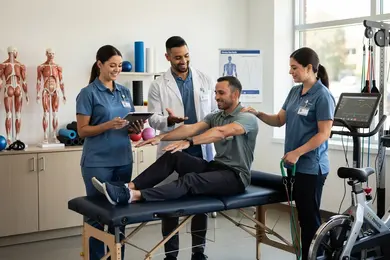
Top roles for kinesiology degree holders in the workplace vary distinctly by sector. In healthcare, positions focus on rehabilitation specialists and clinical exercise physiologists, emphasizing patient-centered protocols and therapeutic interventions.
Conversely, sports organizations fill strength and conditioning coach roles with a performance optimization mandate, demanding expertise in sport-specific programming and injury prevention. Academic and research institutions attract kinesiology graduates with credentials for roles requiring long-term innovation in human movement science.
Graduates targeting healthcare employers improve prospects through clinical internships, typically in hospital exercise labs, while those focused on athletic roles benefit from experience with collegiate or professional teams, including familiarity with evolving treatment protocols.
Adapting to these divergent expectations is key for workforce success. For those interested in managerial pathways, understanding the career arc of an athletic director can reveal additional leadership opportunities beyond direct care and coaching roles.
What industries are driving current demand and job growth for kinesiology majors?
Demand for kinesiology graduates is expanding most rapidly within healthcare, fitness, and rehabilitation sectors, where applied skills in mobility support, injury prevention, and post-surgical rehabilitation are essential. Hospitals and outpatient therapy centers constitute the largest employer segment, often requiring kinesiology foundations for physical and occupational therapy assistant roles.
This scenario illustrates a common tradeoff: while many entry-level positions welcome bachelor's holders, advanced certifications or graduate degrees typically unlock higher pay and specialized roles.
Sports science and rehabilitation job growth trends show increasing hiring by collegiate and professional sports organizations as well as commercial fitness facilities, seeking experts to enhance athlete performance and injury management.
Positions such as strength and conditioning coach or rehabilitation specialist depend heavily on practical biomechanics and exercise prescription knowledge rather than strictly academic credentials.
Emerging healthcare industries hiring kinesiology graduates now frequently include occupational health and ergonomics within corporate wellness, focused on reducing workplace injuries and boosting productivity.
Public health agencies also employ graduates to design and implement community physical activity initiatives targeting obesity and sedentary behavior, requiring cross-disciplinary coordination and data analysis.
Graduate placement rates for kinesiology bachelor's degrees reach 80%-90% within six months, according to CU Chicago's 2025 summary. Prospective students should weigh the benefits of entering the workforce quickly against the delayed but often more lucrative pathways that advanced credentials offer.
For those considering extended academic routes, programs like the fastest PMHNP programs provide models of accelerated progression in related health fields.
What kinesiology degree levels and specializations are most attractive to employers today?
Employers prioritize candidates with bachelor's or master's degrees in kinesiology, particularly those who specialize in clinical exercise physiology, biomechanics, or sports performance. Demand is strongest for individuals combining foundational knowledge with skills in data analysis, rehabilitation, or performance optimization, reflecting the market preference revealed by over 1,000 kinesiology researcher jobs listed on LinkedIn Jobs.
These hiring trends illustrate how employers' preferred kinesiology degree levels and specialties align tightly with practical, applied competencies rather than general credentials.
Entry-level positions usually require a bachelor's focus in exercise physiology or motor behavior, suitable for roles in clinical support or wellness programs, but these often come with flat wage growth and limited leadership pathways.
By contrast, master's degrees emphasizing sports biomechanics or rehabilitation open access to clinical and research settings needing expertise in movement analysis and patient outcome measurement.
Graduates able to interpret data from wearable technology or perform functional movement assessments have a notable advantage, especially in rehabilitation clinics aiming to improve post-injury protocols.
Doctoral-level professionals typically fill academic and advanced clinical roles requiring grant writing, experimental design, and interdisciplinary collaboration, further delineating employment niches by degree level and specialization.
Candidates must weigh tradeoffs: bachelor's programs offer fast workforce entry but restrict research and advanced clinical roles; master's degrees increase employability for specialized positions at higher cost and duration; doctoral pathways are intensive with fewer job openings but essential for academic leadership.
Many administrative and sport science employers now require certifications alongside academic credentials to substantiate applied competencies.
For those evaluating potential programs, including affordable online healthcare degrees, practical outcomes and alignment with employer expectations in kinesiology degree specializations most valued by employers should guide decisions.
How does a kinesiology curriculum prepare students for specific high-demand career paths?
Specialized coursework in biomechanics, motor control, exercise physiology, and clinical assessment equips kinesiology graduates with the practical skills employers seek for roles in rehabilitation and therapeutic evaluation.
The kinesiology curriculum for healthcare professions trains students to interpret complex physical data and create individualized intervention plans, making them immediately valuable in positions such as physical therapy assistants and athletic trainers.
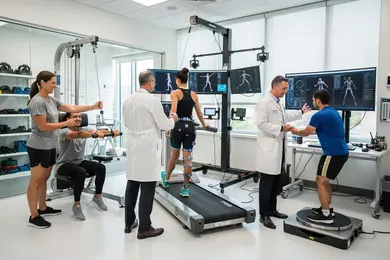
These roles demand proficiency beyond theory-especially in client assessment and exercise prescription-and kinesiology programs reflect this by incorporating hands-on experience with tools like motion capture and EMG analysis.
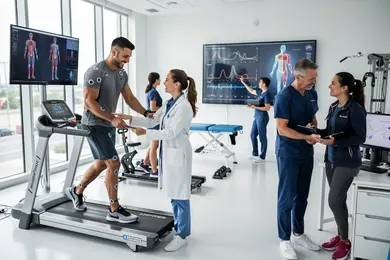
In a busy physical therapy clinic, for example, a kinesiology professional capable of performing functional movement screenings and applying corrective exercises reduces overall therapist workload and improves patient recovery metrics. Employers prioritize candidates who can manage initial assessments autonomously, a distinct advantage in high-demand healthcare environments.
Programs couple foundational sciences with applied anatomy labs and internships, exposing students to diverse populations and injury prevention strategies, which broadens their competence in Ontario's expanding market where kinesiology degree career opportunities remain strong through 2027 according to Job Bank Canada.
However, pursuing this pathway also requires considering tradeoffs such as additional certifications or licensing that certain career tracks necessitate, potentially extending the time to employment. Emerging fields like corporate wellness and ergonomics offer avenues for specialization but often demand further credentials.
Students should realistically assess these requirements alongside immediate workforce needs. For those exploring alternative health-related educational routes, an RN to BSN online program might provide a different but complementary pathway to healthcare employment.
What are typical entry-level and midcareer salaries for major kinesiology career tracks?
Entry-level salaries in kinesiology vary notably depending on the role and sector, with clinical exercise physiologists and physical therapy assistants generally starting near $48,000 annually. Midcareer professionals often reach $70,000 to $90,000, especially in sports science or rehabilitation support, where advanced certifications or experience may push salaries up to $85,000.
For instance, an exercise physiologist working in a hospital typically begins at about $50,000 but can expect salary growth aligned with added credentials and responsibilities.
Geographic location, employer type, and credentialing critically shape wage progression. Positions in professional sports settings may offer higher initial pay, around $60,000, yet come with contract volatility, whereas roles in community health promote steadier but usually lower compensation.
Research and academic kinesiology tracks tend to start lower, $50,000-$55,000, with incremental raises absent tenure or significant funding. Candidates must carefully balance time and financial investment in postgraduate certifications such as the Certified Strength and Conditioning Specialist (CSCS), which can boost starting salaries by 10-15%, against likely job market outcomes.
While strong hiring demand exists, practical wage advancement is uneven and hinges on targeted skill acquisition and employer demand patterns within the kinesiology field.
How do online kinesiology programs compare with campus-based options in employer perception?
Employers overwhelmingly prefer campus-based kinesiology programs due to their direct access to hands-on clinical training, specialized equipment, and real-time mentorship-components critical for mastering movement analysis, rehabilitation, and exercise physiology. This preference is especially relevant in healthcare and sports medicine, where employers require documented clinical hours and skill verification before hiring.
Purely online kinesiology degrees often lack structured, supervised practicum components, creating doubts about skill readiness for roles demanding immediate applied expertise. For example, hospitals or rehabilitation centers prioritize candidates with immersive, in-person practicum experience and may discount online credentials unless bolstered by rigorous externships or hybrid clinical rotations.
This gap affects employment outcomes and wage progression, with exercise physiologists earning a median annual wage of $58,160, according to the Bureau of Labor Statistics.
Hybrid programs that integrate synchronous online coursework with local clinical placements offer a more viable path for working professionals pivoting careers. However, prospective students must critically evaluate whether programs maintain formal partnerships with clinical sites and document supervision hours recognized by employers.
Key considerations include:
- Availability of supervised internships on campus or through trusted local partners.
- Direct access to specialized kinesiology lab equipment and mentorship.
- Program transparency about clinical hour requirements tied to employer expectations.
Without these elements, online-only degrees risk limiting competitive advantage in the kinesiology job market through 2026 and beyond.
Which accreditations and program quality indicators matter most to kinesiology employers?
Employers in kinesiology increasingly demand clear credentials that prove both academic depth and practical expertise. Certifications such as Certified Strength and Conditioning Specialist (CSCS) or Certified Exercise Physiologist (CEP) significantly enhance starting salaries and job prospects, especially in urban healthcare and sports settings where certified practitioners can start above $50,000, according to data from CU Chicago.
Accreditation from bodies like the Commission on Accreditation of Allied Health Education Programs (CAAHEP) or the Council on Accreditation of Parks, Recreation, Tourism and Related Professions (COAPRT) signals program quality crucial to employers seeking standardized education aligned with public health, rehabilitation, or sports science needs.
Different kinesiology subfields prioritize diverse program components:
- Healthcare systems value robust clinical practicum hours and accreditation matching clinical certifications.
- Sports organizations prefer strong biomechanical analytics and sports nutrition modules, even with limited clinical experience.
Tradeoffs involve balancing program cost against measurable outcomes like certification exam pass rates and internship availability. Geographic accreditation recognition also shapes employer acceptance and job entry speed, with regionally accredited programs often easing local hiring processes.
This mix of specialized certification, accredited education, and practical experience forms the tangible criteria employers use to evaluate competence-not generic degrees. Candidates aiming for kinesiology roles must strategically select programs that match their targeted employment sector and long-term credential requirements.
What certifications and licenses boost employability for kinesiology and exercise science roles?
Holding Certified Exercise Physiologist (CEP) and Certified Strength and Conditioning Specialist (CSCS) credentials distinctly influences employability in kinesiology by aligning qualifications with specific workforce demands. For instance, CEP certification is often mandatory for cardiac rehabilitation settings, where clinical precision in exercise prescription directly impacts patient safety.
Conversely, CSCS credentials cater to athletic performance environments, validating expertise required by professional teams and training facilities.
Acquiring multiple certifications broadens job prospects but introduces practical challenges: maintaining both CEP and CSCS requires roughly 60 continuing education credits triannually, implying sustained time and financial investments that candidates must anticipate.
Employers also value specialized licenses such as Certified Personal Trainer (CPT) or qualifications in corrective exercise and functional movement, which enhance candidacy particularly in community and fitness-sector roles.
Licensed clinical exercise physiologists with state approval often command better compensation and access to hospital or geriatric programs, yet these pathways demand adherence to evolving regulatory standards. Realistically, students and professionals should weigh the tradeoff between expanded marketability and the administrative burdens tied to credential upkeep.
Current labor data indicates over 5,000 kinesiology-related jobs are open across the United States, reflecting a competitive field where differentiation through targeted certification often dictates hiring outcomes.
How can students build internships, clinical hours, and experience that impress kinesiology employers?
Employers in kinesiology increasingly value candidates who combine quantifiable internships with relevant clinical hours to demonstrate readiness and reduce onboarding time. From 2024 to 2025, average salaries rose modestly from $53,897 to $54,843, signaling a steady rise in skills valuation rather than rapid inflation.
Prioritizing internships in specialized settings such as sports medicine or rehabilitation clinics allows students to collect data-driven outcomes, for example, patient recovery rates or injury prevention statistics, which differentiate applicants.
Practical exposure must center on evidence-based assessment and motor function analysis consistent with hospital or athletic demands. A candidate logging 300+ clinical hours alongside a project analyzing biomechanical data gains measurable proof of competence that academic coursework cannot substitute. Such experience addresses employer concerns about workforce readiness and curtails additional training expenses.
Effective networking within clinical placements offers mentorship and cultivates communication skills essential for interprofessional teams-an increasingly decisive hiring criterion. Concurrent employment as an exercise technician or physical therapy aide diversifies experience and demonstrates adaptability, qualities employers prefer over unrelated job histories.
Balancing internship timing with certifications like CPR or state licensure requirements optimizes employability by aligning credentials with practical competence.
What criteria should students use to choose a kinesiology program aligned with hiring trends?
Programs aligned with 2026 hiring trends in kinesiology emphasize applied biomechanics, exercise physiology, and data analytics, responding to employer demand for measurable outcomes. Those embedding clinical practicum in outpatient physical therapy settings provide direct pathways to in-demand roles, such as in Vermont, where kinesiology jobs reach 13 per 1,000 residents, the nation's highest concentration according to Zippia.
Such experiential components bridge classroom theories with workforce needs, but they also lengthen time-to-degree and may limit options for those balancing employment.
Graduates' job placement rates within six months and employer satisfaction scores offer critical insight into a program's alignment with real-world employer expectations. Programs integrating certification prep for ACSM or NASM better match explicit job requirements found in private rehab and corporate wellness sectors, reducing gaps between hiring criteria and candidate readiness.
Students should consider geographic employment density alongside tuition costs. Investment in programs linked to states with fewer kinesiology openings can constrain early-career opportunities and earning potential. Balancing local job market data with education expenses mitigates risk and maximizes return on investment.
Flexible learning paired with on-site clinical hours allows working professionals to upskill without halting their careers but requires tradeoffs between speed and depth of training. Evaluating these factors against desired career outcomes supports strategic educational decisions in a competitive labor market.
Other Things You Should Know About Kinesiology
Employers in kinesiology emphasize hands-on experience as much as, if not more than, academic credentials. Internships, clinical hours, and applied research projects directly relevant to the target industry consistently outweigh theoretical knowledge alone. Students should prioritize programs and opportunities that integrate substantial fieldwork or practicum requirements, as this experience sharpens skills and signals job readiness to employers.
Kinesiology programs with extensive internship or clinical hour requirements increase time demands, which can lengthen time to degree completion and stress students managing part-time jobs. Balancing rigorous coursework with practical placements requires strong time management and may necessitate reducing course loads or extending program duration. Prospective students should carefully assess program structures to ensure they can handle this balance without compromising academic performance or financial stability.
While broad foundational skills in human movement, anatomy, and physiology create versatile candidates, employers increasingly seek niche specializations aligned with industry needs like sports nutrition, rehabilitation technology, or performance analytics. Job seekers should prioritize specializations that match local or national hiring trends to maximize employability and career growth. Specializing too early without market validation may limit opportunities, so combining a broad base with targeted skill development is the most effective strategy.
References
- Kinesiology Program Quality Indicators | Washburn University https://www.washburn.edu/academics/college-schools/arts-sciences/kinesiology/quality-indicators.html
- Kinesiology Full Time Jobs in All New Zealand, Job Vacancies - Jun 2026 | SEEK https://nz.seek.com/kinesiology-jobs/full-time
- What Employers Should Look for in Accredited Qualifications https://www.internationaleducationboard.co.uk/post/what-employers-should-look-for-in-accredited-qualifications
- Best Exercise Science Careers - Let's Find out! https://www.ptpioneer.com/personal-training/exercise-science-careers/
- Online Degree vs. Traditional: Choosing the Right Path https://beal.edu/online-degree-vs-traditional/
- American Kinesiology Association | Careers in Kinesiology https://americankinesiology.org/careers-in-kinesiology/
- Kinesiology and Exercise Science Careers Guide https://teach.com/online-ed/healthcare-degrees/online-bachelors-kinesiology-exercise-science/career-outlook/
- What Can You Do With a Kinesiology Major? | USAHS https://www.usa.edu/blog/what-can-you-do-with-a-kinesiology-major/
- What Can You Do with a Kinesiology Degree? https://www.nec.edu/news/what-can-you-do-with-kinesiology-degree
- How Employers View Online Degrees: Interviews with Nine Hiring Executives https://www.onlineeducation.com/features/how-employers-view-online-degrees