2027 Coaching and Performance Roles You Can Target With a Kinesiology Degree

Co-Founder and Chief Data Scientist
Graduates with a kinesiology degree face the urgent challenge of navigating a fragmented job market where coaching and performance roles vary dramatically in requirements and career trajectories. Demand for versatile skill sets is rising as employers increasingly seek candidates with both scientific expertise and applied experience.
According to the National Center for Education Statistics, nearly 30% of adults enrolled in postsecondary programs in 2024 opted for flexible, online or hybrid formats, signaling shifts in how students pursue credentials to accelerate workforce entry or pivot careers. This article explores specific coaching and performance roles accessible with a kinesiology degree and offers practical guidance on targeting opportunities that balance employability and career growth amid shifting labor dynamics.
Key Things You Should Know
- Employment projections from the U.S. Bureau of Labor Statistics indicate a 13% growth in performance coaching roles linked to kinesiology expertise through 2032, but positions often require specialized certifications beyond a bachelor's degree, limiting immediate entry-level access.
- Employers increasingly prioritize candidates combining kinesiology knowledge with data analytics skills, per National Strength and Conditioning Association reports, creating a dual-competency expectation that graduates must meet to compete in high-impact sports science and rehab sectors.
- Graduate-level kinesiology programs average $25,000-$45,000 annually in tuition, posing a timing and cost tradeoff for professionals seeking advancement versus faster, certification-based career pivots within emerging coaching niches.
What careers can you pursue with a kinesiology degree?
The path into careers in coaching and performance with a kinesiology degree requires navigating competitive entry points and complementary certifications. Coaching roles, while numerous with nearly 20,800 projected annual openings for coaches and scouts, demand specialized credentials that vary by sport and level, posing significant friction especially for aspirants targeting collegiate or professional ranks.
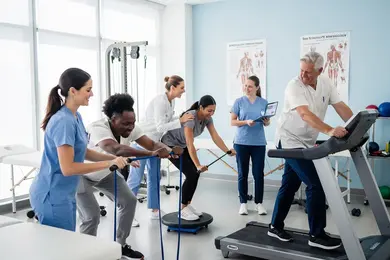
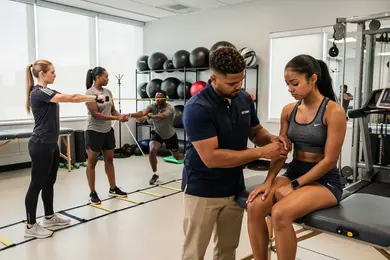
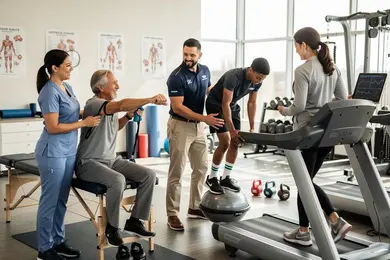
Career opportunities in kinesiology for coaching roles extend beyond direct team management to performance optimization jobs such as exercise physiologists or strength and conditioning specialists. These positions rely heavily on applied biomechanics and physiology expertise, with employers prioritizing candidates who combine theoretical knowledge with substantial hands-on internships and real-world skill application, given the practical demands of improving athlete performance and injury prevention.
A kinesiology degree also supports roles assisting physical therapists, designing recovery programs, or coordinating fitness services within healthcare. However, these roles often require additional certifications to attain clinical authority. Furthermore, integrating technology-such as data analytics and wearable devices-is increasingly non-negotiable for employability in modern kinesiology fields.
Graduates lacking technical fluency face diminishing prospects in a workforce that values the synergy of science and technology. For example, a candidate focused on collegiate sports should pursue targeted certifications and build networks within athletic departments, addressing workforce saturation at entry coaching positions. Understanding specific athletic director education requirements enhances strategic planning for career advancement in administration alongside coaching.
Which coaching and performance jobs hire kinesiology graduates?
Employers filling strength and conditioning and performance jobs for kinesiology graduates emphasize certifications such as Certified Strength and Conditioning Specialist (CSCS) and requiring hands-on experience that combines biomechanics with sport-specific training programs. For example, strength and conditioning coaches tied to professional sports franchises may exceed six-figure salaries, while entry-level roles at community colleges often pay below $40,000.
This divergence highlights the importance of strategic job targeting within the kinesiology degree coaching career opportunities landscape. Roles like athletic trainers and rehabilitation specialists demand practical clinical skills and certifications, with positions in schools and clinics requiring adherence to state-specific licensure protocols.
Graduates must navigate these regulatory frameworks alongside internship requirements that often pose significant obstacles during degree completion. Growth projections for strength and conditioning coaches show a robust 9% increase through 2033. However, meaningful career progression depends on networking within sports or healthcare sectors and demonstrating quantifiable results rather than relying solely on academic credentials.
The kinesiology degree coaching career opportunities operate within these pragmatic parameters, balancing employer expectations, credentialing hurdles, and salary stratifications. Prospective candidates should weigh these factors carefully when planning their education and experiential pathways. Individuals considering further education might also explore doctorate in health administration programs to expand options beyond hands-on performance roles.
What education and certifications do kinesiology coaching roles require?
Certification and educational qualifications for kinesiology coaches shape access to viable roles in this competitive field. Entry-level jobs generally demand a bachelor's degree in kinesiology, exercise science, or related health fields, emphasizing anatomy, physiology, biomechanics, and nutrition. For fitness professionals like personal trainers, employers require nationally recognized certifications such as those from ACSM, NSCA, or NASM.
More specialized or clinical positions-such as those in rehabilitation or collegiate sports-often mandate a master's degree combined with targeted credentials like Certified Athletic Trainer or Licensed Physical Therapist Assistant. These roles also enforce ongoing education through CEUs to maintain certification standards.
For example, NCAA standards require strength and conditioning coaches to hold the Certified Strength and Conditioning Specialist (CSCS) credential along with documented supervised coaching hours. Kinesiology coaching certification requirements extend beyond academic credentials to software literacy, injury prevention protocols, and biomechanical data application-necessitating supplementary workshops outside core curricula.
Without certification or relevant experience, candidates confront significant regulatory and employment barriers. This balance between formal education, certification, and hands-on training defines employability in kinesiology careers. Those evaluating educational qualifications for kinesiology coaches should consider the impact of combined credentials and practical exposure on workforce readiness.
For professionals interested in pivoting or advancing within healthcare and fitness sectors, options like pursuing an MBA healthcare can complement kinesiology expertise with managerial skills, broadening career trajectories.
Is an online kinesiology degree as credible as a campus program?
An online kinesiology degree program credibility depends heavily on how well it replicates essential hands-on training found in campus programs. While regional accreditation and curriculum rigor align online and campus offerings academically, employer demand for supervised physical assessments and lab work often distinguishes graduate readiness.
Exercise physiologists, with a median salary of $54,860 and a 10% job growth projection through 2033 per Oregon State University citing BLS data, benefit most from programs that embed internships or hybrid labs rather than fully remote formats lacking experiential components. Key tradeoffs arise when comparing online versus campus kinesiology degrees: campus students access immediate faculty mentorship and specialized equipment.
Online learners must proactively secure local partnerships to avoid competence gaps that are critical in healthcare and sports performance roles. Flexibility suits working professionals pursuing pivots but requires self-direction to gain quality field experiences, while recent graduates targeting clinical or research roles may prioritize a campus environment that aligns tightly with employer expectations.
Verify program accreditation, curriculum equivalency, and clinical experience structure before committing, as these factors directly impact employability and skill validation in kinesiology-based careers. For a broader perspective on similar educational comparisons, consider exploring Capella vs Chamberlain RN to BSN evaluations that emphasize practical outcomes and market positioning relevant to healthcare fields.
What should a kinesiology curriculum include for coaching careers?
Effective training for coaching careers in kinesiology requires a curriculum that balances foundational sciences with applied expertise in human movement and conditioning. Employers expect graduates to design individualized training programs incorporating anatomy, exercise physiology, biomechanics, injury prevention, nutrition, and sport-specific skill development.
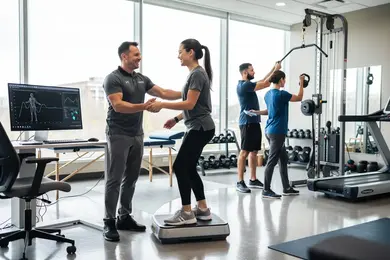
Practical labs replicating real coaching scenarios are vital-they cultivate skills such as athlete performance assessment and biomechanical data interpretation, which remain critical for on-the-job success. Coaching is as much about managing people as it is about science; thus, communication, psychology, and group dynamics training have tangible value. The modern coaching environment increasingly demands competency in data analytics and sports technology.
For instance, strength and conditioning coaches working with collegiate athletes must interpret data from wearable devices to refine recovery and training plans. Tradeoffs in curriculum design become apparent when balancing theory with real-world skills. Programs neglecting technology risk leaving graduates ill-prepared for sectors utilizing motion capture or AI-driven models, while overly theoretical paths can produce candidates unfit for the unpredictability of coaching demands.
Inclusion of CPR, first aid, and sport-specific certifications improves employability given the projected 47,500 annual job openings for fitness trainers and instructors. Ethical coaching practices, legal responsibilities, and diversity awareness also deserve explicit coverage. Graduates who efficiently pivot between youth, amateur, and elite-level coaching roles meet a wider range of employer needs in this competitive labor market.
How long does a kinesiology degree take to finish?
Completing a bachelor's degree in kinesiology typically takes four years full-time, blending foundational education with specialized studies in biomechanics and exercise physiology. Part-time students may need five to six years, while accelerated options remain rare and demand prior credits or intense coursework, limiting outside work. Graduates with only a bachelor's often enter entry-level fitness or coaching roles, but higher-paying clinical positions require further study.
For instance, becoming a licensed physical therapist involves pursuing a three-year Doctor of Physical Therapy (DPT) after the bachelor's, a path extending total education to seven or more years. Rehabilitation therapists earn a median wage significantly above bachelor-level roles, reflecting employer preference for advanced qualifications in clinical and rehabilitation contexts.
Prospective students prioritizing quick entry into coaching or fitness should ensure their program integrates certifications and internships aligned with employer expectations. Conversely, those targeting rehabilitation specialties must anticipate prolonged education and plan prerequisites early to avoid delays in licensure.
Key considerations include program accreditation, clinical experience quality, and compatibility with state licensing rules. Navigating these factors pragmatically determines workforce readiness and long-term employability, making the choice between immediate job eligibility and graduate education a strategic decision shaped by individual circumstances.
What admissions requirements do kinesiology programs typically set?
Successfully navigating kinesiology admissions requires more than meeting basic academic thresholds; it demands strategic alignment with workforce expectations and practical skill readiness. While foundational coursework in biology, chemistry, physics, and math remains mandatory, the distinction between applicants often hinges on measurable applied competencies and real-world experiences such as internships or fitness-related employment.
Institutions increasingly incorporate prerequisites like CPR/AED certification and background checks to safeguard clinical and corporate placements. This reflects growing employer insistence on immediate functional readiness over theoretical prowess, directly impacting graduate employability and time-to-degree. Transfer students, in particular, should expect rigorous scrutiny of prior credits, with many programs insisting on minimum grades to maintain progression.
Key tradeoffs emerge when applicants overlook targeted experiential elements: extended education timelines and diminished practical credentials that employers prioritize, especially in burgeoning fields like corporate wellness and rehabilitative coaching. The U.S. Bureau of Labor Statistics projects a 14% growth in personal trainer roles through 2033, underscoring the premium on candidates who demonstrate career-focused preparation within their academic journey.
- Minimum high school GPA requirements usually range from 2.5 to 3.5 depending on program selectivity.
- Submission of personal statements emphasizing human movement and health science concepts often influences acceptance.
- Background checks and certifications are standard for clinical placements.
- Emphasis on applied assessments aligns with labor market demands.
How do you choose an accredited kinesiology program?
Choosing a kinesiology program requires prioritizing accreditation that demonstrates both institutional legitimacy and specialized programmatic quality. Employers specifically seek graduates from programs accredited by recognized bodies like the Commission on Accreditation of Allied Health Education Programs (CAAHEP), ensuring curriculum rigor and applicable clinical experience rather than mere regional accreditation of the university alone.
Practical outcomes matter most: for instance, strength and conditioning coaches with a bachelor's degree in kinesiology typically earn around $66,704 annually, reflecting the workforce value of programs connected to employment networks such as fitness centers and healthcare facilities. Prospective students should assess graduate employment rates and whether internships or lab work form a significant component of training.
Key evaluation points include:
- Balance of theory with hands-on experience in biomechanics, exercise physiology, and strength conditioning modules
- Alignment with certifications such as Certified Strength and Conditioning Specialist (CSCS) to support specialized career paths
- Program logistics like length, part-time or online availability, and transfer credit policies to accommodate working students
- Transparent student outcome data including retention, certification exam pass rates, and internship placements
Without these practical checks, students risk investing time and money in degrees that do not deliver market-validated skills or clear paths to employment.
How much do coaching and performance professionals earn?
Coaching and performance professionals with a kinesiology degree encounter a broad salary spectrum shaped by specialization, credentials, and employer type. Entry-level positions in community health or fitness centers often start around $40,000 to $45,000 but typically require additional certifications to remain competitive. In contrast, roles with professional sports teams or higher education institutions may pay above $80,000, driven by demand for advanced expertise and verifiable outcomes.
The practical difference in compensation hinges on measurable impact: a corporate wellness coach demonstrating reduced healthcare costs can secure a premium salary compared to those in less quantifiable roles. Senior clinical rehabilitation or corporate wellness positions demand multi-disciplinary experience and advanced education, pushing salaries beyond $90,000.
Geographic variations also influence pay, with urban centers and regions hosting significant sports markets offering higher wages alongside increased living costs and competition. Prospective candidates should weigh these regional disparities and credential requirements when planning career steps.
Key considerations include:
- Salary expectations ranging roughly from $40,000 for entry-level health coaches to over $90,000 in senior specialized roles
- Necessity of visible outcomes and credentials for higher pay scale negotiation
- Impact of location on compensation balanced against competitive and cost-of-living factors
What is the job outlook for kinesiology coaching careers?
Job openings for coaching and scouting positions in kinesiology-related fields remain stable, with approximately 20,800 annual vacancies across the U.S., according to Oregon State University citing Bureau of Labor Statistics data. These roles are frequently subject to turnover driven by retirements and program growth, creating ongoing recruitment needs primarily in high school, collegiate, and community sports settings.
Entry-level roles are accessible but offer limited pay and may require geographic flexibility, especially in regions with established sports cultures. Graduates seeking leadership positions, such as head coach roles at Division II universities, encounter tougher competition. Such roles demand mastery not only of athlete development and recruitment but also compliance and multi-disciplinary team oversight, which often necessitates advanced credentials or specialty expertise.
Employers prioritize candidates who merge kinesiology knowledge with communication skills and proficiency in interpreting biometric data to aid injury prevention. Career pathways that expand into integrated performance teams within sports medicine or rehabilitation are increasingly valued, shifting the role beyond traditional coaching.
- Public school positions often provide lower compensation than collegiate or professional feeder programs.
- Balancing early-career experience in lower-paying roles against credentials for higher-paying leadership jobs requires strategic decision-making.
- Geographic mobility remains a practical consideration for accessing growth sectors in this field.
Prospective students should weigh these workforce dynamics carefully when selecting kinesiology programs and consider specialization opportunities that address evolving employer demands.
Other Things You Should Know About Kinesiology
While advanced degrees in kinesiology can expand knowledge and may lead to better job opportunities, they don't guarantee higher earnings or job security in 2027. Experience, networking, and industry-specific certifications often play a more crucial role in advancing coaching and performance careers.
The main challenge lies in bridging theoretical knowledge with practice, since many kinesiology programs focus on biomechanics and physiology rather than coaching methodologies. Graduates must proactively pursue coaching-specific certifications and mentorships to gain effective communication and tactical planning skills valued by employers. Prioritizing experiential learning opportunities during the degree can ease this transition and improve long-term career success.
Specialization strongly influences career trajectory as employers in competitive coaching and performance sectors prefer candidates with targeted expertise, such as exercise physiology or sports psychology. Specializing allows professionals to differentiate themselves and align with niche employer needs. Early specialization in the curriculum or through graduate studies is advisable for those seeking quicker advancement or roles requiring advanced technical skill sets.
Advanced degrees expand knowledge and can open doors to research or leadership roles, but they do not guarantee higher pay or job security in all coaching contexts. Many positions prioritize coaching experience and certifications over academic rank. Candidates should evaluate whether the additional time and financial investment align with their targeted career path and local job market demands before committing to graduate studies.
References
- American Kinesiology Association | Careers in Kinesiology https://americankinesiology.org/careers-in-kinesiology/
- Best Online Kinesiology Degree Programs, Updated for 2026 https://www.kinesiologydegrees.org/programs/online
- Accredited Programs https://akta.org/employment-opportunities/education/accredited-programs
- Admission Requirements https://www.ualberta.ca/en/kinesiology-sport-recreation/programs/international-undergraduate-students/undergraduate-degree/admission-requirements.html
- How Long to Get a Kinesiology Degree? | ValidGrad https://validgrad.com/blog/kinesiology-degree-duration/
- Strength & Conditioning Coach - Kinesiology Graduates - GRITLABS https://bebee.com/ca/jobs/strength-conditioning-coach-kinesiology-graduates-gritlabs-burlington-on--theirstack-665113177
- Life Coach Salary: How Much Money Do Professional Coaches Make? https://www.schoolofcoachingmastery.com/coaching-blog/bid/82347/life-coach-salary-how-much-money-do-professional-coaches-make
- Careers in Kinesiology: Experience A Day in the Life! https://www.kinsk.ca/post/a-day-in-the-life-kinesiology-as-a-career
- What Can You Do with a Kinesiology Degree? https://www.nec.edu/news/what-can-you-do-with-kinesiology-degree
- How much does a football fitness coach earn? | Salary Guide 2026 https://fsi.training/en/blogs/football-physical-trainer-salary-guide