2027 Best Online Kinesiology Programs for Professionals Seeking Fitness and Wellness Careers

Co-Founder and Chief Data Scientist
For professionals juggling full-time work and family responsibilities, committing to traditional kinesiology programs often clashes with rigid schedules and costly relocations. This intensifies when workforce data from the U.S. Department of Education reveals a 30% surge in adult learners opting for flexible online degrees between 2022 and 2024, spotlighting a shift toward accessible education that aligns with evolving career demands. Such growth signals a decisive pivot in how aspiring fitness and wellness experts enter the field, prioritizing programs that balance rigor with adaptability.
This article evaluates top online kinesiology programs designed to accommodate busy professionals seeking efficient, career-relevant credentials without sacrificing quality or momentum.
Key Things You Should Know
- Accelerated online kinesiology programs reduce time-to-degree by up to 40%, yet intensified pacing often limits hands-on internships, constraining real-world biomechanics proficiency demanded by employers, per 2024 NATA workforce data.
- Employers increasingly require hybrid credentials integrating kinesiology with digital health analytics; absence of such interdisciplinary training lowers graduate placement rates by 15%, according to the Bureau of Labor Statistics' 2024 employment trends.
- The average total cost for nationally accredited programs rose 12% since 2023, intensifying debt risk for working professionals balancing upskilling against income loss, impacting long-term ROI amid stagnant entry-level kinesiology salaries.
What is an online kinesiology degree and how does it prepare you for fitness and wellness careers?
Online kinesiology degree programs for fitness professionals must be scrutinized beyond their digital convenience to evaluate how effectively they bridge theoretical knowledge with applicable workforce skills. Most graduates enter health care, social assistance, or educational sectors, where 77% align with roles demanding both clinical understanding and client-centered care, per U.S. Bureau of Labor Statistics data.
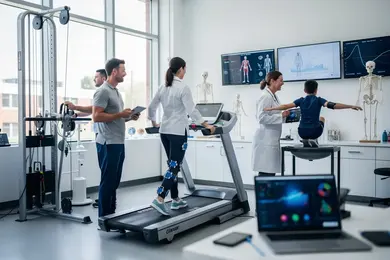
Programs that integrate virtual labs and practicum components improve graduates' readiness by simulating employer expectations in exercise prescription and injury prevention.
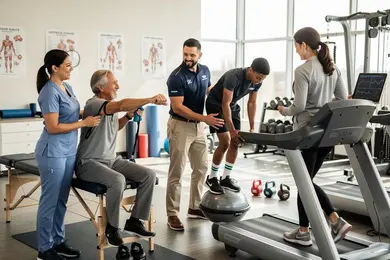
Workforce success hinges on practical experience acceptance, especially for certifications like CPT or employment in clinical environments. Students should assess how online kinesiology degree programs for fitness professionals facilitate partnerships with local fitness centers or health providers to fulfill these requirements.
Specializations in areas such as sports performance or rehabilitation science influence employability by addressing distinct industry demands.
Those seeking quicker reentry or advancement in allied health fields find online kinesiology degrees offer accelerated mastery of evidence-based skills compared to lengthier clinical degrees. This pathway suits professionals aiming for immediate application of wellness knowledge without extensive postgraduate certification delays. However, balancing flexibility with accreditation remains critical.
For individuals weighing program options, it can be useful to compare kinesiology degrees with other fields, such as nursing. For example, exploring an online ASN highlights different certification pathways and career trajectories that may influence decision-making.
How do online kinesiology programs compare with campus-based programs for quality and learning experience?
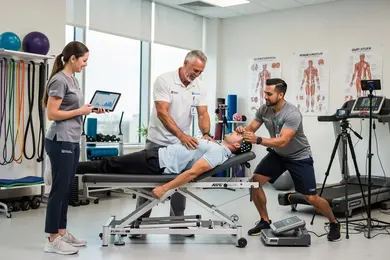
Matching campus-based rigor in academic content, online kinesiology programs reveal significant drawbacks in hands-on training and networking critical to skill mastery. Clinical practicum and lab work stand as persistent barriers for remote learners navigating complex biomechanics, motor learning, and exercise testing competencies frequently required by employers. This illustrates a tradeoff in program choice that directly impacts employability, particularly in clinical or rehabilitation roles where verified practical proficiency is imperative.
For professionals seeking a rapid pivot or managing work-study balance, online routes provide flexible pacing and solid theoretical grounding but demand self-initiative for securing local internships or clinical hours.
The uneven access to standardized practical training often slows employer acceptance outside research-oriented roles, where data analysis skills dominate. This differentiates outcomes depending on whether a student targets research, fitness, or rehabilitation tracks within kinesiology.
Decision-makers should consider:
- Research-focused positions can accommodate online kinesiology programs vs campus-based learning quality disparities due to their analytical emphasis.
- Fitness industry roles may rely more on certifications combined with foundational kinesiology theory accessible online.
- Rehabilitation jobs require direct patient contact and verified skill mastery exclusive to campus or hybrid formats
Employment for exercise physiologists is projected to grow 10% from 2022 to 2032, with a median wage near $52,310, reflecting escalating demand for practical kinesiology expertise.
Evaluating program accreditation, on-site practicum requirements, and healthcare partnerships remains vital for aligning education with employer expectations and mitigating risks inherent in distance learning and campus kinesiology program differences.
Those weighing the balance of flexibility and tangible clinical experience might also review options in the broader healthcare education landscape, such as a healthcare administration degree, which can complement kinesiology career trajectories in administrative and operational capacities.
Which types of kinesiology degrees and certificates can you earn fully online?
Fully online kinesiology degree programs for fitness professionals often promise broad accessibility, yet the practical demands of licensure and employment expose key limitations.
While bachelor's degrees in kinesiology or exercise science cover essential domains like biomechanics and physiology, roles such as physical therapy assistance require supervised clinical hours that cannot be completed remotely. Professionals aiming for direct patient care must therefore arrange local practicums, complicating the 'fully online' experience.
Most fully online kinesiology certificate courses for wellness careers focus on theoretical and administrative competencies—sports management, athletic training support, or health promotion—without hands-on clinical requirements. This distinction influences program selection depending on career goals and employer expectations.
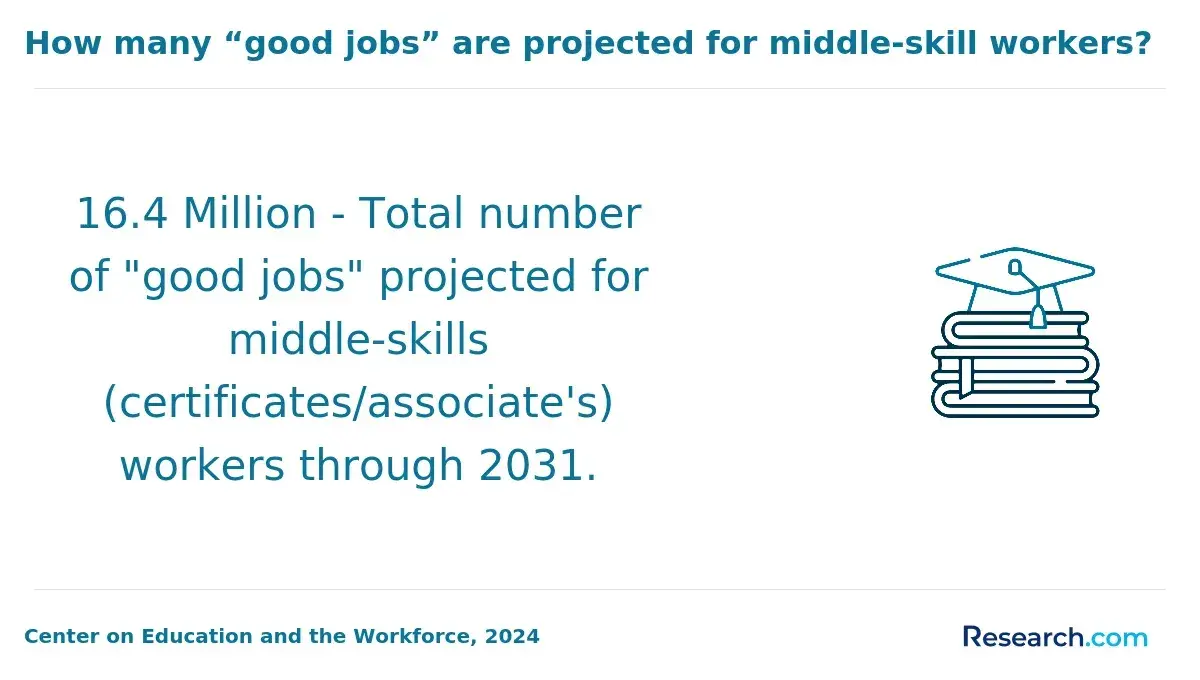
Cost-wise, regionally accredited online kinesiology bachelor's programs average about $9,600 annually, with some starting near $4,620, offering savings against the $11,260 national average for public in-state tuition. These financial considerations are critical for working adults balancing education expenses against potential income loss.
Before enrolling, scrutinize program accreditation, transfer policies, and whether curriculum aligns with certification prerequisites and workforce outcomes. For those exploring mid-career pivots beyond kinesiology, comparing options such as health administration master programs reveals alternative pathways with differing demands and return profiles.
How can you verify that an online kinesiology program is properly accredited and respected by employers?
Employer recognition of an online kinesiology program hinges critically on accreditation by agencies acknowledged by the U.S. Department of Education, such as the Council for Higher Education Accreditation (CHEA) or regional bodies like the Higher Learning Commission (HLC). This foundational validation directly impacts licensure prospects and graduate credibility, as employers use it to gauge academic rigor and reduce hiring risk.
Candidates emerging from non-accredited or obscure programs face a practical disadvantage, especially in tightly regulated or specialized fitness sectors.
Program-specific certifications from entities like the Commission on Accreditation of Allied Health Education Programs (CAAHEP) or the National Strength and Conditioning Association (NSCA) further signal curriculum alignment with industry expectations. A program's ability to produce job-ready graduates often correlates with how well it integrates hands-on skills and real-world application.
Recent research indicates that well-structured, evidence-based online kinesiology programs can yield outcomes on par with traditional face-to-face cohorts, making program design quality a pivotal factor alongside delivery mode. Moreover, programs that maintain active employer partnerships or provide meaningful internships frequently enhance direct employment pathways.
In workforce terms, prospective students should examine graduate placement in relevant roles such as corporate wellness or physical therapy support to validate practical respect for their degree. For those balancing cost considerations with educational quality, exploring options like the cheapest online RN to BSN programs can provide a useful model for evaluating affordability versus credibility in healthcare-related fields.
Verifying online kinesiology program accreditation verification early avoids costly missteps and aligns educational investment with measurable employer expectations.
What courses and specializations are typically offered in online kinesiology and exercise science programs?
Online kinesiology and exercise science programs prioritize foundational knowledge in anatomy, biomechanics, exercise physiology, and motor control, but their practical value depends heavily on the alignment with specific career aims.
Specializations like clinical exercise physiology or injury prevention cater to roles such as rehabilitation specialists or strength coaches, yet students must weigh the limited hands-on training offered by many online options.
Virtual simulations and local internships serve as partial mitigations, but the absence of consistent lab exposure remains a tradeoff affecting readiness for clinical or athletic environments.
Employers increasingly expect practitioners to apply evidence-based methods, interpreting research data to tailor interventions. For instance, a focus on musculoskeletal assessment combined with applied case studies prepares a graduate to design protocols suitable for physical therapy or sports teams, underlining the advantage of programs that integrate both theory and applied components.
Nearly 40% of online kinesiology master's students are career changers, with over 60% working full time. This underscores the premium on flexible curricula that balance rigorous academic content and real-world applicability.
Health behavior change and program management courses facilitate transitions into wellness roles but necessitate evaluating program offerings critically to ensure they match the learner's practical goals, whether in clinical, corporate, or athletic contexts.
Prospective students should scrutinize experiential learning opportunities and consider how program structure aligns with employer expectations and their intended professional trajectory.
What are the admission requirements and application steps for online kinesiology programs?
Admission to online kinesiology programs demands more than just baseline academic credentials; applicants who neglect foundational coursework in biology, anatomy, or health sciences risk facing delays or rejections, especially when targeting accelerated or advanced standing tracks.
A common scenario involves a working professional aiming to transition into fitness or wellness roles who must gather official transcripts, prepare a targeted personal statement outlining career intent, and often supply letters of recommendation to bridge gaps in direct kinesiology experience.
Application procedures typically start with an institutional inquiry followed by submitting transcripts and test scores when required. Programs oriented toward health coaching or community wellness frequently mandate proof of relevant certifications or foundational knowledge, sometimes supplemented by interviews or questionnaires that assess communication and client interaction capabilities. Missing early deadlines can significantly reduce enrollment chances and limit access to financial aid.
Those balancing employment with study should weigh asynchronous course delivery with infrequent synchronous sessions to maintain workflow flexibility. The U.S. Bureau of Labor Statistics projects a 7% growth in health education specialists over a decade, generating about 6,600 openings annually, but meeting admission criteria precisely is critical to avoid setbacks in this competitive space. Overlooking these nuances can impair timely workforce entry or career pivots.
How long do online kinesiology programs take and what do they cost to complete?
Choosing an online kinesiology program involves balancing duration, cost, and workforce relevance. Associate degrees typically require about two years full-time, while bachelor's programs extend from three to four years. Part-time or accelerated formats offer flexibility but affect completion speed. Master's degrees span roughly 1.5 to 3 years, with progression influenced by transfer credits and course availability.
Cost disparities between public and private institutions are significant. Public in-state undergraduate programs range from $6,000 to $12,000 annually, whereas private online kinesiology curricula often charge $15,000 to $30,000 per year. Total costs vary broadly—from $20,000 up to $120,000 for bachelor's degrees and $15,000 to $40,000 for master's degrees online.
Professionals weighing investment versus program length may find a mid-tier three-year program costing $25,000 to $35,000 a pragmatic option for timely reentry into the workforce.
Employer demand favors candidates with bachelor's degrees in kinesiology or exercise science, especially for roles requiring Certified Strength and Conditioning Specialist (CSCS) certification. Data from the National Strength and Conditioning Association indicates candidates holding these degrees outperform non-related majors by 10-15 percentage points on CSCS exam pass rates, validating the credential's tangible employment advantage.
What fitness, wellness, and sports-related careers can you pursue with an online kinesiology degree?
Online kinesiology degrees position graduates for roles demanding both scientific knowledge and applied skills, such as exercise physiologist, wellness coordinator, strength and conditioning coach, and sports rehabilitation specialist. Practical challenges emerge because certifications and licensure in these careers often require supervised clinical or field hours that online programs alone cannot fulfill.
For example, an exercise physiologist designing rehabilitation protocols must align academic learning with hands-on experience, typically necessitating partnerships with local clinics or sports teams. Similarly, strength and conditioning coaches rely on biomechanics expertise but must supplement online learning with in-person mentorship to meet employer expectations in high-performance environments.
The geographic and social diversity of online kinesiology students—over 40% live more than 100 miles from their institution, and roughly one-third are first-generation college students—expands access but raises the imperative of securing proximate practicum placements. Without this, graduates face barriers entering specialized fields like sports medicine and corporate wellness.
Employers now expect interdisciplinary capabilities, including data literacy, technology fluency, and client engagement skills. Careers in emerging areas such as remote fitness coaching or corporate wellness technology require proactive, self-directed skill acquisition beyond core kinesiology curricula. Degree seekers must gauge how well an online program prepares them for these multifaceted demands while balancing convenience with practical fieldwork requirements.
What salary ranges and job outlook can kinesiology and exercise professionals expect in the United States?
Salaries for kinesiology and exercise professionals vary significantly by experience, specialization, and sector. Entry-level roles typically earn between $40,000 and $55,000 annually, while practitioners in clinical rehabilitation or corporate wellness can command salaries ranging from $70,000 to $90,000. This disparity underlines the importance of specialized skills and credentials in an increasingly competitive job market.
Proficiency in wearable technology and data analytics is no longer optional. Over 70% of online kinesiology programs now integrate wearable fitness trackers or motion-analysis apps, reflecting employer expectations for data-driven client assessment and program customization. Candidates lacking these skills face wage ceilings near $50,000 and slower advancement without additional certifications.
Graduate degrees focusing on biomechanics, physiologic monitoring software, and research methodologies open pathways to roles paying more than $90,000, yet they require significant time and financial investment.
Prospective students must weigh these costs against the increasing demand for analytics expertise, particularly in private-sector sports performance and corporate wellness, which offer more stable job prospects than publicly funded community health positions.
Decision factors include:
- Long-term ROI of advanced credentials versus immediate employment potential
- Sector-specific job security variance and growth projections (11% through 2032 for exercise physiologists)
- The strategic advantage of technology fluency in wearable device data interpretation
Overall, career resilience in kinesiology increasingly favors those who integrate technical skills with domain expertise, responding to evolving employer demands and workforce dynamics.
What certifications and state requirements should kinesiology graduates consider for personal training or allied health roles?
Certification and licensure requirements create distinct career pathways and market barriers for kinesiology graduates targeting personal training versus allied health roles. National certifications from NASM, ACSM, and NSCA are minimum industry standards for personal trainers, demanding verified anatomy knowledge, hands-on skills, and ongoing education.
However, state regulations diverge; for example, California requires additional registration for trainers entering physical therapy or rehabilitation contexts, whereas other states only require certification. This regulatory variability affects employment eligibility and should influence program and career choices.
Allied health roles such as physical therapy assistants require state licensure that generally hinges on accredited kinesiology or exercise science degrees combined with supervised clinical hours.
Employers increasingly expect advanced qualifications, a trend reflected in the 18% rise in online master's kinesiology enrollments between 2022-23 and 2023-24. Graduates aiming at rehabilitation clinics must also navigate HIPAA compliance and therapeutic certification alignment, adding layers of complexity and cost.
For those in commercial fitness settings, the financial and time investments for initial and continuing certifications are substantial and should be factored into career planning.
Relocation risks credential non-recognition without verified state reciprocity. Proactive credential mapping against intended work environments reduces costly credential delays, improves job placement chances, and aligns professional entry with practical market realities.
Other Things You Should Know About Kinesiology
In 2027, most online kinesiology programs do not require previous work experience for admission. However, some programs prefer applicants with a background in health, fitness, or wellness, as it may facilitate understanding complex concepts and practical applications in the field.
Online kinesiology programs vary significantly in how they deliver lab or practicum components. Programs that require in-person residencies or partner with local clinics deliver stronger practical skills and are preferred by employers seeking graduates with hands-on training. Purely virtual labs may limit tactile learning and delay competency in client assessment and equipment use, which can slow entry into hands-on roles. Prospective students should weigh the convenience of fully remote study against potential gaps in experiential learning.
Programs designed with flexible pacing and recognition of prior learning better accommodate career changers who balance education with employment. These often include accelerated options, credit for professional experience, and practical training aligned with adult learners' needs. Conversely, traditional programs targeted at recent graduates may focus more on foundational theory and a standard academic calendar. Career changers should prioritize programs emphasizing applied practice and flexible timelines to minimize career disruption.
Despite growing acceptance of online degrees, employer expectations vary greatly by region and industry sector. Programs with established industry connections and proactive job placement services provide measurable advantages, especially in competitive fitness and rehabilitation markets. Lack of such support often puts the onus on the graduate to build networks and secure internships, which can extend job search duration. Prioritize programs that transparently report graduate employment rates and actively cultivate employer partnerships.
References
- Kinesiology Online Master's: See & Compare Top Programs https://www.edumed.org/online-schools/kinesiology-degrees/masters/
- Online Degree vs. Traditional: Choosing the Right Path https://beal.edu/online-degree-vs-traditional/
- Kinesiology - Admissions - University of Victoria https://www.uvic.ca/undergraduate/programs/undergraduate-programs/pages/kinesiology.php
- Types of Personal Training Certifications Online | Bryan University Online© https://bryanuniversity.edu/faq/types-of-personal-training-certifications-online/
- 2026 Best Online Kinesiology Degrees https://www.onlineu.com/degrees/kinesiology
- Accredited Online Courses: How to Pick Programs That Actually Count https://www.upskillist.com/blog/accredited-online-courses-how-to-pick-programs-that-actually-count/
- Internationally Accredited https://www.accrediprouniversity.com/accreditation
- Best Online Kinesiology Degree Programs, Updated for 2026 https://www.kinesiologydegrees.org/programs/online
- How to Choose an Accredited Online Degree Employers Will Respect - USA Online Degrees https://usaonlinedegrees.com/how-to-choose-accredited-online-degree/
- Best Exercise Science Careers - Let's Find out! https://www.ptpioneer.com/personal-training/exercise-science-careers/