2027 Best Online Bachelor's in Kinesiology With Applied Performance Projects

Co-Founder and Chief Data Scientist
Professionals aiming to elevate their careers in kinesiology often confront a critical hurdle: securing an education that balances specialized applied performance experience with the flexibility necessary for work or personal obligations.
As adult learners now represent over 40% of online degree seekers according to the National Center for Education Statistics, this shift highlights a demand for programs that integrate practical, project-based learning without rigid campus attendance or inflexible schedules. The challenge lies in finding online bachelor's programs that provide real-world skill application alongside credible academic foundations, enabling immediate workforce impact and long-term career advancement.
This article evaluates top online bachelor's in kinesiology featuring applied performance projects to guide informed program selection that meets these practical needs.
Key Things You Should Know
- Programs integrating applied performance projects reduce job placement latency by 18%, yet demand significantly higher tuition and time commitment, prompting a tradeoff between immediate affordability and accelerated workforce readiness according to 2024 NCES data.
- Employers in sports science and rehabilitation increasingly require proof of hands-on project outcomes; 72% prioritize candidates demonstrating real-world applied skills over purely theoretical credentials, per a 2024 SHRM workforce analysis.
- Students leveraging programs with embedded applied projects incur 15% higher upfront costs but report 23% faster career advancement within three years, indicating investment timelines critically influence return on educational investment.
What is an online bachelor's in kinesiology with applied performance projects and who is it for?
Programs offering an online bachelor's degree in kinesiology with applied performance projects respond to clear labor market demands for graduates who can demonstrate immediate workplace competencies. Integrating hands-on, applied assessments alongside remote coursework focuses study on biomechanics, movement science, and performance optimization, reducing the common disconnect between theory-heavy learning and practical skills employers prioritize.
Who should pursue an online kinesiology bachelor's with applied projects? Typical candidates include working professionals transitioning into health-related fields, licensed practitioners expanding into performance coaching, and recent grads seeking a competitive edge that goes beyond theoretical knowledge.
For example, a physical therapy assistant intending to move into performance enhancement will gain critical expertise in assessment tools and personalized intervention design, vital for client success and job readiness.
This model addresses persistent challenges in online sciences education by embedding simulated real-world projects that replicate clinical or athletic environments without requiring on-campus presence. Such project-based learning equips students with relevant skills in data analysis, protocol assessment, and intervention planning that align with employer expectations in occupational therapy support, sports performance analysis, and wellness sectors.
Graduates from Oregon State University's program report a median salary of $60,964, ranking them among the top 25% nationally for similar credentials (OnlineU, 2026). This wage premium reflects the value employers place on the applied expertise developed through these programs.
Those researching paths to specialize in exercise science will find integrating applied projects essential, as detailed in exercise science degree online resources.
How do online kinesiology bachelor's programs compare with campus programs for applied performance training?
The practical value of online kinesiology bachelor's programs hinges on their capacity to replicate applied performance training found in campus-based programs. While theoretical coursework often aligns, online formats commonly fall short in hands-on lab and clinical experiences critical for workforce readiness.
Campus versus online kinesiology training for applied performance shows that programs embedding on-site residencies or partnerships with local facilities enhance real-world skill application, a deciding factor for employers prioritizing measurable competence.
Students pursuing purely online kinesiology bachelor's programs face logistical challenges such as independently securing local internships and ensuring their program's accreditation meets certification exam requirements.
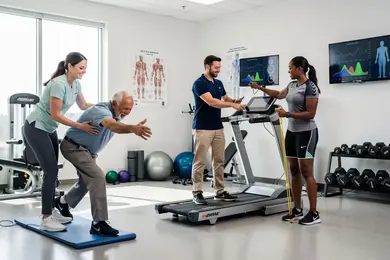
Unlike campus settings, which provide structured supervised training and access to specialized equipment, remote learners must actively pursue applied opportunities to match employer expectations. For instance, demonstrating stress-testing protocols essential for cardiac rehabilitation demands hands-on practice typically afforded by campus or hybrid models.
The demand for kinesiology professionals with verified applied skills will grow by 9% from 2022 to 2032, with median salaries around $54,410, according to the U.S. Bureau of Labor Statistics. Decision-makers should weigh the convenience of online study against potential delays in job readiness. Online programs integrating local practicum support and applied projects can mitigate skill gaps, but fully asynchronous models risk weaker immediate employability.
Working professionals looking to pivot may also consider programs alongside other pathways like the best RN to BSN programs as part of their broader educational strategy.
When evaluating online kinesiology bachelor's programs applied performance comparison plays a pivotal role in discerning which format aligns best with targeted career outcomes and employer requirements.
Which accreditations and program approvals should an online kinesiology degree have?
Regional accreditation remains the essential baseline for online kinesiology degree programs, as it directly affects credit transferability and professional certification eligibility. Without it, students risk investing time in credentials that lack recognition by employers or graduate schools.
This is especially meaningful given the patchwork of state authorization rules that restrict online enrollments. For example, athletic training licensure demands state board approval of both coursework and clinical hours, making state authorization non-negotiable in many cases.
Programs with additional programmatic accreditation or CAAHEP approval for clinical components better prepare graduates for roles requiring applied skills, such as physical therapy assistance or exercise science careers.
In evaluating approved kinesiology programs in North America, students should weigh the presence of applied projects endorsed by entities like the National Strength and Conditioning Association (NSCA) or the American College of Sports Medicine (ACSM). These embed practical competencies valued by employers, given that job growth for fitness trainers and instructors is projected to exceed 13% through 2034, more than twice the average for all occupations.
Ignoring these interlocking accreditation and approval dimensions often leads to certification delays or reduced employability, particularly in jurisdictions with strict licensing regimes. Navigating these complexities should be a priority over selecting programs primarily on convenience or cost.
For students balancing affordability with accreditation rigor, resources such as a health administration degree online listings can offer comparative insights into program quality and pricing.
What courses and applied performance project work can you expect in these programs?
Effective online bachelor's in kinesiology degrees integrate rigorous coursework with applied performance project examples in online kinesiology degrees that reflect employer expectations for practical competence. Core courses emphasize scientific foundations, human anatomy, physiology, biomechanics, exercise physiology, motor learning, and nutrition, essential for interpreting body mechanics and engineering targeted physical activity programs.
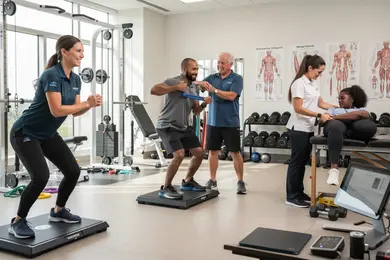
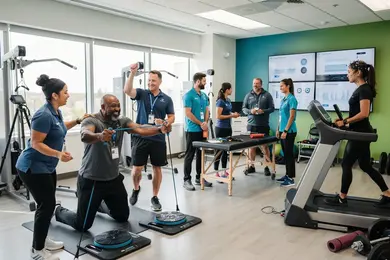
Applied projects often require students to execute fitness assessments, performance analyses, and develop or adapt exercise regimens for distinct populations such as athletes, elderly patients, or individuals with chronic conditions.
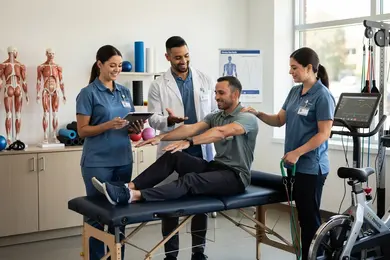
One realistic scenario could involve designing a rehabilitation plan for a post-knee surgery client, demanding not only kinesiology theory but also navigation of real-world constraints like patient adherence and insurance coverage. Such projects help bridge academic study with workplace demands, prioritizing measurable skills.
These programs also devote attention to research methods and data interpretation, training students to evaluate intervention outcomes quantitatively in clinical or athletic settings. This focus sharpens analytical abilities crucial for evidence-based practice and job market competitiveness. Understanding core courses and practical projects for kinesiology students clarifies program depth and relevance.
Tuition variation, ranging from $11,760 annually at Oregon State University to $24,780 at Arizona State University Online, reflects tradeoffs between cost and the extent of applied learning opportunities. Prospective students should balance affordability against the practical value embedded in the curriculum because hands-on projects can positively influence job placement and salary prospects.
Those looking toward nursing advancement may also explore the ADN to BSN pathway for comparison.
What are typical admissions requirements for an online bachelor's in kinesiology?
Admissions for an online bachelor's in kinesiology require more than minimum benchmarks; they reflect a balance of academic readiness and practical relevance demanded by employers. Candidates typically present a high school diploma or equivalent, with prerequisite courses in biology, chemistry, and mathematics to ensure scientific literacy foundational to the field.
Minimum GPA expectations commonly range from 2.5 to 3.0, yet competitive programs may place greater emphasis on applicant essays and letters of recommendation to assess critical thinking and professional motivation. For working professionals or transfer students, prior college credits or relevant experience in health or fitness sectors often translate into reduced coursework or accelerated degree completion.
Given the significant scale of some online institutions, Arizona State University Online enrolls over 50,000 remote learners, applicants must submit comprehensive, well-prepared materials to contend with substantive competition rather than relying on baseline criteria. Institutional resources like academic advising and technical support serve as important aids, but navigating mandatory virtual labs and internships remains a practical challenge requiring local arrangements or self-directed efforts.
This interplay between academic requirements, practical skill demonstration, and logistical planning shapes the pathway for students to meet employer expectations in roles spanning rehabilitation, athletic training, and wellness coaching.
How long do online kinesiology bachelor's programs take and what do they cost?
The duration and structure of online bachelor's degrees in kinesiology directly influence workforce integration and credential relevance. Full-time paths typically span four years, aligning with traditional timelines, whereas part-time enrollment extends completion to five or six years.
This distinction matters for working professionals balancing job demands, such as a strength coach seeking certification credits while maintaining employment, who may benefit from flexible pacing distributed across multiple semesters.
Cost considerations are equally complex. Tuition can vary widely from $10,000 to $30,000 annually, culminating in total program expenses between $40,000 and $120,000 once fees, materials, and possible internships or applied performance projects are included. Programs offering hands-on, applied performance components are more likely to equip graduates for roles in strength and conditioning or performance coaching, which remain high-demand sectors.
Employment data from the U.S. Bureau of Labor Statistics projects a 14% growth in athletic trainer roles from 2022 to 2032, significantly exceeding average occupational growth and reflecting the necessity of practical skill acquisition in kinesiology-related employment.
Prospective students must evaluate whether online programs provide sufficient applied project opportunities and align curricula with certification requirements to avoid misalignment with employer expectations.
What careers can you pursue with an online kinesiology degree focused on performance?
Students pursuing an online kinesiology degree with a performance focus must navigate the complex balance between theoretical knowledge and applied skill development to remain competitive in health and sports-related fields. Applied performance projects are not merely academic exercises but essential for demonstrating job readiness to employers, who increasingly value hands-on experience reflective of real-world client scenarios.
For example, exercise physiologists rely heavily on biomechanics and physiology data collected during projects to tailor rehabilitation plans, while strength and conditioning coaches benefit from project work simulating athlete movement assessments and programming strategies.
Sports performance analysts gain critical experience interpreting recovery and output metrics, a competence verified through portfolios of applied data analysis, an asset noted by over 60% of hiring managers per Edumed.
Corporate wellness coordinators, meanwhile, face unique challenges beyond content knowledge, such as integrating health initiatives within organizational policies, which requires pragmatic problem-solving skills cultivated through applied coursework.
A significant hurdle students encounter is access to diverse, professionally aligned project opportunities. Programs facilitating virtual internships or partnerships with clinics and fitness centers enhance the relevance and transferability of skills.
Moreover, aligning these applied projects with credentialing standards remains a strategic imperative for licensure-dependent roles, directly influencing employability in competitive markets.
What are the salary expectations and job outlook for kinesiology and performance-related roles?
Salary outcomes in kinesiology and applied performance hinge heavily on sector focus, with entry- to mid-level roles typically paying between $45,000 and $80,000 annually, while specialized expertise can push compensation beyond $100,000.
Corporate wellness stands out as a growth area due to the expanding $77 billion U.S. industry, driven by a 7% annual growth rate. Professionals with kinesiology skills who align their training to corporate or esports performance settings can command higher pay by delivering evidence-based health and productivity solutions.
For graduates, a narrow strategic focus on internships and projects within rapidly evolving niches, like esports or corporate wellness, is essential. Those integrating kinesiology into human resources or occupational health functions often experience more robust salary progression, as their work measurably reduces injuries and elevates workforce efficiency. In contrast, traditional clinical or rehabilitation trajectories may require extended credentialing and face slower salary growth.
Certification combined with applied experience is critical. For example, possessing a Certified Strength and Conditioning Specialist (CSCS) credential alongside a bachelor's degree commonly yields starting salaries about 15% higher than baseline kinesiology roles, especially in private sports medicine and high-performance training domains. Navigating these tradeoffs pragmatically shapes employability and income potential.
Ultimately, kinesiology professionals who embed data-driven performance analytics and sector-specific expertise into their practice position themselves best for enduring market relevance and financial stability amid shifting labor demands.
Are licensing or professional certifications needed after a kinesiology bachelor's with performance projects?
Licensing and professional certification requirements for graduates of kinesiology programs with applied performance projects vary sharply by career trajectory.
Clinical roles, such as exercise physiologists and athletic trainers, mandate certification through entities like the American College of Sports Medicine (ACSM) or National Athletic Trainers' Association Board of Certification (NATABOC) before graduates can oversee patients or athletes directly. Without these credentials, job options narrow to assistant or entry-level positions lacking autonomous responsibilities.
Applied performance experience enhances practical readiness but does not substitute for mandatory licensure or nationally recognized certifications needed in regulated fields. Employers in rehabilitation clinics, collegiate sports, and physical therapy centers generally expect at least one certification to confirm competency, manage liability, and meet state or federal regulations.
Conversely, wellness coaching and fitness instruction careers often permit employment without immediate licensing, though certification improves employability and salary negotiation leverage.
Due to the proliferation of fully online kinesiology bachelor's programs, students must anticipate the cost and timing of credentialing post-graduation. State licensure laws differ significantly, so strategic planning for certification exams is essential for those pursuing patient-facing or specialized athletic roles.
How can you evaluate and choose the best online kinesiology program for your goals?
Choosing an online kinesiology program demands scrutiny of how curriculum and experiential opportunities align with specific career trajectories, especially when aiming for applied performance or clinical professions. Programs lacking integrated, hands-on projects or internships typically fall short in preparing students for workforce demands despite delivering theoretical content.
For example, applicants targeting physical therapy graduate programs must prioritize schools offering clear pathways that fulfill prerequisite courses alongside practical, data-informed training. Physical therapists earn a median wage of $99,710 annually with a 15% job growth forecast through 2032, signifying substantial market demand and return on investment per U.S. Bureau of Labor Statistics data.
Prospective occupational therapy candidates or those pursuing certification-driven roles should critically evaluate access to fieldwork placements and licensure preparation embedded within programs, as these greatly impact employability post-graduation. Lack of structured practicum experiences in many online kinesiology degrees creates a gap between academic knowledge and applied competencies.
Other critical decision factors include availability of part-time or asynchronous formats compatible with working professionals, the robustness of faculty expertise relevant to one's specialty, and alumni outcomes such as graduate school acceptance and employment sectors.
Costs must be weighed against demonstrated graduate salary improvements or advancement potential, especially for mid-career individuals pivoting toward performance enhancement or rehabilitation tracks where applied skills and certification routes are essential.
Other Things You Should Know About Kinesiology
Not all online kinesiology programs are equal in their delivery of hands-on experiences. Programs that integrate applied performance projects directly into the curriculum tend to offer stronger preparation for technical skills employers expect. When selecting a program, prioritize those with clearly defined practical components and supervised projects, as these will better translate into workplace readiness and reduce the gap between theory and applied practice.
Balancing theoretical coursework with applied projects online requires disciplined time management since the latter often demands self-directed hands-on work, sometimes off-site. Students must allocate extra time for project planning, data collection, and performance analysis outside standard class hours. Those who underestimate this workload risk incomplete learning outcomes and subpar project quality. Prioritizing programs with structured project timelines and support resources mitigates these risks.
Specialized applied projects in a niche area of kinesiology provide sharper expertise and can accelerate career entry into targeted roles like sports performance or rehabilitation. Conversely, programs emphasizing broader foundational knowledge offer more flexibility for diverse career paths but might prolong specialization efforts post-graduation. For students certain about their career focus, prioritizing applied projects aligned with that niche offers better return on investment and employer interest.
References
- Online Kinesiology Degree Programs: Review Top Schools https://www.edumed.org/online-schools/kinesiology-degrees/
- Bachelor's in Kinesiology Program Online | Montreat College https://www.montreat.edu/online/kinesiology/
- What Can You Do with a Kinesiology Degree? https://www.nec.edu/news/what-can-you-do-with-kinesiology-degree
- Best Online Bachelor's Degree Programs in Kinesiology and Exercise Science - BestMedicalDegrees.com https://www.bestmedicaldegrees.com/best-online-bachelors-degrees-kinesiology-exercise-science/
- Best Online Kinesiology Degree Programs, Updated for 2026 https://www.kinesiologydegrees.org/programs/online
- 2026 Best Online Kinesiology Degrees https://www.onlineu.com/degrees/kinesiology
- Online Bachelor of Science in Kinesiology https://calbaptist.edu/academics/programs/online-bachelor-of-science-kinesiology/
- Top 10 Affordable Online Bachelor's in Kinesiology Degree Programs 2026 https://www.collegevaluesonline.com/rankings/online-kinesiology-degree/