2026 Best Online Human Resource Management Programs for Professionals Seeking Leadership Mobility in HR

Co-Founder and Chief Data Scientist
Mid-level HR professionals often confront a stark bottleneck when striving for leadership roles: many fast-track programs require full-time, on-campus commitments that conflict with their ongoing job responsibilities. Meanwhile, data from the National Center for Education Statistics reveals a 14% surge in enrollment in fully online master's degrees among adult learners since 2024, reflecting a growing demand for accessible, flexible credentials that align with professional schedules.
This shift signals evolving employer expectations favoring both advanced expertise and demonstrable adaptability. This article evaluates the top online human resource management programs specifically calibrated to support career mobility without sacrificing workload balance or delaying advancement timelines.
Key Things You Should Know
- Graduate outcomes in human resource management vary significantly by program accreditation; SHRM-aligned curricula correlate with 12% higher promotion rates within 18 months, but tend to increase tuition costs by 20-30% compared to non-accredited options.
- Employers increasingly prioritize digital HR analytics expertise-present in only 38% of programs surveyed by the Society for Human Resource Management in 2024-forcing candidates to seek specialized coursework or risk stagnation in leadership pipelines.
- Time-to-completion impacts career trajectory: part-time online degrees averaging 30 months delay leadership eligibility versus accelerated tracks under 18 months, impacting median HR director salary growth by over $15,000 annually according to Bureau of Labor Statistics data.
What is an online human resource management degree and how does it prepare leaders in HR?
Online human resource management degree benefits for leadership development extend beyond foundational knowledge to emphasize strategic application in diverse industries. For instance, HR professionals in healthcare navigate stringent regulatory frameworks and workforce shortages, while those in technology prioritize talent retention amid competitive labor markets.
These programs cultivate capabilities in organizational change management, labor law compliance, and conflict resolution, equipping students to address sector-specific challenges with agility. The integration of theory with practical exercises such as HR analytics, case studies, and virtual simulations supports immediate application in dynamic workplaces. This format accommodates working professionals, offering flexible access to advanced HR curriculum without relocating.
However, decision-makers must weigh the tradeoff between convenience and the absence of traditional campus networking opportunities that sometimes impact career trajectories. Employers increasingly seek HR leaders who demonstrate not only knowledge but also leadership in productivity and culture transformation.
Data from the National Association of Colleges and Employers indicates 85% of 2024 human resources bachelor's graduates found employment within a year, earning a median salary of $61,400. Such outcomes reinforce the degree's practical value but also underscore the necessity for curriculum relevance to current labor market trends.
Prospective students evaluating how an online human resource management program prepares HR leaders should consider faculty expertise, use of technology, and whether the program addresses diversity, inclusion, and compliance complexities. Those interested in further leadership development might explore pathways like the online PhD organizational leadership, which expands strategic capabilities beyond foundational HR roles.
How do online human resource management programs support career advancement into HR leadership roles?
Online human resource management education for advancing into leadership roles demands more than theoretical knowledge; it requires specific operational skills and strategic judgment tailored to complex workplace realities. For example, a senior healthcare professional balancing compliance with labor laws, staff leadership, and budgeting must rely on targeted coursework and case-based learning prevalent in many online programs.
Flexibility is a key tradeoff in these programs. Online formats enable working HR professionals to enhance their competencies without pausing employment, bridging learning with immediate application. However, the variability in program rigor means candidates should prioritize offerings featuring immersive projects, leadership assessments, and industry-backed certifications to avoid underqualification risks.
This blend of knowledge and practical exposure aligns well with employer expectations, as firms increasingly prefer HR practitioners who exhibit leadership potential grounded in evidence-based methods. This preference supports the projected 7% job growth for HR managers in the US labor market through 2031, positioning online credentials as a pragmatic response to workforce demand.
Professionals exploring how online human resource management programs enhance career growth in the United States might also evaluate adjacent fields for complementary skills. For instance, a bachelor of project management can augment HR leadership capabilities by broadening strategic project oversight competencies.
Which online human resource management degrees are best for working professionals seeking mobility?
Effective career mobility in HR depends heavily on selecting programs that align tightly with workforce expectations and individual career contexts. The best online human resource management degrees for working professionals integrate practical leadership skills with rigorous HR fundamentals, equipping graduates to navigate complex compliance and stakeholder dynamics in sectors such as healthcare or manufacturing.
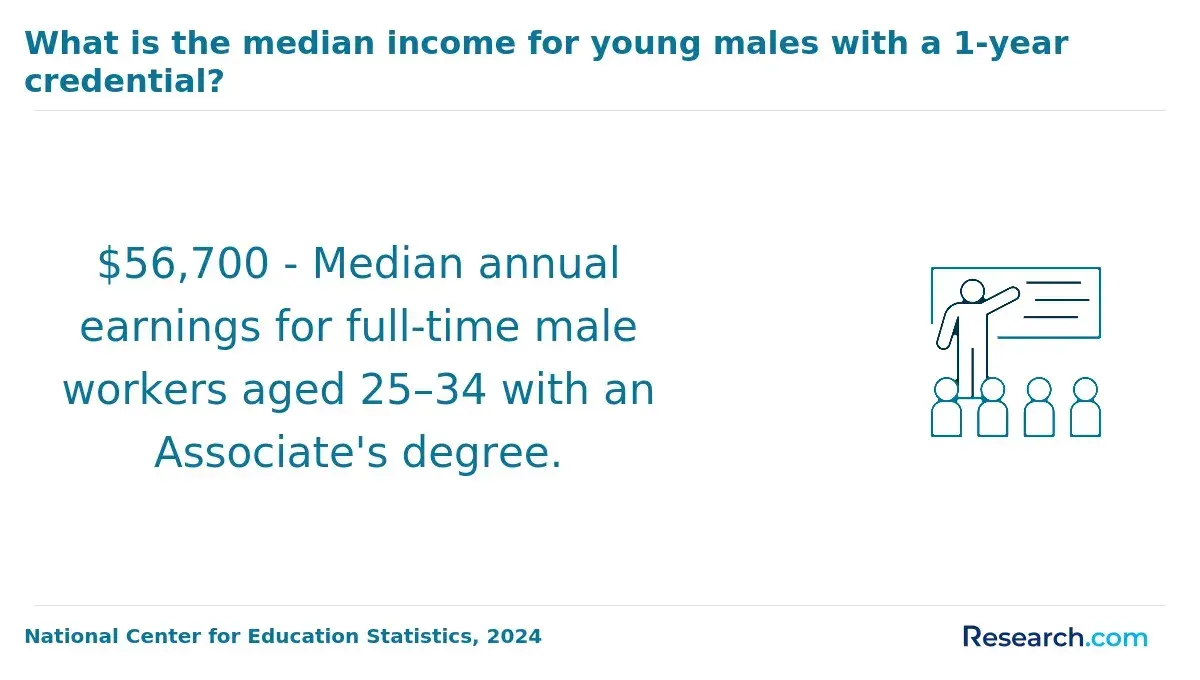
Salary evidence reflects this value: workers with a bachelor's in human resources earn a median annual wage of about $64,000, versus $48,000 for those with only a high school diploma, according to 2024 Payscale data summarized by Forbes Advisor. This differential signals a clear ROI for those pivoting into HR leadership or broadening their roles from specialist to generalist positions.
Program selection demands scrutiny of several practical factors:
- Accreditation ensuring curricula meet employer standards and industry relevance
- Flexible scheduling that fits around ongoing professional and personal obligations
- Targeted career services supporting networking and placements within desired industries and regions
- Integration of certifications and real-world case studies to anchor learning in applied contexts
For instance, professionals aiming for corporate HR leadership in retail must seek programs emphasizing organizational behavior and conflict resolution within diverse workforces. Conversely, industrial manufacturing employees should prioritize degrees offering specialized labor law and safety compliance training.
Additionally, working professionals exploring allied fields may consider degrees like the project management degree to complement HR expertise, especially where workforce planning and cross-functional leadership intersect. These considerations hold particular weight when assessing the top human resource management programs for career mobility in North America, as regional employer expectations and industry priorities vary significantly.
How do online human resource management programs compare with campus options for quality and flexibility?
Professionals pursuing leadership in human resource management confront a pivotal choice between online human resource management programs versus campus options for flexibility and impact. Online programs, with median in-state tuition near $9,000 annually, significantly undercut private on-campus costs averaging $21,000, presenting a financial advantage that can reduce debt burdens for mid-career workers.
Quality differences of online and campus human resource management programs have lessened as accreditation aligns curricula with SHRM and HRCI certification competencies. Online formats support asynchronous study that accommodates shift work common in healthcare or retail sectors without diminishing program rigor, while campus settings offer more immediate employer networking and mentoring, which some candidates require for internal promotions.
Decision-makers must weigh:
- Whether employer connections and internship opportunities on campus justify the scheduling rigidity for those with variable shifts.
- The value of robust, increasingly active online alumni networks compared to traditional career centers in accessing local job markets.
- How each mode fits specific professional circumstances and long-term goals.
Students considering accelerated attainment routes can also examine an accelerated business degree to optimize timing and cost-efficiency, along with credential relevance for HR career pivots.
What accreditation and industry standards should online human resource management programs meet?
Online human resource management programs lacking accreditation from bodies like ACBSP or ABET often fall short of industry expectations, limiting graduates' readiness for evolving HR functions. Employers prioritize candidates from programs with recognized accreditation and specialized validation from SHRM or HRCI because these confirm alignment with professional standards and ensure foundational competencies.
Candidates aiming for strategic roles-particularly in tech or finance-must evaluate whether a program provides in-depth training in HR analytics, given that demand for these skills surged by 111% in 2024, as reported in LinkedIn's 2024 Global Skills Report. Programs focused mainly on traditional HR theories without data-driven decision-making components risk producing graduates less competitive in a workforce increasingly reliant on analytics.
Real-world practica, such as virtual internships or partnership projects, offer critical networking and mentorship avenues often unavailable in non-accredited programs. Moreover, accreditation impacts financial aid access, a decisive factor for working professionals financing their education. Without it, students face higher out-of-pocket costs and limited institutional support.
Failing to select a program that meets current industry benchmarks can leave graduates with obsolete skills, slowing career progression in leadership roles that now demand technological fluency alongside human capital management expertise.
What courses and specializations are typically included in an online human resource management curriculum?
Online human resource management programs in 2026 respond to shifting workforce demands by embedding critical leadership skills alongside essential operational knowledge. For example, HR professionals in healthcare must navigate stringent regulatory compliance while promoting employee well-being, whereas those in technology sectors prioritize talent retention driven by skills forecasting and analytics.
Curricula consistently cover core subjects such as talent acquisition, employee relations, performance management, compensation and benefits administration, and employment law. Specialized tracks often emphasize organizational development, diversity and inclusion, HR analytics, or labor relations-each shaping graduates' strategic versatility or narrowly focused expertise.
With 72% of undergraduates in online business-related majors balancing work and study, programs lean heavily on asynchronous learning and applied projects to enable immediate workplace application. Employers value demonstrated proficiency in conflict resolution, HRIS software, and strategic planning, making these skills foundational for advancement.
Students must assess program balance carefully: an HR data analytics specialization suits roles demanding measurable workforce productivity impact, while labor relations preparation is pivotal in unionized environments. Over-specialization risks limiting broader operational adaptability, crucial in many organizational contexts.
Practical components such as case studies, capstone projects, and internships remain indispensable, enhancing the candidate's ability to tackle real business challenges effectively and meet employer expectations in dynamic industries.
What are the typical admission requirements and application materials for online HR management programs?
Admission standards for online human resource management programs reflect a balance between academic preparedness and practical experience, which directly impacts employability after graduation. Programs typically require a bachelor's degree with a minimum GPA around 2.5 to 3.0, ensuring candidates can handle graduate-level coursework. More critically, 2 to 3 years of HR or management experience is often a gating factor, especially for leadership-oriented tracks.
Applicants should anticipate submitting official transcripts, detailed resumes or CVs, and personal statements that articulate clear career intentions and leadership potential. Letters of recommendation (usually 2 or 3) play an essential role in validating professional skills and interpersonal effectiveness, which are highly valued in HR roles across sectors such as healthcare and technology.
Standardized tests like the GRE or GMAT are increasingly waived for candidates with strong work histories or advanced credentials, but they remain a variable requirement by program. English proficiency exams apply to international students, aligning with workforce linguistic expectations.
Operationally, applicants must navigate varied deadlines and submission portals, often coordinating with employer tuition assistance or credit transfer processes, which can delay or accelerate entry into specialized HR leadership roles. Given that 92% of HR professionals view online degrees as equivalent to traditional ones, strategic preparation of application materials is a practical investment with tangible hiring implications.
How long do online human resource management programs take and what do they cost?
Completing an online human resource management program within two to four years hinges on credential level and enrollment intensity, with bachelor's degrees typically requiring up to four years full-time. Part-time or accelerated options can reduce this to two or three years, an essential consideration for working professionals balancing job demands. Certificate and graduate diploma programs, lasting six months to two years, offer targeted skill-building for leadership roles with less time investment.
Cost remains a critical factor. According to the 2024 AffordableCollegesOnline review, some of the most affordable HR bachelor's programs charge around $6,000 annually, substantially below the national average, enabling professionals to upskill without excessive debt. Yet, the budget alone should not dominate decision-making.
Employers in healthcare, technology, and other key sectors expect candidates with practical know-how in compliance, workforce analytics, and strategic planning, making programs with integrated internships or applied projects more valuable despite potentially higher cost or duration.
Professionals must weigh tradeoffs between accelerated pacing-which demands higher weekly commitment but speeds promotion timelines-and extended schedules that ease work-study balance but increase overall expense. Flexibility and financial aid availability often influence these choices.
- Employer preference for applied skills alongside formal credentials impacts program selection
- Affordable options may lack experiential components necessary for leadership roles
- Accelerated formats reduce time-to-advancement but increase study intensity
- Programs with internships enhance real-world readiness despite added time or cost
Prioritizing programs that align affordability with experiential learning and employer expectations remains essential for strategic positioning in the evolving HR job market of 2026.
What salaries, job titles, and promotion pathways can graduates of online HR programs expect?
Entry-level human resource management positions accessible to online program graduates typically offer salaries from $55,000 to $70,000. Progression to mid-level roles within five to seven years generally boosts compensation to between $90,000 and $130,000. Early-career titles include HR coordinator, HR specialist, and talent acquisition associate, with promotional opportunities leading to manager and analyst roles commanding $85,000 to $110,000.
Senior leadership roles, such as HR director or vice president, often require over a decade of combined experience, with salaries commonly exceeding $140,000-though these vary widely depending on industry and organization size. Promotion trajectories increasingly depend on proficiency with digital HR tools, AI, and automation, as 60% of recent online human resource management curricula now integrate such components.
Candidates who lack these competencies risk slower advancement, especially in sectors like technology, healthcare, and finance, where workforce analytics and digital transformation are critical. For career changers from non-HR backgrounds, it may take 3-5 years to reach managerial levels, contingent on supplementing degrees with certifications in AI-driven HR applications and compliance.
Practical results confirm this shift: A healthcare HR specialist who implemented digital talent management dashboards improved operational efficiency by 25%, facilitating promotion to HR manager. This example illustrates that measurable tech literacy can be a decisive factor for career mobility in human resource management, outweighing traditional experience alone.
Which HR certifications align with online human resource management programs and enhance leadership prospects?
Selecting a human resource management certification requires aligning credential value with specific industry demands and educational pathways. The SHRM-CP/SCP and PHR/SPHR credentials address distinct professional contexts: SHRM-SCP emphasizes organizational leadership and policy development, fitting roles like healthcare directors, while SPHR's analytical focus suits manufacturing environments where operational precision is prioritized.
Integrating certification preparation into online degree programs can reduce redundant coursework and expedite qualification, a practice increasingly adopted by institutions embedding competency frameworks directly in Human Resource Management curricula. For example, Western Governors University reports that over 95% of its bachelor's graduates in HR secured jobs within a year, with salary gains averaging $12,000, underscoring the tangible labor market benefits when certification complements degree completion.
Decisions should also factor in employer reimbursement policies, renewal cycles, and scheduling the timing of certification exams in harmony with academic commitments and workplace expectations. Neglecting these operational aspects risks delaying advancement in leadership roles.
- SHRM credentials favored for strategic and leadership roles in service sectors
- HRCI certifications often preferred for operationally intensive fields
- Broader international recognition achieved through CIPD qualifications
- Program integration improves efficiency and market readiness
Other Things You Should Know About Human Resource Management
Choosing between an online human resource management degree and professional certifications depends on career goals. Degrees offer broader leadership skills and strategic HR knowledge required for senior roles, while certifications focus on specific competencies and quicker returns. For professionals targeting sustained upward mobility in HR leadership, prioritizing a degree makes more sense because it signals advanced critical thinking and organizational impact capabilities to employers.
Programs vary in how effectively they prepare graduates for the complex legal and social dimensions of diversity and compliance. Those with case-based learning and up-to-date regulatory content equip students to handle real-world HR challenges immediately. Students should prioritize programs that integrate contemporary compliance issues with practical diversity management training to meet employer expectations in regulated environments.
Many do. A capstone is often required in the final term and usually involves 3 to 6 credit hours, a strategic HR case study, or an applied project reviewed by faculty. Some programs also require a presentation or employer-based practicum before the degree is awarded.
References
- Which Course Is Best for Human Resource Management? 9 Options https://www.aihr.com/blog/which-course-is-best-for-hr-management/
- Top 20 Online Courses for Human Resource Managers https://zoetalentsolutions.com/top-20-online-courses-for-human-resource-managers/
- 12 Best HR Training Programs in 2026 https://www.eubrics.com/blog/human-resource-management-training
- What is a Human Resource Management (HRM) Degree? https://www.onlineeducation.com/business/faqs/what-is-an-hrm-degree
- Human Resource Management (HRM) https://www.learndirect.com/course/human-resource-management-hrm
- Advantages of the distance learning human resources diploma and its cost 2026 https://mdit.edu.sa/en/blog/diploma-in-human-resources-remotely
- Are Online HR Certifications Legit? What You Should Know https://hrcertification.com/blog/are-online-hr-certifications-legit-biid1000050
- Human Resources Career Path: Why It May Be Right for You https://www.michiganstateuniversityonline.com/resources/leadership/why-human-resources-may-be-right-for-you/
- Empowering Employee Growth: Building Dynamic Career Paths and Ladders https://www.shrm.org/topics-tools/tools/toolkits/empowering-employee-growth-building-dynamic-career-paths
- what courses are required for hr - A comprehensive guide https://www.bmc.net/blog/general-blog-posts/what-courses-are-required-for-hr