2027 Online Forensic Science Degrees With Lab-Ready Forensic Curricula

Co-Founder and Chief Data Scientist
Forensic science professionals face increasing pressure to demonstrate hands-on proficiency with evolving lab technologies while balancing rigid work schedules or existing career demands. The need to master complex analytical techniques outside traditional campus labs complicates advancement or timely credential completion. Federal data shows online enrollments among adult learners rose by 14% in 2023, driven by flexible program formats that must still ensure rigorous laboratory experience-a challenge many programs struggle to address effectively.
This disconnect affects workforce readiness and the ability to pivot roles quickly in a competitive job market. This article evaluates online forensic science degrees with lab-ready curricula that reconcile practical skill acquisition with flexible learning, helping readers identify programs aligned with real-world career progression and operational constraints.
Key Things You Should Know
- Lab-ready forensic curricula with integrated virtual and in-person hybrid models reduce hands-on training time by up to 30%, impacting skill mastery but lowering expenses and geographic constraints, according to the 2024 NCFS Workforce Report.
- Employers prioritize candidates with documented chain-of-custody simulation experience, signaling a growing demand for programs that embed legally rigorous, case-based labs reflecting 2025 forensic accreditation standards from OSAC.
- Median program costs rose 15% nationwide since 2023, disproportionately affecting low-income candidates and delaying entry into forensic science roles where the BLS predicts 9% growth through 2030, complicating timely career pivots.
What is an online forensic science degree and how does it compare to campus programs?
Online forensic science degree programs with lab components present a critical tradeoff between accessible theory and practical proficiency. These programs replicate core coursework found in campus degrees-biology, chemistry, criminalistics-but often lack comprehensive hands-on lab experience essential for many forensic roles. Employers increasingly expect proof of applied lab skills, particularly for roles in forensic pathology or toxicology, where instrument handling is non-negotiable. Without FEPAC-accredited lab components or verified external internships, credential holders risk perceived practical insufficiency despite solid theoretical grounding.
Costs favor online pathways, with GMC Online estimating associate degrees around $8,415 annually, inclusive of materials. This financial benefit suits working professionals requiring flexibility but imposes the necessity of proactively securing in-person lab exposure to align credentials with workforce standards. The distinction between online and campus degrees is especially pronounced when assessing employability for roles like crime lab technicians, where evidence processing competence underpins job readiness.
Decision-makers should evaluate programs based on their integration of lab curricula or partnerships, recognizing the impact on hireability and career trajectory. Practical skill gaps from exclusively virtual labs or simulations can undermine employability despite comparable academic content.
For those aiming to understand related income prospects or career pathways, resources on FBI profiler salary offer further context on workforce demands and compensation benchmarks.
How do accredited online forensic science degrees ensure credible, lab-ready forensic curricula?
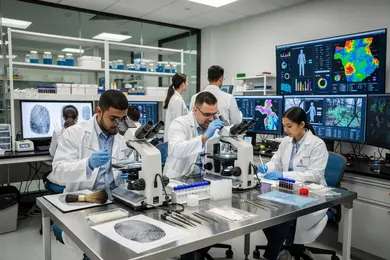
Employer expectations in forensic science prioritize graduates who demonstrate immediate operational competence, which accredited online forensic science degree programs with hands-on lab training are designed to ensure. These programs typically mandate at least 32 credits, such as the University of Florida's structure of 18 core and 14 elective credits, balancing foundational theory with applied skill development in areas like DNA analysis and crime scene investigation. This split addresses workforce needs by integrating controlled remote labs or regional partnerships to overcome the logistical challenges online students face in accessing physical lab environments.
Meeting professional accreditation standards, especially those set by the Forensic Science Education Programs Accreditation Commission (FEPAC), is a critical marker of a program's practical rigor. These standards require explicit lab competencies and validated skill assessments, which help reduce the common gap between academic credentials and field readiness-an important consideration for hiring managers selecting candidates for crime labs or forensic consultancies.
Programs with online forensic science curricula meeting professional accreditation standards often employ hybrid or virtual instrumentation models to replicate real crime lab workflows. This approach fosters mastery of tasks such as evidence handling and analytical reporting essential for effective forensic practice. Students can also tailor learning through electives aligned with trending specializations like forensic chemistry or digital forensics, improving employability across forensic sectors.
Prospective students considering a strategic pivot should weigh these program designs alongside other advanced options like the online data science doctorate, which can also complement forensic data analysis needs in evolving forensic fields.
What types of online forensic science degrees are available and which path fits my goals?
Choosing an online forensic science degree program with lab components requires evaluating how well the curriculum aligns with specific career trajectories and employer expectations. Forensic chemistry and biology tracks serve candidates aiming for crime labs or toxicology roles, demanding extensive hands-on training with chemical analysis and DNA sequencing instruments that federal and state forensic laboratories require.
Digital forensics degrees cater to cybercrime investigation and data recovery but face a scarcity of accessible programs featuring practical labs nationwide. This reduces options for students, particularly those transitioning from unrelated fields like software engineering, who must verify access to virtual labs or industry partnerships to develop validated skills sought by cybersecurity firms and law enforcement units handling digital evidence.
Hybrid forensic science degree paths that incorporate criminal justice or legal studies benefit applicants targeting law enforcement or legal consultancy, equipping graduates with knowledge of evidence admissibility and courtroom procedure critical to expert witness roles. Working professionals must balance program availability against specialization relevance; for instance, a biologist pursuing forensic pathology needs robust biological forensic coursework paired with real lab experiences.
- Prioritize programs offering direct lab engagement matching your target work environment
- Confirm flexibility and modularity for career pivots, especially in digital forensics
- Be wary of programs lacking hands-on or validated training components, which are often deal-breakers for employers
Prospective students can compare program structures effectively by examining well-analyzed educational fields such as animal science degrees online, which similarly emphasize practical training and employer-driven outcomes. Such cross-disciplinary awareness sharpens decision-making about which best forensic science degree paths for career goals render credible, workforce-aligned credentials.
What core courses and hands-on lab experiences are included in online forensic science programs?
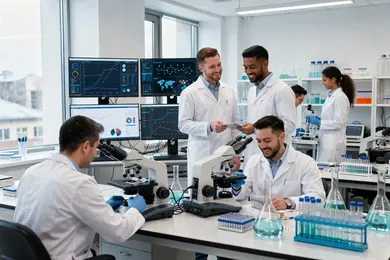
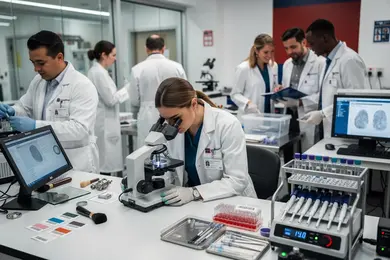
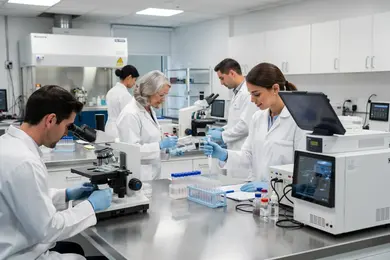
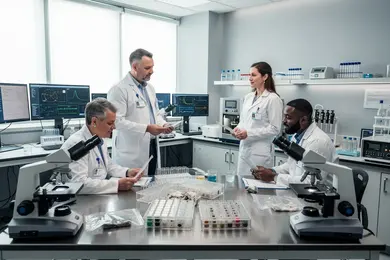
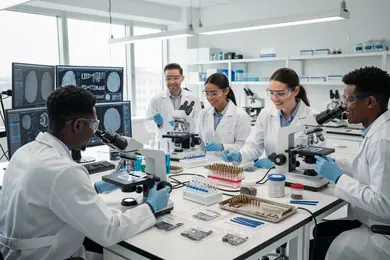
Online forensic science core courses with practical labs must strike a balance between virtual convenience and the hands-on proficiency demanded by employers. While theoretical knowledge is foundational, workforce readiness increasingly depends on demonstrable skills in crime scene investigation, forensic chemistry, and evidence handling. Programs incorporating hands-on lab components in forensic science degree programs use digital simulations, mailed kits, and remote-controlled instruments to approximate real-world scenarios. This approach addresses the logistical challenge of tactile training in remote settings but also raises questions about equivalency for roles requiring in-person competency verification.
Practitioners hiring for forensic roles weigh candidates' experience with strict chain-of-custody procedures and standardized analyses, such as DNA profiling or GC-MS instrumentation use. An online curriculum's ability to embed these elements varies, and federal agencies or specialized labs may require supplemental training that virtual labs alone cannot fulfill. Prospective students should carefully assess how well a program's lab integration aligns with their intended career context and the certification demands of their target employers.
The cost of quality online forensic science programs reflects their investment in experiential learning technology and faculty expertise; for example, graduate tuition at Stevenson University Online is $719 per credit hour. Balancing tuition expenses against tangible outcomes-like employer recognition, access to practicum placements, and job market alignment-is vital. This practical lens extends beyond traditional academic valuations to focus on return on investment in forensic science education.
For individuals considering advanced degrees in related fields, comparing tuition rates and program structures, such as a master of library science, underscores the variability in cost-to-benefit ratios across disciplines and delivery models.
How do online forensic science programs handle lab work, practicums, and on-site training?
Online forensic science programs must reconcile the unavoidable need for hands-on experience with the logistical constraints of remote learning. Most successfully do this through hybrid models where students complete the bulk of coursework online but attend approved local labs or partner institutions for practical sessions. For instance, an undergraduate enrolled in a 120-credit program like ASU Online's forensic science degree attends designated in-person weeks to conduct controlled lab experiments and casework simulations.
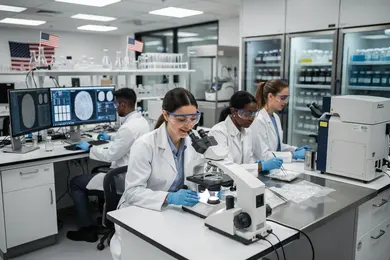
This hybrid approach maintains essential skill development particularly in evidence handling, chemical analyses, and chain-of-custody procedures, which purely virtual simulations fail to fully replicate. Students are often placed in nearby forensic labs, medical examiners' offices, or law enforcement agencies for practicums, creating field experience that is both decentralized and relevant. However, this requires students to navigate scheduling challenges and potential travel costs, factors employers consider part of training investments.
Prospective students should critically evaluate program flexibility, the geographic availability of onsite training, and employer expectations for verified practical exposure. Failure to meet hands-on competencies may restrict graduates to limited forensic roles or necessitate expensive additional certifications, undermining the degree's initial value. For personalized program details and local placement guidance, contacting program coordinators is essential to align educational outcomes with workforce standards.
What are the typical admission requirements for online forensic science degrees?
Admission requirements for online forensic science degrees reflect the tension between theoretical preparation and hands-on competencies employers prioritize. Typical minimum criteria include a high school diploma or equivalent, with GPA cutoffs often between 2.5 and 3.0. Undergraduate programs generally expect foundational coursework in biology, chemistry, and mathematics to prepare students for science-intensive material. Graduate-level admission usually mandates a related STEM bachelor's degree, along with letters of recommendation, a personal statement, and sometimes relevant professional experience.
The most significant practical challenge for applicants is fulfilling lab experience requirements. Unlike traditional campus programs-such as Hamline University's forensic science major, which offers direct lab access-online students often depend on virtual labs or limited in-person residencies. This creates a direct tradeoff: either commit to local lab partnerships or in-person visits, which may restrict access for those with geographical or scheduling constraints.
Employers' rising insistence on verifiable lab skills means students must critically evaluate whether an online program's admission process ensures meaningful, physical lab engagement, not just academic coursework. Some programs explicitly require documentation of local lab availability or prior lab-based training, effectively filtering candidates on practical readiness rather than academic eligibility alone.
For many aspiring forensic science professionals, navigating these layered admission criteria requires assessing their access to facilities and willingness to meet real-world experiential demands early in the enrollment process.
How long do online forensic science degrees take, and what do they cost to complete?
Choosing an online forensic science degree requires careful consideration of program length, cost, and hands-on training, as workforce standards heavily favor candidates with verified lab experience. Associate degrees typically involve about 60 credits and two years of full-time study, while bachelor's programs demand closer to 120 credits, usually over four years. Accelerated or competency-based options may shorten this timeline by allowing students to bypass certain courses based on prior knowledge or experience.
Cost variability is significant, with public universities averaging $300 to $600 per credit hour-totaling roughly $18,000 to $36,000 for a bachelor's degree exclusive of additional expenses. Private institutions often exceed $50,000. Prospective students should anticipate extra fees for essential hands-on components, such as lab kits or accessed virtual labs, without which employers in law enforcement and crime labs typically do not consider credentials credible.
Working professionals aiming to pivot careers face extended part-time timelines that may increase ultimate costs and delay skill acquisition, possibly complicating job placement. The niche status of online forensic science programs limits competition, affecting price and program availability. Evaluating a program's accredited lab opportunities is critical before investing time and funds, especially when employer demand prioritizes demonstrated practical competence over theoretical knowledge alone.
What forensic science careers can I pursue with an online degree and what do they involve?
A bachelor's degree in online forensic science serves distinct career tracks-crime scene investigation, forensic lab analysis, toxicology, and digital forensics-that vary considerably in daily work and training demands. For example, crime scene investigators require hands-on evidence collection and certifications beyond a bachelor's degree, while forensic laboratory analysts focus on precise chemical or biological testing within controlled environments. Toxicologists need deep biochemistry knowledge and commonly work with health or law enforcement agencies, and digital forensic specialists must blend computing expertise with forensic methods to handle cybercrime cases.
Choosing an online degree entails important tradeoffs. While virtual labs and hybrid residencies attempt to replicate in-person training, many forensic roles still require supplementary hands-on experience to meet employer standards. Graduates often face additional credentialing hurdles, which factor heavily into total costs that typically range from $35,000 to $68,000 for full tuition. Work-life balance is enhanced by online flexibility, but students targeting specialized paths-like toxicology-should seek programs with access to relevant practicum or agency partnerships to build necessary field skills.
Practical decisions hinge on aligning educational delivery with career goals and local workforce realities. Digital forensic roles tend to support fully online study more readily than laboratory-intensive fields, yet demand ongoing technical skill development even post-degree. These dynamics inform realistic employment timelines and advancement potential.
What salary ranges and job outlook can forensic science graduates expect in the U.S.?
Entry-level forensic science graduates in the U.S. face starting salaries typically ranging from $50,000 to $60,000, with median earnings near $62,000 according to the U.S. Bureau of Labor Statistics in 2024. However, this baseline masks significant geographic and sector-driven variation: candidates working for federal agencies or in major urban crime labs often command wages closer to $90,000, reflecting higher caseload complexity and advanced technological tools. Conversely, positions in smaller jurisdictions may offer limited salary growth and fewer upward mobility options, making location and employer choice critical factors in long-term earning potential.
Job growth projections of 11% through 2031 underscore a growing need for skilled forensic science technicians, fueled by improvements in forensic technology and expanding law enforcement demands. But wage advancement is frequently tied to continued skill development-certifications in specialized testing methods or forensic disciplines substantially increase competitive positioning beyond just holding a degree.
Practical decisions for prospective students or mid-career professionals involve balancing moderate entry salaries with robust demand and advancement trajectories. Strategic investment in ongoing education and targeting specialized roles within federal or technologically advanced labs is a pragmatic approach to maximizing financial returns and employability in a field that emphasizes exacting technical credentials.
How do I evaluate and choose a reputable online forensic science program?
Programs without recognized accreditation-such as FEPAC or regionally endorsed bodies-often lack the rigor employers demand, limiting graduate hireability despite degree completion. Prioritizing programs with hands-on lab components isn't optional; it correlates directly with job readiness and real-world forensic competency. For example, graduates from fully simulated crime lab courses consistently outperform peers in entry-level roles.
Course content should extend beyond theory, encompassing critical areas like crime scene investigation, forensic biology, toxicology, and evidence interpretation. Faculty with current forensic industry involvement or active research links enhance relevancy over purely academic instructors. Practical internships or cooperative education with law enforcement or crime labs substantively improve skill application and networking opportunities that directly impact employment outcomes.
Recent data reports forensic scientists average $62,325 annually, framing a baseline ROI against tuition and time investment. Returning professionals must weigh asynchronous lab access and flexible scheduling against workload constraints for meaningful skill acquisition. Specialized career tracks-whether advanced instrumentation or criminalistics-focused-necessitate tailored program emphases that directly affect employability probabilities.
- Accreditation validates curriculum standards and employer recognition.
- Embedded lab work ensures applicable, hands-on expertise.
- Faculty with industry experience improve training relevance.
- Strong connections to crime labs provide indispensable practical exposure.
- Graduate earnings and program flexibility influence cost-benefit considerations.
Other Things You Should Know About Forensic Science
Employers in forensic labs prioritize candidates who demonstrate practical skills and verified lab experience over the mode of education delivery. Online forensic science degrees that integrate accredited lab components, clear hands-on assessments, and recognized practicum placements tend to be valued similarly to on-campus degrees. However, programs lacking rigorous physical or simulated lab work may raise concerns about readiness, so prospective students should prioritize programs with well-documented, supervised lab experiences linked to industry standards.
Online forensic science degrees offer flexibility but often involve complex lab assignments and time-intensive projects that require careful scheduling. Working students need to account for on-site practicums or lab sessions that cannot be completed remotely, which may mean periodic travel or weekday absences from work. Programs that provide evening or weekend lab access, as well as asynchronous theory content, better accommodate working professionals. Selecting a program without these options can significantly increase workload stress and reduce program completion prospects.
Many lab-ready online forensic science degrees require at least one proctored final exam, usually in a supervised testing center or through approved remote proctoring. Programs may also require a capstone or lab skills assessment, especially in upper-division courses that document competency in evidence handling and analysis.
Licensing and certification bodies for forensic professionals often require documented hands-on lab hours and supervised experiences to qualify candidates. Online programs that incorporate structured, verified lab components aligned with these requirements facilitate smoother certification processes. Students should confirm that their program's lab work meets specific state or professional body standards, as failure to do so can delay or prevent eligibility for critical certifications. Choosing programs with clear, transparent lab verification processes is essential for avoiding post-graduation obstacles in licensure.
References
- The Forensic Science Jobs You Can Pursue with Qualifications https://www.stonebridge.uk.com/blog/distance-learning/the-forensic-science-jobs-you-can-pursue-with-qualifications/
- B.S. in Forensic Science | Rivier University https://www.rivier.edu/academics/all-programs/b-s-forensic-science/
- Forensic Science Courses | Internships | Training Delhi India https://sifs.in/
- Forensic Science https://icieducation.com/courses/law-justice/forensics/
- Crime Scene Investigation vs. Forensic Science https://www.forensicscolleges.com/blog/resources/csi-vs-forensic-science
- Bachelor's in Forensic Science https://www.ccis.edu/degrees/forensic-science-bachelor
- 2025 Most Popular Online Forensic Science Degrees https://www.onlineu.com/degrees/forensic-science
- Forensic Scientist Salary: State-by-State Median Guide https://www.allcriminaljusticeschools.com/forensics/salary/
- Online and Offline Forensic Science Courses for Students & Professionals https://iesr.in/forensic-science-courses-online-offline/
- European Forensic Institute Bachelor's and Masters programmes https://eufor.eu/programmes/