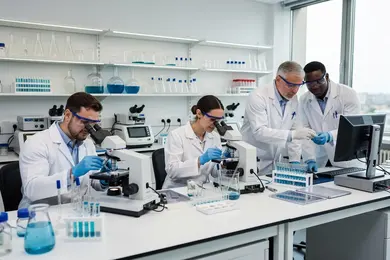
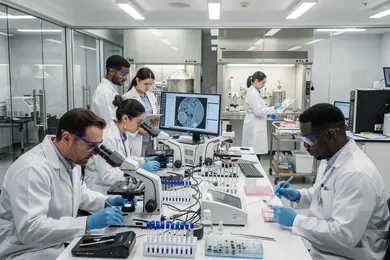
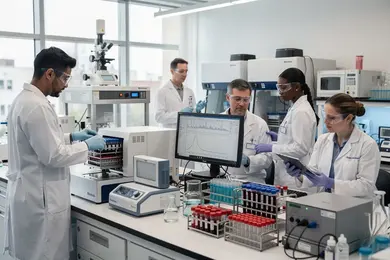
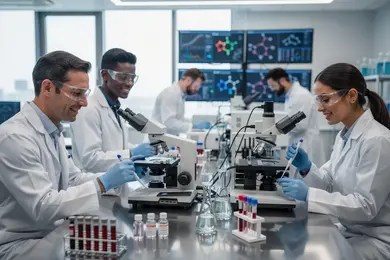
2027 Online Forensic Science Degrees With Evidence Handling Coursework

Co-Founder and Chief Data Scientist
When forensic science professionals mishandle or inadequately document evidence, case outcomes can be jeopardized, undermining justice and professional credibility. Yet, balancing the need for advanced training with demanding schedules remains a persistent obstacle. The National Center for Education Statistics reports a 32% increase in adult enrollment in online degree programs since 2022, underscoring a shift toward accessible, flexible education for working students.
This shift reduces barriers while maintaining rigorous skill development, crucial for mastering evidence handling protocols that employers prioritize. This article evaluates online forensic science degrees integrating evidence handling coursework, guiding readers to programs aligned with career advancement and practical competencies.
Key Things You Should Know
- Online forensic science degrees with evidence handling coursework often omit hands-on lab components, requiring supplemental in-person training that extends total completion time by up to 12 months, affecting workforce entry speed.
- Employers in forensic laboratories report a 22% preference for candidates from hybrid or on-campus programs over fully online degrees due to concerns about practical skills, directly impacting job market competitiveness.
- According to the Bureau of Labor Statistics, forensic technician roles grew 7% from 2022-2024, but online degree tuition premiums averaging 15% above similar in-person options raise cost-efficiency questions for career pivoters.
What are online forensic science degrees with evidence handling coursework and who are they for?
Online forensic science degrees with evidence handling coursework respond directly to workforce demands in public-sector crime labs and law enforcement agencies where procedural rigor governs evidentiary processes. Given 93% of forensic science technicians are employed by state or local government, these programs emphasize operational compliance over purely theoretical knowledge, equipping students to navigate strict chain-of-custody protocols integral to admissible evidence handling.
Such degrees integrate foundational forensic science principles with applied skills, including crime scene investigation techniques, federal evidence standards, and specialized packaging and analysis of trace materials. This focus mitigates risks associated with mishandled evidence that can result in case dismissals or wrongful convictions. Students must also arrange supervised practicums or internships locally, a logistical necessity that often challenges those without physical access to forensic labs or crime scenes.
Prospective learners-whether recent graduates or professionals pivoting into forensic roles-must weigh the practical tradeoffs of remote study plus external fieldwork versus in-person training models. Employers explicitly favor candidates demonstrating evidence management competency aligned with regulatory frameworks versus solely academic credentials. For those seeking best online forensic science programs with evidence management classes, consideration of these operational realities is essential.
For additional insights on aligned pathways in forensic psychology and related fields, consult forensic psychology graduate programs online.
How do online forensic science programs compare to campus-based options for evidence handling?
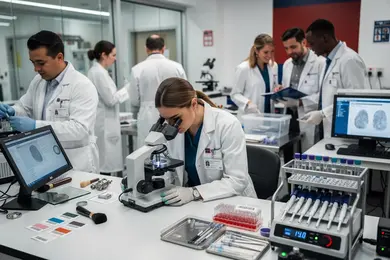
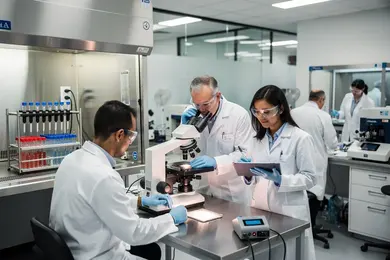
Online forensic science degrees with evidence handling present a significant tradeoff between flexibility and authentic skill acquisition. While virtual labs and simulations can introduce core concepts, they fall short of replicating the tactile precision and strict chain-of-custody protocols critical in crime scene work. Campus programs offer supervised, hands-on access to forensic equipment, real specimens, and direct engagement with crime labs-an advantage that employers explicitly value and often require.
In real-world scenarios, cross-contamination risks and evidence integrity demand immediate peer and instructor feedback that online platforms struggle to emulate. Employers hiring forensic science technicians prioritize candidates with verifiable practical experience because mistakes in evidence processing can jeopardize entire legal cases. Candidates relying exclusively on online training frequently need to supplement their education with internships or part-time lab roles to remain competitive.
The Bureau of Labor Statistics forecasts a 13% growth in forensic science employment through 2032, nearly triple the average for all fields, intensifying demand for graduates with hands-on proficiency. Campus vs online forensic science programs for evidence handling decisively favors campus-based routes when practical skills are the priority.
Prospective students should scrutinize whether online programs incorporate formal externships or mandatory fieldwork aligned with reputable agencies. Without these, campus education remains the most reliable gateway to meeting current industry standards and improving job placement in forensic labs.
For those considering alternative fields, examining an affordable data science degree could provide transferable analytical skills applicable in forensic investigations.
Which U.S. schools offer accredited online forensic science degrees focused on evidence handling?
Online forensic science degree programs in the U.S. with evidence handling prepare students for a workforce that demands precision in managing physical proof through rigorous chain-of-custody protocols and contamination control. Programs at accredited U.S. schools offering forensic science degrees focused on evidence management, such as the University of Florida and University of New Haven, combine theoretical courses with scenario-based virtual labs and internships to align with employer expectations for methodical evidence tracing under legal scrutiny.
The practical value of these degrees depends heavily on integrating online coursework with local agency partnerships or in-person fieldwork, often creating a friction point for students balancing accessibility and hands-on training requirements. Graduates typically become eligible for certification exams from recognized bodies like the American Board of Criminalistics, a key credential for roles in forensic labs, medical examiners' offices, or legal consulting.
Salary projections from the U.S. Bureau of Labor Statistics (May 2023) show forensic science technicians earn a median wage of $64,940 annually, with top earners exceeding $108,190, reflecting a tangible ROI on mastering evidence handling competencies within accredited programs.
Prospective students should carefully evaluate program designs to ensure they meet practical training benchmarks required by employers, especially when comparing fully online options against hybrid models. For those considering parallel paths or interdisciplinary interests, exploring options such as an accredited online animal science degree may provide complementary skills relevant to forensic investigations involving biological evidence.
What evidence handling and crime lab courses are typically included in these online programs?
Evidence handling protocols in online forensic science programs emphasize rigorous crime scene processing and chain of custody to safeguard evidentiary integrity. These protocols train students in securing scenes, preserving diverse evidence types-ranging from biological to digital-and adhering to standards required by agencies like the FBI and the National Institute of Justice. A breakdown in these procedures can render evidence inadmissible, directly impacting case outcomes and professional credibility.
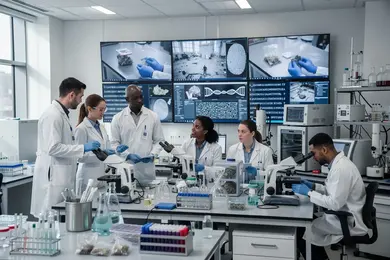
Crime laboratory coursework in online forensic science degrees often incorporates both virtual and hands-on training in chemical analysis, fingerprint examination, and forensic toxicology. Students engage with instruments such as gas chromatographs and mass spectrometers, aligning technical skills with American Academy of Forensic Sciences standards. This practical experience is critical for roles in municipal and federal crime labs, where precision and methodical record-keeping are essential.
The curriculum also addresses legal competencies, including forensic reporting and courtroom testimony, reflecting the dual scientific and communicative demands placed on professionals. Working adults evaluating these programs must consider tuition costs against these competencies; for example, Grand Canyon University charges $610 per credit for a 36-credit online master's degree, totaling about $21,960. Given the investment, prospective students should weigh the balance of these costs with the necessity of mastering complex evidence handling to meet employer expectations in forensic roles.
For those assessing related academic pathways, a library degree resource offers comparative affordability insights across disciplines, providing additional context for tuition benchmarking.
What admission requirements and prerequisites do online forensic science degrees usually have?
Forensic science online degree programs demand more than minimum academic credentials; they require a foundation in chemistry, biology, mathematics, and sometimes physics-skills essential for accurate evidence interpretation. Candidates with associate's or bachelor's degrees in related fields often have a smoother admission pathway, yet practical laboratory experience or prior crime scene involvement remains a decisive advantage to meet employer expectations for hands-on competency.
Admission thresholds typically include a competitive GPA, generally between 2.5 and 3.0, along with standardized test scores or graduate-level transcripts. Applicants without complete prerequisites must often complete courses elsewhere before enrollment, which can delay graduation and extend workforce reentry timelines. Such delays impact not only earnings but also momentum in the forensic field, particularly for career changers.
Programs also integrate background checks due to security concerns tied to handling sensitive evidence. Crucially, many require local internships or lab practicums, complicating purely online routes yet ensuring graduates possess applied skills valued by employers.
Financially, online offerings like those at Arizona State University lower tuition burdens via widespread financial aid, improving access without sacrificing academic rigor. This financial dimension can be a critical factor for prospective students balancing cost against time and career goals.
- Prerequisite coursework completion may extend time-to-degree and delay entry into forensic roles.
- Hands-on internships are often mandatory, limiting fully remote program viability.
- Competitive GPA and test scores remain key gatekeepers for program admission.
How long do online forensic science degrees take and what do they cost?
Completing an online forensic science master's degree typically takes between 1.5 and 3 years, depending on full- or part-time enrollment and program credit requirements. For instance, the University of Florida's MS program requires 32 credits, combining 18 core and 14 elective credits centered on biological and trace evidence techniques like forensic DNA analysis and serology. This curriculum design directly addresses employer priorities, emphasizing verifiable specialized coursework that impacts eligibility for forensic certification boards.
The financial investment ranges broadly from $15,000 to $40,000 in total tuition, varying by residency and institutional prestige. Working professionals often face a tradeoff between accelerated programs that demand 15-20 weekly hours and their available time, especially if managing employment simultaneously. Additional indirect costs, such as software fees or on-site practicums, further affect total expenses.
Choosing a program aligned with expertise in trace and biological evidence is critical. Employers in forensic labs and crime scene units prioritize this competency, which can be decisive in securing advanced roles. Students should weigh timelines against career objectives, understanding that longer part-time paths may delay workforce reentry but allow for income continuity.
- Duration: 1.5-3 years per degree completion path
- Tuition: $15,000-$40,000 total cost range
- Time Commitment: 15-20 hours per week for accelerated study
- Focus: Biological and trace evidence coursework impacts employability and certification
What forensic science careers require strong evidence handling skills and what roles can graduates pursue?
Forensic science roles demand exacting evidence handling that directly influences case outcomes and career viability. Positions such as crime scene investigators, forensic laboratory technicians, digital forensic analysts, and evidence custodians require rigorous chain-of-custody management to safeguard evidence integrity under legal scrutiny. A single mishandled sample-whether microscopic or digital-can invalidate crucial proof and compromise litigation.
Digital forensic examiners and electronic discovery specialists face additional complexity preserving volatile data from devices and networks, where regulatory standards enforce stringent documentation and bit-level data duplication. Employment growth in these technical roles reflects the escalating dependence on digital evidence in investigations.
Graduates must navigate practical challenges such as handling diverse material types needing specialized storage, evolving encryption technologies, and cloud data retrieval. Employers prioritize professionals who integrate physical and digital evidence workflows effectively while maintaining compliance with shifting legal benchmarks.
Career pathways often involve a tradeoff between fieldwork-collecting evidence on-site-and lab-based analytical work requiring advanced technical expertise. Mastering evidence handling substantially broadens access to federal agencies, cybersecurity firms, or multidisciplinary consultancies supporting complex litigation. Clear documentation and adherence to protocols remain the foremost indicators of sustained employability in forensic science.
What salary ranges and earning potential can graduates with forensic evidence training expect?
Forensic evidence training yields significant wage disparities influenced by specialization, employer type, and credentialing depth. Median earnings for forensic science technicians hover around $63,000, but those with focused skills in digital forensics or advanced evidence handling can reach $80,000 to $90,000 annually in competitive markets.
Federal agencies and private cybersecurity firms typically offer top-tier salaries due to the complexity of electronically sourced evidence, whereas local law enforcement positions often see wages capped closer to $50,000-$60,000. The professional premium strongly correlates with stackable credentials or micro-credentials, which serve as quick, verifiable skills endorsements to meet evolving employer expectations.
Consider a forensic analyst working healthcare fraud cases: initial salaries may start near $55,000 but can rise above $85,000 with advanced digital forensics training and field experience. Conversely, field evidence technicians focused solely on physical collection face limited growth unless they pursue cross-disciplinary education or higher degrees.
Public agency budgetary constraints and hiring freezes slow salary progression, underscoring the pragmatic necessity of ongoing, modular certificates to maintain market relevance. Candidates must weigh upfront investments against realistic mid-career returns, understanding that credential stacking improves job competitiveness but does not guarantee linear salary growth.
What certifications, licenses, or professional standards apply to forensic evidence specialists?
Certification is non-negotiable for forensic evidence specialists aiming to work with legal-grade evidence, particularly in high-stakes environments like state or federal crime labs. Credentials such as those from the American Board of Criminalistics (ABC) or the International Association for Identification (IAI) are essential, reflecting not just technical knowledge but documented field experience and adherence to quality standards like ISO/IEC 17025.
For example, a digital evidence specialist in a state crime lab must maintain IAI certification and ongoing training to ensure evidence admissibility in court. Without such certification, even a relevant degree or online training falls short, limiting job mobility and excluding candidates from sensitive roles that demand strict chain-of-custody and quality assurance compliance.
Licensing requirements vary but typically mandate background checks, practical proof of forensic procedures knowledge, and compliance with local or federal lab standards, such as the FBI's Quality Assurance Standards for DNA evidence handlers. Practical implications for students and professionals are clear:
- Online forensic degrees can provide foundational knowledge but rarely fulfill certification preconditions alone.
- Hands-on fieldwork and exam-based credentialing remain critical.
- Employer preference heavily favors candidates with recognized certifications and documented laboratory experience.
Programs reported by OnlineStudies and Educations.com highlight growth in distance learning options; however, strategic planning must include how these credentials integrate with practical certifications to meet workforce expectations and legal standards.
How can students evaluate and choose a reputable online forensic science program?
Choosing an online forensic science degree requires prioritizing accredited programs that combine rigorous evidence-handling coursework with industry standards. Accreditation by entities such as the Forensic Science Education Programs Accreditation Commission signals adherence to recognized curriculum quality and improves employer recognition. Programs offering advanced quantitative skills-like applied statistics for forensic data analysis-and molecular evidence techniques, exemplified by the University of Florida's curriculum, align closely with workforce demands for practitioners fluent in data interpretation and current laboratory methods.
Faculty expertise backed by active forensic lab roles or research enhances real-world applicability. Students should scrutinize syllabi to confirm inclusion of chain-of-custody protocols and legal standards, as gaps here significantly undermine preparedness for court-admissible evidence handling. The choice between fully online formats and hybrid models also carries tradeoffs: virtual labs support working adults but may limit crucial hands-on experience absent supervised internships or forensic lab partnerships, which state and federal employers often require.
Graduate employment metrics provide an objective lens to evaluate programs-those with placement rates exceeding 70% within one year tend to maintain alignment with evolving forensic science employer expectations. Avoiding outdated curricula or limited practical training is essential for meaningful career pivots or advancement in this technically demanding field.
- Accreditation ensures curriculum rigor and credibility
- Quantitative and molecular coursework reflect direct workforce skills
- Faculty experience correlates with practical knowledge transfer
- Hands-on learning through internships increases employability
- Graduate placement data signals market alignment
Other Things You Should Know About Forensic Science
Employers prioritize accreditation and practical experience over the modality of instruction. An online degree from an accredited program that integrates substantial hands-on evidence handling labs and internships can hold equal weight to traditional degrees. However, programs that lack real-world training components may hinder job readiness and reduce competitive advantage in forensic lab or field roles.
Online evidence handling courses demand disciplined time management since many include asynchronous lectures combined with strict deadlines for virtual labs or simulated exercises. Skill development relies heavily on the quality of lab simulations and remote mentoring; students should verify that programs offer interactive, scenario-based training to build practical competence rather than just theoretical knowledge.
Yes, many programs require a supervised practicum or internship, often 120 to 240 hours, in a crime lab, medical examiner office, or law-enforcement evidence unit. Students usually must complete background checks, chain-of-custody training, and site approvals before placement.
Specializations can influence employability depending on local job market demands. Students should prioritize programs offering flexible curricula that allow combining evidence handling with crime scene analysis or forensic biology if those align with their intended career paths. Narrow focus programs may limit opportunities, while broader specializations provide versatility but may reduce depth in evidence handling expertise.
References
- Forensic Science Careers UK Requirements: Complete Guide to Professional Entry and Advancement https://pathologylabtraining.co.uk/biomedical-sciences/forensic-science-careers-uk-requirements
- Tips for Students Pursuing Careers in Forensic Science https://forensicstats.org/blog/tips-for-students-pursuing-careers-in-forensic-science
- Top Online Forensic Science Degree Programs https://www.forensicscolleges.com/online
- Forensic Investigation Degree Program | University of Wisconsin-Platteville https://www.uwplatt.edu/program/forensic-investigation
- 13 Reasons To Become A Forensic Scientist https://www.openstudycollege.com/blog/3-reasons-become-forensic-scientist
- Criminal Justice Careers in Forensic Science and Investigations https://www.shawnee.edu/blog/criminal-justice-careers-in-forensic-science-and-investigations
- Online Forensic Science Degrees https://www.criminaljusticeprogramsonline.com/forensic-science/
- How Much Does A Forensic Scientist Make? A Salary Overview https://www.salemu.edu/blog/how-much-does-forensic-scientist-make/
- Blogs https://aifset.com/blogs/career-opportunity-after-enterance-exam.html
- Forensic Scientist Salary: State-by-State Median Guide https://www.allcriminaljusticeschools.com/forensics/salary/