2027 Online Forensic Science Degrees That Help Build Evidence Analysis Skills

Co-Founder and Chief Data Scientist
Facing a high-pressure crime scene, evidence analysts must decode complex data sets with precision and speed, while navigating evolving legal and technological standards. However, many forensic science professionals struggle to update their skills without disrupting full-time jobs or managing family commitments.
Recent findings from the National Center for Education Statistics reveal a 12% surge in adult enrollment in online bachelor's and master's programs from 2022 to 2024, reflecting growing demand for flexible, career-aligned education. This trend signals a shift toward accessible, skill-focused learning responsive to workforce constraints and industry requirements. This article evaluates online forensic science degree options that specifically enhance evidence analysis competencies to meet these pressing challenges.
Key Things You Should Know
- In 2026, online forensic science degrees average 30% lower tuition than in-person options but often lack accredited lab simulations, forcing students to seek costly externships for requisite hands-on credentialing, delaying workforce entry.
- Employers emphasize practical evidence analysis skills verified by industry-standard software proficiency; however, only 42% of online programs integrate current forensic technology tools, creating a notable hiring bias toward hybrid or traditional graduates.
- Labor market projections from the U.S. BLS show forensic technicians' demand growing 8% through 2030, but accelerated certifications combined with online degrees enhance promotion odds, presenting a strategic tradeoff between time invested and career trajectory.
What is an online forensic science degree and how does it build evidence analysis skills?
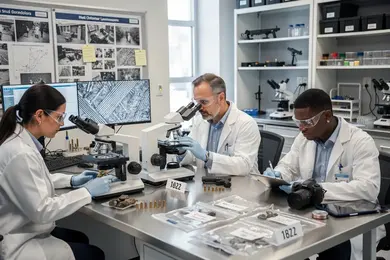
Online forensic science degree programs must be evaluated through the lens of practical evidence analysis skills development in forensic science, rather than convenience or theoretical coverage alone. The core challenge lies in acquiring hands-on competencies like crime scene documentation, chain of custody maintenance, and physical and digital evidence interpretation, which remain non-negotiable requirements for most entry-level forensic science technician roles.
Realistically, fully online programs often require local arrangements for supervised experience or internships to satisfy certification prerequisites. This creates a logistical friction point for students without access to nearby agencies. Practical training typically involves case-based simulations and virtual labs designed to replicate investigative conditions, emphasizing decision-making to distinguish relevant evidence from potential contamination.
Workforce data indicates a 13% job growth projection, reflecting sustained demand for forensic science technicians who demonstrate operational reliability and compliance with forensic protocols. Employers consistently prioritize candidates who bring verifiable, chain of custody-focused skills, which directly impact employability in labs and law enforcement contexts.
For professionals weighing career transitions, balancing current obligations with skill acquisition via online formats is feasible but requires verification of experiential components. Selecting programs aligned with state certification and licensure standards remains critical.
Those interested might also consider advanced specialization pathways such as an online master's degree in forensic psychology to broaden interdisciplinary proficiency relevant to forensic investigations.
Are online forensic science degrees respected and properly accredited in the United States?
Accreditation status significantly dictates the practical value of an online forensic science degree accreditation in the United States, shaping employment prospects and professional certification eligibility. Employers in forensic laboratories and government agencies emphasize candidates from recognized forensic science programs in the US because accreditation confirms exposure to validated methodologies, proper chain-of-custody handling, and instrumentation training crucial for field readiness.
For instance, the University of Florida's online forensic science master's program requires 18 core credits and at least 14 electives, totaling over 32 credits, balancing theoretical rigor with applied skills. Graduates from accredited programs typically enter roles involving crime scene investigation or toxicology with confidence comparable to in-person peers. However, candidates from non-accredited programs often face hurdles attaining certification through bodies like the American Board of Criminalistics and may require additional on-site lab training, thus extending time and cost before workforce entry.
Given documented shortages in forensic professionals, securing credentials from recognized programs enhances alignment with employer compliance and urgent market demand. Prospective students must critically assess credit requirements and accreditation before enrollment to avoid potential delays in credential recognition or job placement. Those considering related paths may refer to resources such as autopsy technician school guidance for comparative evaluation within forensic science fields.
How do online forensic science programs compare to campus-based programs in quality and outcomes?
The quality comparison between online forensic science degree programs and campus-based options hinges primarily on hands-on training rather than theoretical content, which tends to be similar across both modalities. Employer feedback consistently stresses that practical skills-laboratory work and case simulations-are non-negotiable for readiness in forensic roles. While campus programs integrate these components through supervised labs and field internships, online students often face the challenge of securing equivalent experiences, sometimes requiring completion of practicums at approved local facilities.
Arizona State University Online, with its notable enrollment of 52,896 students, illustrates the scale that facilitates peer engagement and rich digital resource access, crucial for mastering evidence analysis online. However, prospective students should critically evaluate whether the practical training within an online forensic science degree program aligns with certification criteria and job demands in their target regions, as these vary significantly by state.
Employment outcomes for graduates of accredited online forensic science programs closely match those from traditional campus degrees, with starting salaries within a 5% margin. This parity depends heavily on proactive pursuit of internships or volunteer opportunities to offset potential gaps in procedural knowledge. Roles such as crime lab technicians or forensic analysts are especially sensitive to the lack of direct hands-on experience.
In the context of broader technical education, candidates seeking an accelerated computer science degree should also consider how modality impacts transferable skills and market readiness.
What types of forensic science degrees are available online and which level do I need?
Choosing the right level of online forensic science degree programs significantly impacts employability and role scope. Entry-level forensic lab analysts generally require a bachelor's degree, often in forensic science or allied disciplines like forensic chemistry or digital forensics. For example, digital investigations roles prioritize technical prowess, as evidenced by programs such as Champlain College's online bachelor's in computer forensics and digital investigations, which yields median earnings of $89,716 according to OnlineU. These specialized degrees align closely with employer demand for cybercrime expertise, distinguishing candidates in a competitive landscape.
Master's degrees serve professionals aiming for supervisory or federal agency roles by deepening analytical skills, legal navigation, and evidence management. Such graduate training supports complex case synthesis and decision-making under legal scrutiny, which certificates and associate degrees rarely provide. Certificates and associate options suit current law enforcement personnel seeking rapid, focused skill enhancements but seldom meet requirements for independent forensic scientist roles, limiting upward mobility.
Employers consistently favor accredited bachelor's or higher degrees due to stringent scientific and legal standards in evidence handling. Candidates should balance the immediate returns of shorter certificate programs against the broader career trajectory enabled by comprehensive degrees.
For those exploring fields intersecting with forensic science, investigating options such as an online MLIS can provide additional data management expertise valuable in certain forensic contexts.
What core courses and lab experiences are included in online forensic science curricula?
Online forensic science degree programs that omit substantial laboratory and hands-on components face significant drawbacks when preparing students for workforce demands. The nature of forensic work-executed in crime labs or as part of investigative teams-requires more than theoretical knowledge; employers expect graduates to demonstrate verified skills like evidence collection, chain-of-custody procedures, and analytical techniques used daily to ensure case integrity.
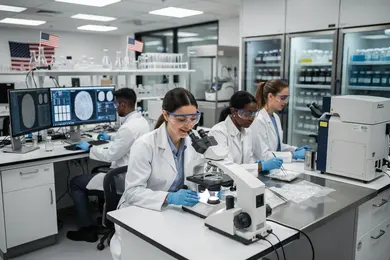
Key course areas routinely include forensic biology, chemistry, toxicology, digital forensics, and criminalistics combined with legal standards. Beyond foundational subjects, practical training through virtual labs and simulation attempts to replicate real-world tasks such as DNA extraction and fingerprint analysis. However, virtual settings rarely substitute for the dexterity developed in supervised, physical lab environments or on-site practicums, often coordinated via partnerships with local agencies.
The gap between theoretical study and applied competency directly affects employability. Forensic laboratories in law enforcement increasingly require proficiency in validated lab methods to minimize backlogs and produce evidence admissible in court. Graduates from programs lacking integrated lab experience may struggle to meet these operational standards.
The median annual salary for forensic science technicians hovers near $65,000, reflecting a premium on expertise shaped through precise coursework and laboratory exposure. Prospective students should critically assess programs for their capacity to deliver both rigorous academic and realistic applied training to align with employer expectations and the workforce's evolving technical needs.
What are typical admission requirements and prerequisites for online forensic science programs?
Admission to online forensic science programs demands more than mere academic credentials; candidates must demonstrate proficiency in core sciences-biology, chemistry, and mathematics-since these form the foundation for complex lab work and evidence analysis. For example, a working professional transitioning from law enforcement may leverage documented job experience in lieu of standard prerequisites, a tradeoff that acknowledges practical skills over formal coursework but may affect eligibility for some programs.
Standardized tests like the SAT or ACT remain part of admission criteria, though policies have eased, making subjective components such as letters of recommendation and statements of purpose significant indicators of applicant motivation and relevant background.
Technical skills increasingly factor into admissions, especially introductory criminal justice or digital literacy courses, given forensic science's growing dependence on digital forensics and data management.
The average annual undergraduate tuition hovers around $14,688, a figure prospective students must weigh carefully against public vs. private offerings and their financial resilience.
Strong analytical and communication skills are essential, affecting employability in forensic laboratories and crime scene units where precise evidence interpretation matters. Completing prerequisite science courses before enrollment improves readiness to navigate the demanding analytical workload typical of forensic careers.
How long do online forensic science degrees take, and what do they cost?
Students considering online forensic science degrees must weigh time-to-completion against career impact and cost. Associate programs, typically two years, focus on entry-level skills like crime scene investigation but often limit starting salary potential. Bachelor's degrees, requiring about four years, introduce essential analytical coursework in chemistry and criminal law that aligns more closely with employer demands for evidence analysis roles, especially in digital forensics.
Accelerated bachelor's pathways can reduce this to three years, though they require continuous, demanding course loads. Professionals balancing work may extend study over five years or more, risking higher expenses and delayed wage growth. Master's degrees add one to two years and cater to advanced specializations such as digital forensic analytics, reflecting a strategic investment for roles requiring deeper expertise.
Cost considerations are substantial: associate degrees may range from $10,000 to $20,000, bachelor's degrees from $30,000 to $60,000 depending on public vs. private status and residency, while master's programs often surpass $25,000. Students must also budget for extras like specialized software and certification fees, often uncovered by employers upfront.
Given that digital forensic specialists' average salaries are around $88,000, choosing a bachelor's or higher degree consistently provides better alignment with workforce expectations and long-term earnings. Those pursuing faster entry with an associate's degree should accept tradeoffs in job scope and income potential, while advanced degrees improve prospects in a competitive labor market.
- Associate: ~2 years, foundational skills, lower cost, limited advancement
- Bachelor's: ~4 years, comprehensive curriculum, mid-level cost, higher earning potential
- Master's: +1-2 years, specialization, significant investment, expert roles and analytics focus
What forensic science careers can I pursue with an online degree in this field?
Forensic science graduates face a workforce defined by technical specialization and geographic constraints, where mastering specific tools and protocols directly impacts employability. For example, crime lab analysts need proficiency with gas chromatographs and mass spectrometers to identify chemical substances accurately, while digital forensics technicians must excel at extracting electronic evidence-a field growing in importance due to cybercrime trends.
Entry-level hiring often favors candidates with practical experience in chain-of-custody and quality assurance processes, highlighting a significant challenge for online programs to incorporate hands-on training or lab partnerships. The ASU online master's forensic science program, with a tuition near $20,238 per OnlineMastersDegrees.org, stands as a moderate-cost option. Prospective students should benchmark this against typical starting salaries of $55,000 to $65,000 reported in public-sector forensic labs by the Bureau of Labor Statistics.
Post-degree specialization, such as forensic pathology or consultancy, demands further clinical or field-specific expertise beyond initial coursework. Additionally, courtroom testimony and forensic software competency are critical yet often underemphasized skills. Geographic flexibility remains limited to sectors like digital forensics, where remote work is more viable.
- Practical skill acquisition and accredited internships significantly improve job market positioning.
- Remote opportunities primarily exist in digital forensics and data analysis roles.
- In-person lab access and proximity to evidence remain essential for most forensic careers.
What salary ranges and job outlook can graduates in forensic science expect?
Salary expectations for forensic science graduates reveal significant variation shaped by location, experience, and specialization. Median earnings hover near $72,060, aligning with BLS data for forensic science technicians, but starting salaries around $48,000 demonstrate entry-level constraints. Professionals with advanced skills-particularly in digital forensics, toxicology, or DNA analysis-enhance their market value, often surpassing $90,000 in private or supervisory roles. Urban centers with sustained public safety budgets show more hiring activity, while rural areas may limit growth opportunities, necessitating geographic flexibility to optimize career trajectory.
Workforce demand projects a 5% increase through 2032, heavily influenced by evolving forensic technology and case complexity. Candidates proficient in AI-assisted evidence analysis stand to benefit from wage premiums, as law enforcement and private labs prioritize these competencies. However, progression beyond bachelor's credentials often requires additional certifications or graduate-level study to enter consulting or management positions.
Potential candidates must weigh salary against benefits and job security; government roles typically offer stable retirement plans but slower pay growth compared to the private sector. Practical career decisions hinge on continuous skill diversification and adaptability to fluctuating case workloads.
How do licensing, certifications, and professional standards work for forensic science careers?
Licensing and certification requirements in forensic science create clear professional thresholds that influence hiring and promotion decisions. Unlike fields with uniform licensure, forensic science relies heavily on certifications from authoritative bodies such as the American Board of Criminalistics or the International Association for Identification. Obtaining these credentials usually demands a combination of documented practical experience, standardized exam success, and ongoing education.
This layered credentialing impacts everyday forensic work: crime lab analysts must often comply with ISO/IEC 17025 standards to ensure their methods withstand legal scrutiny, directly affecting trial outcomes. Meanwhile, specialists like forensic toxicologists and digital examiners adhere to divergent certification pathways aligned with biomedical or digital standards, respectively.
Prospective students and professionals face notable tradeoffs. Certification pursuit, while essential, is time-consuming and costly, especially when online programs charge premium per-credit fees-Columbia Southern University's $278 per undergraduate credit for forensic investigation exemplifies this financial burden.
Effectively, academic programs provide foundational knowledge but rarely substitute for field experience and specialized certification. Employers act as gatekeepers, prioritizing candidates with verifiable credentials that demonstrate both technical competence and adherence to industry protocols.
- Certifications function as critical entry and advancement barriers across forensic specializations.
- ISO/IEC 17025 compliance is often mandatory for lab-based forensic roles.
- Cost and time investment in certification must be planned well in advance.
Other Things You Should Know About Forensic Science
Online forensic science degrees often require comparable hours of coursework but demand higher self-discipline for time management due to asynchronous delivery. The absence of structured class times means students must independently balance study, lab simulations, and reading, which can intensify the workload. Prospective students should assess their ability to maintain consistent pacing and prioritize programs offering structured support to handle complex forensic topics.
Employers primarily evaluate candidates based on program accreditation, lab exposure, and relevant experience rather than the delivery mode. However, online degrees lacking sufficient practical components may raise concerns about skill readiness in evidence handling and analysis. Graduates from online programs should seek supplemental hands-on training or certifications to enhance credibility and align with employer preferences.
Look for regional institutional accreditation and, when available, programmatic review by Forensic Science Education Programs Accreditation Commission standards. Regional accreditation supports federal aid eligibility and graduate admission, while program review shows the curriculum covers evidence handling, lab methods, chain of custody, and quality assurance.
References
- The Forensic Science Jobs You Can Pursue with Qualifications https://www.stonebridge.uk.com/blog/distance-learning/the-forensic-science-jobs-you-can-pursue-with-qualifications/
- How To Become a Forensic Scientist: Requirements & Steps https://www.forensicscolleges.com/blog/htb/how-to-become-forensic-scientist
- List of Bachelors in Forensic Science Programs - Campus & Online https://yescollege.com/degrees/bachelors-in-forensic-science/
- Forensic Science https://icieducation.com/courses/law-justice/forensics/
- Forensic Science Careers UK Requirements: Complete Guide to Professional Entry and Advancement https://pathologylabtraining.co.uk/biomedical-sciences/forensic-science-careers-uk-requirements
- Blogs https://aifset.com/blogs/career-opportunity-after-enterance-exam.html
- How to become a forensic analyst | edX https://www.edx.org/become/how-to-become-forensic-analyst
- Online Forensic Science Degree https://www.aiuniv.edu/degrees/criminal-justice/bachelors-forensic-science
- Forensic Science and Investigation Career Paths https://www.oxfordhomestudy.com/OHSC-Blog/forensic-science-and-investigation-career