2027 Forensic Science Jobs With the Best Work-Life Balance

Co-Founder and Chief Data Scientist
Balancing extended crime scene hours with ongoing education or family responsibilities challenges many forensic science professionals and students. Amid growing workforce demand, with the U. S. Bureau of Labor Statistics projecting a 14% employment increase over the next decade, choosing roles that offer sustainable schedules becomes critical.
Meanwhile, the rise of flexible, online degree programs-up 22% in enrollment just last year according to the National Center for Education Statistics-reflects a shift toward accommodating adult learners and working professionals. These trends shape timely decisions about career paths and learning formats. This article identifies forensic science job options offering the best work-life balance to support informed career and education planning.
Key Things You Should Know
- Federal labor data shows forensic science technician roles with compressed schedules average 8%-12% higher retention but require employer waiver due to evidence chain security, affecting work-life balance tradeoffs in agency settings.
- Employers increasingly prioritize candidates with specialized analytic certifications over generalist degrees, pushing workforce entrants toward expensive postbaccalaureate credentials that extend time-to-employment by 18 months on average.
- State budget constraints cut support for forensic training programs by 15% since 2023, forcing aspirants to finance costly out-of-state or private lab internships critical for practical experience and job placement.
What forensic science jobs offer the best work-life balance?
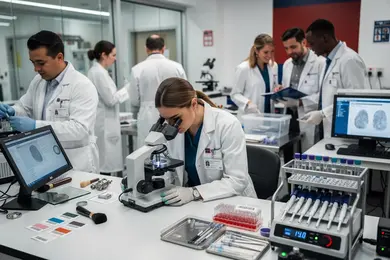
Work-life balance in forensic science careers hinges on predictable schedules and manageable caseloads, which often exclude roles riddled with emergency callouts or irregular shifts. Civilian or municipal crime scene investigators and laboratory analysts typically encounter more consistent hours, unlike their counterparts in metropolitan police or medical examiner offices where unpredictable demands are common. Forensic science technicians working in controlled lab settings usually maintain regular 40-hour weeks, easing personal planning and reducing burnout risks. This distinction illustrates why certain forensic science careers with flexible hours are more sustainable long-term.
Tradeoffs between specialization and schedule stability are significant. Forensic toxicologists face extensive educational requirements that delay entry yet benefit from structured lab work with set hours, whereas evidence technicians or forensic photographers often step into steadier roles sooner but with slower advancement paths. Federal employers tend to offer more stable shifts and benefits compared to some local agencies, which may necessitate night or weekend work. Understanding these employer expectations is crucial when prioritizing roles that align with a desired work-life balance.
Selecting programs with robust practical training in analytical techniques improves eligibility for laboratory-focused positions, reducing the likelihood of unpredictable hours tied to fieldwork. Those evaluating forensic science careers with flexible hours should consider how entry timelines, role responsibilities, and institutional contexts affect everyday work rhythms and long-term career trajectories. For insights on earning potential within specialized fields, see this analysis of criminal profiler salary.
Which forensic science careers have the most regular schedules?
Forensic laboratory analysts often secure roles with the most regular schedules among forensic science careers, typically following standard daytime hours and avoiding the unpredictable shifts common in field positions. This stability supports those seeking forensic science jobs offering predictable schedules, allowing for better personal time management and planning. For example, a crime lab technician employed by a municipal laboratory may operate on a fixed 9-to-5 schedule, facilitating consistent childcare arrangements or secondary employment.
While this role minimizes emergency overtime, it also comes with tradeoffs such as less field exposure and sometimes slower career progression compared to positions like forensic investigators or pathologists, who respond to urgent cases and work on-call hours. Employers of forensic lab analysts-often state or federally funded labs-prioritize systematic evidence processing through predictable shifts that optimize team coordination and instrument use. Those focused on routine workflows typically pursue education in forensic chemistry or biology to align with these requirements.
Other forensic science careers with regular work hours include forensic transcriptionists and digital forensic examiners in corporate environments, where project-based workflows reduce the need for emergency availability. Contrast this with forensic pathologists or law enforcement-affiliated forensic specialists whose schedules are frequently disrupted by urgent case demands.
Deciding to specialize in forensic laboratory analysis requires weighing these operational realities against personal priorities. Students and professionals exploring such careers should consider practical program outcomes and labor market realities, which are critical in determining alignment with their life and work objectives. For guidance on adjacent fields and degree relevance, explore what can you do with an environmental science major.
How do you compare forensic science jobs by hours and stress?
Job demands in forensic science vary widely, with work hours and stress closely tied to specific roles and environments. Forensic science jobs with manageable hours and low stress typically emerge in laboratory technician positions, where schedules are more predictable and tasks more routine compared to crime scene investigators who face irregular hours and on-call demands. Stress intensifies in roles like forensic pathology, where high workloads and legal consequences demand overtime and swift case resolution.
Career progression often involves starting in lower-stakes lab roles, which require only a bachelor's degree plus moderate-term on-the-job training, allowing faster entry but less immediate pressure. Meanwhile, field positions necessitate mobility and adaptability to emergency situations, increasing fatigue risk and impacting work-life balance in forensic science careers. Prioritizing roles with structured hours can alleviate these stresses and support personal commitments.
Key factors influencing job stress and scheduling include:
- The immediacy and legal weight of task deadlines
- Work setting, whether mobile fieldwork or controlled laboratories
- Entry-level responsibilities versus advanced specialization
Those exploring educational pathways may consider programs that balance practical skills with career flexibility. For example, pursuing master of library science online programs could complement investigations by enhancing research capabilities and versatility in forensic documentation management.
What education do forensic science jobs with better balance require?
Securing forensic science jobs with improved work-life balance hinges on meeting precise educational and accreditation requirements tailored to specific roles. For instance, DNA analyst positions demand compliance with SWGDAM Quality Assurance Standards, which require at least a bachelor's degree along with 9 credit hours in biology- or chemistry-based courses and additional studies in statistics or population genetics. These strict criteria ensure technical proficiency while allowing students some flexibility in course choices.
Degree programs for better work-life balance in forensic science careers often prioritize targeted certifications combined with foundational bachelor's degrees. Roles such as forensic document examiners or digital forensics specialists tend to have less taxing schedules and emphasize computer science or information technology coursework over heavy lab sciences. This creates a pathway that balances specialized skills with reduced overtime and irregular shift demands.
Prospective students and professionals pivoting into forensic science must weigh educational formats carefully. Statewide or accredited online programs offering required biology, chemistry, and statistics credits can make scheduling more manageable, but must be aligned with SWGDAM or equivalent standards to avoid employment delays. Employers favor applicants whose coursework aligns closely with casework demands rather than broad forensic degrees that involve extensive lab work and unpredictable hours.
Understanding the financial commitment is essential as well. Evaluating options akin to the MLIS degree cost approach can help candidates anticipate expenses, ensuring educational investments correspond to realistic workforce outcomes.
Which forensic science degree programs are best for working adults?
Working adults pursuing forensic science degrees must balance flexible scheduling with meaningful, practical experiences to ensure their education translates directly into workplace competence. Programs offering asynchronous coursework combined with integrated internships at local criminal justice agencies allow students to avoid rigid class schedules and gain hands-on skills applicable in forensic labs or medical examiner offices. This model supports those employed in healthcare or law enforcement who face variable shifts.
Students focused on molecular and digital forensics benefit from aligning with high employer demand sectors, directly improving their early employability post-graduation. However, those targeting forensic pathology should recognize the extended timeline, including medical school and residency, which limits simultaneous full-time work despite potential salaries exceeding $300,000 annually in some regions, as noted by UC Davis.
Alternatives like forensic chemistry or crime scene investigation offer shorter educational tracks and manageable work-life balance during study, though with comparatively modest salary ceilings. Critical evaluation of programs should include credential recognition by bodies such as the American Academy of Forensic Sciences and the availability of career services aimed at licensure and workforce entry.
Prospective candidates should weigh the tradeoffs between educational duration, financial return, and ongoing employment feasibility when selecting among accredited accredited public universities or community colleges emphasizing competency-based progress and practical experience.
Are online forensic science programs respected by employers?
Employers in forensic science prioritize practical skills and verifiable hands-on experience over purely online credentials. Federal agencies and established labs predominantly recruit candidates from regionally accredited programs that integrate substantial laboratory work and supervised internships. Without these, candidates with online degrees face significant disadvantages, especially when competing for federal roles that require operating forensic instruments and strict chain-of-custody protocols.
For example, a candidate applying with a fully online degree but no lab hours will encounter barriers relative to peers who completed hybrid or part-time programs offering in-person training. This discrepancy reflects a broader labor market reality: technical interviews and field assessments favor demonstrable, sanctioned practical experience over theoretical knowledge.
Those transitioning mid-career through online education must proactively seek internships or crime lab partnerships to bridge practical gaps. Evaluating programs also involves examining graduate success on industry certification exams, which heavily influence employer trust.
- Regional accreditation and hands-on training are essential for federal and advanced forensic science roles
- Fully online degrees may suffice for some entry-level government or technician positions but limit upward mobility
- Internships and supervised fieldwork frequently differentiate competitive candidates in hiring processes
According to UC Davis data from May 2023, federal forensic scientists earn an average of $119,630 annually, underscoring the premium placed on rigorous training pathways. Navigating these tradeoffs requires a clear-eyed assessment of program curricula, practical components, and labor market expectations to secure meaningful employment and career sustainability.
What accreditation should a forensic science program have?
Graduating from a forensic science program without FEPAC accreditation significantly narrows employment opportunities, especially in government and competitive private labs where chain-of-custody and evidence handling standards are non-negotiable. For example, crime lab analysts in state agencies typically require degrees from FEPAC-accredited programs to verify competency in critical areas such as crime scene processing, DNA analysis, and toxicological methods. Without this accreditation, candidates often face exclusion from roles that demand strict quality assurance and legal compliance.
Programs lacking FEPAC approval frequently underdeliver on essential training components, including modern instrumentation use and legal standards, which limits graduates' adaptability and marketability. Students should confirm that their program offers robust hands-on laboratory experience and internship placements, as these practical elements correlate strongly with faster job placements. The U.S. Bureau of Labor Statistics projects roughly 2,900 annual openings for forensic science technicians through 2032, primarily replacement-driven, reinforcing that accreditation is a differentiator in accessing these jobs.
While some forensic roles accept degrees with related STEM accreditation, this often confines candidates to technician-level positions without clear advancement. Prioritizing a FEPAC-accredited program elevates a graduate's potential for career mobility, higher salary, and long-term stability in forensic science careers.
What coursework prepares you for balanced forensic science roles?
Choosing coursework that balances technical skill development with schedule stability directly affects employability and work-life integration in forensic science roles. Positions like fingerprint analysts, with a national average salary near $41,742 according to Indeed data, typically offer more predictable hours than field investigators whose shifts are often irregular and on-call. Prospective students should evaluate programs emphasizing laboratory-focused training in fingerprint analysis and crime scene processing, as these courses align with employer preferences for pattern recognition and evidence documentation skills.
Supplementary subjects such as forensic chemistry and digital forensics, while valuable, are less immediately critical for entry-level lab roles and may add complexity or scheduling demands that challenge work-life balance. Practical workforce implications include mandatory continuing education and compliance reporting, requiring students to develop both technical competency and sustainable professional habits.
Academic pathways that cultivate partnerships with municipal or state crime labs afford controlled internship environments with consistent daytime hours, contrasting sharply with programs heavy in emergency response or night/weekend lab simulations, which risk disrupting personal time before entering the workforce.
To prepare realistically, applicants should scrutinize how curricula balance classroom theory with hands-on practice and how they simulate workload pressures without excessive evening or weekend obligations. This tradeoff affects both immediate learning conditions and long-term career stability.
Which certifications improve forensic science career options?
Certification choices in forensic science shape not only employability but also the type of work environment and long-term career rhythm. Crime labs and private investigative firms prioritize credentials like the Certified Forensic Consultant (CFC) and American Board of Criminalistics (ABC), which demonstrate hands-on expertise essential for evidence analysis. Forensic accountants lean heavily on the Certified Fraud Examiner (CFE) credential, aligning with financial investigations and correlating with an average salary near $81,170 nationally.
Employers typically expect a relevant degree alongside recognized certifications that meet legal and industry standards. For instance, a crime scene technician lacking certification from the International Association for Identification (IAI) is often confined to entry-level roles with limited advancement. Conversely, an ABC-certified professional often gains opportunities at federal agencies and larger firms that offer more predictable hours, balancing demanding case work.
Ongoing certification maintenance involves documented case experience and recurring exams, which impact professionals' availability and scheduling. Forensic accountants with CFE status generally face fewer emergency calls and steadier salaries compared to field specialists whose credentials require irregular hours and on-scene presence.
Consider these tradeoffs for alignment with career goals and lifestyle preferences:
- CFE suits candidates targeting finance-heavy forensic roles with enhanced stability.
- ABC and IAI certifications favor those pursuing laboratory or field assignments with variable schedules.
- Certification upkeep obligations influence work-life balance and practical workload.
Decisions around forensic science credentials require a strategic balance between immediate job market demands and the sustained operational realities of the chosen specialization.
What are the salary and job outlook for these careers?
Choosing a forensic science career with a sustainable work-life balance often requires navigating clear tradeoffs between compensation, workload predictability, and job stability. Public sector forensic science technicians earn a median wage near $62,000, but typically face mandatory overtime, especially in high-crime areas, which can undermine long-term career viability. In contrast, private laboratory analysts and specialized consultants can command salaries exceeding $85,000 while benefiting from more controlled caseloads and client-driven timelines that allow for better scheduling.
Workload management is a critical factor shaping job satisfaction and career longevity. Private forensic labs emphasize balanced staffing and predictable shifts, which mitigate chronic overtime and reduce burnout compared to often understaffed government facilities. This difference impacts mental health and skill retention, two vital considerations for professionals aiming to maintain peak performance in technically demanding roles.
Practically, forensic scientists targeting private sector or consulting roles should evaluate employers based on their workload regulations and staffing adequacy. Protected time off is not optional but essential to sustain efficient performance over time. Conversely, entry-level government positions, while offering more job security, require accepting irregular hours and overtime risks.
- Median salaries for forensic science technicians hover around $62,000, with private lab analysts earning above $85,000
- Projected job growth is about 17% through 2032 due to expanding forensic applications
- Work-life balance improves significantly in private labs with sufficient staffing and workload controls
Other Things You Should Know About Forensic Science
While entry-level forensic science positions often require a bachelor's degree, advancing into roles with greater autonomy and improved work-life balance typically demands a graduate degree or specialized training. Employers prioritize candidates who have master's degrees or higher in forensic science or related disciplines for supervisory and research-focused positions, which usually offer more predictable schedules. Professionals aiming for such roles should weigh the investment in graduate education against expected gains in schedule stability and job control.
The American Board of Criminalistics offers the Comprehensive Criminalistics Certification, which federal crime labs recognize as a strong credential. Applicants usually need a bachelor’s degree in forensic science, chemistry, biology, or a related field, plus documented laboratory experience and passing scores on the certification exam.
Specializing in disciplines like digital forensics or forensic toxicology generally leads to more predictable workloads and less after-hours demand compared to crime scene investigation or forensic pathology. These areas often involve scheduled analysis in controlled laboratory environments rather than unpredictable fieldwork. Prioritize specializations that align with your lifestyle needs, since this choice has a measurable impact on daily work patterns and stress levels.
References
- Forensic Examination Accreditation Program https://a2la.org/accreditation/forensics/
- Blogs https://aifset.com/blogs/career-opportunity-after-enterance-exam.html
- Accredited Programs in Forensic Science https://www.collegexpress.com/lists/list/accredited-programs-in-forensic-science/1620/
- Forensic Science Technician Education Requirements: What You Need to Know https://www.scuhs.edu/mshgg-article/forensic-science-technician-education-requirements-what-you-need-to-know/
- Harsh Reality of Forensic Work-Life Balance • Gap Science https://gapscience.com/reality-of-forensic-work-life-balance/
- Forensic Science Jobs (with Salaries) - SEEK https://au.seek.com/forensic-science-jobs
- Tips for Students Pursuing Careers in Forensic Science https://forensicstats.org/blog/tips-for-students-pursuing-careers-in-forensic-science
- Top Forensic Science Career Guide | Forensic Science Online https://www.forensicscienceonline.org/top-careers/
- The Future of Jobs Report 2025 | World Economic Forum https://www.weforum.org/publications/the-future-of-jobs-report-2025/digest/
- Forensic Scientist - Salary, How to Become, Job Description & Best Schools https://www.onlinedegree.com/careers/law-criminal-justice/forensic-scientist/