2027 Forensic Science Career Paths That Lead Most Often to Graduate Study

Co-Founder and Chief Data Scientist
For professionals navigating the forensic science landscape, deciding when and how to pursue graduate study often hinges on balancing urgent career demands against academic commitments. With over 65% of graduate forensic science programs now offering flexible online or hybrid formats, according to the National Center for Education Statistics, candidates face a broader spectrum of entry points but must carefully evaluate program rigor and employer recognition.
This flexible enrollment trend signals shifting employer expectations toward continuous skill updates yet requires strategic timing to avoid workforce stagnation. This article analyzes the forensic science career pathways that most commonly lead to graduate study and guides readers in aligning educational choices with practical career advancement goals.
Key Things You Should Know
- Graduates with master's-level credentials in forensic science see a 27% higher likelihood of securing forensic analyst roles requiring complex lab techniques, according to 2024 Bureau of Labor statistics; this narrows job eligibility, extending time-to-employment tradeoffs.
- Employer demand increasingly favors candidates with interdisciplinary graduate training integrating digital forensics and biostatistics, raising baseline competency expectations and limiting options for single-discipline bachelor's holders, per 2024 NIJ workforce surveys.
- Enrollment data from the Council of Graduate Schools (2024) show rising tuition and lab fees inflate average total graduate pathway costs by 33%, disproportionately impacting career switchers reliant on employer tuition assistance, thus affecting time and financial access to advanced study.
What forensic science career paths most commonly lead to graduate study?
Graduate programs in forensic science career paths are often a practical necessity rather than an option, as advanced roles demand specialized expertise and analytical rigor beyond entry-level technician duties. Forensic science technicians aiming to transition into subfields such as forensic biology, toxicology, digital forensics, or crime scene investigation analysis frequently face employer requirements favoring master's or doctoral credentials. This is especially true given the 13% projected job growth for forensic science technicians from 2024 to 2034, with a median wage of $67,440 and approximately 2,900 annual job openings, incentivizing graduate study to improve job security and earning potential.
Fields like forensic anthropometry, forensic chemistry, and forensic psychology almost universally require graduate education due to technical complexities and research demands. For example, crime laboratories seeking forensic chemists rely on candidates capable of independent research, protocol validation, and courtroom testimony, which typically necessitates advanced degrees.
Prospective students evaluating forensic science career paths leading to graduate programs must weigh the tradeoff between immediate workforce entry and longer educational commitments. Specialized areas such as forensic pathology or entomology require additional medical or graduate training, imposing significant time investments. Working professionals often balance part-time graduate studies alongside forensic lab responsibilities or law enforcement shifts, especially in data-driven roles that require training in statistics and bioinformatics.
Career progression beyond technician roles is limited without graduate credentials, restricting professional autonomy and influence on investigative outcomes. Those seeking strategic pivots or advancement should carefully assess subfield demands, wage trajectories, and geographic market competitiveness. For those exploring these pathways, resources explaining how to become a criminal profiler provide practical insights into education and career realities in forensic science.
Which forensic science jobs typically require a master's or doctoral degree?
Positions in forensic science careers requiring master's degree or doctoral qualifications often hinge on practical mastery beyond foundational training. Forensic toxicologists, senior DNA analysts, forensic anthropologists, and forensic psychologists typically must hold graduate degrees due to the complexity of their tasks-ranging from biochemical substance identification to specialized behavioral assessment. For example, forensic psychologists interpreting criminal competency usually need doctoral-level job requirements because of the clinical expertise demanded.
Federal roles highlight the tangible premium advanced degrees confer: forensic science technicians at the federal level earn a mean salary of $119,630, significantly higher than local or state counterparts earning around $70,000. This differential reflects both the technical rigor and the expectation of research contributions in federal labs, where method development and evidentiary testimony are integral. Those without advanced degrees often encounter barriers advancing into these demanding specialist or supervisory positions.
Choosing to pursue graduate education involves weighing extended time and financial investment against access to these selective opportunities. Graduate programs emphasizing internships, peer-reviewed publications, and original research align better with federal hiring priorities, where competition is intense. Professionals considering a long-term forensic science career should assess these tradeoffs carefully.
For those interested in combining data analytics expertise with forensic science, exploring options like a PhD data science online can complement traditional forensic roles by enhancing research capabilities and opening cross-disciplinary pathways.
What undergraduate forensic science degrees best prepare students for graduate programs?
Bachelor's degrees emphasizing natural sciences-such as chemistry, biology, and biochemistry-offer the most direct routes to graduate forensic programs and employment. Degrees labeled simply as forensic science without rigorous science coursework usually necessitate additional bridge classes, adding time and cost before graduate study. Forensic programs that build analytical skills and lab competencies aligned with graduate-level expectations reduce these barriers.
Those targeting digital and multimedia forensics face different demands. Cybersecurity, computer science, or information technology degrees with forensic electives better position candidates for the projected 29% growth in information security analyst roles through 2034 according to BLS data cited by National University. In practice, a graduate program may prioritize applicants adept in coding, network security, and digital evidence management over traditional forensic science majors lacking these technical skills.
Regardless of focus, baseline expertise in laboratory protocols, evidence handling, and chain-of-custody remains foundational. Students from liberal arts forensic science backgrounds often confront the need for heavy prerequisite science coursework, delaying credential attainment and reducing competitiveness. Internship or practicum involvement, integrated into some degrees, strengthens applications and job readiness.
Careful review of undergraduate forensic science degrees for graduate study must balance program science rigor, experiential learning, and market relevance. For broader options, prospective students may also consider researching the best online library science programs as an alternative pathway to related information management roles.
How do online and campus-based forensic science programs compare for grad school preparation?
Campus-based forensic science programs maintain a distinct advantage in preparing students for graduate school and technical roles by integrating direct laboratory access, supervised teamwork, and real-time problem-solving. These elements align with employer expectations and produce graduates who enter the workforce with verified lab competencies and critical hands-on experience. In contrast, online forensic science programs vs campus-based options reveal significant tradeoffs: online students risk gaps in experimental skills vital for research-intensive areas or lab scientist roles, which make up a notable portion of UK forensic graduate outcomes.
Working professionals often favor online options for flexibility, but without structured local lab partnerships or hybrid models that guarantee residencies or field exposure, these graduates face challenges matching campus-trained peers' readiness. For example, 7% of forensic graduates become police officers, a role where procedural familiarity and evidence processing practiced in campus settings give a measurable edge. Online learning demands additional resourcefulness to circumvent these experiential deficiencies.
Students comparing online and traditional forensic science graduate programs should weigh:
- Access to supervised, immersive labs and technical mentorship
- Opportunities for real-time collaborative problem-solving
- Integration of hybrid or regional lab residencies
- Alignment with workforce skills needed in chemical, biological, or law enforcement roles
Prospective learners might also examine offerings such as MLIS programs to understand comparative affordability and curricular design across disciplines when evaluating in-person versus online formats.
What accreditation should forensic science programs have to support future graduate study?
Accreditation fundamentally differentiates forensic science degrees in terms of graduate study eligibility and employment competitiveness. Degrees lacking FEPAC accreditation-the benchmark for forensic science programs-often result in graduates facing limited access to top-tier graduate programs and state forensic labs, especially in California and New York where FEPAC recognition is a hiring prerequisite.
Employers and admissions panels expect candidates to have hands-on experience with validated instrumentation, crime lab protocols, and quality assurance processes. These rigorous standards are embedded only within accredited programs like those endorsed by FEPAC, ABFDE, or NAACLS. Graduates from non-accredited schools frequently encounter remedial burdens or fail to meet prerequisite coursework, hindering smooth entry into forensic research roles or federal internships.
When assessing forensic science educational pathways, consider these operational realities:
- FEPAC-accredited programs align with employer expectations and streamline graduate admissions.
- Non-accredited programs may save costs or offer flexibility but often increase the risk of limited job prospects and additional graduate coursework.
- Accreditation facilitates transfer credits and federal forensic internship eligibility, easing workforce integration.
Choosing accreditation early reduces transitional friction from undergraduate studies to master's or doctoral tracks and improves employability in states with competitive forensic science industries.
What core coursework and lab experience do graduate-focused forensic science majors include?
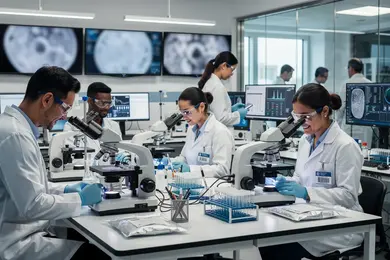
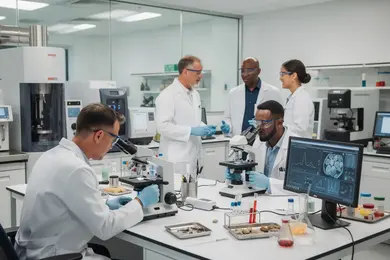
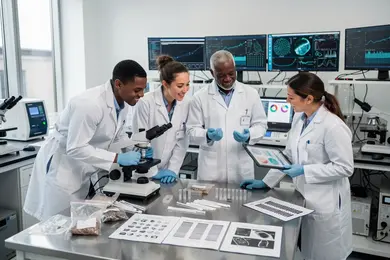
Employers increasingly require forensic science graduate candidates to demonstrate both advanced theoretical knowledge and substantial hands-on lab experience. Mastery of analytical chemistry techniques such as gas chromatography-mass spectrometry (GC-MS) and high-performance liquid chromatography (HPLC) is not optional; these skills directly influence hiring decisions at federal and state crime labs where evidence interpretation depends on precise instrumentation. For example, proficiency in DNA sequencing platforms affects eligibility for specialized roles in forensic toxicology and genetic evidence analysis.
Entrants to this field must be prepared to allocate roughly one-third of their graduate study time to supervised laboratory work, limiting flexible or part-time enrollment options. Programs lacking applied modules in serology, fingerprint analysis, or crime scene protocol risk leaving students underprepared for employer expectations emphasizing psychomotor skill benchmarks and chain-of-custody competence.
Federal, state, and private crime labs now expect a master's degree as the minimum credential. This has shifted admission and hiring criteria so that robust, lab-intensive graduate programs increasingly differentiate candidates from those with lecture-heavy curricula.
- Core coursework typically includes advanced biochemistry, molecular biology, analytical chemistry, criminalistics, and forensic toxicology.
- Effective programs integrate forensic serology and fingerprint analysis, emphasizing real-world operational standards.
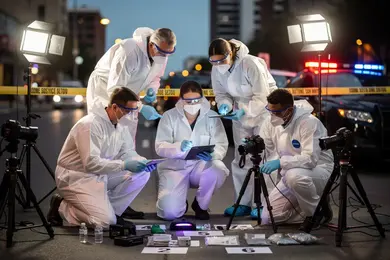
- Crime scene investigation training with strict evidence collection and chain-of-custody protocols is essential for federal agency roles.
Prospective students should weigh the tradeoff between program flexibility and the necessity for documented lab proficiency when selecting graduate forensic science pathways.
What admission requirements do forensic science graduate programs commonly expect from applicants?
Admission to forensic science graduate programs hinges on a strong technical foundation, typically evidenced by a bachelor's degree in biology, chemistry, forensic science, or criminal justice with a GPA of around 3.0. Beyond meeting coursework prerequisites in organic chemistry, biochemistry, molecular biology, and statistics, applicants face analytical benchmarks such as GRE quantitative scores near the 70th percentile to validate their problem-solving and data interpretation skills.
The selection process heavily weighs professional references-usually two or three letters-from faculty or practitioners who can assess candidates' research reliability and scientific acumen. A focused personal statement must convey awareness of practical demands, including strict chain-of-custody protocols and evidence interpretation challenges frequently encountered in forensic casework.
Meaningful experience within crime labs or forensic internships is often decisive, demonstrating an applicant's preparedness for real-world complexities and employer expectations. Documented proficiency in core laboratory techniques like DNA analysis, toxicology, and microscopy is also generally required. For international applicants, standardized English tests such as TOEFL or IELTS confirm language readiness.
These requirements parallel workforce standards where roles such as forensic pathologists command salaries exceeding $300,000 annually in certain regions, as reported by UC Davis referencing Salary.com. This reflects how advanced forensic credentials align with positions demanding extensive scientific expertise and high accountability in legal contexts.
What are typical costs and funding options for forensic science graduate education?
Costs for forensic science graduate education in the U.S. present a significant financial commitment that demands strategic planning. Public university tuition and fees typically range from $15,000 to $40,000 annually, while private institutions often exceed $50,000 per year. These figures exclude essential expenses such as textbooks, lab equipment, and living costs, pushing total yearly outlays potentially above $60,000. For working professionals, especially those balancing employment and study, understanding these cumulative costs over multi-year programs is critical to avoid unsustainable debt.
Federal and state grants remain the primary funding sources, with programs like the National Science Foundation Graduate Research Fellowship offering roughly $34,000 annually plus tuition coverage. Employer tuition assistance is another practical avenue, mostly available to law enforcement or cybersecurity analysts, albeit often tied to mandatory service commitments that can restrict career flexibility.
Loans are widely used but carry long-term financial burdens that require careful scrutiny of repayment options, often linked to public service roles in the forensic science sector. Combining part-time studies with paid internships or fellowships can mitigate borrowing. Importantly, the forensic science job market is evolving: digital forensic and information security roles are outpacing traditional lab positions, with information security analyst employment projected to grow 29% from 2024 to 2034 according to National University. This shifts the calculus of funding and specialization toward subfields with stronger job prospects, a factor prospective students should weigh in their education investment decisions.
What are the salary outcomes for forensic scientists with graduate versus undergraduate degrees?
Advanced degrees in forensic science often serve as a prerequisite for accessing higher-paying and more specialized roles beyond typical technician positions. The median wage for forensic science technicians with bachelor's degrees hovers around $67,440 annually, yet progression to roles in forensic toxicology, DNA analysis, or forensic psychology generally requires graduate-level education. These positions command salaries ranging roughly from $80,000 to over $100,000, shaped by location, employer type, and job complexity.
For instance, a technician promoted to a supervisory role overseeing complex casework or preparing court testimonies will frequently need a master's degree, which employers equate with advanced analytical and research competencies. Wage premiums for graduate credentials can exceed 20-50% in specialized consulting or grant-funded research roles.
A critical tradeoff involves balancing the 2-4 additional years of graduate study and its costs against steady technician-level employment opportunities that advance through experience and certification rather than formal education. Candidates relying solely on undergraduate qualifications may encounter slower salary advancement unless supplemented by robust field experience or professional credentials.
- Graduate education enables faster salary growth and access to leadership or niche fields.
- State and local agencies often hire bachelor's degree holders directly into technician roles with wage stability through on-the-job training.
- Advanced degrees particularly benefit those targeting supervisory, analytical, or research-intensive forensic science careers.
How can students choose a reputable forensic science program aligned with long-term career goals?
Hiring patterns in forensic science technician roles indicate roughly 2,900 annual openings over the next decade, primarily due to replacement rather than expansion. This dynamic means selecting programs with robust technical training and industry connections is essential for gaining meaningful employment. For instance, students targeting forensic toxicology within state labs benefit from curricula that provide specialized coursework, accredited lab access, and internships linked to government agencies. In contrast, those aiming for forensic genetics in private biotech firms require programs emphasizing molecular biology and bioinformatics to meet narrower but more technically specialized needs.
Employers prioritize graduates with proven practical skills supported by strong field placements and up-to-date technical training. Without these, candidates face longer job searches or risk lateral moves outside their original focus. Accreditation remains a key marker of program credibility, affecting not only initial hiring but future career mobility. Geographic proximity to partner facilities also influences job prospects, as many forensic science positions demand relocation to states with active forensic infrastructures.
Students should evaluate programs through graduate employment outcomes and alumni career trajectories using authoritative datasets. Critical considerations include:
- Depth and relevance of curriculum aligned with target specialization
- Faculty expertise and visible research output in niche areas
- Established partnerships facilitating apprenticeships and direct exposure to employers
- Program accreditation recognized by forensic science hiring bodies
Given the steady workforce attrition driving most technician demand, programs must also prepare students for ongoing methodological evolution and adaptive career pathways rather than just entry-level readiness.
Other Things You Should Know About Forensic Science
The strongest preparation is a science-heavy record with at least 24 semester credits in chemistry and biology, plus physics, statistics, and analytical chemistry. Many graduate programs also expect lab courses in instrumental analysis or biochemistry and a minimum 3.0 GPA for admission.
Graduate programs often require applicants to have clear specialization or research interests, reflecting the wide range of forensic disciplines. Early specialization influences the choice of academic mentors, internships, and skills developed, directly affecting employability in niche fields such as DNA analysis, toxicology, or digital forensics. Students uncertain about their focus should seek interdisciplinary programs with flexible curricula to explore before committing to a specific track. Prioritizing breadth in early coursework, while gaining foundational lab experience, allows better-informed specialization decisions aligned with market demand.
Full-time graduate enrollment enables faster completion and deeper immersion, which benefits skill proficiency and networking in forensic science fields requiring technical mastery. However, full-time study often requires pausing or reducing professional work, leading to income tradeoffs and increased financial strain. Part-time study allows continued employment and practical field experience, often valued by employers, but can extend program duration and delay credential benefits. Evaluate personal financial capacity and career goals; those seeking quick advancement or research roles should favor full-time, while working professionals wanting gradual transition may choose part-time.
Employers hiring forensic scientists with graduate degrees expect advanced analytical skills, research capability, and potential for leadership roles that exceed the competencies of those with only a bachelor's degree. Graduate-level education opens pathways to specialized positions involving complex casework, supervisory functions, and involvement in method development. Candidates lacking graduate education may secure entry or technical support roles but encounter barriers to career progression and salary growth. For students aiming at higher-tier forensic positions or federal agency work, graduate degrees are essential to meet or exceed employer standards.
References
- How To Become a Forensic Scientist: Requirements & Steps https://www.forensicscolleges.com/blog/htb/how-to-become-forensic-scientist
- What can you do with a forensic science degree? https://www.wlv.ac.uk/news-and-events/wlv-blog/2023/april-2023/what-can-you-do-with-a-forensic-science-degree.php
- Guide To Forensic Science Careers | LearnHowtoBecome.org https://www.learnhowtobecome.org/career-resource-center/forensic-science-careers/
- 13 Reasons To Become A Forensic Scientist https://www.openstudycollege.com/blog/3-reasons-become-forensic-scientist
- How to become a Forensic Scientist - Salary, Qualifications, Skills & Reviews – SEEK https://au.seek.com:8443/career-advice/role/forensic-scientist
- Forensic Science https://www.staffs.ac.uk/course/forensic-science-msc
- Criminal Justice Careers in Forensic Science and Investigations https://www.shawnee.edu/blog/criminal-justice-careers-in-forensic-science-and-investigations
- Careers in Forensic Science https://www.aafs.org/careers-forensic-science
- Forensic Science Degree Programs https://www.criminaljusticedegreeschools.com/degrees/forensic-science-degree/