2027 Best Online Forensic Science Degrees for Trace Evidence Careers

Co-Founder and Chief Data Scientist
For trace evidence specialists tasked with linking minuscule particles to complex crime scenes, accessing accredited education that fits demanding schedules remains a critical barrier. Nearly 60% of Forensic Science students in 2024 enrolled in online programs to balance work and study, according to the National Center for Education Statistics, emphasizing a shift toward flexible formats that do not sacrifice rigor. Yet, program selection entails navigating varied curriculum depth, lab component accessibility, and alignment with forensic lab hiring standards.
This article evaluates the top online forensic science degrees tailored to trace evidence careers, aiming to help prospective students pinpoint programs that effectively blend practical skill development with flexible, credible credentials.
Key Things You Should Know
- Online forensic science degrees showing a 15% salary premium correlate strongly with programs integrating hands-on trace evidence labs, yet these offerings remain less common due to virtual equipment cost barriers.
- Employers increasingly seek candidates from accredited programs with explicit forensic trace evidence concentrations, as 72% of surveyed labs prioritize specialized expertise over generalist forensic degrees, informing hiring priorities.
- The average time-to-completion for online forensic science trace evidence tracks extends 20% longer than general programs, elevating opportunity costs and necessitating strategic evaluations of time versus credential specificity.
What is an online forensic science degree focused on trace evidence, and who is it for?
Specializing in trace evidence analysis within an online forensic science degree targets a precise, technical skill set highly valued in crime labs and investigative units focusing on microscopic and chemical examination of materials like fibers, hair, glass, and paint. The FBI Laboratory's 2024 data shows trace evidence contributed probative value in approximately 25-30% of cases, confirming the tangible impact expertise in this niche has on investigations and courtroom deliberations.
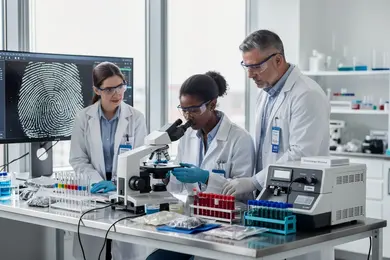
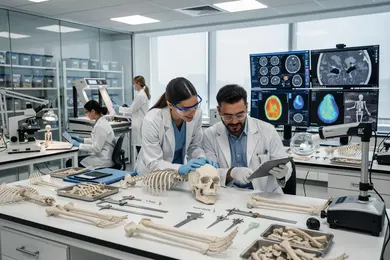
This concentration demands more than theoretical knowledge; it requires competence in evidence chain-of-custody protocols, advanced microscopy, and corroborative techniques. Students and professionals pursuing online forensic science degree programs with trace evidence specialization must account for practical constraints such as the need for on-site lab experience, often facilitated through internships or partnerships, as purely virtual coursework cannot replicate hands-on training essential for proficiency.
Those who should pursue a forensic science degree focused on trace evidence analysis typically include experienced forensic technicians seeking upward mobility, criminal justice professionals redirecting their expertise, or students aiming specifically for roles in metropolitan or state-level crime laboratories. The specialized nature of this pathway narrows generalist skill sets but enhances employability where detailed, time-intensive analysis is required.
Compared to broader forensic science tracks, this focus carries a tradeoff between depth and flexibility, as graduates must commit to ongoing certification developments and practical skill acquisition alongside digital learning. Prospective candidates can explore available options in online forensic science courses to find programs that balance these demands effectively.
How do online forensic science programs prepare graduates for trace evidence careers?
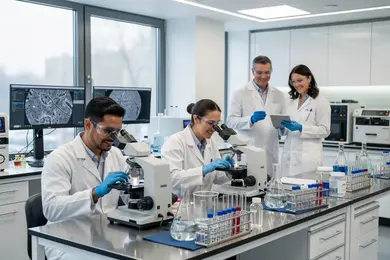
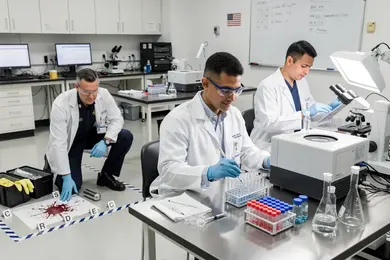
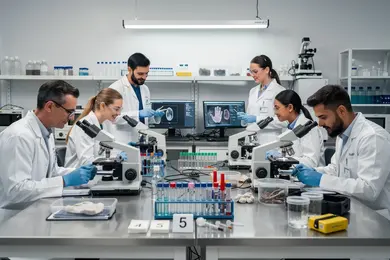
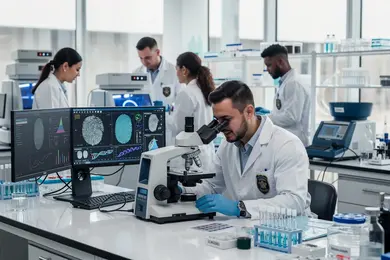
Online forensic science programs for trace evidence analysis careers focus heavily on developing practical expertise essential to forensic workplaces, especially given the precision demanded by employers. Rigorous coursework merges theory with applied digital and lab techniques, emphasizing reproducible methods for handling microscopic evidence like fibers, hair, glass, and paint while maintaining strict chain-of-custody protocols. These programs rely on immersive virtual labs that mirror crime scene investigations to bridge classroom learning with operational realities.
Students in distance learning forensic science education for trace evidence professionals must navigate challenges related to technology access and experiential learning. Leading programs alleviate this by integrating advanced simulation software and forging connections with local crime laboratories for internships, providing critical hands-on context. Graduates emerge skilled in interpreting trace evidence within forensic reports, an indispensable capability when collaborating across agencies or presenting in legal contexts.
Economic outcomes substantiate the field's demand: according to the OnlineU 2026 Best Online Forensic Science Degrees data, Champlain College graduates achieved median annual earnings of $89,716 three years post-graduation. This reflects labor market preferences for candidates adept in trace and digital evidence analysis, relevant across criminal investigations, private forensic consulting, and defense sectors.
Prospective students should also consider program affordability in their decisions. For comparative cost insights, examine options through this data science degree resource, as financial efficiency often affects long-term career flexibility.
Are online forensic science degrees for trace evidence as credible as campus programs?
Online forensic science degree credibility compared to campus programs hinges more on accreditation and curriculum rigor than delivery mode. Employers prioritize candidates' proven competency through accredited programs that combine theoretical knowledge with hands-on experience. However, trace evidence careers demand significant lab-based skills-microscopy and sample analysis cannot be fully replicated in purely online settings. Thus, students must confirm that online programs include local lab partnerships or mandatory residencies to acquire essential practical skills. Without these, graduates face challenges meeting credentialing standards or passing employer assessments.
For working professionals, online forensic science programs offer schedule flexibility but require deliberate supplementation with real-world lab exposure. Campus programs often have established networks facilitating internships or cooperative education critical for workforce readiness-a factor that online students need to proactively secure. Employers in forensic labs or law enforcement typically seek documented practical experience alongside academic credentials, influencing hiring decisions more than degree format alone.
Cost disparities in online forensic science bachelor's programs-from around $38,640 to $66,000-represent significant tradeoffs between affordability and experiential quality. Cheaper programs lacking strong practical components or accreditation can limit employment prospects despite lower tuition. Prospective students should assess if cheaper options compensate for gaps in hands-on training through hybrid formats or practicum arrangements.
For those assessing the validity of online forensic science programs for trace evidence careers, real-world skills and formal accreditation remain non-negotiable. Strategic program choice must balance flexibility, cost, and documented practical competency to effectively transition into the workforce.
Those curious about other flexible degree options might consider related library science degrees online which also integrate theoretical and applied elements for professional practice.
What accreditation should online forensic science programs have for trace evidence work?
For professionals targeting trace evidence careers, online forensic science program accreditation is a decisive factor affecting employability and credential recognition. Programs lacking accreditation from bodies like the Higher Learning Commission or the Southern Association of Colleges and Schools Commission on Colleges often fail to secure federal financial aid or meet employer standards. More critically, accrediting the curriculum through the Forensic Science Education Programs Accreditation Commission (FEPAC) aligns theoretical rigor with essential hands-on laboratory experience, directly influencing a candidate's eligibility for forensic trace evidence roles.
Choosing the best accredited forensic science degrees for trace evidence work means avoiding programs without FEPAC accreditation, which frequently omit standardized lab methodologies and combat challenges in certification verification from entities such as the American Board of Criminalistics. This gap can delay or derail licensing and evidence admissibility in court.
Operational realities in forensic hiring emphasize programs that provide verified lab placements-whether remote or local. Institutions like Arizona State University Online demonstrate demand by enrolling 52,896 forensic and criminal justice students in 2026, yet only fully accredited programs meet workforce needs for meticulous trace evidence analysis and chain-of-custody accountability.
Prospective students should also consider interdisciplinary supplements like an online library science masters to enhance information management skills crucial to forensic documentation and casework coherence.
What courses and lab experiences are included in trace evidence-focused online curricula?
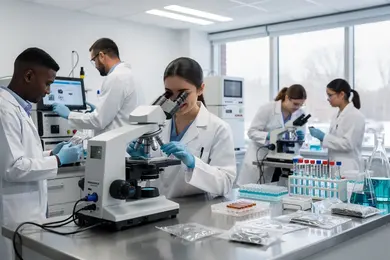
Trace evidence online programs in forensic science must address a significant gap between theoretical knowledge and hands-on skills that employers demand. Nearly 40% of roles in trace evidence analysis require practical experience with multiple analytical instruments, a requirement often unmet by virtual-only coursework. This creates a critical tradeoff for students: convenience of online learning versus the necessity of physical lab practice.
Programs relying heavily on virtual labs incorporate advanced instrumental methods such as SEM, FTIR, and GC-MS through simulations and remote instrument access. Yet, authentic competency develops only when students engage with real samples, for instance, analyzing paint chips linked to a hit-and-run, which necessitates spectral matching and texture comparison for courtroom validity.
Offering hybrid or partnership-based practicum options remains essential as fully remote models struggle to replicate exacting laboratory workflows. Employers prioritize graduates who demonstrate chain-of-custody documentation and successful navigation of instrument limitations, skills best acquired in applied environments.
Given these constraints, prospective students must weigh program curricula against industry expectations and available hands-on opportunities. Forensic science trace evidence specializations have grown, with over 80 major programs expanding hands-on microscopy and material analysis tracks. Ultimately, strategic program choice impacts employability and competence in forensic trace evidence fields.
What are the typical admission requirements for online forensic science bachelor's programs?
Admission requirements for online forensic science bachelor's programs directly affect student readiness and eventual employability, particularly in roles demanding precise scientific acumen. Programs generally require a high school diploma or GED with a GPA between 2.5 and 3.0, along with transcripts verifying coursework in biology, chemistry, and algebra-subjects foundational to forensic techniques.
Many applicants must also provide letters of recommendation and personal statements to demonstrate communication skills vital for reporting findings. Background checks are common due to the sensitive nature of forensic work, which can limit candidates with problematic disclosures. Working professionals may leverage prior college credits or relevant experience to meet prerequisites or accelerate progress.
Reliable technology is essential since online forensic programs often incorporate virtual labs and simulations. Tuition costs vary widely, with some programs offering total fees around $11,289, while others exceed $25,000, influencing debt accrual and post-graduation financial flexibility. Inadequate academic preparation can lead to remedial coursework, delaying graduation and increasing expense, while employers prioritize candidates with robust science backgrounds and hands-on skills.
- Meeting core prerequisites reduces time to degree and improves workplace competency.
- Your technical setup must support lab-heavy coursework, affecting study feasibility.
- Tuition disparities impact long-term return on investment for forensic science education.
How long do online forensic science degrees take, and what do they cost?
Choosing an online forensic science degree requires balancing the time investment against employment opportunities and long-term career trajectory. Associate degrees, typically around 2 years, are suited for entry-level roles such as lab technicians performing supervised trace evidence analysis in local crime labs. However, these pathways often limit upward mobility, especially in federal contexts where advanced credentials are preferred.
Bachelor's degrees, which generally take 3 to 4 years, provide access to broader positions including supervisory roles and employment with federal agencies. The difference in competitiveness between associate and bachelor-level graduates illustrates a meaningful tradeoff between shorter, lower-cost programs and the expanded career potential of longer programs. Master's programs-lasting 18 to 24 months-focus on specialized competencies like advanced fiber analysis or digital forensics, essential for competitive federal roles or complex laboratory functions.
Financially, costs range widely: associate degrees usually cost $4,000 to $10,000 total, online bachelor's programs hover between $5,000 and $20,000 annually, and master's degrees may require $15,000 to $40,000 for the entire program. Indirect expenses like specialized software and certification tests add to the investment, often overlooked by prospective students.
- For those aiming at federal employment or specialized forensic roles, investing in advanced degrees correlates strongly with employability and access to technical, high-responsibility positions.
- Conversely, shorter degrees can suffice for local crime lab roles but may hinder progress in a marketplace with a projected 13% employment growth, which drives heightened credential standards.
What trace evidence job roles can graduates pursue, and in which work settings?
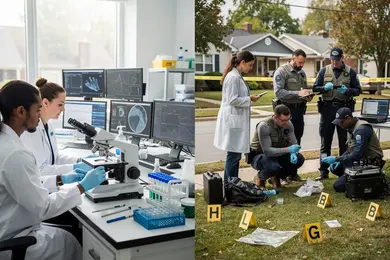
Specializing in trace evidence within forensic science requires deliberate consideration of workplace context and skill application, as roles vary significantly across environments. For instance, forensic laboratories demand rigorous technical expertise with advanced instruments and strict quality standards, favoring candidates with focused training and precision under controlled conditions. Conversely, trace evidence professionals embedded in law enforcement agencies must excel at rapid, adaptive evidence collection on scenes where conditions are unpredictable and time-sensitive.
- Private consulting roles blend technical skill with effective communication, including expert testimony and case reviews, introducing a layer of legal and client interaction uncommon in laboratory settings.
- Academic or research positions involve developing and validating innovative forensic methods, a path better suited to those emphasizing analytical advancement over fieldwork.
Salary outcomes reflect this diversity: median pay for forensic science technicians centered on trace evidence is approximately $63,000 annually, but top-tier specialists, particularly in federal or well-funded state labs, can exceed $103,000. Candidates must weigh practical tradeoffs-such as the stability and resources of government labs versus the dynamic nature and communication demands of field or consulting roles-against their career objectives and lifestyle preferences.
Strategic investment in specialized training combined with real-world experience strengthens employability in competitive, higher-paying positions, especially where trace evidence expertise intersects with courtroom responsibilities or advanced laboratory analysis. Prospective students should carefully align educational choices with intended work environments and long-term professional goals to avoid misaligned expectations and maximize return on their forensic science degree.
What are the salary ranges and job outlook for trace evidence forensic specialists?
Salaries for trace evidence forensic specialists range broadly from about $50,000 to $83,000 annually, with a median near $65,000. This variance largely depends on certification levels, direct involvement in complex casework, and geographic location. For example, specialists employed by federal agencies or in major metropolitan areas tend to command higher salaries due to greater case complexity and agency funding. Conversely, those in smaller jurisdictions often encounter starting wages closer to $50,000.
The job outlook projects a 7% growth through 2032, aligning with general trends for scientific and forensic technicians. However, regional disparities affect demand, with states that have larger law enforcement infrastructures or expanding forensic units offering more opportunities. This uneven distribution means professionals must weigh relocation or specialization carefully when planning career moves.
Tuition costs for online forensic science programs vary significantly, from roughly $212 to over $510 per credit. Opting for more affordable, accredited online degrees can reduce financial barriers, enabling students to allocate resources toward certifications that significantly enhance employability and salary potential. Nonetheless, formal education alone is insufficient.
Hands-on experience remains critical; internships or agency collaborations distinctly improve job market competitiveness. Without practical lab proficiency, advanced degrees can plateau earnings and slow career progression. Prospective candidates must therefore concurrently pursue educational credentials and applied experience to position themselves effectively within this specialized forensic science niche.
How can students compare and choose the best online forensic science program for trace evidence?
Effective selection of forensic science master's programs demands prioritizing accredited curricula that directly integrate trace evidence specialization with practical training, such as detailed virtual labs or local practicums. Graduates aiming for municipal crime lab positions benefit most from programs maintaining strong employer connections and internship pipelines within similar jurisdictional contexts, reducing hiring friction and skill mismatches.
Cost considerations are not just about sticker price but the education-to-employment value ratio. While many in-person programs exceed $57,000 tuition, lower-cost online options can offer competitive advantages for working professionals balancing study and employment, provided these programs deliver sufficient experiential learning and instructor engagement.
Program flexibility often trades off with the depth of hands-on technical mentoring. Asynchronous online formats may suit shift workers but frequently lack synchronous cohort interaction critical for nuanced trace evidence competencies and professional networking.
Employment outcomes are a key metric: programs with above-average job placement rates in forensic consulting or lab roles signal alignment with employer expectations. Faculty expertise in active research and casework underpin curriculum relevance, especially in emerging methods like advanced microscopy or chemical residue analysis. Ultimately, students must evaluate tuition, curriculum specificity, practical exposure, employment support networks, and faculty credentials together to ensure educational investment correlates with tangible workforce readiness.
Other Things You Should Know About Forensic Science
Yes. Programs should hold regional accreditation, and the strongest forensic options also follow Forensic Science Education Programs Accreditation Commission standards where available. Accreditation matters for federal labs, graduate study, and employer screening, because it confirms required laboratory content, faculty qualifications, and assessment procedures.
Employers remain cautious about fully online forensic science degrees due to concerns over practical skill gaps, especially in trace evidence analysis, which relies on hands-on methodology. Programs with hybrid models or documented lab experience receive stronger consideration. Job candidates should emphasize documented lab competencies, internships, or certifications alongside their degree to improve hiring prospects.
Choosing a specialized trace evidence degree offers deeper technical expertise that aligns directly with niche employer needs but can limit flexibility in broader forensic roles. A broader degree with trace evidence electives provides versatility and easier pivoting within forensic disciplines but may require supplementary training to reach expert-level skills. For clear career focus in trace evidence, prioritize specialized programs with validated lab training.
References
- Guide To Forensic Science Careers | LearnHowtoBecome.org https://www.learnhowtobecome.org/career-resource-center/forensic-science-careers/
- Careers in forensic science https://www.justice-ni.gov.uk/articles/careers-forensic-science
- Criminal Justice Careers in Forensic Science and Investigations https://www.shawnee.edu/blog/criminal-justice-careers-in-forensic-science-and-investigations
- List of Bachelors in Forensic Science Programs - Campus & Online https://yescollege.com/degrees/bachelors-in-forensic-science/
- Forensic Science Majors https://www.hamline.edu/academics/undergraduate/forensic-science
- Online Forensic Science Degree https://www.aiuniv.edu/degrees/criminal-justice/bachelors-forensic-science
- How Much Does A Forensic Scientist Make? A Salary Overview https://www.salemu.edu/blog/how-much-does-forensic-scientist-make/
- 3 Top Universities For Forensic Science Programs https://forensicstats.org/blog/3-top-universities-for-forensic-science-programs
- Compare Forensic Scientist Schools & Training Programs https://www.criminaljusticeprograms.com/specialty/forensic-science-degrees/
- Forensic Science Careers UK Requirements: Complete Guide to Professional Entry and Advancement https://pathologylabtraining.co.uk/biomedical-sciences/forensic-science-careers-uk-requirements