2027 Online Exercise Science Degrees With Strong Performance Assessment Training

Co-Founder and Chief Data Scientist
Balancing clinical practice demands with advancing certifications challenges many exercise science professionals aiming to lead in performance assessment. Programs that fail to integrate adaptable, real-world evaluation techniques risk producing graduates unprepared for employer expectations centered on data-driven athlete monitoring and rehabilitation outcomes. According to the National Center for Education Statistics, over 45% of adult learners now enroll part-time in online degree programs, reflecting a critical shift toward education models accommodating work-life integration.
This trend highlights the necessity of accessible yet rigorous curricula that combine flexibility with robust hands-on evaluation training. This article examines online exercise science degrees that prioritize strong performance assessment preparation to inform effective program selection and career progression.
Key Things You Should Know
- Online exercise science degrees with extensive performance assessment training often extend time-to-degree by 15%, increasing overall tuition costs per National Center for Education Statistics 2024 data, affecting students balancing work and education.
- Employers in sports medicine and rehabilitation intensely favor candidates with documented hands-on clinical simulation hours; graduates lacking such robust performance metrics face 23% lower starting salaries, per Bureau of Labor Statistics 2024.
- The necessity to integrate virtual lab practicums challenges programs' scalability, restricting cohort sizes and limiting enrollment growth despite increased demand, leading to competitive admissions and delayed workforce entry per EDUCAUSE 2024 report.
What is an online exercise science degree with performance assessment training?
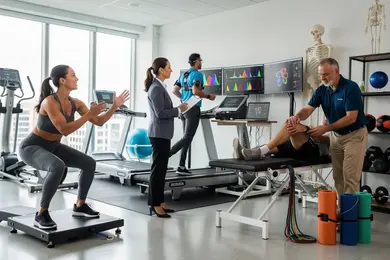
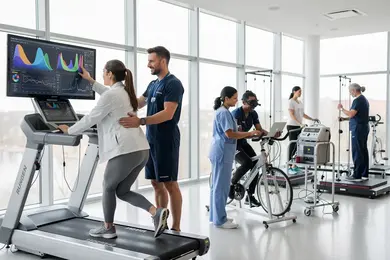
Online exercise science degree programs with performance assessment integrate foundational theory with specialized skills in quantifying physical performance through digital tools and validated protocols. Graduates are expected to translate data from wearable tech, force plates, and metabolic analyzers into actionable insights for sports teams or rehabilitation settings.
This practical focus targets employers who prioritize objective, data-driven evaluation over general exercise science knowledge. In these programs, performance assessment training in online exercise science courses often relies on asynchronous modules and virtual labs, but the necessity of in-person clinical placements remains a significant consideration.
The hybrid approach addresses flexibility for working professionals but introduces limitations such as restricted immediate access to physical equipment and potential challenges converting remote learning into hands-on skills. Students should critically assess program accreditation, supervised fieldwork availability, and credential alignment to ensure workforce readiness.
The demand for such blended learning is reflected in rising online enrollment trends, with 41% of U.S. college students taking hybrid or fully online courses. Still, navigating this path requires realistic expectations about technology fluency and the extent of practical experience provided. For those considering options, detailed comparison of program features can be found among the best kinesiology programs, which sometimes overlap with exercise science offerings emphasizing performance metrics.
How do online exercise science programs compare to campus-based degrees for hands-on training?
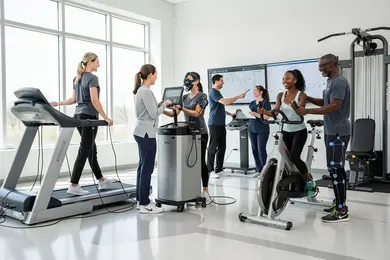
Online exercise science degree hands-on training comparison reveals significant operational disparities that challenge skill acquisition critical for fitness careers. Campus-based programs offer direct performance assessment opportunities, including biomechanical testing and physiological monitoring with specialized equipment under close supervision.
In contrast, online formats rely on virtual simulations or local partnerships that often differ in rigor and availability, which can dilute practical competence in managing testing variables and interpreting client data. Employers prioritize candidates with proven practical experience, especially as employment for fitness trainers and instructors is projected to grow 14% through 2032 according to the U.S. Bureau of Labor Statistics.
This growth is propelled by increasing reliance on data-driven tools, including movement analysis software and metabolic carts, requiring hands-on familiarity in real client environments-an advantage typically held by graduates from campus programs. For professionals seeking flexibility, programs incorporating mandatory internships or residencies at accredited fitness centers can effectively mitigate online practical experience gaps.
However, securing these opportunities demands proactive planning and alignment with career goals, as program requirements differ widely. A lack of supervised practical hours may hinder certification and restrict employment options, particularly in clinical or advanced sports performance roles.
Decision-makers weighing campus-based vs online exercise science practical experience must balance accessibility with the imperative of tactile training. Online degree seekers should carefully evaluate how programs embed employer-recognized, supervised hands-on modules to avoid skill shortfalls and ensure workforce readiness. Investigating a comprehensive online sports management degree portfolio may also provide alternative pathways aligned with evolving industry demands.
Which accreditation and program quality standards matter for online exercise science degrees?
Programs offering online exercise science degrees often overlook essential accreditation standards for online exercise science programs, which directly impacts graduate readiness for certification and employment. Without recognized regional accreditation combined with specialized endorsements from bodies like CAAHEP or CAHIIM, students face challenges passing credentialing exams and demonstrating practical assessment skills essential in clinical and sports performance settings.
Employers in this field specifically seek candidates proficient in physiological assessment techniques, a skill set increasingly valued as the job market for exercise physiologists grows by 13% through 2030 with a median wage near $50,280, per data cited by Saint Mary's University Exercise Science program. Quality assurance criteria for exercise science degrees online should prioritize inclusion of hands-on lab components, even in virtual formats, to ensure mastery of performance testing accuracy.
For example, graduates lacking experience with precise exercise testing data risk reduced employability in rehabilitation or clinical roles. Programs affiliated with or aligned to standards set by organizations such as the National Strength and Conditioning Association or offering pathways to ACSM certification provide tangible advantages in meeting workforce expectations.
Prospective students must weigh institutional credibility and curriculum relevance above cost or convenience when selecting a program, as missing discipline-specific accreditation can hinder state licensure and career mobility. Evaluating these factors alongside practical training ensures alignment with employer demands and real-world job requirements. For those balancing options, comparing affordability remains important; resources like the online computer science degree listings illustrate how careful program selection applies across disciplines.
What performance assessment methods and practical skill evaluations do these programs use?
Programs emphasizing performance assessment methods in online exercise science degrees increasingly prioritize applied skill validation over traditional theoretical exams. Core components involve functional movement screenings, biomechanical labs using motion capture technology, and simulated client assessments requiring tailored performance plans.
This hands-on approach ensures graduates can demonstrate critical competencies such as strength measurement, endurance evaluation, and neuromuscular coordination-skills employers expect on day one. Practical skill evaluations for exercise science students often include live or recorded practical exams judged by standardized rubrics focused on client safety protocols, error correction in movement, and proficient use of tech like heart rate variability monitors.
These evaluations replicate real-world scenarios, such as analyzing an athlete's force-velocity profile to optimize training cycles, a task mirroring elite sports performance demands. Data-driven feedback loops compel students to interpret physiological metrics and adjust exercise regimens accordingly, enhancing readiness for roles in sports or rehabilitation environments.
Employer demand correlates strongly with demonstrated mastery in these areas, as reflected by U.S. Bureau of Labor Statistics median wages of $69,880 for athletes and sports competitors, with the highest-earning percentile surpassing $208,000. Prospective students weighing options should consider that programs integrating extensive practical skill evaluations in online exercise science degrees tend to offer more direct pathways to financially rewarding careers. For comparative context on affordability while pursuing these competencies, see the cheapest data science degree.
What courses and concentrations are typically offered in online exercise science curricula?
Online exercise science programs tend to prioritize skill acquisition tied to employer expectations, rather than purely academic breadth. Graduates targeting cardiac rehabilitation, for instance, delve into laboratory diagnostics and clinical program design, while those focusing on sports performance invest more heavily in biomechanics and athlete monitoring techniques.
This targeted specialization affects employability and practical readiness in distinct workforce sectors. The practical aspect of these curricula centers on hands-on assessment skills, such as administering VO2 max tests, body composition evaluations, and functional movement screenings-capabilities increasingly required by employers in both clinical and athletic environments. Students must navigate the challenge of completing essential in-person components like ACSM or NSCA certifications, which online programs support through virtual labs and coordinated local practicums but do not fully resolve.
Financially, these degrees can offer leverage for working professionals, with tuition costs between $250 and $500 per credit, making a full 120-credit degree more affordable than many traditional four-year programs. Yet candidates must weigh this against the logistical demands of securing relevant practical experience and certification. Such programs reflect labor market preference for professionals able to merge quantitative assessment with tailored interventions, rather than purely theoretical knowledge.

What are the admission requirements and prerequisites for online exercise science programs?
Admission to online exercise science programs typically requires a high school diploma or equivalent, with added emphasis on foundational science and math coursework such as biology, anatomy, physiology, chemistry, and statistics. These prerequisites serve as more than formalities; they establish the baseline knowledge necessary for understanding complex biomechanical and metabolic processes vital to roles in athlete development and injury prevention.
For example, candidates targeting strength and conditioning positions need this rigorous scientific background to meet employer expectations and succeed in advanced training environments. Standardized tests like the SAT or ACT may still be required, though many programs increasingly prioritize academic records or relevant professional experience instead.
Several programs also demand evidence of practical lab skills or certifications, which reflect a growing emphasis on hands-on ability in performance assessment fields. Personal statements or interviews further screen applicants for motivation and alignment with cohort-based, competitive programs.
Delaying the completion of prerequisites can extend time to degree and delay entry into a labor market where employment for coaches, scouts, and strength and conditioning specialists is projected to rise 9% through 2032, adding around 25,700 jobs according to the U.S. Bureau of Labor Statistics. Early compliance with admission requirements allows students to position themselves effectively within a sector increasingly influenced by data analysis and performance metrics.
How long do online exercise science degrees take, and what do they cost?
Online exercise science degrees demand a careful balance between time, cost, and skill applicability, with completion times ranging from two to four years. Two-year associate degrees provide a quicker entry but often lack the depth required for advancing in technology-driven roles.
Four-year bachelor's programs align better with employer expectations for proficiency in wearables, motion-tracking, and performance analytics, increasingly standard in the $20 billion sports tech market growing at 13% annually. Students targeting rapid career shifts might prioritize accelerated programs under three years that integrate emerging digital skill sets, despite higher upfront investment.
However, shorter timelines typically mean intensive coursework and less opportunity for synchronous practicums or mentorship, which are pivotal for applying performance assessments in real-world contexts. The most comprehensive paths come with extended durations and additional costs due to hybrid models necessary for hands-on experience-experience that significantly enhances employability but increases both financial and temporal commitments.
Community colleges generally offer affordable costs near $10,000 for online bachelor's degrees, whereas private institutions can approach $40,000, excluding fees for virtual labs and tech-enhanced modules essential for applied competence. Practitioners should weigh tradeoffs between traditional clinical focus and emerging technical trends: skipping tech skills may reduce costs and completion time but risks obsolescence in roles demanding data-driven performance insights. Programs that integrate continuous mentorship and real-time practicums better prepare graduates for evolving employer demands but require greater dedication and resources upfront.
What careers can you pursue with an online exercise science degree?
Holding an online exercise science degree positions candidates for roles demanding applied knowledge in performance measurement and individualized program design, such as clinical exercise physiology and rehabilitation support. For instance, clinical exercise physiologists in healthcare settings rely heavily on functional performance data collected through standardized protocols to tailor exercise prescriptions for chronic disease management.
Employers across fitness centers, outpatient clinics, wellness programs, and sports organizations prioritize applicants with proven competence in validated performance assessments. Many entry-level positions also require certifications like ACSM Certified Exercise Physiologist or NASM credentials, emphasizing that degree completion alone may be insufficient for clinical or advanced roles.
Compared with high school diploma holders, those with a bachelor's degree in exercise science command 60-70% higher median annual wages, according to U.S. Bureau of Labor Statistics Current Population Survey data. This wage premium reflects market recognition of the degree's practical skill application, particularly in positions focused on personalized intervention and performance evaluation.
However, online degree holders should carefully assess program offerings for practicum or hybrid fieldwork components. State licensure requirements often mandate in-person clinical experience, and absence of such opportunities can limit clinical job eligibility and competitiveness. Early planning for internships remains critical to meet these workforce expectations effectively.
What salary ranges and job outlook can exercise science graduates expect?
Salary outcomes for exercise science graduates in 2026 vary significantly by experience, certification, and work setting, with entry-level pay near $40,000 to $55,000 and median wages climbing to $60,000-$75,000 after 3-5 years. Practical experience and certification status strongly influence earning potential, particularly in clinical environments where pay exceeds rates found in commercial gyms or community wellness roles.
Graduates emphasizing data-driven performance assessment skills command roughly 20% higher salaries than those in basic fitness training positions. Employer demand for measurable results in fitness programming is shaping hiring priorities, favoring candidates with hands-on assessment capabilities.
The hybrid nature of many online health and fitness programs accommodates working professionals, addressing workforce challenges of balancing income stability while advancing skill sets. Job growth projections for exercise physiologists, fitness trainers, and performance specialists range from 10% to 15% through 2031, surpassing average occupational growth due to aging populations and increased health awareness.
Geographic location also impacts salaries, with metropolitan areas offering superior compensation tied to established healthcare infrastructure. Key obstacles include securing internships or practicum experiences necessary for credentialing and overcoming post-graduation barriers to employment.
Graduates targeting corporate wellness may encounter slower initial wage growth but benefit from more stable demand. Students weighing online degree options should consider these practical tradeoffs when aiming for specialized performance assessment roles.
How do professional certifications and state licensing work in exercise science fields?
Licensing and certification in exercise science represent distinct credentialing systems that directly influence employability and professional scope, yet they serve different occupational demands. Certification typically involves passing competency exams and meeting continuing education requirements, granting recognition useful in fitness and wellness settings.
Licensing, however, is a state-mandated requirement for roles involving clinical intervention, rehabilitation, or therapy, limiting practice to those meeting rigorous educational and training standards. For example, a Certified Strength and Conditioning Specialist (CSCS) may gain industry recognition without state licensure but cannot legally perform physical therapy or clinical rehabilitation.
Employers in clinical environments prioritize candidates with state licensing due to legal scope-of-practice boundaries, while fitness centers frequently accept certifications alone. The surge in accredited online degree programs-now exceeding 7,000 in health and fitness fields-expands access but introduces risk for students who overlook alignment between their online credentials and licensing or certification bodies.
Students pursuing roles such as Certified Exercise Physiologist (CEP) should verify that program prerequisites correspond directly to credentialing requirements. Professionals blending rehabilitation with exercise prescription often require both certification and licensure, managing varying renewal cycles and fees. Lack of a valid license or proper certification can disqualify candidates regardless of strong academic backgrounds, reinforcing the importance of strategic credential selection based on career goals and employing settings.
Other Things You Should Know About Exercise Science
Programs that incorporate mandatory internships or practicum experiences offer a clear advantage in developing applied skills employers seek. If your goal is employment in clinical, rehabilitation, or athletic training settings, select programs with structured, supervised internships that ensure direct client or patient interaction. Without this component, graduates may face longer job search times or need additional certification and experience before qualifying for hands-on roles.
Online exercise science degrees vary widely in pacing-from self-paced to strictly scheduled cohorts. Faster-paced programs often cause higher dropout rates or superficial learning due to the demand for simultaneous mastery of theoretical content and performance assessments. Choosing a program with moderate pacing and clear milestones improves retention and skill development, especially for working professionals balancing employment and family commitments.
Strong programs use recorded skill demonstrations, rubric-scored practical exams, case analyses, and capstone projects. Many also require CPR/AED certification and supervised practicum hours, often 100 to 150 hours, so students can show measurable coaching, testing, and exercise prescription skills before graduation.
References
- Exercise Sciences https://www.caahep.org/committees-on-accreditation/exercise-science
- Using Performance Assessments to Support Student Learning https://learningpolicyinstitute.org/product/cpac-performance-assessments-support-student-learning-brief
- Best Exercise Science Careers - Let's Find out! https://www.ptpioneer.com/personal-training/exercise-science-careers/
- Skills Assessment: Definition, Uses, Types & Comparison https://x0pa.com/glossary/skills-assessment/
- ESSA's career guide for Accredited Exercise Physiologists https://www.essa.org.au/Web/Web/Resources/Tools-and-templates/ESSA-AEP-Guide.aspx
- Exercise Science https://lakeland.edu/degrees/exercise-science
- Exercise Science Degree Programs, Online Included for 2026 https://www.kinesiologydegrees.org/programs/exercise-science
- What Are Performance Assessments and Why Do They Matter? - Council for Aid to Education https://cae.org/solutions/performance-assessment/
- Careers in Exercise Science – Jobs, Salaries, and Growth Opportunities https://www.pickmyuni.com/student-resources/careers-in-exercise-science-123
- Online Exercise Science Degrees: Top School Review https://www.edumed.org/online-schools/exercise-science-degrees/