2027 Online Exercise Science Degrees With Strong Movement Analysis Training

Co-Founder and Chief Data Scientist
Balancing career advancement with ongoing professional responsibilities presents a formidable challenge for those seeking robust movement analysis training within exercise science programs. Approximately 40% of online learners today are adult students juggling work and family commitments, according to the National Center for Education Statistics, signaling a demand for flexible yet rigorous curricula.
However, many programs sacrifice depth in practical biomechanics to accommodate asynchronous delivery, limiting graduates' employability in specialized roles requiring precise movement analysis skills. This article evaluates online exercise science degrees that maintain strong, applicable movement mechanics instruction, helping prospective students identify programs that align with both their schedules and career objectives.
Key Things You Should Know
- The scarcity of accredited online programs with rigorous movement analysis labs results in slower credentialing times; data from the National Center for Education Statistics shows 42% of students extend degree completion beyond four years due to limited hands-on components.
- Employers increasingly prioritize candidates with advanced biomechanics proficiency, per a 2024 Bureau of Labor Statistics report linking such expertise to a 15% higher likelihood of obtaining clinical and research roles.
- The premium cost of hybrid models integrating remote motion capture technology imposes a median additional $6,000 expense, challenging affordability but offering essential skill acquisition unmatched by purely theoretical curriculums.
What are online exercise science degrees with movement analysis training?
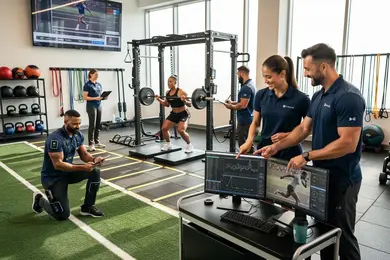
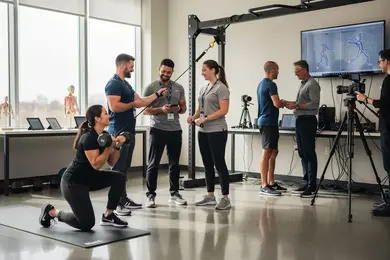
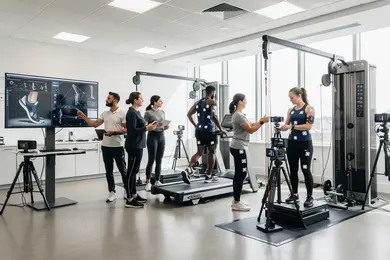
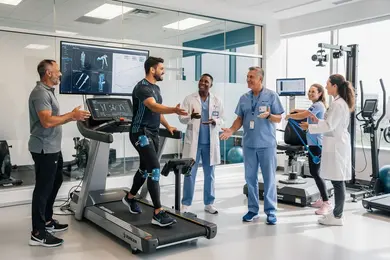
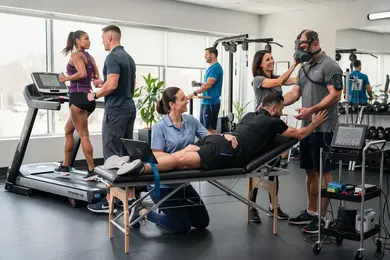
Online exercise science degrees with movement analysis focus require balancing theoretical coursework with practical skill-building in biomechanics and data interpretation. Programs emphasizing movement evaluation train students in real-world tools such as 3D motion capture systems and wearable sensors to assess human motion patterns critically. For graduates, this expertise translates directly into roles where precise movement diagnostics influence rehabilitation or athletic training outcomes.
Employers increasingly seek candidates from the best accredited exercise science programs with biomechanics training, reflecting the priority on data-driven, tailored interventions in clinical and sports settings. For instance, a clinical exercise physiologist assessing post-stroke gait abnormalities must competently leverage motion analysis software to customize therapy effectively, while a sports analyst applies kinematic data to reduce injury risk and enhance performance efficiency.
Online formats combine video demonstrations, virtual labs, and simulation modalities but often necessitate local internships or lab access to develop hands-on competencies essential for employability. Students should critically evaluate program partnerships with relevant clinics or athletic organizations that provide supervised practical experience.
The U.S. Bureau of Labor Statistics projects a 10% employment growth rate for exercise physiologists through 2032, highlighting growing demand for specialists proficient in movement analysis methodologies. This trend favors candidates who can integrate technical analysis with applied decision-making in healthcare and athletic performance contexts.
Prospective students weighing the intensity of technical skill acquisition against experiential learning opportunities can find useful guidance by exploring the best online exercise science degree programs explicitly designed to align training with labor market expectations.
Which accreditation should an online exercise science program have?
Accreditation is a decisive factor shaping the practical value and employer reception of accredited online exercise science degrees in the US. Regional institutional accreditation is the baseline, ensuring credit transferability and entry to graduate studies; however, insufficiency here can halt career momentum for graduates seeking recognized credentials.
Specialized accreditation, such as from the Commission on Accreditation of Allied Health Education Programs (CAAHEP) or the Commission on Accreditation of Athletic Training Education (CAATE), directly impacts eligibility for professional certifications and the viability of clinical or athletic training roles.
For example, an online exercise science graduate aiming for licensure in physical therapy will face hurdles without CAATE-accredited training, often requiring supplementary supervised fieldwork, which delays workforce entry and increases costs.
Employers in rehab and kinesiology sectors prioritize candidates from programs incorporating these programmatic accreditations because they guarantee essential competencies in biomechanics and movement assessment. Conversely, lower tuition costs in non-accredited programs-typically $6,000 to $9,000 annually versus $11,260 on-campus-may lead to hidden expenses related to additional certifications and missed employment opportunities.
Working professionals must also weigh whether hybrid or in-person lab components fulfill accreditation requirements, as purely online curricula might lack necessary hands-on training. Balancing these factors determines whether a program leads to timely career advancement or prolonged credentialing detours.
Prospective students comparing parallel pathways can gain insights from resources on the best online computer science degree, illustrating how accreditation and program design pragmatics affect employability in rigorous, evolving fields.

How do online and campus exercise science programs compare?
Hands-on training and equipment access create a tangible divide between campus and online exercise science programs with movement analysis. Campus programs integrate direct experience with biomechanics tools and motion capture systems, which align with employer expectations in roles demanding precise instrumentation skills. Graduates from these programs often transition smoothly into jobs requiring real-time data interpretation.
In contrast, online degrees rely on virtual simulations and at-home assignments, which may limit immediate proficiency with technical equipment. This gap can necessitate supplementary internships or certifications for online graduates to achieve competitive readiness. For example, a candidate targeting a biomechanics technician role may need additional lab hours beyond an online curriculum to meet workforce standards.
Salary data from the U.S. Department of Labor and East Texas A&M University shows sports statistical analysts and data analysts in human performance-fields closely tied to movement analysis-earn median annual wages near $79,990, while sports scientists earn around $58,160, reflecting the premium on applied biomechanics skills fostered more directly in campus settings.
Working professionals often select online programs for flexibility, especially when balancing full-time jobs. Yet, those pursuing clinical or research-focused careers should weigh supplementing online learning with lab internships or hybrid formats to build essential hands-on competencies.
Prospective students evaluating campus versus online exercise science degree comparison might also explore pathways including a librarian degree online offered through certain programs that complement interdisciplinary knowledge and career adaptability.
What courses cover movement analysis in exercise science?
Programs offering movement analysis courses in exercise science degrees must balance biomechanical theory with applied technology to meet employer expectations in clinical and sports environments. Core classes like Biomechanics teach force quantification and kinematic data collection using motion capture systems and force plates-skills vital for roles in gait analysis clinics or sports biomechanics labs.
Complementing this, kinesiology training emphasizes neuromuscular control and motor learning principles critical to rehabilitation and training design.
Courses within online exercise science programs with biomechanics training typically extend to applied skills such as using video analysis software and observational methods in Functional Anatomy and Movement Assessment classes. Students engaging with these practical elements benefit from workforce readiness, as familiarity with electromyography (EMG), inertial measurement units (IMUs), and software like Visual3D or Dartfish directly influences job placement and career adaptability.
Beyond foundational coursework, programs integrating Applied Sport Analytics reflect a strategic response to a market exceeding $3.5 billion in 2024, growing over 20% annually according to Grand View Research. This indicates increasing employer demand for competencies in wearable sensor data interpretation and AI tools in performance monitoring.
Students evaluating these pathways should be aware that lack of hands-on lab exposure may require additional training post-graduation, impacting time-to-employment. Those weighing a pivot or advancement in Exercise Science should also explore interdisciplinary options, including a master's in library science, which can complement data management skills relevant to sport and health informatics.
What admission requirements do online exercise science programs have?
Strong admission criteria for online exercise science programs typically require a bachelor's degree from an accredited institution with at least a 2.75-3.0 GPA. Candidates must provide official transcripts showing foundational science courses such as anatomy, physiology, kinesiology, and biology. These prerequisites are critical because insufficient preparation in these areas often leads to additional remedial coursework, delaying progress and increasing overall costs.
Letters of recommendation focusing on academic aptitude and professional readiness are common, alongside optional but occasionally impactful GRE scores-particularly for competitive programs with a strong emphasis on physiology or biomechanics. Work experience in clinical, coaching, or rehabilitation environments significantly enhances an applicant's profile, aligning with employer expectations for applied knowledge.
The practical workforce impact of these admissions standards is evident. Graduates from programs with rigorous entry requirements are better positioned for specialized roles like physical therapy assistantships, ergonomic consulting, or advanced sports performance testing, where precise movement analysis and critical thinking are essential.
Financially, tuition costs-as seen in Liberty University's reported $580 per credit hour-place these programs in the upper tier nationally, requiring candidates to weigh the value of immediate preparation against potential deferred graduation and remedial class expenses.
How long does an online exercise science degree take?
Online exercise science degrees present a clear tradeoff: program length influences depth of expertise and career trajectory. Associate degrees typically require two years of full-time study and focus on entry-level fitness training and basic biomechanics, aligning with roles like fitness trainers who earn a median wage near $51,550.
Bachelor's degrees, spanning four years, incorporate advanced movement analysis skills and specialized coursework, unlocking positions such as exercise physiologists where median wages increase to roughly $58,940, with top professionals exceeding $79,000 annually.
For working professionals, flexible pacing options-part-time or accelerated-can modify timelines but often extend total duration. Programs incorporating hands-on practicums or internships are crucial for applied competencies in movement analysis; however, they may prolong completion beyond classroom hours.
For example, a blended program combining synchronous labs with virtual motion capture methods can deliver rigorous, practical training within four years, whereas fully asynchronous formats usually require additional onsite experiences, complicating scheduling and length.
Employers emphasize candidates with certifications and applied skills beyond foundational theory. Students should weigh program design, including how practicum requirements impact duration and skill acquisition, against their own career goals and time constraints. Balancing rigorous, skill-focused curricula with realistic completion timelines better aligns education with workforce demands and earnings potential.
How much do online exercise science degrees cost?
Cost differences in online exercise science degrees with movement analysis training reflect tangible workforce tradeoffs. Programs under $20,000 often omit hands-on technology exposure, such as 3D motion capture and wearable sensors, limiting graduate readiness for clinical roles where these skills are standard. In contrast, tuition exceeding $35,000 usually includes applied modules and certification prep but demands scrutiny of return on investment relative to career goals.
Employers in orthopedic and sports physical therapy fields-where over 70% of clinics utilize advanced motion analysis tools-expect proficiency that extends beyond theory. Hence, verifying whether online options offer remote access to movement analysis labs or affiliated residencies is critical. The absence of such practical experience could hinder job placement and performance.
Additional expenses frequently arise through software licenses for motion platforms and potential travel for on-campus requirements, which tuition figures may not cover. Financial aid or employer tuition assistance often excludes these costs, requiring realistic budgeting.
Public universities with in-state rates typically range from $15,000 to $25,000, presenting a more affordable avenue, while private or out-of-state programs can approach $45,000. Choosing less costly programs lacking integrated technology risks narrowing employment prospects in a competitive market where validated skills in movement analysis drive clinical decision-making.
- The quality and scope of technology training heavily influence graduate marketability.
- Program selection should balance tuition costs with access to relevant practical experience.
- Planning for hidden costs is essential to avoid financial surprises during the program.
What careers can you pursue with an exercise science degree?
Choosing an exercise science degree shapes your access to distinct roles, each demanding specific applied expertise beyond textbook knowledge. Positions such as clinical exercise physiologists integrate biomechanics with real-time patient data to tailor cardiac or pulmonary rehabilitation, often in hospital or outpatient settings.
In contrast, strength and conditioning coaches design athlete-specific programs emphasizing injury prevention through detailed kinetics analysis, reflecting demands in competitive sports environments.
Support roles like physical therapy assistants or occupational therapy aides require proficiency in functional movement assessments and hands-on implementation of therapy protocols, highlighting the necessity of practical skill alongside academic credentials. Wellness coordinators, operating within corporate or public health contexts, leverage exercise science principles to design population-based interventions targeting injury reduction and enhanced productivity.
Cost considerations heavily influence educational choices: bachelor's degrees typically range between $420 and $500 per credit, while specialized master's programs in strength and conditioning can cost up to $1,750 per credit, per EduMed's 2024 review.
Applicants pursuing certification or clinical credentials often invest in more costly graduate education to improve market competitiveness, whereas entry-level candidates frequently need additional certification or experience to meet baseline employer expectations.
Practical readiness involves combining formal education with internships, certifications, and fluency in technologies such as motion capture or movement data analytics. Employers prioritize professionals who convert movement analysis into effective interventions that deliver measurable outcomes, underscoring that academic achievement alone is insufficient in this field.
What is the salary outlook for exercise science graduates?
Salary outcomes for exercise science graduates vary significantly based on specialization and geography, with median annual wages spanning from about $40,000 to $75,000.
Positions in healthcare settings such as hospitals and rehabilitation centers generally offer higher pay but require additional certifications or graduate education, which increase upfront costs and delay entry into the workforce. Conversely, roles in fitness management or community health provide quicker access but often with lower salary ceilings.
Graduates equipped with advanced movement analysis skills or internships can access specialized roles like biomechanics analyst or clinical exercise physiologist, commanding salaries near the top of the range. Strong applied experience is critical, as employers emphasize measurable outcomes and evidence-based interventions, limiting advancement opportunities for those without practical training.
Tuition costs present another layer of complexity, especially for adult and military learners. For example, Concordia University-St. Paul offers the online B.A. in Exercise Science at $420 per credit for adult undergraduates, with active-duty military students paying $250 per credit. This differential materially affects total debt and net salary benefit post-graduation.
Decision-makers must also consider relocation tradeoffs: moving to higher-wage markets may improve earnings but increase living expenses and economic risk. Balancing certification, tuition investment, and local labor market conditions is essential to realizing a favorable return on education expense.
Do exercise science careers require certification or licensure?
Certification and licensure define critical workforce entry points in Exercise Science, shaping both role accessibility and remuneration. Clinical roles, such as a clinical exercise physiologist, require certification from established entities like the American College of Sports Medicine (ACSM). This process compels candidates to pass standardized exams and accumulate verified practical hours.
Some states impose additional licensure requirements to authorize patient care and insurance billing.
For example, employment in hospital-based cardiac rehabilitation mandates ACSM Certified Clinical Exercise Physiologist status plus compliance with state licensure laws. This regulatory framework restricts practitioners lacking credentials from fully functioning within clinical care settings, directly affecting their career trajectory and income potential.
Meanwhile, strength and conditioning coaches commonly rely on industry certifications like those from the National Strength and Conditioning Association (NSCA), which do not require state licensure but remain vital for roles in sports facilities. This distinction highlights a practical tradeoff: broader clinical practice demands rigorous certification/licensure, whereas performance or wellness-focused positions often emphasize employer-recognized credentials without formal licensure.
Programs offering movement analysis training integrated with certification pathways enhance employment prospects by aligning education with employer expectations. Tuition data from Liberty University for 2025-2026 places many online graduate exercise science performance tracks in a competitive affordability range, reducing financial barriers to meeting credential requirements increasingly mandated by hospitals, rehabilitation centers, and research facilities.
- Professional licensure varies by state and influences job scope in clinical environments.
- Certification requirements drive eligibility for reimbursement and clinical employment.
- Non-clinical roles prioritize recognized certifications over licensure.
Other Things You Should Know About Exercise Science
Programs with hands-on labs typically provide stronger kinesthetic learning, especially critical for movement analysis skills that depend on direct observation and physical practice.
Fully online programs with virtual simulations can be more flexible but may limit practical skill development and reduce opportunities to build tactile diagnostic competence, which employers in clinical or sports settings highly value. Candidates prioritizing real-world readiness or clinical roles should prioritize programs with mandatory in-person labs or hybrid formats over fully virtual courses.
Strong movement analysis training improves employability in settings demanding biomechanical expertise, such as physical therapy clinics and performance analysis roles. However, an overly narrow focus can limit opportunities in wellness, coaching, or administration fields.
Selectors should verify that a program offers both foundational exercise science coursework and in-depth movement analysis to maintain adaptability. Employers prefer graduates who demonstrate both technical skill and generalist knowledge, enabling seamless integration into multidisciplinary teams.
Yes. Many 2027 online exercise science degrees with strong movement analysis training require 120 to 300 supervised practicum or internship hours. Programs often place students in labs, clinics, or athletic settings, and completion usually must be documented by a site supervisor and approved faculty.
Yes, but only if their target advancement depends on enhanced diagnostic or biomechanical skills. Adding movement analysis expertise can open doors to specialized clinical roles or performance testing careers that general exercise science credentials do not qualify for.
However, for advancement in general fitness instruction or management, the return on investment may be limited unless combined with certifications or relevant work experience. Evaluate advancement goals before committing to movement analysis-intensive programs.
References
- Anatomy of Movement https://sesnz.org.nz/anatomy-of-movement/
- 2026 Best Online Exercise Science Degrees https://www.onlineu.com/degrees/exercise-science
- Exercise Science Kinesiology Degree https://www.mssu.edu/academics/education/kinesiology/exercise-science-degree.php
- Movement Analysis and Biomechanics for Endurance Sports https://www.nsca.com/education/articles/kinetic-select/movement-analysis-and-biomechanics-for-endurance-sports/
- ESSA's career guide for Accredited Exercise Physiologists https://www.essa.org.au/Web/Web/Resources/Tools-and-templates/ESSA-AEP-Guide.aspx
- Master of Science in Applied Sports Biomechanics and Movement Science - Setanta College https://www.setantacollege.com/our-courses/msc-in-applied-sports-biomechanics-and-movement-science/
- Online Exercise Science Degrees: Top School Review https://www.edumed.org/online-schools/exercise-science-degrees/
- Exercise Physiologists: Salary, career path, job outlook, education and more - RaiseMe https://www.raise.me/careers/healthcare/exercise-physiologists/
- Exercise Sciences https://www.caahep.org/committees-on-accreditation/exercise-science
- Exercise Science | Columbia College https://www.columbiasc.edu/academics/undergraduate/exercise-science