2027 Online Exercise Science Degrees With Strong Fitness Assessment Training

Co-Founder and Chief Data Scientist
Professionals aiming to pivot into fitness assessment-focused exercise science programs often confront a major hurdle: balancing rigorous hands-on training requirements with a demanding schedule. As workforce data from the National Center for Education Statistics reveals, over 40% of online learners in healthcare-related disciplines are working adults prioritizing flexible admissions and asynchronous coursework to accommodate employment obligations.
This shift signals a widening gap between traditional in-person curricula and modern learner needs for accessible, career-aligned training, especially in fitness assessment competencies essential for employability in sports science, rehabilitation, and wellness sectors. This article evaluates online exercise science degrees that integrate robust fitness assessment training, guiding readers toward practical, flexible programs that improve job readiness and credential relevance.
Key Things You Should Know
- Online exercise science degrees with strong fitness assessment training often require extended practicum hours, increasing total program length by 20% compared to programs without hands-on components, affecting time-to-completion and cost.
- Employers indicate a 35% hiring preference for candidates with verified practical fitness assessment experience, reflecting a workforce tilt toward evidence-based applied skills over theoretical knowledge.
- Programs emphasizing fitness assessment integrate evolving wearable tech data, but students may face limited access to latest devices, creating a skills gap versus in-person cohorts, impacting immediate employability.
What is an online exercise science degree with a focus on fitness assessment?
Choosing an online exercise science degree with fitness assessment training requires weighing the tangible tradeoffs between practical skill acquisition and the limitations of virtual delivery. While such programs develop expertise in cardiovascular, strength, flexibility, and body composition assessments critical for tailored fitness programming, real-world application hinges on securing access to appropriate equipment and clinical internship sites.
This access often determines whether the graduate can meet certification requirements and licensure standards within their state.
The inclusion of fitness assessment certification in online exercise science programs directly addresses employer demand for professionals who deliver measurable client outcomes. Graduates typically enter roles such as strength and conditioning coaches or wellness coordinators, where their ability to translate assessment data into actionable protocols differentiates them in competitive job markets.
According to OnlineU data, median salaries for these graduates in 2026 are around $50,705, with median annual tuition approximately $15,150, indicating a moderate return on investment compared to similar health-related degrees.
Realistically, balancing coursework with practicum demands poses challenges, particularly for career switchers who must coordinate with local gyms or health facilities to fulfill hands-on components. Verifying program accreditation and local partnerships is essential to avoid delays in professional licensure or certification.
Prospective students should also consider that gaining leadership roles, such as an athletic director, often requires supplemental experience beyond a foundational degree in exercise science. Resources explaining how to become an athletic director highlight the importance of strategic career planning aligned with evolving field requirements.
How do online exercise science programs compare to campus-based options for hands-on training?
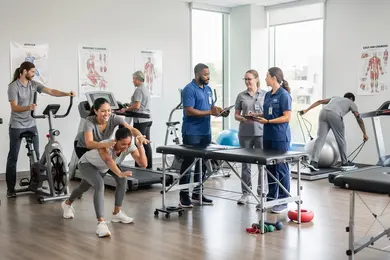
Online exercise science hands-on training differences significantly impact workforce readiness, especially when considering campus vs online exercise science practical experience. Campus-based programs provide daily access to physical equipment, live client assessments, and supervised labs that develop nuanced skills employers prioritize, such as biomechanical observation and corrective techniques.
These hands-on environments offer immediate feedback that virtual simulations or internships cannot fully replicate.
Employers in fitness and rehabilitation sectors expect demonstrable competence gained from real-world practice. Without structured onsite practicums, online learners must independently secure quality placements, which can delay certification milestones and limit exposure to complex client scenarios requiring tactile skills and direct communication.
Students aiming for roles involving precise fitness testing or rehabilitation benefit from programs that incorporate mandatory clinical components or local practicum partnerships, which mitigate barriers associated with remote learning. This strategy aligns with projected job growth of over 45,000 new fitness trainer and instructor positions nationally from 2022 to 2032 but demands practical experience to differentiate candidates.
Given these factors, prospective students should weigh program design carefully. For those evaluating complementary nutrition credentials or seeking integrated pathways, reviewing the best online registered dietitian programs can offer insights into structured remote options involving experiential learning.
Which accredited schools offer reputable online exercise science degrees in the United States?
Employers seeking candidates with accredited online exercise science programs in the United States prioritize graduates proficient in both fitness assessments and nutritional knowledge, reflecting a clear market premium. Data from CSP Global indicates that personal trainers with nutritional skills earn about 21% more, demonstrating the value of integrated competencies beyond theoretical understanding.
Top reputable US schools for online exercise science degrees such as Arizona State University, University of Florida, and the University of North Carolina at Chapel Hill incorporate applied fitness assessment training essential for real-world roles. For instance, ASU embeds evaluation techniques within virtual labs and case studies, enabling students to develop client testing protocols relevant in clinical and athletic environments.
Meanwhile, University of Florida addresses logistical barriers with structured internships at health centers, catering to employer expectations of hands-on experience.
Students should balance program flexibility against opportunity costs; hands-on, project-based assessments boost employability across sectors like rehabilitation clinics and corporate wellness but may extend completion timelines for working adults. Validation of accreditation, alignment with certification standards, and access to mentorship or career services are practical filters in this evaluation.
Prospective learners also should consider cross-disciplinary credentials to enhance their value proposition. For those assessing comparable fields, understanding whether is a master's in library science worth it might offer perspective on how specialization impacts workforce integration and earnings potential.
What fitness assessment and exercise testing courses are typically included in the curriculum?
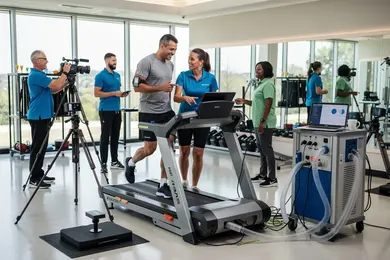
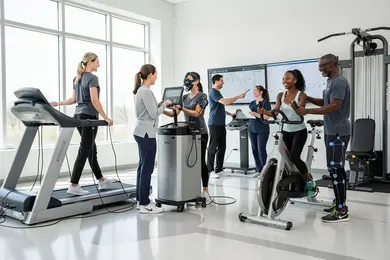
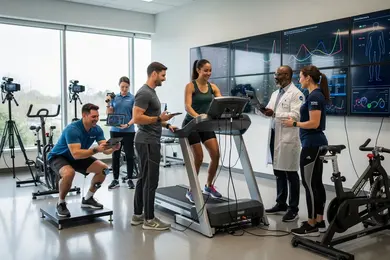
Practical competence in administering and interpreting physiological assessments shapes the market readiness of online exercise science graduates. Core courses in fitness evaluation and exercise performance testing center on hands-on protocols such as VO2 max testing, body composition analysis via DXA or skinfold calipers, and graded exercise tests (GXT) with ECG monitoring, integral for risk stratification in clinical and athletic settings.
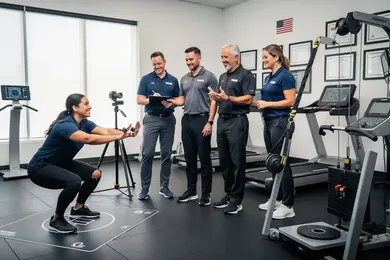
Programs that incorporate biomechanical assessments like gait analysis and functional movement screening enable professionals to identify injury risk and design targeted interventions, addressing a key workforce expectation for precise corrective strategy implementation. However, meeting certification mandates often requires navigating logistical challenges to complete lab hours through local partnerships or hybrid formats, a critical planning factor for remote learners.
Metabolic measurements including indirect calorimetry equip students to tailor exercise prescriptions based on validated data, aligning education with demands for evidence-driven practice in rehabilitation and performance optimization.
Cost considerations also influence accessibility: some programs report tuition stability with less than 5% growth over a decade, situating rates competitively within the broader online exercise science education landscape. Those balancing fiscal constraints against employer expectations should examine such trends and compare affordability, sometimes leveraging resources like the cheapest master's in data science analyses as a proxy for cost-efficiency insights.
Fitness assessment and exercise testing methods in online exercise science programs focus not only on foundational knowledge but also on developing analytic skills essential for interpreting exercise test data and informing client outcomes amid evolving workplace liabilities.
What admission requirements do online exercise science bachelor's and master's programs usually have?
Admission criteria for online exercise science bachelor's and master's programs often reflect the tension between academic rigor and workforce readiness. Bachelor's applicants generally need a high school diploma with solid grades (2.5-3.0 GPA) and evidence of competency in biology and chemistry-foundational subjects directly linked to subsequent coursework. Standardized tests might not be strictly required but can enhance competitiveness.
For master's candidates, a relevant undergraduate degree with a GPA near 3.0 is typical, along with prerequisite coursework if the prior degree is not directly related. GRE scores may boost applications but are sometimes waived for experienced professionals.
This structure acknowledges that theoretical knowledge must be paired with practical skills to meet employer expectations. Increasingly, programs require demonstration of hands-on ability-such as portfolios or fitness assessment seminars-to prepare students for clinical or performance roles. Letters of recommendation serve as additional verification of discipline-specific aptitude and perseverance.
Applicants should weigh the cost of missing prerequisite courses or practical experience, as these gaps risk delaying graduation and limit access to internships, which are often pivotal for job placement. Notably, median salaries vary significantly from $57,120 for recreational therapists to $46,480 for strength and conditioning coaches, reinforcing the importance of aligning education with specific career goals and industry demands.
How long do online exercise science degrees take, and what do they cost?
Choosing between an associate and a bachelor's degree in exercise science hinges on a balance of time, cost, and career ambition. An associate degree requires around 60 credit hours and typically takes two years full-time, allowing faster entry into assistant-level roles but limiting access to advanced practitioner and leadership positions.
Bachelor's degrees demand 120 to 130 credit hours over four years, though accelerated tracks and transfer credits can reduce this to three years, aligning better with employer expectations for higher salary brackets and supervisory responsibilities in exercise physiology.
Cost variation is significant, influenced by institution type and residency. Community colleges charge roughly $4,000 to $10,000 total for in-state associate degrees, while bachelor's degrees from public universities range $20,000 to $40,000 in-state, with private institutions exceeding $60,000. Graduate studies, focused on specialized areas like advanced fitness assessment, often surpass $15,000 annually. Additional expenses-fees, textbooks, technology-should be factored into budgeting.
For working professionals pivoting toward fitness assessment roles, the practical tradeoff involves weighing shorter, less costly programs against longer-term earnings potential and employment stability.
Exercise science employment is projected to grow 13% by 2030 with median wages above $50,000 annually, reflecting workforce demand for credentialed practitioners. Those targeting higher-level roles should consider bachelor's credentials necessary for competitive positioning in this evolving labor market.
What careers can you pursue with an online exercise science degree emphasizing fitness assessment?
Exercise science degrees with a focus on fitness assessment demand strong technical skills in precise evaluation methods and data interpretation, directly shaping roles such as exercise physiologists, strength coaches, and clinical exercise specialists. These professionals apply assessment results to develop individualized training or rehabilitation programs that often require collaboration within medical or athletic environments.
For example, cardiac rehab specialists use fitness data to customize patient workouts while adhering to strict safety and clinical protocols. In corporate wellness, expertise in scalable health metrics supports injury prevention and workforce productivity initiatives.
Students should weigh the necessity of certification or licensing-typically including hands-on experience beyond online learning-which affects employability in this field. The degree's value is often quantified through measurable client outcomes, aligning with employers' growing demand for evidence-based, data-driven interventions.
Financial considerations also matter: military-affiliated students benefit from reduced tuition rates compared to civilian learners, impacting the return on educational investment.
Work settings vary considerably. Clinical roles require adherence to HIPAA and interdisciplinary cooperation, while private fitness careers emphasize client retention and independent business skills. Professionals focusing on fitness assessment gain a competitive edge by integrating precise health data into broader wellness strategies, responding to labor market trends prioritizing demonstrable impact on client health metrics.
What salaries and earning potential can exercise science graduates expect in fitness-related roles?
Exercise science graduates face a broad salary spectrum shaped by role specificity, location, and advanced credentials. For instance, sports performance specialists and strength and conditioning coaches working within urban or professional sports settings can command salaries between $65,000 and $75,000, reflecting employer demand for applied biomechanics and fitness assessment skills.
Conversely, entry-level wellness coaches in outpatient clinics often start near $38,000, indicating that early-career compensation hinges heavily on setting and specialization.
Key workforce trends point to a 25,300 position increase nationally for coaching roles over the next decade, signaling sustained demand in sports performance and related fitness industries. However, compensation models vary markedly: commissions in personal training can create income volatility, while emerging fitness technology roles typically offer higher base salaries above $70,000 but require significant technical adaptability.
Graduates should weigh these factors pragmatically:
- Specializing in data-driven fitness evaluations enhances earning potential in professional athletics and corporate wellness.
- Supplemental certifications and advanced degrees often unlock higher wage tiers but involve additional time and cost investments.
- Geographic relocation can substantially influence salary scale and job availability.
For prospective students assessing exercise science education, prioritizing program elements aligned with these workforce realities positions them better for marketable outcomes.
Which industry certifications and licensure pathways align with exercise science and fitness assessment training?
Certifications like Certified Strength and Conditioning Specialist (CSCS) and Clinical Exercise Physiologist (CEP) offer distinct career pathways shaped by rigorous physiological assessment skills. CSCS demands a bachelor's degree and focuses on performance metrics such as VO₂ max and lactate threshold-key in elite sports conditioning.
CEP licensure, requiring graduate education plus supervised clinical hours, caters to clinical environments with an emphasis on graded exercise testing and biomarker interpretation for chronic disease management.
Registered Exercise Physiologist (RCEP) licensure bridges exercise science with rehabilitative care, often necessary for hospital-affiliated or insurance-supported wellness roles. These clinical credentials command respect in institutional settings but come with extended time and educational investment compared to certifications like CSCS.
Conversely, certifications from organizations such as the National Academy of Sports Medicine (NASM) integrate technology-driven fitness assessments but typically lack the depth for advanced clinical or research positions, limiting upward mobility within medical or scientific contexts.
Prospective students must weigh tradeoffs:
- CEP and RCEP offer strong clinical credibility but slow entry due to education and supervised hours.
- CSCS provides faster access to high-performance athletic roles but requires a bachelor's degree and a challenging exam.
- NASM-level certifications enable quicker entry into general fitness coaching yet offer less leverage for evidence-based, data-driven employment.
Aligning certification choice with career environment-clinical intervention versus athletic training versus community health-is essential to satisfy 2026 employer expectations emphasizing analytical proficiency in movement efficiency and performance data.
How can prospective students evaluate the quality and credibility of online exercise science programs?
Selecting an online exercise science program demands scrutiny beyond accreditation alone because the difference between a credential and employability hinges on faculty expertise and curriculum design. Regional accreditation recognized by the U.S. Department of Education or the Council for Higher Education Accreditation serves as a baseline, ensuring credits transfer and employers recognize the credential.
However, programs led by faculty with current clinical certifications in exercise science or physiotherapy add tangible value, integrating applicable knowledge rather than theoretical abstractions.
Curriculum structures that effectively mix biomechanics, fitness assessment, and exercise physiology while incorporating labs or simulated practicals address a notable challenge: translating online theory into physical skill. Programs offering clinical placements or internship partnerships provide critical hands-on experience, which directly impacts job readiness in a field increasingly demanding applied competencies.
Cost is a pivotal tradeoff for working professionals pivoting careers. OnlineU's 2026 data shows that top exercise science programs charge between $9,480 and $15,150 annually. Choosing within this range aligns with market expectations and helps avoid overpaying for programs lacking proven outcomes. A lower-priced program with strong graduate employment and certification exam pass rates can offer a better return on investment.
Employment outcomes tied to ACSM Certified Exercise Physiologist or NASM Certified Personal Trainer exam preparation represent practical indicators of program quality but require verification through independent data or institutional transparency. Consider also program flexibility, synchronous attendance demands, clinical hour requirements, and available student support-each significantly influences the feasibility of completing the degree while working.
Other Things You Should Know About Exercise Science
Employers in fitness and rehabilitation sectors value exercise science degrees supplemented by strong fitness assessment training, but recognition depends heavily on program accreditation and practical experience opportunities. Programs lacking hands-on components or recognized clinical partnerships may limit job readiness despite theoretical knowledge.
Prioritize degrees that integrate supervised practicum or internship components aligned with industry standards to enhance employability and credibility.
Yes. Many programs require 120 to 240 supervised practicum or internship hours, often completed at approved fitness, clinical, or sports performance sites. Students usually submit logs, competency checklists, and supervisor evaluations to document skills in body composition, movement screening, and cardiovascular assessment.
Working students should realistically assess the intensity of combining advanced exercise science coursework with meaningful practical skill development. Fitness assessment training requires scheduled lab or supervised practicum hours that may conflict with full-time jobs. Programs featuring part-time options or flexible practicum scheduling better accommodate professionals, making them preferable for maintaining employment without sacrificing educational rigor.
References
- Five Online Degrees For Students With A Passion For Fitness https://www.academicinfo.net/blog/2023-02-16-five-online-degrees-for-students-with-a-passion-for-fitness/
- 2026 Best Online Exercise Science Degrees https://www.onlineu.com/degrees/exercise-science
- The Best Education Pathway for Success in the Fitness Industry - IDEA Health & Fitness Association https://www.ideafit.com/the-best-education-for-success-in-the-fitness-industry/
- Exercise Science Degree Programs, Online Included for 2026 https://www.kinesiologydegrees.org/programs/exercise-science
- International Clinical Exercise Physiology Qualification Application Pathways https://icsesp.global/resources/international-clinical-exercise-physiology-recognition-opportunities/
- ESSA's career guide for Accredited Exercise Physiologists https://www.essa.org.au/Web/Web/Resources/Tools-and-templates/ESSA-AEP-Guide.aspx
- Exercise Science Degree Careers, Jobs and Salaries - Peak Physical Therapy and Sports Performance https://peaktherapy.com/blog/exercise-science-degree-careers-jobs-and-salaries/
- Fitness tests for different components of fitness - Keeping fit and healthy in sport - Eduqas - GCSE Physical Education Revision - Eduqas - BBC Bitesize https://www.bbc.co.uk/bitesize/guides/zw7wmnb/revision/3
- Building Trust in Qualified Exercise Professionals: The Power of Alignment, Professional Competencies and Academic Accreditation https://acsm.org/building-trust-certified-pros/
- How I Do Fitness Testing in PE Class |Fitnessgram| https://www.thepespecialist.com/fitnessgram/