2027 Online Exercise Science Degrees With Fitness Assessment Coursework

Co-Founder and Chief Data Scientist
Balancing full-time employment while pursuing a degree in exercise science remains a critical challenge, especially when programs lack practical fitness assessment components vital for employment readiness. According to the U. S. Department of Education, online enrollments increased by nearly 6% in 2024, reflecting a broader shift toward flexible learning models for adult learners seeking career pivots.
This growth underscores how accessibility and program design directly influence whether students can maintain work-life balance without sacrificing hands-on expertise employers expect in exercise science roles. This article evaluates online exercise science degrees with integrated fitness assessment coursework, aiding prospective students in selecting pathways that align with both career demands and scheduling realities.
Key Things You Should Know
- Nearly 48% of online exercise science graduates with fitness assessment coursework face delayed certification eligibility, extending time-to-employment by 6-12 months due to incomplete hands-on practicum requirements, per 2024 workforce readiness reports.
- Employers increasingly prioritize candidates with integrated fitness assessment training and practical application, as indicated by a 26% rise in job postings requiring competency in biometric evaluation software at entry-level exercise science roles in 2024.
- Programs with embedded fitness assessment modules cost on average 15-22% more and require 20% longer completion time compared to theory-only curriculums, creating significant financial and opportunity cost implications for non-traditional students, according to recent education finance analyses.
What is an online exercise science degree with fitness assessment coursework, and who is it for?
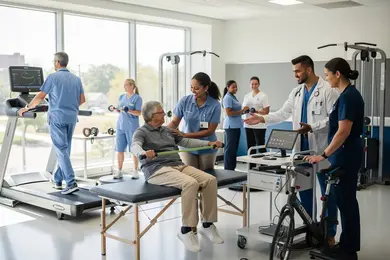
Selecting online exercise science degree programs with fitness assessment components demands a clear-eyed understanding of their operational value and inherent limitations. These programs deliver targeted instruction in physiological testing, biomechanical analysis, and interpreting fitness metrics through remote formats-skills essential for roles such as exercise physiologists and fitness assessment technicians. However, success hinges on securing supervised, hands-on practical experience, often through local internships, which can be a barrier depending on geographic or employer support.
Employers prioritize candidates proficient in objective tools like VO2 max testing, body composition measurements, and functional movement screens. For instance, clinics leveraging remote consultants benefit from professionals trained online who can reliably perform fitness evaluations. This dynamic contrasts with traditional on-site degrees that may present scheduling challenges for working adults. Graduates should also recognize the importance of certifications aligned with employer demand alongside their degree.
The field's 13% projected employment growth from 2022 to 2032 underscores rising demand for health professionals adept in fitness evaluation and personalized exercise prescription. Yet, prospective students must realistically assess their discipline and access to practical training when choosing the best online exercise science degrees for fitness evaluation.
Understanding actual workforce implications, including how remote credentials intersect with hiring preferences and how much do sports analysts make, informs smarter educational investment and career pivot decisions.
How do online exercise science degrees compare to campus programs in quality and outcomes?
Choosing between online and campus exercise science degree program quality comparison requires weighing practical skill development against scheduling flexibility. Campus programs include in-person lab work, internships, and direct fitness assessment experience that employers in clinical and sports performance settings often prioritize. Online programs attempt to bridge this gap with simulated labs and remote fitness assessment coursework outcomes in online vs campus exercise science degrees, but some hiring managers remain cautious without verified hands-on practice.
Key operational considerations include:
- Campus offerings provide robust clinical exposure and easier access to internships and networking, beneficial for careers in rehabilitation therapy or athletic training.
- Online degrees offer accelerated completion, especially for students with prior credits, averaging about two years according to University of Saint Mary, accommodating working professionals.
- Employers increasingly emphasize certifications and practical competencies, so supplementing online coursework with local internships is critical.
Those aiming for roles in fitness coaching, wellness program design, or remote consulting may find online pathways a strategic fit, balancing knowledge acquisition with flexible scheduling. A deliberate, context-aware approach to these program formats and their market realities can mitigate tradeoffs. For additional insight on related fields and program rankings, consider reviewing the nutrition degree online opportunities that often intersect with exercise science coursework.
Decision-making should align program characteristics with specific career pathways, local job market conditions, and the tangible demonstration of competence beyond online study alone.
Which U.S. schools offer accredited online exercise science degrees focused on fitness assessment?
Employer demand in health clubs, rehabilitation centers, and integrated healthcare units distinctly favors graduates of accredited online exercise science programs in the U.S. with fitness assessment focus who demonstrate applied competency through hands-on practicum or lab simulations. The University of Northern Colorado and Oregon State University exemplify programs with curricula integrating practical fitness evaluation techniques critical for roles requiring credentialing or licensure. Without supervised practical experience, candidates often struggle to prove proficiency in client health screening and individualized testing, narrowing immediate employability.
Workforce projections from the U.S. Bureau of Labor Statistics estimate an addition of 106,000 trainers and instructors from 2022 to 2032, underscoring the importance of selecting top U.S. schools offering online exercise science degrees with fitness assessment coursework that align with current industry standards and technologies. Programs incorporating metrics like VO2 max, body composition analysis, and functional movement screening enable graduates to secure better entry-level positions and improved initial compensation.
Prospective students must balance program accreditation, access to practical lab experiences, and relevance to emerging fitness technologies, as institutions lacking these components risk producing candidates less prepared for evolving market demands. This evaluation should consider the tradeoffs between program affordability and practical readiness, especially compared to other online options such as the cheapest online computer science degree tracks, which often differ significantly in hands-on requirements and employment outcomes.
What fitness assessment courses and lab experiences are typically included in these online programs?
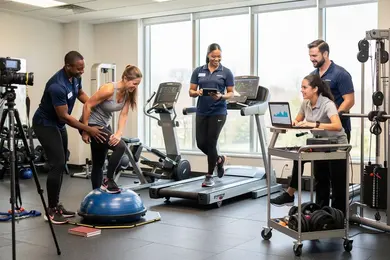
Online exercise science degrees with fitness assessment coursework must reconcile academic rigor with practical skill development, especially in delivering effective lab experiences for practical fitness evaluation in distance exercise science degrees. Proficiency in core assessment techniques-such as body composition analysis via skinfold calipers and VO2 max cardiovascular endurance tests-is essential, yet many distance learners face the critical challenge of securing adequate hands-on practice remotely. Institutions often address this by collaborating with local fitness facilities or requiring brief, intensive campus residencies to meet employer expectations for tangible competency in data-driven client evaluation.
Assessment skill sets extend beyond tests to include functional movement screenings, isokinetic dynamometry, and flexibility protocols like sit-and-reach, ensuring professionals can interpret diverse client profiles. Candidates must also navigate the increasing integration of wearable device data and performance software that reflect recent trends in fitness technology adoption. These capabilities are vital for roles ranging from clinical exercise physiologists to strength coaches, where reliable, quantifiable metrics inform personalized programming and progress tracking.
Employers in clinical, sports, and wellness sectors prioritize candidates demonstrating practical mastery, often requiring credentialing tied to in-person assessments. This creates a real-world tradeoff for students balancing flexibility against the necessity for hands-on mastery. For those considering exercise science as a pivot or advancement, evaluating programs must include scrutiny of lab experience formats and how well they replicate live practical application.
Prospective students may also compare program cost-effectiveness and outcomes through resources like this library science degree, applying similar evaluative rigor to workout science pathways.
What admission requirements and prerequisite courses do online exercise science programs expect?
Applicants to online exercise science programs frequently underestimate the impact of prerequisite coursework on time and cost. Many programs mandate foundational classes-such as college-level anatomy and physiology, general biology, chemistry, and sometimes physics or kinesiology-before progressing to advanced fitness assessment and program design topics. For working professionals, conditional enrollment options exist but require timely completion of these prerequisites, or students risk extended program durations and increased tuition.
Consider a student switching careers without prior science coursework: budgeting for 2-3 foundational classes at roughly $398 per credit, as seen at institutions like Franklin University, directly affects overall educational expenses. Employers in clinical and performance settings increasingly expect demonstrated mastery of applied sciences, making these prerequisites critical for employability. Skipping or inadequately completing them can lead to gaps in practical skills and reduced job prospects.
Applicants with associate degrees or prior credits should scrutinize transfer policies to avoid redundant courses and minimize tuition burden. Additionally, proficiency in statistics, often overlooked, is valuable for interpreting research data in this field; lacking this may necessitate extra classes. These layered requirements can complicate educational planning and highlight the need for strategic decision-making aligned with realistic workforce expectations.
How long do online exercise science degrees take, and what do they cost to complete?
Choosing an online exercise science degree requires weighing time, cost, and career trajectory against real workforce demands. Associate degrees typically span two years, while bachelor's programs require about four years of full-time study; accelerated options can compress associate credentials into as little as 18 months. However, part-time enrollment is common among working adults, extending completion time and introducing challenges in balancing employment and practicums that often demand in-person attendance. For instance, a personal trainer aiming to advance into clinical exercise physiology must consider the longer timeline and higher costs of a bachelor's degree to meet employer expectations and licensing requirements.
Costs range significantly, from approximately $15,000 to $60,000 total, influenced by institution type, residency, and credit load. Public state universities generally charge $200-$400 per credit hour, whereas private colleges can exceed $600, plus extra fees for labs or certification prep. Beyond tuition, students should anticipate expenses for certification exams such as ACSM or NASM, which affect overall return on investment given the median exercise physiologist salary of $58,030 (U.S. Bureau of Labor Statistics).
Strategic planning around employer tuition assistance and program format can optimize feasibility. Prospective students must align program length and financial commitments with their targeted roles-clinical versus general fitness-and local licensing demands to ensure credentials translate into market-relevant job opportunities.
What exercise science careers rely on fitness assessment skills, and what roles can graduates pursue?
Fitness assessment expertise is a practical currency shaping employability across exercise science roles, but it comes with nuanced tradeoffs. Graduates aiming to become clinical exercise physiologists must accurately interpret physiological data to tailor regimes that mitigate risks for patients with chronic conditions, a task demanding precision beyond textbook knowledge. In contrast, strength and conditioning coaches often prioritize certifications and demonstrated applied skills over formal degrees, reflecting a workforce preference for proven adaptability and sport-specific insight.
Health education specialists working within corporate wellness rely on their ability to integrate fitness testing with behavioral strategies to enhance employee health outcomes; per BLS data cited by Maryville University Online, these roles offer a median annual wage of $62,860. Yet, employers seek confidence in administering standardized assessments and translating results across diverse populations, a skillset often underdeveloped without hands-on practicums or internships.
Prospective students should consider how programs deliver real-world experience, since theoretical knowledge alone rarely satisfies employer demands for actionable results. Those lacking direct exposure to fitness assessment tools frequently encounter hiring barriers. Graduates successful in bridging this gap tend to combine strong analytical skills with communication proficiency, enabling them to contribute effectively in multidisciplinary teams.
What are the salary expectations and job outlook for exercise science professionals in fitness assessment?
Salary prospects for exercise science professionals specializing in fitness assessment vary significantly with certification status and work environment. Entry-level candidates typically start between $40,000 and $55,000 annually, but those with ACSM, NSCA, or NASM certifications, widely recognized by employers in clinical and sports performance sectors, can exceed $70,000. For example, a certified professional in a hospital wellness program may earn considerably more than a counterpart working in a commercial gym. This difference illustrates how setting and credentialing affect compensation and career trajectory.
Industry demand is growing at a 13% rate through 2031, driven by the rise in personalized fitness and preventive healthcare. However, uncertified workers often face limited upward mobility, reflecting a clear tradeoff between investing time and money in certification preparation versus entering the workforce sooner. Costs associated with certification renewals and continuing education also impact net income and career sustainability.
Employers increasingly expect candidates to combine technical fitness assessment expertise with strong client communication and data analytics skills. Graduates should plan education paths that balance practical training with recognized credential preparation to align with these market expectations and enhance employability.
Understanding these factors helps weigh short-term entry barriers against long-term occupational benefits in exercise science careers.
What certifications or licenses align with online exercise science degrees emphasizing fitness assessment?
Certifications such as Certified Strength and Conditioning Specialist (CSCS) and Certified Personal Trainer (CPT) remain essential complements to an online exercise science degree, particularly for roles involving fitness assessment. Employers across clinical and athletic sectors prioritize candidates who demonstrate practical expertise through credentials issued by bodies like the National Strength and Conditioning Association (NSCA) or the American College of Sports Medicine (ACSM). For example, a corporate wellness program hiring a candidate without at least one such certification often limits their responsibilities, relegating them to entry-level tasks despite academic credentials.
Licensure and certification requirements vary by state and employer, especially in medical or rehabilitation environments where advanced certifications such as ACSM Certified Exercise Physiologist are often mandatory. Graduates who overlook these certifications may find limited access to specialized roles requiring expertise in health-related fitness testing and disease management.
Financial and temporal investment in certifications is significant; however, some programs like American Public University enable credit transfers up to 90 credits, effectively reducing costs and easing concurrent certification preparation. Maintaining these credentials also involves continuing education every three years, a factor that influences long-term planning and budget.
How can students evaluate and choose a reputable online exercise science program in the U.S.?
Choosing an online exercise science program requires balancing accreditation, curriculum rigor, and career alignment while understanding the workforce realities graduates face. Regional accreditation remains essential for recognition by employers and certification bodies. Coursework must reflect current standards such as ACSM or NASM guidelines and include hands-on experiences-virtual labs or supervised internships-that differentiate theoretical knowledge from practical competence.
Financial investment should be evaluated not just by tuition but by measurable outcomes. For example, costs averaging $420 per credit reported by Online Degree Demand CSP Global suggest a competitive pricing landscape, yet cheaper programs without data on graduation rates or job placement risk limited return on investment. Working professionals need asynchronous content paired with interaction opportunities to maintain progress without sacrificing networking or faculty access.
Programs that embed career services oriented toward exercise science roles-in rehabilitation centers, corporate wellness, or clinical settings-translate academics into employability. Graduates targeting certifications or advanced degrees must confirm curricula adequately prepare for these benchmarks as many employers prioritize nationally accredited credentials. Evaluating alumni employment sectors and salary outcomes provides key insight into the program's relevance and effectiveness within dynamic labor markets.
Other Things You Should Know About Exercise Science
Employer recognition varies significantly depending on program accreditation and institutional reputation. Degrees from regionally accredited universities with clearly outlined fitness assessment labs tend to be accepted by employers in healthcare and fitness industries. However, graduates from lesser-known or nationally accredited programs may face skepticism, especially when competing against campus-trained peers for clinical or research roles. Prioritize programs with strong practicum components and verified industry partnerships to improve job prospects.
The practical component in online programs relies heavily on local partnerships or virtual simulation, which can limit hands-on experience. Students must often arrange their own lab access or complete internships independently, increasing logistics complexity. This structure may not suit learners needing guided, supervised skills training, which employers consider essential for clinical readiness. Prospective students should confirm how a program supports supervised practice and the availability of on-site fitness labs or approved externships.
Commonly required tools include a blood pressure cuff, stethoscope, stopwatch, heart-rate monitor, body-fat calipers, and a scale or bioelectrical impedance device. Many 2027 online exercise science programs also require supervised lab kits or recorded demonstrations for skills such as resting vital signs and body-composition screening.
References
- exercise science pre reqs https://publicreg.vaccination.gov.ng/scholarship/ue06BO/0S9009/exercise-science_pre_reqs.pdf
- Building Trust in Qualified Exercise Professionals: The Power of Alignment, Professional Competencies and Academic Accreditation https://acsm.org/building-trust-certified-pros/
- Online Exercise Science Degrees: Top School Review https://www.edumed.org/online-schools/exercise-science-degrees/
- Health and Human Performance (HHP) https://catalog.uwplatt.edu/undergraduate/course-descriptions/courses/hhp/
- Exercise Physiologist Career https://explorehealthcareers.org/careers/sports-medicine/exercise-physiologist/
- Exercise Science Degree Programs & Career Guide 2025 https://www.nutritioned.org/exercise-science-degree/
- Exercise Science Degree Programs Lead to Rewarding Careers in Health and Fitness https://www.carrollcc.edu/articles/exercise-science-degree-programs-lead-to-rewarding-careers-in-health-and-fitness/
- Online Exercise Science Program https://stmary.edu/online-programs/exercise-science.html
- Exercise Science, associate degree | Exercise Science at PCC https://www.pcc.edu/programs/exercise-science/aas-exercise-science/
- Exercise science: What exactly is it? https://www.scienceforsport.com/exercise-science/