2027 Exercise Science Skills Most Commonly Mentioned in Job Postings

Co-Founder and Chief Data Scientist
Landing a role in exercise science often hinges on more than a degree; recruiters emphasize up-to-date, specialized skills that match evolving industry demands. With the U. S. Department of Education reporting a 35% surge in adult learners opting for flexible or online programs since 2023, professionals must weigh accessibility and rapid skill acquisition against the breadth of credentials typically sought.
This shift in enrollment patterns reflects both a need for career mobility and a challenge in validating experience amid diverse educational formats. This article identifies the most frequently required exercise science skills appearing in current job postings and guides readers on targeting competencies that improve hiring prospects.
Key Things You Should Know
- Data from the U.S. Bureau of Labor Statistics shows that 62% of job postings for exercise science roles prioritize advanced biomechanics and data analysis skills, creating a tradeoff for candidates who must invest in costly specialized certifications versus broader fitness credentials.
- Employers increasingly require proficiency in telehealth and remote client management technologies, reflecting a 48% rise from 2023; this demands workforce adaptability and limits opportunities for applicants relying solely on conventional in-person training experience.
- Programs offering accelerated online exercise science degrees reduce time-to-hire by 30%, but the compressed curricula risk omitting critical clinical internship hours, challenging students balancing upfront cost savings against long-term employability.
What core exercise science skills do employers most frequently list in job postings?
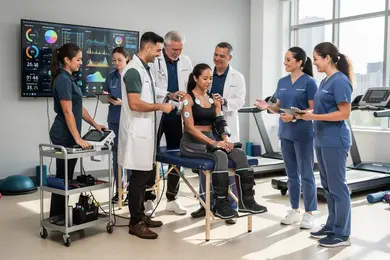
Exercise science job postings in 2026 consistently demand competencies in exercise physiology, biomechanics, and patient assessment, with particular emphasis on designing tailored exercise programs based on clinical evaluations. These skills are especially critical for roles focused on chronic disease management and rehabilitation. For example, mid- to senior-level clinical exercise physiologists must competently interpret cardiopulmonary and metabolic test data to customize interventions-a requirement appearing in approximately 75% of relevant listings. This focus on applied clinical skills shapes the core exercise science competencies demanded by employers in job listings.
Employers increasingly expect candidates to combine theoretical knowledge of human anatomy and physiology with practical expertise in electronic health records (EHR) and data analytics for monitoring outcomes. Collaboration skills are vital, as professionals often coordinate care among physicians, physical therapists, and patients in multidisciplinary settings. This dynamic highlights the most sought-after exercise science qualifications in employment opportunities, where communication and interdisciplinary coordination are non-negotiable.
Employment growth projections from the U.S. Bureau of Labor Statistics indicate a 9% rise in clinical exercise physiologist roles between 2024 and 2034, producing about 1,700 annual openings. This trend favors health-oriented sectors over purely athletic or performance-based roles, which emphasize exercise testing and nutrition. Candidates lacking specialized credentials or real-world clinical experience face significant competition, as measurable success in patient adherence and cardiometabolic improvements increasingly define hireability. Additionally, state licensure variability creates practical challenges requiring strategic program selection aligned with geographic career goals.
For those evaluating pathways in exercise science, understanding these operational demands is essential. Practical workforce implications include balancing clinical proficiency with data management and interdisciplinary engagement.
Professionals considering pivots or advancement should also study exercise science online to strengthen their foundational knowledge while exploring related fields and roles, such as how to become a sports analyst, to assess complementary positions and skills within the broader industry landscape.
Which exercise science skills are most in-demand across different job titles and settings?
The exercise science skills employers value most focus on combining precise biomechanical analysis with the ability to design individualized training programs. Positions like strength and conditioning specialist or athletic trainer demand expertise in adapting movement assessments and conditioning to meet specific athlete or patient needs, balancing performance gains with injury prevention. This specialization is particularly critical for collegiate-level strength coaches who require data-driven strategies to optimize outcomes while minimizing downtime.
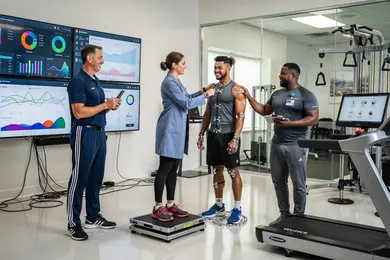
Top exercise science competencies by job type shift according to context. Clinical roles emphasize interpreting physiological data such as VO2 max and lactate threshold within medical parameters, ensuring safe exercise prescriptions for patients with chronic conditions. Conversely, candidates in corporate wellness or rehabilitation settings must display proficiency in data literacy and client progress tracking technologies, translating raw health metrics into targeted interventions aligned with organizational or patient goals.
Employers also prioritize advanced coaching and interpersonal communication skills to foster behavioral change, a factor often overlooked in typical academic programs.
The sector's projected 8.8% growth through 2033 and a $58,910 average salary underscore the practical value of integrating performance science with talent evaluation. Ultimately, prospective professionals face tradeoffs between academic breadth and applied proficiency, influencing workforce readiness.
For those considering a strategic career pivot or advancement, acquiring a solid foundation in exercise science alongside complementary skills can be pivotal. Exploring aligned fields-such as pursuing an online CS degree-may enhance data analytical capabilities increasingly demanded in this domain.
How do common exercise science job skills translate into specific entry-level roles?
Entry-level roles in exercise science demand distinct, contextual skills shaped by workplace setting and job focus. Fitness trainer positions emphasize designing client-specific programs rooted in biomechanics and kinesiology, requiring applied knowledge of exercise testing protocols and real-time plan adjustments. These roles uniquely combine technical expertise with interpersonal communication to motivate diverse populations, reflecting projected 14% employment growth and median salaries near $44,190. In healthcare careers involving exercise science skills for entry-level fitness roles, there is a stronger emphasis on clinical accuracy. Rehabilitation aides or physical therapy assistants prioritize injury prevention, therapeutic exercise precision, and strict adherence to patient safety, emphasizing collaboration within healthcare teams rather than solo client engagement.
Operationally, candidates without advanced certification must offset gaps by gaining hands-on experience, such as internships or supervised practice, to meet employer expectations in data interpretation and risk management. Strength and conditioning coaches focus more narrowly on sport-specific performance metrics and adaptive training strategies, presenting a tradeoff between specialization and broad client interaction.
Prospective students should weigh these functional distinctions against their career goals. For those exploring adjacent pathways, understanding whether an is a library science degree worth it or a practical credential in exercise science aligns better with market realities remains crucial.
What degrees and training best develop the exercise science skills employers seek?
Employers hiring in exercise science prioritize graduates from accredited bachelor's and master's programs that explicitly focus on exercise science, kinesiology, or related health sciences. These programs emphasize foundational expertise in anatomy, physiology, biomechanics, and exercise physiology, blended with practical training including assessment and intervention techniques. A key workforce implication is that candidates without hands-on clinical or internship experience frequently encounter limited job readiness, as real-world application is essential for roles involving client interaction or rehabilitation.
Certification beyond formal degrees notably differentiates candidates, particularly for clinical or therapeutic roles. Credentials such as Certified Strength and Conditioning Specialist (CSCS) or clinical exercise testing certifications significantly enhance employability. For instance, recreational therapy-which averages $65,350 in annual salary and projects 4.3% growth through 2033-demands specialized skills in adaptive physical activity and patient-centered programming, showcasing the practical value of targeted training programs that develop top exercise science skills for employers.
Professionals aiming for rehabilitation or wellness sectors often face employer expectations that necessitate a master's degree due to advanced evidence-based practice demands. This requirement entails a tradeoff between extended education time and costs against access to specialized roles with a potential trajectory advantage.
Interdisciplinary training combining exercise science with nutrition, psychology, or data analytics is becoming increasingly critical, accommodating emerging specialties such as telehealth fitness coaching or injury prevention analytics. Candidates lacking these complementary skills risk constrained career scope. Those evaluating degrees today should also consider aligned fields; for example, degrees in exercise science and kinesiology for job readiness can be compared to alternative pathways like data science degrees for market adaptability and salary trajectories.
How does the exercise science curriculum build clinical, technical, and soft skills?
Exercise science programs must balance clinical insight, technical proficiency, and interpersonal skills to align with employer demands. Graduates competent in anatomy and biomechanics can effectively design injury prevention in settings like occupational health, where applied skills are non-negotiable from day one.
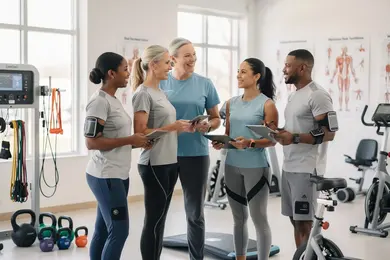
Technically, fluency in data interpretation using wearable devices and fitness tech is increasingly vital. Employers in corporate wellness, offering salaries between $78,000 and $95,000 as per Indeed job data, prioritize candidates who translate physiological data into actionable health strategies. This creates a tradeoff for students: programs overly focused on classroom theory may underprepare them for these technical expectations.
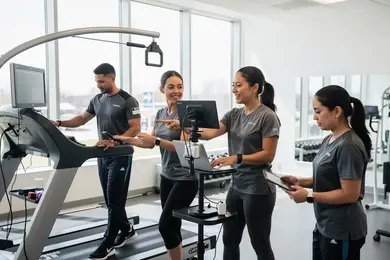
Developing communication and critical thinking skills is equally important. Exercise science graduates must often simplify complex health data for clients lacking technical backgrounds, making motivational and collaborative abilities critical. Practical learning through case studies or simulated client sessions can mitigate common employability gaps in interpersonal effectiveness.
Employers seek professionals able to integrate data analysis with client engagement. Prospective students should assess whether curricula provide adequate technical tool training alongside sufficient hands-on clinical exposure. Neglecting either can cap starting salaries and reduce competitiveness in clinical or wellness sectors.
What certifications validate key exercise science skills for fitness and clinical careers?
Certification choices in exercise science hinge on specific career pathways and employer expectations, with clear distinctions between fitness and clinical applications. For instance, professionals aiming to work with athletes typically pursue the Certified Strength and Conditioning Specialist (CSCS) credential, which prioritizes applied biomechanics and athlete performance evaluation. Conversely, those targeting rehabilitation or chronic disease management roles are more aligned with the American College of Sports Medicine's Certified Exercise Physiologist (ACSM-EP) certification, emphasizing clinical exercise prescription.
Employment projections support this bifurcation: exercise physiologists are expected to experience 10% job growth over the next decade, driven by demand for expertise in VO2 max testing and biomechanical assessments. However, these credentials require more than theoretical knowledge-they mandate documented hands-on experience and continuing education to maintain relevance amid evolving methodologies.
Choosing a certification without matching its practical demands or labor market value risks limiting job opportunities or advancement in either fitness or clinical settings. Cross-disciplinary skills, including strength conditioning, rehabilitation techniques, and performance data analytics, increase employability but often necessitate multiple certifications or continuing education.
Those weighing certification paths should also consider the tradeoff between broad generalist credentials and specialized ones that better fit targeted roles. Understanding these operational nuances is crucial for professionals seeking to transition or deepen expertise effectively within a competitive job market.
How do online exercise science programs teach hands-on skills compared to campus programs?
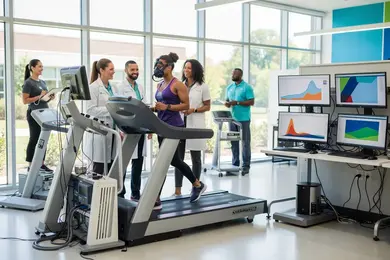
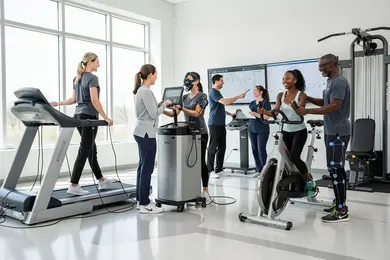
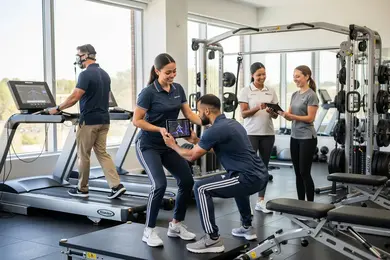
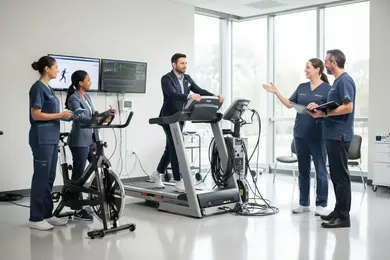
Hands-on skills acquisition in exercise science often hinges on access to physical labs and supervised clinical environments, which differentiates campus-based programs from online alternatives. Campus students benefit from repeated practice with equipment like force plates and metabolic carts, receiving immediate expert feedback that strengthens muscle memory-an advantage that employers recognize during hiring. In contrast, online students face challenges securing quality externships or internships nearby to meet clinical hour requirements, sometimes delaying readiness for roles such as cardiac rehabilitation specialists where ECG application proficiency is essential.
This gap in tactile education directly impacts employability in a competitive labor market projecting 4% to 14% job growth over the next decade, with median salaries between $44,190 and $65,350. Employers prioritize validated practical experience, often tied to certification standards requiring documented clinical hours. Students pursuing online routes must weigh the convenience against additional time and cost investments needed to arrange supervised hands-on training externally.
Key considerations for prospective students include:
- Availability of local clinical placements and quality supervision if choosing online programs
- Access to varied lab equipment and immediate expert guidance on campus
- Speed of skill acquisition aligned with employer expectations in sports performance, wellness coaching, and clinical exercise physiology
Decisions about modality significantly affect the pathway to competence and market alignment, underscoring the importance of strategic planning before enrollment.
What internships, labs, and practicums strengthen real-world exercise science skills?
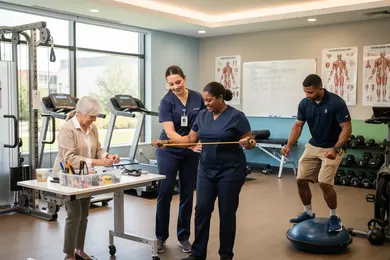
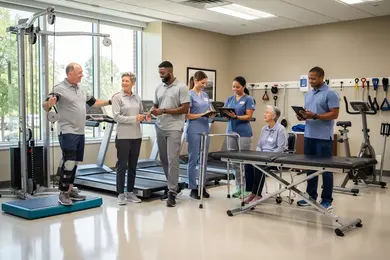
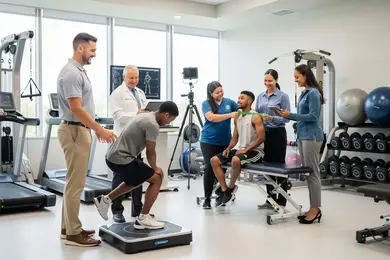
Real-world experience in exercise science hinges on practical internships, labs, and practicums that emphasize clinical, biomechanical, and physiological testing. Such hands-on exposure delivers skills directly aligned with employer demands, especially in cardiovascular fitness assessments, musculoskeletal screenings, and functional movement analyses. For instance, a clinical internship in cardiac rehabilitation offers first-hand practice designing targeted exercise prescriptions for patients with chronic conditions-preparing graduates for outpatient or wellness center settings.
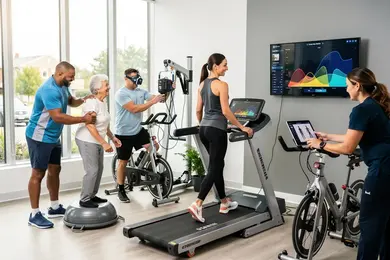
Affiliated research labs specializing in human performance measurement provide access to advanced tools like metabolic carts and electromyography, cultivating data interpretation capabilities sought after in performance enhancement and rehabilitation roles. Meanwhile, practicums in athletic training or physical therapy settings sharpen client communication and applied knowledge under supervision, addressing employer preferences for adaptability and interpersonal skills.
Key tradeoffs involve specialization limits: a focus strictly on sports performance may reduce competitiveness for clinical or corporate wellness positions. Additionally, paid internships are scarce, often replaced by time-intensive unpaid practicums, which can affect students' logistical planning. Entry-level roles typically offer starting salaries around $45,000 annually, highlighting the importance of relevant experience in securing favorable positions and negotiating leverage.
How do exercise science skills affect salary ranges and career advancement potential?
Clinically focused exercise science expertise commands distinct wage premiums and career pathways compared to generalist roles. For example, U.S. job postings in cardiac rehabilitation and other clinical settings report hourly wages typically between $34 and $47, outpacing general exercise science salaries by approximately 20-40%. Employers in healthcare-specific environments prioritize certifications and skills in medically supervised protocols, chronic disease management, and precision assessment, which serve as crucial gatekeepers for higher compensation and leadership opportunities.
Those lacking these competencies often encounter constrained job prospects and slower wage growth, largely constrained to fitness or wellness roles with lower financial ceilings. Practical decision-making for prospective students or current professionals involves weighing the upfront investment in additional clinical certification against the financial and occupational returns that specialized credentials promise.
Investing in clinically oriented skills translates into tangible workforce advantages: reduced employer risk exposure, improved patient outcomes, and greater institutional stability, which in turn support prospects for promotion into management or advanced practitioner roles.
Key considerations include:
- Wages for clinical exercise science roles generally reflect employer demand for specific medical knowledge.
- A 20-40% higher hourly pay than general exercise science roles justifies added certification costs for many.
- Professionals without clinical expertise face limited upward mobility and compensation ceilings.
How can students assess and improve their exercise science skills to stay competitive?
Success in exercise science hinges on aligning skills tightly with employer demands, particularly in advanced physiology, biomechanics, and clinical assessment. Candidates lacking practical experience with tools such as metabolic carts or cardiac rehabilitation protocols risk being outpaced by peers who demonstrate this applied expertise. For example, a student aiming for a clinical exercise physiologist position must prioritize internships or practicum work that deliver such exposure rather than relying solely on academic theory.
Certifications linked to clinical or performance assessments function as decisive differentiators in the labor market. Specialized credentials often enhance earners' potential, with advanced roles commanding salaries between $79,000 and $87,000, extending up to $112,000 in upper tiers.
Employers increasingly expect data analysis capabilities coupled with interdisciplinary knowledge-like exercise psychology and nutrition-though these augment rather than replace core applied skills. Efficient skill development depends on regular benchmarking through labor market data and self-assessment tools integrated in professional platforms, enabling targeted responses to evolving job requirements.
Students constrained by limited access to traditional clinical placements can mitigate this by engaging in verified virtual simulations or research collaborations, preserving skill relevance despite geographic or scheduling barriers.
Other Things You Should Know About Exercise Science
Exercise science programs often require balancing rigorous coursework in anatomy, physiology, and biomechanics with hands-on experience through labs and internships. Prioritizing programs that integrate practical training within the curriculum improves job readiness, as disconnected theoretical study limits skill application. Students should assess how well a program sequences and supports experiential learning to avoid falling behind on skill proficiency while meeting academic demands.
Employers increasingly expect exercise science graduates to have competencies in related areas such as nutrition, health coaching, or data analysis. Prioritizing interdisciplinary skills enhances versatility and opens broader career opportunities beyond traditional roles. However, spreading focus too thin can dilute core expertise, so candidates must strategically build knowledge that complements rather than replaces essential exercise science skills.
The Certified Strength and Conditioning Specialist, or CSCS, is one of the most requested credentials in exercise science job postings. Many employers also ask for CPR and AED certification, plus a bachelor’s degree in exercise science, kinesiology, or a related field.
References
- Exercise science: What exactly is it? https://www.scienceforsport.com/exercise-science/
- Exercise Science Major | Taylor University Upland, IN https://www.taylor.edu/academics/degrees/exercise-science
- Exercise Physiologist https://acsm.org/certification/get-certified/exercise-physiologist/
- ESSA's career guide for Accredited Exercise Scientists https://www.essa.org.au/Web/Web/Resources/Tools-and-templates/ESSA-AES-Guide.aspx
- Exercise Science | Columbia College https://www.columbiasc.edu/academics/undergraduate/exercise-science
- Exercise Science | York College of Pennsylvania https://www.ycp.edu/academics/programs/exercise-science
- Online Exercise Science Degrees: Top School Review https://www.edumed.org/online-schools/exercise-science-degrees/
- What can you do with a Diploma of Clinical Exercise Science qualification https://www.think.edu.au/blog/what-can-you-do-with-a-diploma-of-clinical-exercise-science-qualification
- Best Exercise Science Careers - Let's Find out! https://www.ptpioneer.com/personal-training/exercise-science-careers/
- Experiential Learning https://charleston.edu/applied-exercise-science/experiential-learning/index.php