2027 Best Online Bachelor's in Exercise Science With Biomechanics Coursework

Co-Founder and Chief Data Scientist
Health and fitness professionals often confront a critical knowledge gap when biomechanical expertise is essential for optimizing rehabilitation or performance-but traditional degree programs rarely offer the scheduling flexibility to accommodate busy working adults. Approximately 70% of degree-seeking students now balance employment or family obligations, according to the National Center for Education Statistics, signaling a decisive shift toward online learning as a practical access gateway.
This trend reshapes not only who can enter the exercise science workforce but when and how they acquire specialized skills like biomechanics, influencing career mobility and hiring competitiveness. This article analyzes the best online bachelor's programs combining exercise science and biomechanics coursework to help prospective students identify pathways that align with both their professional schedules and technical aspirations.
Key Things You Should Know
- 60% of exercise science graduates with biomechanics coursework face credential bottlenecks when pursuing clinical licensure, delaying workforce entry by an average of 18 months, according to 2024 National Board data.
- Employers in rehabilitation sectors increasingly prioritize applied biomechanics certifications, with 72% linking hiring decisions to proven hands-on biomechanics skills measured in recent industry audits.
- Online bachelor's programs offering biomechanics cost an average of 25% less than in-person equivalents but often extend degree completion times by up to 20%, impacting total opportunity cost for mid-career pivots.
What is an online bachelor's in exercise science with biomechanics coursework and who is it for?
An online bachelor's degree in exercise science with biomechanics focus offers a distinct advantage for professionals seeking roles that demand expertise in movement mechanics alongside foundational exercise science. This specialization equips graduates to perform precise evaluations of bodily motion, emphasizing applications in rehabilitation, sports performance, or clinical settings.
For instance, a fitness professional shifting toward healthcare will find biomechanics coursework essential for assessing gait abnormalities or joint stress quantitatively, enhancing their value in environments prioritizing evidence-based interventions. Choosing bachelor's in exercise science online programs with biomechanics courses requires acknowledging practical constraints.
While coursework is primarily remote, clinical or lab practicums often necessitate local arrangements or travel, introducing logistical challenges that some students may struggle to coordinate alongside work or family demands. Candidates able to manage self-directed study and on-site experiences will benefit most.
Career prospects reflect a robust demand for the biomechanical expertise embedded in these programs. According to U.S. Bureau of Labor Statistics data from 2024, exercise physiologists-a common employment outcome-earn a median annual wage of $56,580, with the top 10% exceeding $82,810.
This underscores the economic rationale for those pursuing specialized training amid competitive job markets. Those evaluating opportunities can also consult resources on athletic director salary to contextualize potential career trajectories within the broader exercise science and sports management landscape.
How do online exercise science programs compare with campus-based options for biomechanics study?
Online exercise science programs with biomechanics coursework deliver foundational theory comparable to campus-based biomechanics study in exercise science degrees but fall short in providing essential hands-on laboratory experience. Proficiency in biomechanical assessment-vital for roles in rehabilitation, sports performance, or ergonomics-requires access to real-time physical evaluations and specialized motion analysis tools typically unavailable in fully online settings.
For instance, a candidate targeting outpatient physical therapy must secure supervised biomechanical exposure beyond virtual simulations to fulfill employer expectations. Employers prioritize graduates who combine conceptual understanding with practical biomechanical skills.
Online students often grasp musculoskeletal anatomy and data interpretation remotely yet struggle to attain proficiency with specialized biomechanical instruments without direct instruction. This gap affects employability for technical positions demanding certification or tactile competence, such as exercise physiologists who conduct precise biomechanical evaluations.
Nevertheless, online pathways suit working professionals seeking schedule flexibility or geographic independence, enabling quicker entry or advancement into roles like fitness trainers and instructors-a sector projected to grow 39% from 2020 to 2030 per U.S. Bureau of Labor Statistics. These positions emphasize applied exercise knowledge over intensive biomechanics labs, making online degrees strategically appropriate.
Prospective students must align their choice with career goals. Clinical or research trajectories requiring extensive biomechanics practice necessitate campus-based or hybrid programs with mandatory lab residencies. Alternatively, online programs supplemented by verified local internships or practicums can bridge practical skill gaps but demand proactive planning. For those investigating comparable flexible healthcare education routes, reviewing online associate nursing programs may offer additional insights into structured clinical training models.
Which accredited schools offer fully online bachelor's degrees in exercise science with biomechanics?
Choosing an accredited fully online bachelor's degree in exercise science with biomechanics coursework requires weighing the practical limitations of remote study, particularly regarding hands-on biomechanics labs. Institutions like the University of Florida and Arizona State University offer such programs that incorporate biomechanics topics-ranging from musculoskeletal kinetics to applied human movement analysis-while maintaining full online delivery.
For working professionals, these programs provide an essential balance between foundational theory and flexible scheduling, but candidates should verify the extent of virtual lab simulations or synchronous sessions as proxies for in-person training. Students must assess programs for clinical internship support or partnerships with local facilities, since biomechanical competence in rehabilitation, occupational health, or sports performance increasingly demands applied experience.
Without this, graduates risk falling short of employer expectations despite holding degrees from top online schools offering exercise science bachelor's with biomechanics coursework. Tuition at leading programs varies from $9,480 to $16,200 annually, a competitive range considering median alumni salaries between $46,903 and $52,549 in related fields.
This data signals reasonable return on investment, especially for those pursuing a career pivot while employed. Understanding workforce outcomes and curricular tradeoffs informs sound decision-making, especially when evaluating online availability versus hands-on proficiency. For comparative educational planning extending beyond exercise science, some students explore library science degrees online for alternative skill acquisition pathways.
What biomechanics and exercise science courses are typically included in these online programs?
Online bachelor's in exercise science biomechanics courses integrate complex quantitative analysis with practical human movement studies, addressing a critical employer demand for graduates who move beyond theoretical knowledge. Core biomechanics classes typically cover motion capture technology, kinetic and kinematic assessment, and the mechanical behavior of biological tissues-all requiring strong competency in statistics and data interpretation.
This data-driven focus equips students for roles where interpreting biomechanical measurements directly informs injury prevention and rehabilitation strategies. Programs add value by pairing this with robust exercise science coursework in online programs, incorporating exercise physiology, motor control, nutrition, and rehabilitation sciences.
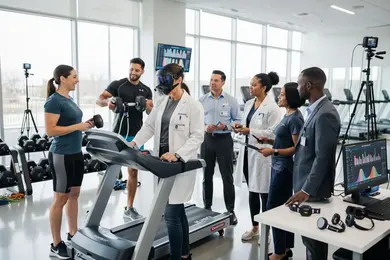
To counteract the absence of traditional labs, many programs employ virtual simulations or partnerships for hands-on biomechanical assessments such as gait analysis or muscle function tests. Such practical exposure is essential in fields like athletic training or physical therapy support, where employers expect applied skills for individualized program development.
The workforce relevance of these programs is demonstrated where 99% of online BS in exercise & sport science students at Methodist University qualify for financial aid, making advanced study more accessible. Prospective students should evaluate these programs with an emphasis on exercise prescription, strength and conditioning, and injury prevention to ensure their skillsets meet real-world demands rather than purely academic pursuits. For more detailed comparison of affordability in related fields, consider exploring masters in library science rankings, which offer insights into financial accessibility across disciplines.
What admission requirements and prerequisites do online exercise science biomechanics programs have?
Admission to online exercise science biomechanics programs hinges on more than a diploma; they demand a foundational STEM background and evidence of academic readiness. Candidates without prior exposure to biology, chemistry, or anatomy face prerequisite courses that extend time-to-degree and increase costs, a critical consideration for working adults aiming for swift career changes.
Standardized tests remain selectively required, with some programs insisting on SAT or ACT scores and personal statements to evaluate motivation-a factor tied to success in self-directed online learning. Technology access is equally non-negotiable: insufficient hardware or software compatibility disrupts engagement with virtual labs and biomechanical simulations, impairing skill acquisition essential for employer expectations.
Financially, programs like American Public University System's BS in Sports and Health Sciences exemplify tradeoffs; standard tuition is $360 per credit hour, though active-duty military members benefit from a $250 rate, highlighting varied affordability based on student status. In practical terms, students must weigh the initial investment of preparatory coursework and technology requirements against the demands of the biomechanics field, where employers prioritize demonstrable technical proficiency and adaptable learning capabilities over credentials alone.
How long do online bachelor's programs in exercise science with biomechanics usually take to finish?
Completing a bachelor's degree in exercise science with biomechanics coursework typically requires four years of full-time study, reflecting the comprehensive curriculum standards that prepare graduates for specialized roles such as biomechanists and clinical exercise specialists. Part-time students face increased program durations of five to six years due to course load limits and transfer credit complexities, which can delay entry into relevant positions by up to two years.
This delay can impact earning potential and professional advancement, especially for those balancing employment or caregiving responsibilities. The degree demands 120 to 130 credit hours, including rigorous biomechanics electives and applied labs vital for meeting employer expectations in data analysis and practical skills.
Institutions like St. Mary's University note that biomechanics coursework is fundamental rather than supplemental, ensuring graduates gain competencies aligned with workforce needs. Yet students must be mindful that accelerated options or credit for prior learning often come with higher tuition or require increased study time, and financial aid eligibility typically requires at least half-time enrollment.
Choosing programs with clearly sequenced biomechanics courses and integrated lab experiences reduces scattering of electives and minimizes credit loss, supporting completion within four years. Balancing academic plans against real-world constraints and workforce timing remains critical: without clear advisement and strategic course selection, students risk prolonging studies and postponing career entry.
What do online students in exercise science and biomechanics pay for tuition and fees?
Tuition for online bachelor's degrees in exercise science with biomechanics coursework varies significantly, affecting affordability and career decisions. Public in-state options tend to range from $15,000 to $35,000 annually, while private programs often exceed $40,000 per year.
This volatility demands scrutiny beyond sticker price, as credit hour costs (typically $400-$600 for public institutions and $800-$1,200 for private) combined with mandatory fees like technology and lab charges add $1,000-$2,500 annually. Consider Maryville University as a practical benchmark: charging about $550 per credit hour for online undergrad courses, totaling roughly $66,000 for the 120 credits required.
This figure excludes additional living or internship-related expenses common in biomechanics-focused paths. Prospective students must assess these factors thoughtfully: internship demands in rehabilitation or sports tech sectors often entail travel or equipment costs, elevating total investment beyond tuition.
Flexible payment models and employer tuition aid become critical for professionals shifting careers to control financial exposure. Meanwhile, those targeting research roles should anticipate intensified costs due to graduate school entry, signaling the importance of upfront budgeting aligned with long-term occupational goals.
What careers can a bachelor's in exercise science with biomechanics prepare you for?
Graduates with a bachelor's in exercise science combined with biomechanics coursework enter fields where mechanical and physiological insights are essential, such as clinical rehabilitation, sports performance, and workplace ergonomics. These roles require interpreting human movement to optimize function, prevent injury, and develop emerging technologies like wearable health devices.
For instance, physical therapy assistants apply biomechanical principles to tailor rehabilitation exercises that restore joint mobility post-injury, directly affecting patient outcomes. Career paths often demand more than theory, emphasizing practical skills in anatomy, physics, and applied technology, alongside certifications like Certified Strength and Conditioning Specialist (CSCS) or Licensed Physical Therapist Assistant.
Applicants face competitive markets and must complement technical proficiency with communication and real-world problem solving. Occupational health roles focus on redesigning work environments, aiming to reduce repetitive strain and injury risk by collaborating with engineers on adaptive tools.
This intersection requires biomechanical data fluency and situational judgment regarding worker safety and productivity. Salary data from Methodist University reports an average annual income near $71,000 for exercise & sport science graduates, but the variability depends on specialization and role seniority. Continuous upskilling in data analytics and health tech remains critical, especially given the sector's evolving demands and the integration of sophisticated monitoring systems.
What certifications or licenses commonly align with exercise science and biomechanics careers?
Employers in the exercise science field consistently prioritize certifications that align closely with the intended professional context. For example, strength and conditioning specialists working directly with athletes must obtain the CSCS credential, which mandates a bachelor's degree and mastery of biomechanics, exercise physiology, and program design.
This contrasts sharply with clinical settings, where the CEP credential from ACSM is more relevant, focusing on chronic disease management through exercise testing and prescription. Choosing between these certifications entails weighing practical factors such as exam rigor, prerequisite education, and whether the role involves performance enhancement or therapeutic intervention.
State licensing adds complexity, as requirements vary widely, often leaving candidates to rely on certification for access to medical or sports facilities. For biomechanics specialization, advanced certifications like the Certified Biomechanist credential can differentiate candidates, especially in research institutions and rehabilitation centers integrating wearable technology and data analytics.
However, these certifications require documented hands-on experience and research involvement, reflecting a higher barrier to entry but potentially greater market value. Students and professionals must also consider the cost-benefit balance of multiple certifications versus workforce demand.
The prominence of programs such as Concordia University Chicago's online Kinesiology degree-with its high graduate output-indicates strong market absorption for candidates ready to meet certification standards. Overall, informed decisions depend on aligning educational investment with the specific employer expectations and job functions pursued.
How can you evaluate and choose a reputable online exercise science biomechanics program?
Programs in exercise science biomechanics without accredited status from recognized bodies like the Commission on Accreditation of Athletic Training Education (CAATE) often restrict graduate employability, especially for clinical or research roles requiring advanced movement analysis. Employers generally prioritize candidates with such credentials, reflecting the competitive job market shaped by growing demand in healthcare and fitness sectors.
Faculty expertise directly impacts curriculum relevance. Instructors should hold terminal degrees and maintain active professional engagement in biomechanics research or applied practice, ensuring content aligns with employer expectations for roles in physical therapy clinics or sports science environments.
Program outcomes matter. Transparent data on graduation rates, certification exam pass rates (e.g., ACSM or NSCA), and employment within six to twelve months post-graduation offer critical insight into a program's real-world effectiveness.
Caution is warranted with programs reporting under 60% job placement, given a 13% job growth projection for exercise physiologists and 39% for fitness trainers, underscoring a demanding labor market. Practical considerations such as flexible schedules, strong technical support, and assistance with practicum placements are decisive for working students. Without these, balancing work and timely completion becomes challenging, undermining opportunities to gain essential applied biomechanics experience.
Other Things You Should Know About Exercise Science
Most online bachelor’s programs require a practicum, lab simulation, or supervised field experience in addition to 120 credit hours. Biomechanics coursework usually includes movement-analysis assignments, video-based labs, and data collection in a local setting approved by the program.
Programs that compress curriculum into accelerated formats can increase stress, reducing learning retention, especially in technical courses like biomechanics. Working adults should assess if the program pacing allows adequate time for both study and practical application. Opting for programs with flexible timelines and balanced course loads supports deeper mastery and reduces dropout risk.
Including biomechanics coursework adds valuable analytical and technical skills attractive to employers in sports science, rehabilitation, and ergonomics sectors. However, its impact depends on the depth and quality of that coursework within the program. Candidates should seek programs that integrate biomechanics with applied projects or research, as superficial coverage may not substantively boost employability.
References
- Study Sports Science in Poland - Study in Poland https://studyinpoland.biz/programs/study-sports-science-in-poland/
- Top 20 Careers With a Master’s in Exercise Science | PLNU https://www.pointloma.edu/resources/health-sciences/top-20-careers-masters-exercise-science
- Online Exercise Science Degrees: Top School Review https://www.edumed.org/online-schools/exercise-science-degrees/
- Exercise Physiology https://online.une.edu/science-prerequisites/exercise-physiology/
- Exercise Science Degree Programs & Career Guide 2025 https://www.nutritioned.org/exercise-science-degree/
- A Comparison of Physical Activity Levels between On-Line and Campus University Students https://clinmedjournals.org/articles/ijsem/international-journal-of-sports-and-exercise-medicine-ijsem-5-141.php
- What Can You Do With an Exercise Science Degree? https://willamette.edu/academics/college/exercise-health-science/career-options
- Online Exercise Science Program https://stmary.edu/online-programs/exercise-science.html
- Sport & Exercise Science https://www.napier.ac.uk/courses/bsc-hons-sport-and-exercise-science-undergraduate-parttime
- Exercise Science Degree Programs, Online Included for 2026 https://www.kinesiologydegrees.org/programs/exercise-science