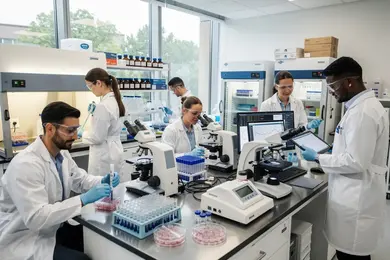
2027 Quality Control Roles You Can Target With a Biological Sciences Degree

Co-Founder and Chief Data Scientist
Facing a bottleneck in career advancement, many biological sciences graduates discover that traditional research roles no longer provide the sole path to professional growth. Employers increasingly expect proficiency in quality control processes amid growing regulatory demands, a trend confirmed by the Bureau of Labor Statistics projecting a 6% increase in quality assurance roles over the next decade.
At the same time, a 2024 National Center for Education Statistics report notes a 24% rise in enrollment for flexible, competency-based programs that better accommodate working adults, highlighting a shift toward more accessible, skill-focused education. This article outlines specific quality control roles biological sciences graduates can pursue to leverage these evolving workforce requirements effectively.
Key Things You Should Know
- Over 38% of quality control roles requiring a biological sciences degree favor candidates with direct lab validation experience, trading broader coursework for niche skillsets; this narrows job market access but yields higher starting salaries, per 2024 BLS data.
- Employers increasingly favor cross-disciplinary proficiency including biostatistics and regulatory familiarity, stressing multifaceted expertise over singular domain depth; this demands strategic curriculum choices to avoid credential obsolescence, according to NSF workforce projections.
- Degree completion timelines extending beyond four years increase education costs by approximately 15%, significantly impacting entry-level compensation potential and delaying workforce entry in high-turnover sectors tracked by the National Science Foundation.
What quality control careers can you pursue with a biological sciences degree?
Quality control careers for biological sciences graduates demand a mix of practical lab skills and regulatory acuity, with clear wage and role distinctions across sectors. For instance, quality control analysts working in pharmaceutical and medicine manufacturing earn a median annual wage of $63,100, approximately 18% above the average for QC inspectors nationwide, highlighting the premium employers place on candidates with robust life sciences expertise capable of handling complex biological testing and strict FDA compliance.
Typical responsibilities vary by industry: pharmaceutical roles emphasize batch testing, microbial contamination control, and stability studies using aseptic techniques and analytical tools like chromatography and spectroscopy. Food manufacturing QC roles prioritize allergen and pathogen testing aligned with USDA or FDA guidelines. A biological sciences degree quality assurance job readies graduates to interpret data critically and construct standard operating procedures tailored to these sector-specific demands.
Employers expect candidates to have hands-on experience with laboratory instruments and quality management software, along with certifications such as GMP and GLP. Without such credentials, entry-level biological sciences degree quality assurance jobs may be limited or stagnant. Advancement to validation specialist roles requires skills in documentation, cross-functional communication, and audit participation, reflecting greater responsibility for regulatory submissions.
Choosing pharmaceutical or biotech quality control tracks offers higher median wages and more structured career progression but entails navigating more stringent compliance regimes. Prospective candidates should review these tradeoffs carefully, considering practical implications and long-term professional growth. For those assessing career options, resources on jobs with biology degree can provide additional guidance.
How does a biological sciences degree prepare you for quality assurance and regulatory roles?
A biological sciences degree benefits for quality assurance careers by instilling expertise in microbiological, chemical, and molecular techniques critical for verifying product safety. For example, professionals in food manufacturing rely heavily on microbiological testing to detect contamination and comply with expanding regulatory standards. This demand aligns with the projected growth of the global food safety testing market from $25.3 billion in 2024 to $44.9 billion by 2032, reflecting broader job opportunities requiring precise understanding of microbial pathways and risk assessments.
Regulatory compliance skills gained from a biological sciences degree include navigating complex frameworks such as FDA, USDA, or EPA guidelines. Graduates are expected to develop and audit standard operating procedures, integrate laboratory findings with quality management systems, and ensure thorough documentation to meet inspection and certification requirements.
Transitioning into quality assurance often involves overcoming challenges like mastering specialized regulatory software and sector-specific rules, especially across diverse industries such as pharmaceuticals versus food safety. While foundational scientific literacy accelerates this adaptation, pursuing targeted certifications or on-the-job training is commonly necessary.
The degree's analytical emphasis equips professionals with competencies in root-cause analysis and continuous improvement, reducing recall risks and supporting sustained compliance across biomedical, agricultural, and environmental sectors. Those evaluating educational pathways might also consider programs such as an accelerated computer science degree to complement their profile with data management and informatics skills increasingly valued in regulatory roles.
What entry-level and advanced quality control job titles hire biological sciences majors?
Entry-level quality control positions for biological sciences graduates often center on roles such as quality control technician, laboratory technician, and analytical technician. These jobs require strict adherence to standard operating procedures, routine contamination testing, and compliance verification. Starting wages typically range from $21 to $31 per hour, with biopharmaceutical manufacturing positions generally offering higher pay than food production. Employers expect immediate proficiency in aseptic techniques, instrumentation basics, and data documentation; certifications like cGMP training are favorable but not always mandatory.
Advancing into more specialized roles, such as quality control analyst, microbiologist, or quality assurance specialist, demands a deeper command of experimental design, regulatory standards like FDA or EPA guidelines, and root cause analysis. For instance, a quality control analyst might lead validation studies or handle batch deviation investigations, requiring experience with sophisticated instrumentation like HPLC or PCR combined with 2-5 years in regulated settings. These roles come with substantially improved salary prospects but necessitate validated technical and analytical expertise.
Successfully moving beyond entry-level positions depends on developing not only laboratory skills but also cross-team collaboration and rigorous data integrity oversight. Biological sciences degree holders seeking to enhance employability should pursue internships or co-op programs within pharmaceutical or environmental testing firms to obtain practical, documented experience consistent with industry expectations.
For individuals considering how to align their education with market demands, exploring online exercise science programs can provide an example of related health science education options with streamlined pathways. Balancing educational choices against such real-world outcomes is critical when evaluating advanced quality control careers for biological sciences degree holders.
What education, skills, and lab experience do employers expect for quality control positions?
Employers strictly prioritize candidates for quality control roles requiring biological sciences degree credentials, typically demanding a bachelor's degree as the baseline. This requirement is rooted in the need for candidates to competently apply analytical techniques and interpret complex data in regulatory environments. The 2024 ASQ salary survey shows a stark median salary gap-$94,000 for bachelor's degree holders versus $70,000 for high school graduates-illustrating tangible workforce impacts tied to formal education.
Essential technical skills focus on hands-on laboratory proficiency including chromatography, spectrophotometry, microbiological culturing, and assay validation. Familiarity with Good Laboratory Practices and industry standards like FDA, EPA, or ISO is expected. Employers stress data analysis abilities through tools like SAS or R to track quality metrics and identify process deviations.
Practical lab experience remains a gatekeeper. Candidates with internships or co-op exposure demonstrating aseptic technique use, sterility testing, and precise documentation typically reduce onboarding time and avoid early career setbacks. This real-world skillset is often decisive in competitive hiring.
Soft skills such as detail orientation, clear communication, and cross-functional collaboration are equally influential, reflecting the operational demands of quality control work. Candidates with a biological sciences degree but limited lab experience face significant barriers, emphasizing a strategic tradeoff between educational credentials and experiential training.
For professionals evaluating advanced qualifications, programs like an MLIS degree online offer alternative pathways to integrate specialized knowledge that can complement scientific roles when aligned with specific workforce needs.
Do you need professional certifications for quality control careers in biology-related industries?
Certification in quality control roles within biology-related fields often determines access to advanced positions and regulatory responsibilities rather than entry-level employment. For instance, pharmaceutical quality control positions typically require credentials like the American Society for Clinical Pathology (ASCP) or Certified Quality Auditor (CQA) to verify proficiency in FDA and ISO compliance. This credentialing directly affects promotion opportunities into supervisory or audit functions.
Environmental testing labs present a different dynamic; the U.S. Environmental Protection Agency's reported revenue growth over 30% between 2018 and 2023 corresponds with increasing demand for analysts certified in EPA-approved methodologies. Employers here prioritize certifications linked to accreditation standards, reflecting strict regulatory oversight and higher pay grades for credentialed staff.
Conversely, sectors such as food safety or biotech may place greater emphasis on hands-on experience rather than formal certification, but still value credentials for roles with quality system auditing or regulatory interface.
Employers expect certification when job functions include validated testing, data audits, or quality system supervision. Without it, career mobility can be limited, especially in contract or inspection roles. However, positions that combine a bachelor's degree in biological sciences with employer-supported training can serve as viable entry points.
- Certification expedites supervisory promotion in pharmaceutical QC due to regulatory complexity.
- Environmental labs link certification to accreditation and compensation.
- Biotech and food safety balance practical skills with selective credentialing.
Planning for certification demands thorough consideration of professional experience requirements and continuing education, which can delay near-term job progression despite long-term gains.
What is the typical salary range and earning potential for biological sciences graduates in quality control?
Quality control roles for biological sciences graduates present a nuanced salary landscape shaped by industry demands, geographic factors, and skill specialization. Entry-level positions such as quality control technicians often start near $45,000 annually, while supervisory or specialized roles can exceed $70,000. The Bureau of Labor Statistics (BLS) identifies clinical laboratory technologists and technicians as core contributors to medical test quality control, citing a median wage around $60,000.
Employment for these positions is projected to grow 5% over a decade, adding roughly 16,800 jobs, driven by regulatory compliance and healthcare expansion. Graduates pursuing pharmaceutical manufacturing roles typically encounter higher salary ceilings due to stringent FDA-related quality assurance requirements, contrasting with often narrower pay bands but better geographic flexibility in environmental or agricultural sectors.
Key tradeoffs revolve around credentialing and ongoing education: employers increasingly expect certifications and familiarity with laboratory accreditation processes, which impact earning potential beyond baseline technical experience. Professional advancement into leadership and the $75,000+ salary tier usually correlates with expertise in data analysis tools and regulatory documentation.
- Practical wage range: $45,000 to $75,000+
- Projected job growth: 5% through 2032
- Industry variance: Pharmaceutical manufacturing versus environmental sectors
- Critical skills: Certification, data analysis, regulatory knowledge
What is the job outlook for quality control roles in biotech, pharma, and medical devices?
Quality control roles in biotech, pharma, and medical devices require more than theoretical knowledge; practical expertise with analytical instruments, GMP standards, and regulatory audits is essential. For instance, a quality control analyst in a biologics CDMO must validate assays to ensure drug purity and potency, an exacting process directly influencing patient safety and approval timelines. This operational demand means candidates with biological sciences degrees often need targeted training beyond their academic background, especially in lab techniques and data interpretation.
As the global biologics CDMO market is projected to more than double from $19.9 billion in 2024 to $44.8 billion by 2033 at a 9.5% CAGR, the need for skilled QC professionals will intensify. Employers value experience handling complex biologics production or contamination control in medical device manufacturing. Entry-level positions might remain competitive without certifications or hands-on experience focused on high-throughput testing and cross-functional collaborations involving R&D and regulatory teams.
Students and professionals must weigh the challenge of bridging academic concepts to industry practices against the sustained hiring trend fueled by regulatory complexity and biologics growth. Developing applied laboratory skills and regulatory fluency is a strategic move to align with real-world QC expectations in the growing life sciences workforce.
Which biological sciences degree pathways best align with quality control and quality assurance work?
A degree pathway focused on molecular biology, biochemistry, and biotechnology most directly prepares candidates for quality control (QC) and quality assurance (QA) roles in rapidly expanding sectors like cell and gene therapy manufacturing. These roles demand precise knowledge of cellular processes, analytical instrumentation, and regulatory compliance, where missing hands-on experience with assays and equipment such as HPLC or flow cytometry creates immediate hurdles for applicants.
QC and release testing represent a significant portion of manufacturing expenses-in some cases exceeding 25%. Programs that integrate Good Laboratory Practices (GLP) and Good Manufacturing Practices (GMP) coursework offer graduates a decisive advantage, translating academic theory into operational standards essential for pharmaceutical QA work.
Employers increasingly prefer candidates with regulated biotechnology or biomanufacturing certifications reflecting familiarity with FDA guidelines and ISO standards. Without such credentials or targeted minors, biology graduates often face longer onboarding phases and limited progression in quality-focused manufacturing environments.
Key considerations when choosing a biological sciences degree pathway include:
- Emphasis on laboratory skills directly applicable to assay validation and contamination control.
- Exposure to regulatory frameworks critical for audit readiness and documentation accuracy.
- Practical training aligned with sectors forecasting compound annual growth rates above 15%, such as cell and gene therapy manufacturing.
Ignoring these factors risks underpreparing students for stringent QC environments where technical compliance directly impacts costs and production efficiency.
How do online biological sciences programs compare to campus options for quality control careers?
Online biological sciences programs often fall short in delivering the hands-on laboratory experience crucial for quality control (QC) roles, especially in fast-growing sectors like in vitro diagnostics (IVD). These roles demand skills in validating assays, testing reagents, and calibrating equipment-practical competencies rarely replicable through remote study alone. For example, troubleshooting assay inconsistencies or executing batch release testing requires both conceptual understanding and physical lab dexterity, components that campus-based curricula systematically embed through supervised lab rotations and specialized instruments.
Employers prioritizing candidates for QC positions-particularly in pharmaceutical manufacturing or clinical laboratories-expect proven experience adhering to Good Laboratory Practices (GLP) and proficiency with quality systems regulations. These standards are often difficult to meet without real-world lab exposure that online programs seldom facilitate, unless students independently secure internships or practicums.
Prospective students seeking online pathways must weigh immediate convenience against the challenge of demonstrating practical competency to hiring managers. The global IVD market forecasted to grow from $120.2 billion in 2024 to $175.2 billion by 2030 at a 6.5% CAGR intensifies this need for job-ready QA/QC professionals.
Key considerations when choosing a program include:
- Availability of hands-on training components or partnerships enabling lab access
- Employer network integration for placement support
- Track record of graduates securing QC roles aligned with industry expectations
Online degrees may suit working professionals upgrading theory, but those aiming for entry-level roles must proactively bridge practical gaps to align with hiring criteria in diagnostic and biotech firms.
How can you evaluate and choose an accredited biological sciences program for a quality control career?
Choosing a biological sciences program for quality control careers requires focusing on accreditation recognized by the U.S. Department of Education or CHEA and alignment with industry expectations like GMP training, assay design, and bioprocess monitoring. Graduates who lack exposure to applied laboratory modules often struggle with hiring demands in quality analyst roles, which emphasize real-time problem-solving in production settings.
Employment data from sources such as the National Center for Education Statistics can reveal programs with over 70% placement rates in bioprocessing or quality roles within six months, signaling stronger workforce connections. The biotechnology market's rapid growth-from $1.55 trillion in 2024 to an expected $3.88 trillion by 2032 at a 12.2% CAGR per Precedence Research-makes quality control roles among the fastest-expanding sectors.
Other decision factors include program partnerships offering industry practicums, faculty experience in bioprocessing, class size, and access to contemporary equipment. Online programs may provide flexibility but often depend on in-person labs to develop critical hands-on skills. Prospective students should also assess credit transfer policies and the availability of relevant certifications like Six Sigma Green Belt to enhance job readiness.
Without applied experience such as equipment validation and documentation standards, graduates risk delayed entry into quality control roles, illustrating the tradeoff between theoretical knowledge and practical skill development.
Other Things You Should Know About Biological Sciences
Hands-on laboratory experience directly influences employability in quality control by proving practical competence with instruments, protocols, and data integrity enforcement. While theoretical coursework provides foundational knowledge, employers in quality control prioritize candidates who can replicate, validate, and troubleshoot processes under strict regulatory standards. Students should prioritize programs or internships offering extensive lab exposure over those heavy on lectures to meet employer expectations.
Immediate pursuit of a graduate degree is generally recommended only if the program offers specialized training in regulatory affairs or quality systems beyond undergraduate capabilities. Many quality control positions at entry to mid-level require solid practical experience that a graduate program may delay gaining. Prioritizing industry work experience followed by targeted graduate credentials often yields stronger career advancement opportunities.
Transitioning into quality control roles from academia involves adapting to a regulated, process-driven environment that demands strict documentation practices and compliance with standards like GMP or ISO. Academic research often allows flexibility, whereas quality control requires consistency, reproducibility, and adherence to protocols. Candidates should prepare for reduced autonomy and increased accountability, focusing on developing soft skills around communication and cross-functional teamwork.
References
- Unlock Success with fixmycareer: Your Pathway to Career Brilliance https://www.fixmycareer.in/career/logistics-supply-chain-management/logistics-supply-chain-management/quality-control-analyst
- Regulatory Affairs Career Path in Life Sciences https://pathologylabtraining.co.uk/biomedical-sciences/regulatory-affairs
- âWhy Quality Control and Quality Assurance Roles are Crucial to Life Sciences https://www.orionjobs.com/resources/blog/-why-quality-control-and-quality-assurance-roles-are-crucial-to-life-sciences/
- Careers in Biology https://www.aibs.org/careers/
- Career Opportunities with a Pharmaceutical Quality Control Diploma | Pharma Medical https://pharmamedical.ca/what-are-the-career-aspects-of-the-diploma-in-pharmaceutical-quality-control-program/
- Biotech vs. QA/QC: Which Certification Course is Perfect for You? https://ibri.org.in/blog/biotech-vs-qaqc-which-certification-course-is-perfect-for-you
- Quality Control Technician | Biotech Careers https://biotech-careers.org/career/quality-control-technician
- Career profile: Yavé Lozano, Medical Writer, ICON https://www.embl.org/about/info/embl-fellows-career-service/info-resources/exploration/regulatory-affairs-quality-and-safety/
- Quality Assurance Roles in Life Sciences https://www.clinlabsolutionsgroup.com/quality-assurance-roles-in-life-sciences
- Biology Major Jobs: Careers in the Biological Sciences | Houston Christian University https://hc.edu/articles/biology-major-jobs-careers-in-the-biological-sciences/