
2027 Best Online Master's Degrees for In-Demand Careers

Co-Founder and Chief Data Scientist
Choosing an online master's degree means deciding whether graduate study will open a career path that your current qualifications cannot. Demand alone is not enough: the U.S. Bureau of Labor Statistics projects data scientist employment to grow 34% from 2024 to 2034, but many data science jobs do not require a master's degree. This guide compares ten fields for career changers and working professionals, distinguishing occupations that require graduate credentials from those where experience may matter more. You'll learn how to weigh career fit, cost, online requirements, and licensing rules before applying.
Key Things You Should Know
- Best depends on the job: Counseling, advanced practice nursing, and some education roles have credential requirements; many technology and business roles do not.
- Demand is not a degree premium: BLS projects 34% growth for data scientists from 2024 to 2034, but that forecast covers an occupation, not the outcomes of master's graduates.
- Check the whole pathway: Compare total cost, required in-person work, accreditation, and state eligibility before treating any online program as a practical fit.
Top 10 Best Online Master's Degrees for In-Demand Careers
Business / MBA Programs
An online Master of Business Administration (MBA) is a broad, practice-oriented option for people seeking stronger finance, operations, and leadership skills. An MS in finance or another business specialty may fit a narrower goal better. Business occupations span many industries, but an MBA alone rarely qualifies someone for a management role; relevant experience remains important. Compare employer tuition assistance, networking opportunities, and the program's total cost. If you need a specific technical skill rather than a broad credential, a certificate or targeted training may be the less expensive choice.
Healthcare Administration & Management Programs
A Master of Healthcare Administration (MHA) or healthcare-focused MBA can prepare professionals for operational, financial, and policy responsibilities in healthcare organizations. It does not grant a clinical license, and management positions often require healthcare experience. Look for coursework in reimbursement, quality improvement, and regulation, plus projects connected to real organizations. An MPH may be a better match for population health or public health policy. Choose the degree according to the work you want to do, not the shared word "healthcare."
Information Technology Programs
An MS in information technology commonly emphasizes enterprise systems, cloud infrastructure, and technology operations. It can suit an experienced professional moving toward systems architecture or IT leadership, though employers may still prioritize hands-on experience and relevant certifications. Compare applied labs and team projects with your intended role. If your goal is to design software or conduct computing research, a computer science degree may provide deeper preparation. Ask whether required labs or exams can be completed remotely.
Computer Science Programs
An MS in computer science can deepen preparation in algorithms, software systems, artificial intelligence, or research. Some programs welcome career changers through foundation courses; others expect substantial prior computing coursework. Software development jobs generally do not require a master's degree, so compare the degree's cost with the value of a portfolio, work experience, or focused training. A thesis-oriented program may suit research ambitions, while an applied capstone may better serve someone building production software skills.
Cybersecurity Programs
An MS in cybersecurity may cover security engineering, risk management, incident response, and policy. Demand for security workers makes the field attractive, but many roles require practical experience and may value certifications; a graduate degree is not a substitute for either. Compare technical lab access, faculty expertise, and whether the curriculum matches engineering or governance work. Career changers should check networking, operating-system, and programming prerequisites before assuming the master's will teach every foundation skill.
Data Science / Analytics Programs
An MS in data science typically combines statistics, programming, and data modeling; an analytics degree may place more emphasis on business decisions. Both can support work in a growing occupation, but neither automatically confers the experience employers seek. Examine the depth of statistics coursework, access to realistic datasets, and the quality of the capstone. Applicants without calculus or programming preparation may need prerequisites. If your goal is primarily reporting or dashboard development, a narrower credential may be sufficient.
Education / Educational Leadership Programs
A Master of Education (MEd) in educational leadership can support experienced educators seeking instructional or school leadership responsibilities. Principal licensure, however, is governed by state rules and may require a teaching license, experience, an approved program, and an examination. An online curriculum may still include a supervised school-based internship. Verify the program's eligibility in the state where you intend to work. Teachers seeking curriculum expertise rather than administration may prefer a different MEd concentration.
Counseling / Psychology Programs
A licensure-track MA or MS in counseling is different from a general psychology master's degree. Counseling pathways commonly require specified coursework, supervised field placements, examinations, and post-degree practice under state rules. A psychology master's alone generally does not qualify someone to practice independently as a psychologist; that role typically requires doctoral training and licensure. Before enrolling online, confirm that the curriculum meets your state's requirements and that you can secure approved local placements.
Nursing Programs
A Master of Science in Nursing (MSN) can prepare licensed registered nurses for advanced practice, education, or leadership, depending on the track. Nurse practitioner pathways require clinical hours and must meet applicable certification and state licensing rules; an online MSN is not entirely location-independent. Check RN eligibility, placement support, and whether the program accepts students in your state. Nurses interested in administration should not assume a leadership MSN qualifies them for advanced practice, or vice versa.
Engineering Management Programs
An MS in engineering management combines technical decision-making with project, financial, and organizational coursework. It can fit engineers preparing for broader responsibility, but management jobs usually require substantial professional experience. Compare it with an MBA: the engineering degree may stay closer to technical operations, while an MBA may offer broader business exposure. Applicants should check quantitative prerequisites and whether team projects require scheduled attendance across time zones.
What Are the Best Online Master's Degrees for In-Demand Careers?
The best online master's degree is the one that connects a credible program to a specific job goal. These are degree-field recommendations, not a ranking of universities. The comparison below separates paths where graduate education is central to qualification from those where it is one possible route to advancement.
| Career goal | Strong degree-field fit | Key qualification check |
| Licensed counseling practice | Licensure-track MA or MS in counseling | State approval and supervised-practice requirements |
| Advanced practice nursing | Appropriate MSN track | RN status, clinical placement, certification, and state rules |
| School administration | Educational leadership MEd | Experience and state principal-licensure rules |
| Technical specialization | MS in computer science, cybersecurity, or data science | Prerequisites and evidence of applied skills |
| Organizational leadership | MBA, MHA, or engineering management MS | Industry experience and the degree's specialization |
For someone still choosing an undergraduate foundation, top 10 best majors for the future offers a separate starting-point comparison. Undergraduate major choice does not, by itself, establish eligibility for a particular master's program.
Which Online Master's Degrees Offer the Best Career Outcomes?
Degrees tied to a required credential may offer the clearest reason to enroll: a suitable counseling program or MSN track can be part of a defined route to practice. The payoff still depends on completing placements, exams, and other requirements. For business and technology, the case is more individual: a master's may help someone change specialties or advance, but relevant experience or a less costly credential might meet the same goal.
To assess the incremental value of graduate study, compare the jobs you qualify for now with those you could realistically pursue after graduation. Consider program cost, time away from paid work, employer assistance, and whether local job postings request the degree. Neither occupational growth nor a high occupational median wage proves that a master's caused better earnings.
How Much Do Online Master's Degrees Cost and How Long Do They Take?
Online master's costs and timelines vary too much for a single reliable price or completion promise. Required credits, tuition rules, fees, enrollment pace, prerequisite courses, and the availability of required classes all affect the final result. A clinical placement, internship, or residency can add travel costs or limit paid work even when coursework is online.
Request a program-specific estimate covering tuition for every required credit, mandatory and differential fees, books or software, and any placement or travel expenses. Then map the course sequence against the hours you can study each term. Federal aid eligibility, scholarships, employer assistance, and payment plans may change what you pay out of pocket. Some previous graduate-level coursework may qualify for transfer, but ask whether accepted credits actually satisfy degree requirements; ordinary undergraduate credits generally do not transfer into a master's.
Flexible pacing is worth checking separately from online delivery. Resources on self paced accredited online college options can help frame scheduling questions, but do not assume a master's program offers self-paced graduate courses, unscheduled attendance, or an accelerated graduation date.
Which Careers Require a Master's Degree or Professional License?
A master's degree is part of the usual qualification route for licensed mental health counseling and many advanced practice nursing roles. Public school principal positions commonly require a master's, teaching experience, and state-specific credentials. In contrast, software development, data science, information security, and many management jobs do not universally require graduate education. Requirements can differ by occupation, employer, and state.
Do not confuse finishing a degree with receiving permission to practice. Licensing boards may separately require approved coursework, supervised hours, examinations, background checks, or an active underlying license. If you have not completed a bachelor's degree, first investigate undergraduate pathways, including online associate degree programs where appropriate; an associate degree alone does not meet standard master's admission requirements.
What Do You Learn in High-Demand Online Master's Programs?
High-demand fields call for different kinds of graduate learning. Technical programs may emphasize advanced computing, statistical analysis, and applied projects. Professional programs may focus on organizational decisions, clinical practice, or regulated educational work. The degree label matters less than the actual curriculum: an MS can be research-oriented or applied, and an MBA's broad business core is not interchangeable with an MSN's clinical preparation.
Compare required core courses with electives and concentrations, then inspect the culminating requirement. A thesis can be useful for research ambitions; a capstone may demonstrate applied work. Internships, practicums, and clinical placements can be essential to professional preparation but harder to schedule alongside a job. In technology fields, ask how coursework addresses current tools, including AI, without neglecting durable fundamentals or responsible use.
What Are the Admission Requirements for Online Master's Programs?
Standard master's admission requires a completed bachelor's degree. Programs may also assess undergraduate GPA, prerequisite courses, recommendations, a statement of purpose, professional experience, or an interview. GRE or GMAT policies vary by program; some require a test, some offer waivers, and others do not use one. Clinical and technical tracks can impose additional requirements beyond general graduate admission.
Check the specific program's admissions page rather than assuming a university-wide policy applies. A computer science applicant may need foundation coursework; an MSN applicant generally needs RN licensure; an educational leadership applicant may need teaching experience. If you are still selecting a bachelor's pathway, information on easy degrees should not replace a check of the prerequisites for your intended graduate field.
Are Online Master's Degrees as Valuable as Campus-Based Degrees?
An online master's can be valuable when its institution is appropriately accredited, its curriculum fits the intended occupation, and students can complete every requirement. The delivery method alone does not establish equivalence - or inferiority. Evaluate the same factors you would for a campus program: faculty and coursework, applied learning, student support, total cost, and, where relevant, eligibility for licensure.
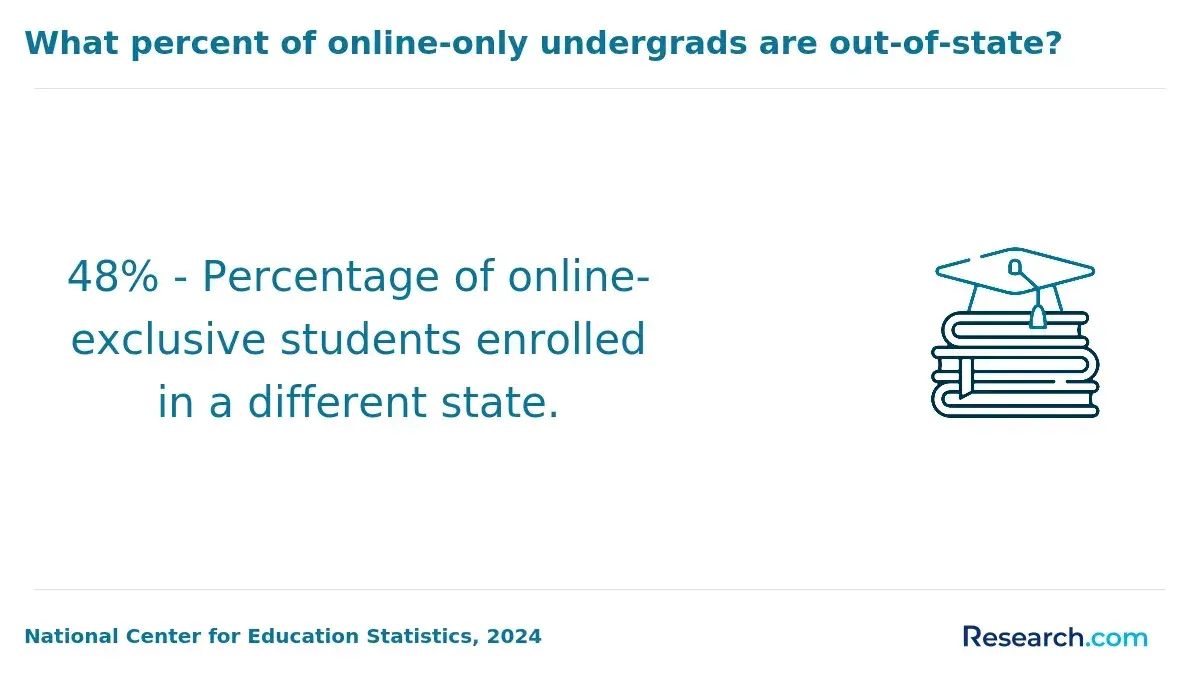
"Online" also describes coursework, not necessarily the whole student experience. Scheduled live classes, exams, campus residencies, local clinical placements, or internships may still be required. Ask for the current course schedule and a written explanation of location-specific requirements before enrolling, especially if you work full time or live outside the institution's state.
How Do Salaries and Job Outlook Vary by Master's Degree?
U.S. Bureau of Labor Statistics occupational medians provide useful context, not predictions of what a program's graduates will earn. The figures below are May 2024 wages for all workers in each occupation, across experience and education levels.
| Occupation | May 2024 median annual wage | Master's-degree relevance |
| Data scientists | $112,590 | An MS may deepen skills; it is not a universal entry requirement. |
| Information security analysts | $124,910 | Experience and technical skills remain important; an MS is not universally required. |
| Medical and health services managers | $117,960 | An MHA or related degree may help, but management experience commonly matters. |
Job outlook differs as well: BLS projects particularly rapid growth for data scientists from 2024 to 2034. Use projections to identify occupations worth investigating, then compare entry requirements and local openings. A growing occupation may still be competitive, and its median wage is not the salary attributable to earning a master's.
How Can You Choose an Accredited Online Master's Program?
Start by verifying institutional accreditation through the U.S. Department of Education's accreditation database or the accreditor itself. For regulated careers, check the program's applicable accreditation and eligibility directly with your intended state licensing board. Accreditation is important, but it does not automatically establish that a particular online track meets every state's rules.
Before applying, take these steps to compare finalists on the factors most likely to affect your outcome:
- Identify a target occupation and determine whether it requires the degree, a license, experience, or another credential.
- Request the complete curriculum, course schedule, and details of any in-person, clinical, or internship requirements.
- Calculate total required costs and ask how scholarships, employer benefits, or approved graduate transfer credits would change them.
- Confirm accreditation and, when applicable, obtain state-specific licensure information for the exact program and track.
- Compare documented graduate outcomes where available, noting how the school collected the information rather than assuming career services imply job placement.
Red flags include an advertised completion time that assumes credits you do not have, a tuition quote that omits mandatory fees, or an online licensure program that cannot clearly explain placement and state-eligibility rules.
Other Things You Should Know About
It depends on your starting qualifications and target job. A technical MS may require foundation courses; a licensure-track degree may require supervised practice. Confirm both before comparing programs.
An appropriately accredited online degree can be a credible credential. Employers may also assess your experience, skills, and the relevance of the program to the role.
Some programs allow it, but others require residencies or scheduled in-person work. Clinical placements and practicums may also need to be completed locally.
It may be if it meets a credential requirement or fills a specific skills gap. Compare the full cost and time commitment with less expensive routes before enrolling.
References
- Business career options: Outlook, wages, and entry requirements | bls.gov https://www.bls.gov/careeroutlook/2025/article/business-career-options.htm
- Cost of Attendance (Budget) | 2025-2026 Federal Student Aid Handbook https://fsapartners.ed.gov/knowledge-center/fsa-handbook/2025-2026/vol3/ch2-cost-attendance-budget
- What Career Changers Should Look for in Online Degrees | UGA Online https://online.uga.edu/news/what-career-changers-should-look-for-in-online-degrees/
- How Internships, Practicums, and Clinicals Actually Work | Florida National University (FNU) https://www.fnu.edu/internships-practicums-clinicals-explained/
- State Authorization | Office of Academic Affairs https://oaa.osu.edu/academic-administration/state-authorization
- What are some of the best jobs that require a master's degree? | miami.edu https://news.miami.edu/uonline/stories/2024/05/jobs-that-require-masters-degree.html
- Residencies, Practicum, and Internship | Gordon College https://www.gordon.edu/psychology-human-services/academics/clinical-mental-health-counseling/residencies-practicum-internship
- Post-Graduation Statistics | esu.edu https://www.esu.edu/warrior-outcomes/post-graduation-statistics.php
- Post-Graduate Outcomes - Penn Career Services | University of Pennsylvania https://careerservices.upenn.edu/post-graduate-outcomes/
- Which Management Career Often Requires a Master's Degree? | American Public University https://www.apu.apus.edu/area-of-study/business-and-management/resources/which-management-career-often-requires-a-masters-degree/


