2027 Online Political Science Degrees With International Relations Coursework

Co-Founder and Chief Data Scientist
Professionals aiming to specialize in international relations within political science often struggle to reconcile demanding careers with degree completion. The National Center for Education Statistics reports that nearly 40% of undergraduates are adult learners who require flexible online options for advancement. This signals a shift in enrollment behavior toward programs that accommodate work schedules without sacrificing academic rigor. However, many find that not all online political science degrees offer the depth or specialization necessary to meet employer expectations in foreign policy, diplomacy, or global governance sectors. This article analyzes current online political science degree programs with international relations coursework to guide readers in selecting options that balance accessibility, curriculum quality, and career mobility.
Key Things You Should Know
- Online political science degrees with international relations coursework often extend time-to-completion by 15% due to asynchronous pacing, increasing total educational costs by an average of $8,400 compared to on-campus programs, according to NCES 2024 data.
- Employers prioritize quantitative skills within international relations curricula; graduates lacking advanced data analysis experience see 20% lower initial job placement rates in global policy roles, per Brookings Institution recent workforce studies.
- Tradeoffs between curriculum depth and interdisciplinary breadth significantly impact career trajectories; focusing narrowly on regional specialization reduces adaptability in the evolving geopolitical labor market, where 35% of roles demand multi-thematic fluency, based on Georgetown Center forecasts.
What is an online political science degree with an international relations focus?
An online political science degree with an international relations concentration requires candidates to develop specialized skills in global diplomacy, transnational governance, and geopolitical analysis. Employers seeking international policy expertise often expect graduates to demonstrate applied knowledge of international law, foreign policy frameworks, and strategic problem-solving across borders. This focus differentiates itself from a general political science degree by prioritizing actionable skills relevant to positions in government agencies, NGOs, or multinational corporations.
Students in online political science degree programs with international relations coursework face challenges such as limited access to internships or experiential learning often available through on-campus programs. Managing asynchronous coursework demands strong independent research skills and disciplined time management. Furthermore, combining language proficiency or data analysis abilities with this degree improves competitiveness, particularly for roles like policy analyst positions within international think tanks, where simulations and case studies provide crucial practical experience.
Among graduates with bachelor's degrees in international relations, the median annual salary was $77,000 in May 2024, according to Payscale data reported by New England College. This compensation aligns with persistent demand for professionals adept at navigating complex global affairs and supporting strategic decisions in diversified sectors. For those interested in related pathways, exploring a forensic science degree salary can offer insight into comparative career outcomes.
When selecting from the best online political science degrees featuring global and international relations studies, prospective students should weigh practical employability outcomes, curriculum rigor, and support for experiential opportunities to ensure a meaningful return on investment.
How do online political science programs compare to campus programs for international relations?
Choosing online political science programs versus campus programs for international relations requires careful consideration of significant tradeoffs in networking and experiential learning. While online degrees deliver comparable theoretical foundations, they often lack direct access to the immersive experiences crucial for roles in diplomacy or intelligence analysis. Employers in international affairs emphasize candidates' demonstrated collaboration and analytical skills frequently built through on-campus internships and face-to-face seminars-opportunities less available in fully online formats.
Graduates of traditional political science degrees with international relations focus benefit from structured engagement with faculty experts, group projects, and networking events with policymakers, strengthening their positioning in competitive government and nonprofit roles. Online learners must proactively secure local internships or supplement their education to reach a similar experiential level. This gap can impact early career prospects, especially where security clearances or diplomatic contacts matter.
For working professionals balancing varied schedules and geographic constraints, online options offer flexible pathways to pivot careers or deepen expertise. The U.S. Bureau of Labor Statistics projects a 7% job growth for political scientists through 2032, reflecting rising demand in policy and international affairs. For those evaluating these educational routes, assessing real-world connections and skill application is critical. For example, a public policy analyst may advance smoothly with an online degree, unlike a recent graduate seeking an entry position in diplomacy, who may face more hurdles without on-campus experiential learning.
Prospective students are also encouraged to explore resources like the best online registered dietitian programs for insights into program quality and flexibility models beyond political science.
Which accreditations should online political science and international relations programs have?
Regional accreditation recognized by the U.S. Department of Education or the Council for Higher Education Accreditation (CHEA) remains the fundamental benchmark for online political science and international relations degrees in the United States. Employers and graduate programs specifically seek graduates from institutions accredited by credible agencies such as the Middle States Commission on Higher Education, New England Commission of Higher Education, or the Higher Learning Commission. These accreditations verify academic quality and ensure transferability of credits, which is critical for professional mobility in government or international agencies.
Beyond basic accreditation, some programs add specialized validation through affiliations with organizations like the International Studies Association, signaling rigorous international relations coursework tailored to diplomacy, security, or comparative politics. This distinction can influence eligibility for internships or employment abroad, a vital consideration for students targeting federal or international policy careers.
Outcomes data further inform program choice. For instance, an internal 2024 analysis at New England College showed 91% of online BA International Relations and Diplomacy graduates were employed or pursuing graduate studies within six months, demonstrating that online delivery can match on-campus rigor when accreditation and curriculum alignment are maintained.
- Confirm regional accreditation status as a baseline for acceptance in diverse sectors including government and nonprofits.
- Ensure international relations coursework meets professional association standards to support visa or internship applications.
- Evaluate graduate employment rates and career services as practical complements to accreditation.
Students aiming for roles in federal or international organizations should prioritize transparency in accreditation and proven graduate success, as these attributes affect hiring decisions where verified curricular rigor is non-negotiable. Those comparing degrees may also consider program costs carefully; resources listing the cheapest online data science masters offer a useful reference for cost benchmarking across disciplines, including online political science pathways.
What international relations coursework is typically included in online political science degrees?
Online political science degrees with international relations coursework emphasize skills directly valued in roles requiring the navigation of global diplomacy and regulatory environments. Typical international relations courses in political science programs cover foreign policy analysis, global security, international organizations, and diplomacy, focusing on how states collaborate and contend on the world stage. For example, professionals in multinational corporations rely on this knowledge to manage sanctions regimes and trade policies effectively, demonstrating that applied foreign policy skills meet employer expectations in complex geopolitical contexts.
Core topics also include comparative politics to evaluate political stability, along with quantitative methods designed for policy analysis in diverse international settings. These competencies are critical for roles in governmental agencies or international NGOs, where geopolitical risk assessment and regional expertise-such as in the Middle East or East Asia-are non-negotiable. However, logistical hurdles like securing region-specific materials and relevant internships often challenge online learners.
Costs represent a pragmatic consideration. Institutions like Northwest Missouri State University offer competitively priced tuition at $347 per credit hour regardless of residency, substantially below national averages. This cost-effectiveness comes with tradeoffs in access to specialized resources and professional networks crucial for advancing in foreign affairs careers.
For prospective students considering how this pathway fits with their goals, exploring affordability alongside hands-on experience is essential. Those weighing options might also review a data scientist degree as an alternative for market-driven analytics roles demanding rigorous research design capabilities.
What are the common admission requirements for online political science degrees?
The admission requirements for online political science degrees with international relations coursework reveal a clear divide between undergraduate and graduate pathways, shaping candidate pools and influencing access. Undergraduate applicants usually need a high school diploma or GED and, despite many schools moving test-optional, still may face SAT or ACT requests. Graduate candidates confront higher hurdles: a minimum 3.0 GPA on a 4.0 scale, transcripts reflecting relevant academic rigor, and often supplementary documents like letters of recommendation, personal statements, or resumes targeting political or international affairs experience.
Additional layers emerge for international students, who must prove English proficiency with TOEFL or IELTS scores and sometimes complete prerequisite courses in areas like economics or statistics to meet analytical standards expected by competitive programs.
For professionals transitioning into policy analysis or international development, program format and content alignment critically affect employability and income potential. Payscale's May 2024 data show median salaries of $71,000 for policy analysts and $80,000 for international development roles, dictating the necessity to weigh real-world applicability and research training.
Practical constraints-such as synchronous session attendance, internet reliability, and balancing study with full-time employment-pose significant barriers. Choosing flexible online structures mitigates these issues, especially mid-career. Early preparation of application materials and realistic evaluation of program prerequisites versus one's background optimize acceptance odds and return on investment.
How long do online political science programs take and what do they cost?
Completing an online political science degree with an international relations focus demands strategic planning around time and cost, critical for working professionals balancing education with employment. Associate programs typically require about two years, while traditional bachelor's degrees take four, but part-time enrollment often extends bachelor's completion to five or six years. Graduate programs, including master's degrees with international relations coursework, commonly last one to two years and are structured flexibly to accommodate workforce demands.
Financial considerations vary sharply: in-state public undergraduate tuition can range from $10,000 to $20,000 annually, whereas out-of-state or private programs frequently exceed $25,000 to $50,000. Graduate tuition commonly falls between $15,000 and $45,000 per year, excluding ancillary costs such as books and fees. Students should weigh these expenses against employer tuition aid or scholarships, which require proactive research.
Employers increasingly prioritize applicants who demonstrate timely degree completion combined with applicable, real-world skills rather than those who present credentials without practical insight. This dynamic creates a tension between choosing accelerated, higher-cost tracks promising faster entry into the workforce and more affordable part-time programs that extend study duration but may better align with job and life commitments.
What careers can an online political science degree with international relations lead to?
The integration of advanced quantitative skills within international relations-focused political science degrees directly influences employability across both public and private sectors. For example, graduates with expertise in decision science methods are better equipped to support government agencies such as the State Department in interpreting geopolitical risks and validating policy options under urgent national security demands. This analytical rigor is not merely academic; it translates into enhanced capacity to navigate complex regulatory frameworks and compliance challenges in global corporations, where trade sanctions and policy shifts require precise risk assessments.
Careers in international NGOs or intergovernmental organizations add further complexity by demanding proficiency in managing cross-cultural stakeholder relations and designing programs with measurable outcomes amid fluctuating political contexts. Those lacking training in quantitative research methods embedded in curricula-like Carnegie Mellon University's BS in International Relations and Political Science-may face limitations in upward mobility due to the increasing market preference for candidates who combine theoretical and data-driven insights.
Key workforce realities include:
- Employers prioritizing candidates with both policy knowledge and strong analytical capabilities.
- The necessity for continuous skill development in data analysis and policy modeling tools.
- The practical advantage of advanced electives focused on research methods and decision science.
Such factors underscore the importance of selecting degree programs that balance political theory with applied quantitative training to align with evolving international relations and political science roles. Prospective students should carefully weigh these demands against curriculum design when planning their educational pathway.
What salary ranges and earning potential exist for international relations-related roles?
Salary outcomes for roles centered on international relations vary sharply by sector, specialization, and experience, shaping real-world career options. Entry-level salaries in government or nonprofit positions generally fall between $50,000 and $70,000 annually, constrained by public budgets and competitive applicant pools. Professionals midway through their careers, often specializing in security, diplomacy, or foreign policy, can command between $80,000 and $120,000, reflecting the premium placed on negotiation, policy analysis, and crisis management skills by federal agencies, defense contractors, and international bodies.
The private sector offers higher compensation, frequently surpassing $130,000 in fields like international consulting and global risk analysis. However, transitioning to these sectors requires navigating different hiring criteria and demonstrating tangible impact-a frequent barrier for individuals shifting from public service. Tradeoffs abound, including the necessity for security clearances that may restrict employment breadth but unlock certain contracts, plus geographic limitations centered in hubs such as Washington, D.C., and New York.
Practitioners should weigh:
- Sector-specific demands on credentials and field experience
- Geographic mobility requirements corresponding with salary concentrations
- The strategic value of targeted academic tracks tailored to measurable employer outcomes
Aligning coursework with industry expectations remains crucial for recognition and employability within international affairs and diplomatic practice programs, as reflected in recent cohorts from Seton Hall University's Executive MS in International Affairs and Diplomatic Practice. Thoughtful educational choices can thus significantly influence long-term career trajectories in Political Science.
What is the job outlook for political science and international relations professionals?
Employment prospects for political science and international relations professionals through 2032 suggest moderate growth concentrated in specific sectors. Government roles favor applicants with applied policy analysis experience and security clearances, often requiring legislative or diplomatic backgrounds. Meanwhile, think tanks and international organizations prioritize candidates with a history of publishable research or project leadership beyond academic credentials.
The rapid increase in online international politics programs-reported by Educations.com's directory showing 6 dedicated online international politics degrees and over 100 broader international relations/global politics programs-has intensified competition among graduates. This creates a market where differentiation through internships, foreign language skills, and regional expertise becomes crucial.
Private sector employers value hybrid skill sets that combine political insight with quantitative analysis and cross-cultural communication, reflecting the sector's data-driven and global nature. Students who choose broader global politics degrees without specialization may face limited immediate employability in niche roles.
- Government positions often require real-world policy or diplomatic experience and security clearances.
- Careers in think tanks hinge on demonstrated research output and leadership capabilities.
- International business roles demand analytical skills alongside political knowledge and language fluency.
Selecting programs with robust professional networking and practical components over purely theoretical curricula improves workforce readiness. The balance between program accessibility and meaningful labor market value is a critical consideration for those pursuing a sustainable career shift or advancement in political science and international relations.
How can students choose a reputable online political science program with strong international links?
Choosing an online political science program requires prioritizing accreditation and faculty involvement in active international research or consulting. Regional accreditation assures employer recognition, while faculty connected to global networks enhance learning beyond theoretical frameworks. Programs offering internships or partnerships with embassies and NGOs provide candidates with the hands-on international experience employers increasingly demand.
For instance, mid-career professionals targeting diplomatic roles must evaluate if programs include practical placements rather than solely coursework. Such real-world exposure is critical to distinguishing graduates in competitive job markets focused on cross-cultural competency and evidence-based decision making.
Curriculum breadth matters: rigorous courses in global governance, geopolitical conflicts, and international economic policy foster skills applicable in government, think tanks, and multinational corporations. Candidates should avoid programs lacking data-driven analysis and policy evaluation, as these inadequacies weaken preparedness for complex decision roles.
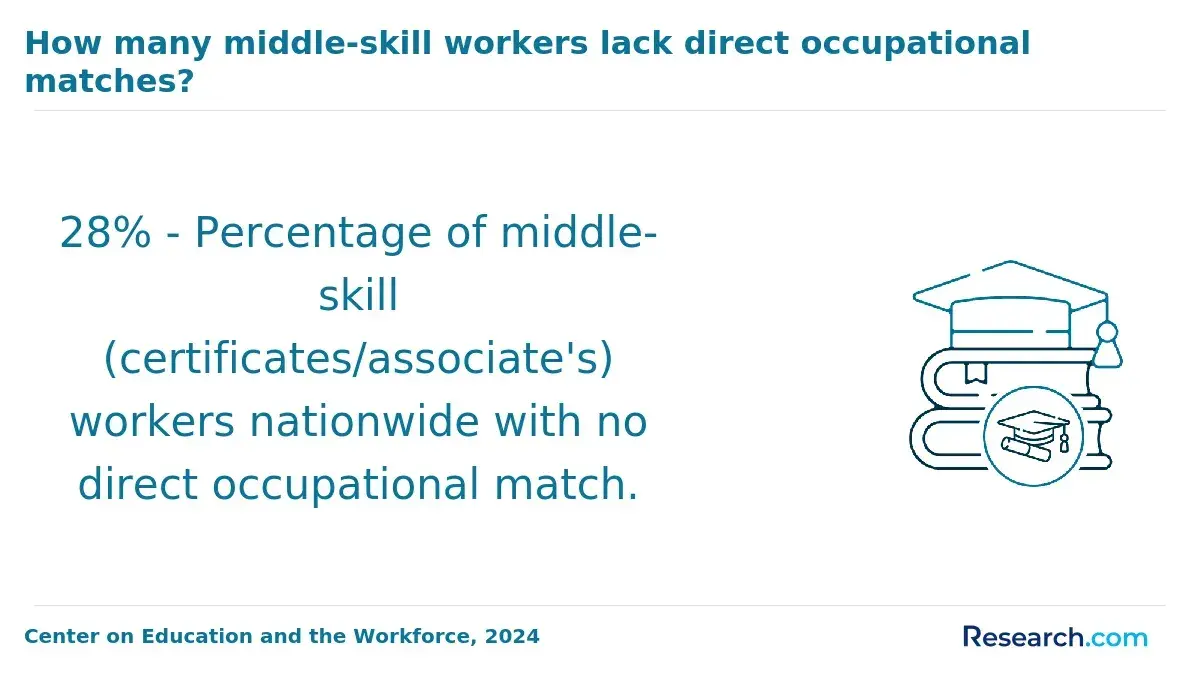
Data from Georgetown University's Center on Education and the Workforce 2024 reveals political science and international relations majors earn about 40% higher median wages by mid-career compared to the average bachelor's holders, reflecting employer premiums on navigating international complexities. Students should weigh program outcomes like alumni job placements and employer feedback to accurately assess relevance.
Operationally, reliable technology and flexible scheduling facilitating collaboration across time zones are necessary, especially for working professionals engaging with global peers.
Other Things You Should Know About Political Science
Employers value online political science degrees when they are awarded by regionally accredited universities with a solid academic reputation. However, skepticism remains among some sectors about the rigor of fully asynchronous programs. Programs that include synchronous interaction or hybrid elements tend to be viewed more favorably, as they demonstrate communication skills vital for political science roles. Prioritize programs that emphasize applied experiences or internships to strengthen employer perceptions.
The workload in online political science programs with international relations content is often comparable to traditional programs but requires greater self-discipline due to the lack of face-to-face structure. Students must allocate consistent time for reading dense materials, engaging in writing-intensive assignments, and participating in discussion forums. Time management skills are essential because asynchronous courses may compress assignments into shorter periods. Choosing a program with clear weekly expectations and instructor support reduces risk of falling behind.
International relations courses in online political science degrees in 2027 offer students a global perspective, critical thinking skills, and opportunities for international networking, which can enhance career prospects in diplomacy, international organizations, and global businesses. However, online formats may limit face-to-face interaction and experiential learning opportunities.
It should be accredited by a U.S. institutional accreditor recognized by the Department of Education or the Council for Higher Education Accreditation. For political science, many employers and graduate schools also look for regional accreditation and, where available, program approval from a recognized public affairs or political science body.
References
- Politics and International Relations Degree Careers and Salary in Europe - StudyinEurope.eu https://www.studyineurope.eu/politics-international/politics-international-relations-degree-careers-salary-europe/
- Top 16 Highest Paying International Relations Jobs in 2026–2027 (Salaries, Career Growth & Future Demand) https://nextgenlearning.org.uk/highest-paying-international-relations-jobs-uk-2026/
- International Relations Jobs (with Salaries) - SEEK https://au.seek.com/international-relations-jobs
- International Relations – Online Studies. A new field of online studies at Vistula University - Vistula University https://vistula.edu.pl/en/news/international-relations-online-studies-a-new-field-of-online-studies-at-vistula-university
- Online Bachelor's Degree: Political Science https://www.umgc.edu/online-degrees/bachelors/political-science
- Political Science - Bachelor's Degree - The Institute of Political Science https://politologia.uwr.edu.pl/en/candidates/bachelor-degree-political-science/
- Political Science vs. International Relations: What's the Difference? https://online.norwich.edu/political-science-vs-international-relations-whats-difference
- International Relations Courses & Degrees https://www.open.edu.au/study-online/law-justice/international-relations
- Applying to Political Science PhD Programs | Mariana Carvalho https://www.maricarvalho.com/post/application-polsci/
- Best Research Programs for Students Interested in Political Science https://riseglobaleducation.com/blogs/best-research-programs-for-students-interested-in-political-science