2027 Online Political Science Degrees With American Government Concentrations

Co-Founder and Chief Data Scientist
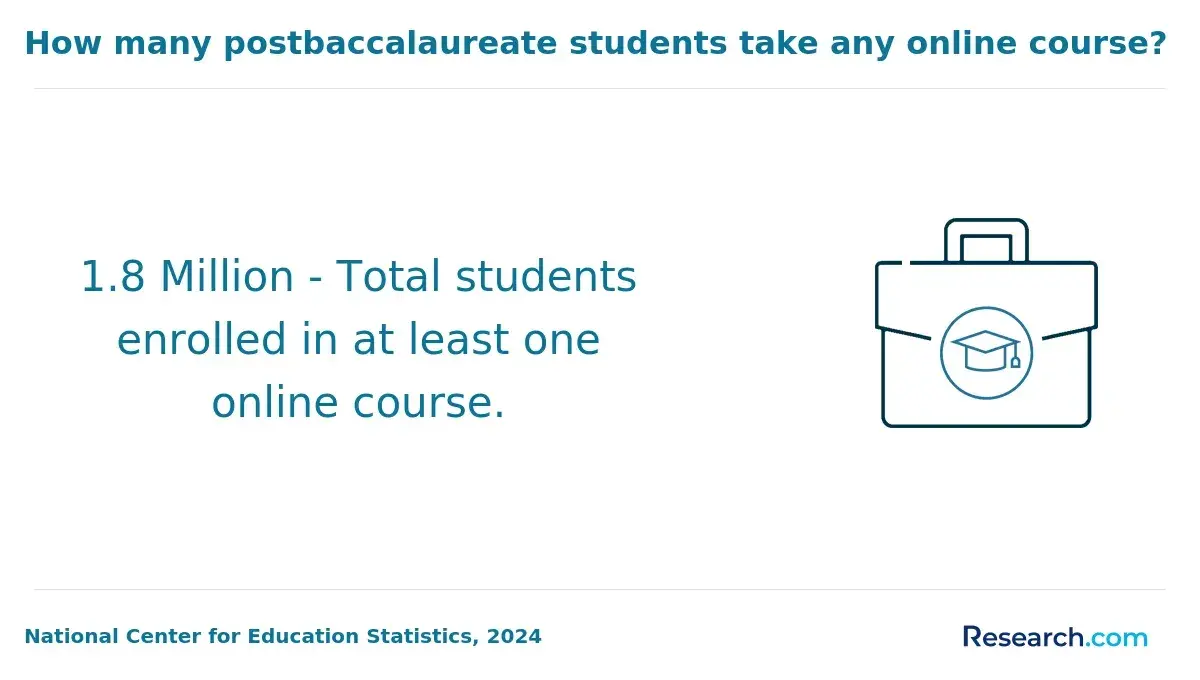
Navigating career advancement in political science increasingly demands targeted expertise in American government, yet traditional campus programs rarely accommodate working professionals' schedules or geographic constraints. The National Center for Education Statistics reports a 12% rise in online degree enrollments among adult learners over the past two years, reflecting a pronounced shift toward flexible learning modalities that align with professional commitments.
This trend signals deeper systemic changes in access and timing for disciplinary specialization, especially as political science roles grow more competitive and policy-driven. This article examines accredited online political science degrees with American government concentrations, equipping prospective students to evaluate program flexibility, curriculum relevance, and career outcomes to optimize strategic educational investment.
Key Things You Should Know
- Online political science degrees with American government concentrations average 30% lower tuition than in-person programs, but extended average completion times-up to 6 semesters longer per National Center for Education Statistics-raise long-term opportunity costs.
- Employers in federal agencies prioritize candidates with demonstrated internships and policy analysis experience beyond online credentials; 62% favor hybrid or in-person practicum components per recent Partnership for Public Service surveys.
- State licensure and certification variability impacts online degree portability across regions, meaning graduates face uneven eligibility for government roles, emphasizing strategic alignment with targeted jurisdictions noted by USAJobs employment data.
What is an online political science degree with an American government concentration?
An online political science degree focused on American government demands clear-eyed consideration of its practical strengths and limitations. While it grants access to advanced understanding of U.S. political structures, constitutional law, and electoral systems, success relies heavily on immersive engagement with synchronous sessions and applied projects.
Such features differentiate accredited online political science degrees in the United States from less rigorous alternatives and influence graduate employability.
Federal and state agencies often prefer candidates with direct operational experience, presenting challenges for students without internships or in-person networking opportunities. This makes proactive remote internships and strategic relationship-building essential. Entry-level roles like policy analyst or legislative assistant frequently require both substantive subject knowledge and familiarity with government workflows.
Students balancing careers should scrutinize program pacing and digital support due to the self-discipline and technical literacy required. With over half of U.S. political science undergraduates taking courses online, this model is far from experimental but necessitates careful alignment with personal and professional demands. Awareness of these tradeoffs informs realistic expectations and successful outcome planning.
This pathway suits those aiming to leverage expertise in American government systems for policy research, public service, or civic technology roles. For those comparing options, examining allied fields such as computer science may be beneficial; for example, the best online computer science degree programs can complement policy analysis skills with technical capabilities relevant to today's data-driven environments.
How do online American government concentrations compare with on-campus political science programs?
Choosing between online American government degree programs vs on-campus political science degrees involves critical tradeoffs in experiential learning and networking opportunities. While online American government concentrations offer flexibility and accessibility, they often lack the immediate access to federal and local government internships and professional networks that on-campus environments provide.
Employers in public policy fields tend to favor candidates with demonstrable applied skills gained through face-to-face faculty mentorship and campus career events.
The U.S. Bureau of Labor Statistics projects robust job growth in government and public administration between 2023 and 2033, benefiting graduates from both pathways. However, recent graduates who complete fully online degrees may face challenges securing entry-level roles due to limited informal exposure and weaker local connections. Conversely, mid-career professionals already embedded in government roles can leverage online programs effectively for advancement without geographic constraints.
Online programs attempt to bridge experience gaps through virtual simulations, remote internships, and synchronous seminars, but these alternatives seldom match the immediacy and depth of in-person engagement. Students pursuing online degrees must therefore proactively build networks through external political organizations and internships to compensate.
Despite these nuances, this landscape mirrors other fields where degree format decisions hinge on the learner's career stage, local access, and self-directed networking capacity. For instance, exploring whether is a master's in library science worth it follows a similar logic of balancing practical outcomes with program format.
Are online political science degrees with American government concentrations respected by employers?
Online political science degrees with American government concentrations recognized by employers can open doors when obtained from regionally accredited institutions and paired with substantive experience. Employers weigh applicants' grasp of U.S. government systems, policy analysis, and legal contexts more heavily than whether a degree was earned online or on-campus.
For instance, federal agencies and public policy organizations increasingly consider online credentials valid if coursework aligns with conventional standards and candidates demonstrate applied knowledge during interviews.
The median annual salary for mid-career political science graduates was $98,000 in 2024, significantly higher than the $74,000 average for the general bachelor's population according to PayScale's College Salary Report.
This wage differential reflects cumulative factors like skill depth, reputation, and experience, rather than degree format alone. Prospective students evaluating the value of American government concentrations in online political science degrees for career advancement should ensure programs offer rigorous content on American institutions, access to faculty with practical expertise, and meaningful internship or research opportunities.
Workforce entry often hinges on demonstrated practical experience; candidates without internships or applied projects - even with online degrees - face barriers in fields like legislative offices, political consulting, or nonprofit advocacy. Conversely, leveraging an online program's flexibility to build work experience simultaneously enhances employability.
However, online degrees typically carry reduced networking opportunities compared to in-person programs, necessitating active efforts in virtual policy forums and professional associations to compensate. Transparency on accreditation and detailed course syllabi remains crucial for ensuring employer recognition aligns with career goals. Those considering an online computer science degree or other pathways should weigh these factors carefully.
What accreditation should online political science programs with American government concentrations have?
Regional accreditation is a non-negotiable baseline for online political science degrees in the United States, especially those emphasizing American government. Employers and graduate programs routinely require degrees from institutions recognized by bodies such as the Middle States Commission on Higher Education or the Southern Association of Colleges and Schools Commission on Colleges.
Without such accreditation, students encounter diminished employability, limited credit transferability, and obstacles to advanced study.
Consider a policy analyst candidate at a federal agency: a degree from a non-accredited program-even one with relevant coursework-can significantly hinder hiring prospects. Beyond basic regional accreditation, less common but notable are endorsements from specialized associations like the American Political Science Association (APSA), which signal curriculum relevance and faculty expertise but are not widespread in online formats.
Those pursuing online political science programs with American government focuses should verify accreditation through trusted databases like the Department of Education's. It is also vital to confirm that online curricula maintain instructional quality and faculty credentials equivalent to traditional settings. Neglecting these factors jeopardizes recognition by employers and professional licensure authorities.
Additionally, workforce dynamics favor applicants from accredited backgrounds as the U.S. Bureau of Labor Statistics projects a 7% increase in political scientist employment from 2023 to 2033. Practical flexibility also comes into play when balancing academic credentials with career pivots; for instance, students evaluating a paralegal studies associate degree should similarly weigh program accreditation before committing.
What courses and specializations are typically included in an American government concentration?
Online political science degrees with a focus on American government emphasize mastering constitutional law, federalism, and institutional mechanics, which directly align with employer expectations in public sector roles. Practical expertise in public administration, including budgeting and management, is vital given the extensive workforce of over 22 million government employees across federal, state, and local levels.
Students face a significant tradeoff: programs lacking solid quantitative training risk limiting access to competitive analyst and research positions where advanced data interpretation and policy evaluation skills are prerequisites.
Core coursework integrates applied research methods such as statistics and survey design to bridge this gap, yet students must proactively select electives tailored to their career objectives. For example, students interested in regulatory policy for compliance roles should choose electives that focus on this area, while those aiming for political communication roles should select electives related to campaign work.
Workforce readiness hinges not just on theoretical understanding but also on practical experience; online programs increasingly incorporate internships or capstone projects with government bodies or nonprofits, addressing the demand for demonstrable skills. However, those pursuing legislative or advocacy careers should weigh specialization carefully to avoid broad but shallow curricula that can dilute employability in specialized sectors.
What are the admission requirements for online political science degrees focused on American government?
Online political science degrees with American government concentrations require more than a high school diploma; admissions increasingly weigh applicants' demonstrated ability in social studies and writing.
Standardized tests like the SAT or ACT may still be requested but are less often mandatory due to many programs adopting test-optional policies since 2023. A well-crafted personal statement reflecting understanding of U.S. political systems is often pivotal, as admissions committees prioritize evidence of critical thinking and genuine engagement over mere credentials.
Applicants with prior college credits or associate degrees tend to gain advantages, especially when seeking accelerated or upper-division entry, which can reduce time-to-degree and improve alignment with workforce needs. For working professionals pivoting into political science careers, documentation of relevant experience and recommendation letters carry significant weight in signaling workplace readiness.
Cost considerations remain a practical factor: online bachelor's programs at public universities average 18% lower total expenses than in-person equivalents when accounting for fees, housing, and transportation. This cost differential influences both admission competition and students' return-on-investment calculations.
Necessary technical infrastructure-reliable internet and compatible devices-is a baseline requirement for sustained engagement in these programs. For those targeting government or policy-sector roles, programs offering practical internships or research experiences are beneficial but may impose higher admission criteria such as minimum GPAs or prerequisite coursework tailored to American government expertise.
How long does it take to complete an online political science degree with this concentration?
Completing an online political science degree focused on American government generally follows a four-year full-time trajectory, but this timeline carries tradeoffs impacting professional outcomes.
Accelerated paths may compress study into three years, yet they require managing heavier course loads alongside securing practical internships and networking opportunities vital for government analysis positions. Conversely, part-time study extending to five or six years often suits working adults balancing employment and family, though slower completion can delay career entry or progression in political science roles.
The significant expansion of fully online social sciences programs-up 64% among U.S. institutions from 2018-2019 to 2022-2023-has introduced pacing flexibility that students should leverage based on individual circumstances. Advisors often emphasize examining credit transfer policies, as integrating prior coursework can reduce degree length by up to two years without sacrificing essential competencies.
Important considerations include:
- Rapid graduates target career switchers or entry-level government analysts prioritizing speed and workload tolerance.
- Extended programs accommodate those maintaining employment who require a gradual skill build, often relevant for policy research roles in think tanks.
- Rushing foundational courses risks missing employer-critical understanding of legislative complexities and institutional function.
Strategic pacing directly shapes career momentum, making a clear-eyed assessment of time-to-completion alongside professional demands essential for meaningful advancement in political science-related sectors.
How much do online political science degrees with American government concentrations typically cost?
Tuition for online political science degrees with American government focuses varies dramatically, often between $10,000 and over $40,000 for a bachelor's degree. Public institutions generally charge $300 to $600 per credit, while private schools can exceed $1,000, making the total cost for a 120-credit degree range from roughly $12,000 to $48,000. This gap directly affects professionals balancing education with ongoing work and living expenses.
An employer in government or nonprofit sectors typically expects rigorous analytical skills and deep knowledge of American government rather than just credential inflation. Thus, selecting a mid-tier accredited program with manageable debt can yield better returns than pursuing costly, less-recognized options.
Additional costs such as technology fees, digital resources, and proctored exams add $500 to $1,500 annually, which can compound financial strain if not accounted for upfront. When comparing programs, evaluating the complete cost of attendance rather than per-credit fees offers a more reliable financial picture.
Working adults constitute a significant portion of online learners, with 38% aged 25 or older according to NCES 2024 data. For these students, flexible scheduling and employer tuition assistance play pivotal roles in feasibility. Transfer policies, program reputation, and employer recognition also influence the ultimate value of the degree for career pivots or advancement.
What jobs can you get with an online political science degree in American government?
The practical value of an online political science degree with an American government focus depends heavily on the candidate's ability to translate academic knowledge into functional skills within government or public affairs roles. Positions like policy analysts or legislative aides require more than theoretical understanding-they demand interpreting legislation, evaluating regulatory impacts, and communicating policy implications clearly.
For instance, a state agency policy analyst must assess how new laws affect community programs, leveraging data analysis and government procedure expertise.
Employers increasingly expect candidates to supplement degree content with applied experience, such as internships in legislative offices or public agencies. Mid-career professionals aiming for federal civilian roles also face competitive hiring processes, including USAJobs, where understanding bureaucratic operations and compliance is critical.
The degree alone does not suffice for political campaign management or elected office, which rely extensively on personal networks and fundraising capabilities.
The noted 11% enrollment increase in graduate public administration reflects rising demand for specialists in regulatory affairs, urban planning, and policy research. Electives emphasizing quantitative methods and institutional knowledge strengthen job readiness, though candidates must recognize that practical skills and targeted experience often outweigh credentials in hiring decisions.
What salary and job outlook can graduates with an American government concentration expect?
Graduates concentrating in American government from online political science programs face a clear wage spectrum shaped by sector and experience, with typical entry-level salaries ranging from $50,000 to $70,000.
Federal roles often start near the lower end but provide structured pay scales and relatively predictable advancement paths, particularly within entities such as the U.S. Department of State or Congressional offices. In contrast, state and local government positions might offer less compensation initially but allow specialization in policy analysis or civic roles, which can enhance long-term community impact despite lower pay.
The job outlook aligns with general political science field trends, projecting around 6% growth through 2032 as per U.S. Bureau of Labor Statistics data.
Growth is concentrated in policy advisory, legislative assistance, and public administration roles, reflecting the 2024 NASPAA survey where 72% of graduates prioritize democratic governance and public service. However, candidates must navigate slower hiring cycles, often requiring security clearances and thorough background vetting, which can delay entry.
Practical advice centers on acquiring skills in data analytics, legislative processes, and effective public communication to stand out. Internships and networking are critical for breaking into competitive government and nonprofit positions. Candidates targeting private sector or advocacy roles may encounter less stable funding but can expect higher starting salaries, posing a tradeoff between impact-driven ambitions and steady government career progression.
Other Things You Should Know About Political Science
Online political science degrees with American government concentrations often demand equal or greater self-discipline due to condensed modules and asynchronous schedules. Students managing full-time work or family should prepare for intensive periods of independent research and writing, which online courses may compress. Prospective students should prioritize programs offering structured timelines and accessible faculty to prevent falling behind.
Access to internships and real-world fieldwork varies widely in online programs and can impact graduate employability. Students should actively seek programs that integrate internship opportunities, partnerships with government agencies, or virtual simulations of legislative processes. Without these practical components, graduates may lack hands-on experience employers value in American government-related roles.
For career advancement in American government sectors, program reputation usually outweighs scheduling flexibility. Employers often recognize degrees from well-established institutions with strong alumni networks and connections to public agencies. However, working professionals balancing other commitments might accept some flexibility tradeoffs but should verify employer recognition and graduate outcomes before enrolling.
References
- 2025's Best Online Master’s Programs in Political Science https://www.onlinemastersdegrees.org/best-programs/political-science/
- Online Political Science Degrees: Find Your School https://www.degreesforgood.org/online-degrees/political-science-degrees/
- Discover the Earning Potential for Careers in Political Science, Law, and Government https://precollegeprograms.org/law-resources/discover-the-earning-potential-for-careers-in-political
- Online Political Science Degrees https://mycollegeguide.org/online-political-science-degrees/
- What Can I Do With a Political Science Degree? https://www.belmont.edu/stories/articles/2024/what-can-i-do-with-a-political-science-degree.html
- List of Bachelors in Political Science Programs – Campus & Online https://yescollege.com/degrees/bachelors-in-political-science/
- Political Science https://www.albany.edu/rockefeller/programs/ba-political-science