2027 Best Online Marketing Degrees for Advertising Careers

Co-Founder and Chief Data Scientist
Advertising professionals often face the challenge of balancing skill acquisition with full-time employment and evolving market demands, making the selection of an online marketing degree a complex decision. According to the National Center for Education Statistics, over 40% of postsecondary students are now enrolled exclusively in online programs, reflecting a significant rise in adult learners prioritizing flexible access.
This shift indicates that prospective students weigh program adaptability and career relevance heavily against traditional campus constraints. Strategic timing and program compatibility can substantially affect career mobility within fast-changing advertising roles. This article evaluates top online marketing degrees to align educational choices with practical career advancement needs.
Key Things You Should Know
- Data from the Bureau of Labor Statistics shows 15% employment growth for advertising managers by 2030, favoring candidates with integrated digital marketing and analytics skills over traditional theory-focused degrees, shifting program value.
- Employers increasingly require demonstrable ROI of marketing campaigns, causing graduates from programs emphasizing real-world tool proficiency and data-driven strategy frameworks to access 30% higher starting salaries per the 2024 CMO Survey.
- Programs with compressed timelines and lower costs grow in appeal as Marketing professionals face wage stagnation; however, faster credentials often trade off depth, limiting mid-to-senior role advancement, according to NSCA and industry hiring data.
What are the best online marketing degrees for advertising careers?
Online programs offering the best online marketing degrees for advertising careers prioritize applied skills alongside foundational theory to meet employer demand for versatile professionals. Candidates focused solely on theoretical marketing concepts may find limited traction in roles requiring hands-on proficiency with digital tools such as Google Analytics, programmatic advertising, or A/B testing.
For instance, marketing analysts and advertising managers increasingly must interpret campaign data and pivot strategies in real time, skills developed through curricula emphasizing marketing analytics, statistics, and real-world project collaboration. Programs designed for practical integration often include internships or partnerships with brands, enabling portfolio development crucial for competitive differentiation.
Students selecting top online marketing programs for advertising professionals should weigh how coursework addresses key areas like SEO, social media strategy, and content creation, balanced with data literacy. This combination supports adaptability in dynamic advertising environments where measurable outcomes are prioritized.
Working professionals benefit from flexible scheduling and opportunities to supplement credentials with certifications, allowing faster pivoting or advancement. Employment growth projections for advertising and marketing managers underscore the value of degrees that align closely with market realities and measurable skillsets.
Those pursuing adjacent pathways may evaluate related educational options such as a bachelor's in project management to broaden strategic capabilities beyond core marketing functions.
How do online marketing degrees prepare you for advertising jobs?
Online marketing degree skills for advertising careers center on applied digital analytics, brand strategy, and consumer behavior interpretation, directly aligning with employer demand for measurable campaign outcomes. Graduates gain practical experience with industry-standard tools like Google Analytics and SEO platforms, enabling them to formulate data-driven strategies. For example, a graduate entering a mid-size tech firm can optimize ROI by leveraging real-time consumer data.
This hands-on training enhances online marketing education and advertising job readiness, but also introduces the challenge of limited face-to-face networking opportunities. Candidates must proactively pursue internships or cooperative education to supplement virtual teamwork and client communication skills developed through online collaboration tools. These soft skills are increasingly valued in agencies operating with remote or hybrid models.
The cost difference between online and hybrid programs is significant. The National Center for Education Statistics reports that the average annual tuition for a bachelor's in marketing combining on-campus and online elements is $16,941, while fully online programs averaged $10,473, about 38% less. This reduction can lessen student debt and ease entry into marketing fields without compromising fundamental competencies.
Key considerations include:
- Emphasis on real-world digital marketing platforms and capstone projects reflecting employer expectations.
- Need to independently build professional networks and secure experiential opportunities.
- Cost efficiency as a factor in program selection and ROI on education expenses.
For professionals evaluating accelerated progress in business education, consider resources like the shortest MBA programs as strategic options to complement marketing skills and broaden leadership prospects.
Is accreditation important for online marketing degrees?
Employer preference for degrees from accredited institutions affects not just the legitimacy of credentials but also measurable career outcomes. In online marketing degrees, accreditation determines if graduates can credibly compete within firms where unchecked program quality is a barrier. The importance of accreditation for online marketing degrees manifests in employer trust-without it, job candidates face limited acceptance and reduced upward mobility.
Accredited programs maintain industry relevance through consistent outcome assessments and curriculum updates, while nonaccredited degrees risk delivering outdated content that diminishes employability. Federal financial aid eligibility also hinges on accreditation, which significantly impacts students balancing budgets during career transitions. Credit transfer between recognized schools further depends on accreditation, a key consideration for plans involving further specialization.
Data from Western Governors University's ROI analysis compares the online marketing program at Arizona State University-Skysong and WGU, showing returns of 254% and 249%, respectively. Such figures underline how accredited online marketing programs translate to tangible salary gains rather than abstract promises. Prospective students evaluating pathways must view accreditation through practical lenses-financial aid access, credit mobility, and employer recognition-to avoid costly pitfalls.
For those exploring accelerated timelines, programs ranked as the fastest online project management degree offer a related example of balancing speed and institutional credibility. In sum, the benefits of accredited online marketing programs extend beyond coursework to influence real-world economic mobility and strategic career navigation.
What courses are in an online marketing degree?
An online marketing degree curriculum integrates focused business fundamentals with digital advertising tools, reflecting employer demand for both strategic insight and data proficiency. Core courses in online marketing programs typically cover SEO, SEM, consumer behavior analytics, and marketing research methods, equipping students to manage paid campaigns and interpret performance metrics like Google Analytics data.
Such practical capabilities often determine initial hireability in digital marketing roles. Programs extending beyond basics introduce content management, e-commerce, and social media marketing, alongside branding and product management. These elements address market positioning challenges recruiters expect candidates to navigate through brand strategy and competitive analysis.
Additionally, cross-disciplinary topics-marketing law, ethics, and integrated communications-prepare students for compliance complexities and the coordination of multi-channel campaigns. Graduate-level curricula, such as an MBA in Digital Marketing, embed case studies focusing on campaign ROI and automation tools like HubSpot or Salesforce.
While total tuition ranges roughly from $23,904 to $32,850, the investment prioritizes technical fluency paired with strategy, essential for career pivots away from general business roles. Candidates should also anticipate ongoing learning due to rapid shifts in consumer data privacy and marketing technology.
Students comparing pathways might consider how this specialized marketing training contrasts with broader management degrees; for instance, a degree in project management emphasizes organizational processes rather than digital market analytics, illustrating the tradeoff between function-specific expertise and administrative versatility.
How do online and campus marketing programs compare?
Employers in advertising increasingly weigh practical portfolio experience over formal credentials alone, posing a challenge for students in fully online marketing programs that often lack immersive, hands-on components. For example, a professional aiming to shift into data-focused advertising roles must consider whether an affordable online master's with an analytics emphasis can adequately replace the collaborative, internship-driven experience offered by campus programs.
Online marketing degrees offer flexibility and generally lower tuition-ranging from about $11,850 for fully online master's to $55,480 for bachelor's options-making them accessible for working professionals. Yet, the tradeoff involves fewer direct networking opportunities and less assured access to industry internships, which campus programs frequently mandate and which substantially elevate employment prospects.
Recent program designs attempt to incorporate live projects and real-time feedback remotely; however, the self-discipline required to translate these into concrete career-ready skills is considerable. Prospective students should evaluate market-specific hiring practices and the degree to which programs support portfolio development, as graduates who combine credentials with applied experience outperform those relying on theory alone.
- Campus programs provide rich, in-person networking and cooperative education with advertising firms.
- Online curricula offer greater scheduling flexibility but depend heavily on student self-motivation to develop portfolios.
- Tuition varies widely, demanding careful balancing of cost, format, and career objectives.
What are the admission requirements for online marketing programs?
Admission requirements for online marketing programs reflect a calculated balance between academic readiness and workforce alignment, often shaping the profile of candidates who can realistically compete in entry-level and mid-career roles. For bachelor's degrees, earning a high school diploma or GED with a minimum GPA near 2.5 to 3.0 typically serves as a baseline, but competitive programs may also require SAT or ACT scores to sift applicants.
Many institutions waive these tests to broaden access, though this can influence perceived program rigor in employer evaluations. Graduate-level programs elevate expectations by requiring a bachelor's degree, often favoring candidates with backgrounds in marketing or related disciplines. This usually includes a minimum undergraduate GPA around 3.0 and may demand evidence of professional marketing experience, reflecting the direct impact practical skills have on roles beyond foundational knowledge.
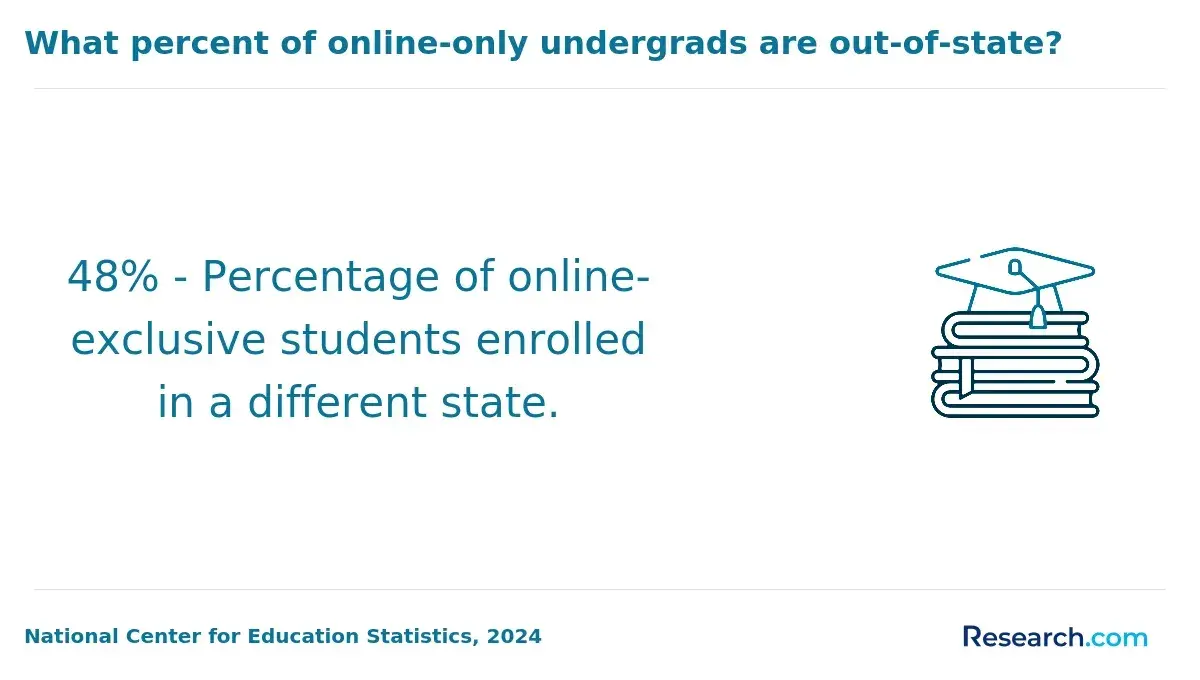
Letters of recommendation and personal statements function less as formalities and more as instruments to assess a candidate's trajectory and fit within specialized marketing niches. Applicants should also consider administrative and technical prerequisites like identity verification and stable internet access, which are non-negotiable given the online delivery format and potential state-based tuition structures.
Despite postgraduation median salaries settling in the low-$50,000 range for marketing bachelor's holders, programs with visible ROI focus often correlate with early-career earnings exceeding $53,000. This signals that meeting or exceeding admission standards aligns not just with academic thresholds but with tangible employment outcomes in competitive marketing environments.
How long does an online marketing degree take?
Completing an online marketing degree within four years aligns with employer expectations, particularly as digital expertise becomes essential for roles managing complex advertising campaigns. Associate degrees, typically lasting two years, target foundational skills like content creation and social media management but may limit advancement in data-driven roles.
Bachelor's degrees usually span four years and incorporate critical training in data analysis, consumer behavior, and campaign strategy, equipping graduates to meet the rising demand for digital competency backed by U.S. Bureau of Labor Statistics projections of 7% job growth for advertising managers through 2032.
Part-time or accelerated options introduce tradeoffs: extending study duration to five or more years can accommodate working professionals but may reduce momentum and employability speed, while three-year accelerated tracks demand intense workloads, challenging many students' balance of obligations.
Practical decisions hinge on program rigor and digital tools offered, especially for mid-career professionals pivoting into marketing. For example, a retail worker aiming to transition should prioritize programs with empirical data components and real-world advertising tech exposure to avoid slower career traction often faced by graduates of shorter, less comprehensive programs.
How much do online marketing degrees cost?
Deciding on an online marketing degree involves balancing institutional reputation, cost, and the specific skill sets aligned with targeted roles. The typical cost for bachelor's programs ranges from $9,000 to $16,000 per year, reflecting a median tier where program quality and employer recognition intersect with affordability. In contrast, budget-sensitive students might pursue options at $5,000 to $7,000 annually, often found at regional public universities with streamlined online curricula.
For professionals aiming to sharpen advanced marketing skills, master's programs can cost approximately $4,600 yearly, offering a financially efficient pathway for skill enhancement without excessive debt. Choosing a lower-cost graduate program may benefit mid-career individuals focusing on digital advertising skills essential for promotion, whereas entry-level candidates should weigh these savings against the value employers place on accreditation and experiential learning opportunities.
Beyond tuition, prospective students should account for fees, technology needs, and duration, as well as the investment required for portfolio development through internships or networking, critical for marketing employability. Programs at the lower price points often provide limited scholarships, which can affect net costs. Evaluating these factors relative to career goals is essential, particularly given hiring trends favoring students with social media degrees or specialization in brand management or analytics-driven roles.
What jobs can you get with an online marketing degree?
The value of an online marketing degree lies in its preparation for performance-driven roles where practical skills surpass theoretical knowledge. For example, a marketing analyst in healthcare might leverage CRM and data visualization tools to refine patient outreach, while a social media manager in technology prioritizes analytics to boost brand engagement. These skill sets address the growing demand for data proficiency across industries like retail, finance, and healthcare.
Employers increasingly require candidates who can demonstrate measurable results, creating a preference for programs with competency-based models. Western Governors University's marketing bachelor's exemplifies this, with 60% of students completing the degree within 19 months and paying about $3,830 per six-month term. Accelerated pacing reduces time-to-employment and financial strain, a critical consideration for working adults changing careers.
Entry-level and mid-level marketing roles are accessible with an online bachelor's, but advancing to roles like brand manager or marketing director often requires additional experience or education. Graduates face challenges such as mastering evolving digital marketing tools, building a portfolio of tangible campaigns, and securing internships or freelance opportunities to remain relevant.
Prospective students should evaluate programs that emphasize current industry platforms and applied projects to minimize common skill gaps that hinder employability and longevity in the field.
What salary and job outlook do advertising careers offer?
Advertising roles linked to online marketing degrees typically offer starting salaries between $50,000 and $65,000 annually, with projected employment growth around 8% through 2032, per the U.S. Bureau of Labor Statistics. However, the variation by specialization and geography can greatly influence income trajectories.
For instance, graduates from Florida International University's online bachelor's in Marketing average earnings near $53,157, a figure that suggests reasonable return on investment compared to tuition expenses identified in DegreeChoices' analysis. Workforce demand is driven by the ongoing digital transformation, requiring professionals to manage brand presence, data analytics, social media, and consumer engagement.
Different job roles illustrate distinct tradeoffs: account managers and media planners often enter with modest salaries but steady growth, whereas digital marketing analysts and advertising strategists can command higher compensation due to specialized technical skills and data fluency.
Key practical considerations include an emphasis on verifiable results in campaign ROI and continuous upskilling, especially for those transitioning from unrelated fields who may face temporary income drops. Investing in programs with robust analytical training and industry connections is essential to avoid career stagnation. Continual certification is increasingly necessary to stay relevant amid rapidly evolving advertising technologies and platforms.
Other Things You Should Know About Marketing
Specialized marketing degrees offer deeper expertise in advertising, digital strategy, and consumer behavior, better preparing students for marketing-specific roles. Broader business programs provide wider context useful for leadership but may lack in-depth training in advertising nuances. Candidates focused on immediate advertising careers should prioritize specialized marketing programs, while those targeting managerial roles after gaining industry experience might benefit from broader degrees.
Online marketing degrees demand strong self-discipline since courses often run asynchronously and require significant independent study. Campus programs typically offer more structured in-person interaction, which can aid time management and accountability. Students with full-time jobs benefit from the flexibility of online formats but must be prepared for concentrated work periods around deadlines without the daily campus rhythm.
Yes. For advertising careers, the degree should come from a regionally accredited college or university, such as one accredited by the Higher Learning Commission, SACSCOC, NECHE, MSCHE, WSCUC, or NWCCU. Regional accreditation is the standard most employers and graduate schools use to verify degree quality.
References
- CourseCareers https://coursecareers.com/course/digital-advertising
- Digital Marketing Major https://www.kozminski.edu.pl/en/digital-marketing-major
- How Much Do Digital Marketing Courses Cost? https://blog.nobledesktop.com/learn/digital-marketing/how-much-is-a-digital-marketing-course
- The Benefits of a Digital Marketing Degree from an Online School | Bryan University Online© https://bryanuniversity.edu/faq/the-benefits-of-a-digital-marketing-degree-from-an-online-school/
- Study Marketing Courses and Degrees Online https://www.open.edu.au/study-online/business-management/marketing
- Navigating Online Program Marketing in a Sea of Change | Carnegie https://www.carnegiehighered.com/online-program-marketing-without-opms/
- 2026 Marketing Career Outlook: AI’s Surprising Impact [Research] https://contentmarketinginstitute.com/career-salary-outlook/content-marketing-salary-outlook