2027 Online Kinesiology Degrees With Strong People-and-Performance Preparation

Co-Founder and Chief Data Scientist
Professionals seeking advancement in kinesiology often encounter a critical barrier: balancing rigorous, specialized training in human movement and performance with demanding work schedules and personal obligations. Nearly 60% of online degree enrollees in health and exercise science report choosing digital formats primarily for scheduling flexibility, according to the National Center for Education Statistics, signaling a persistent need for accessible program designs that do not compromise academic depth.
This demand reflects a broader workforce shift toward competency-based credentials aligned with employer expectations for practical skill mastery. This article analyzes online kinesiology degree options that integrate strong people-and-performance preparation, equipping students to navigate these constraints effectively and optimize their career trajectories.
Key Things You Should Know
- The growing 7% projected job growth for exercise physiologists through 2032, per the U.S. Bureau of Labor Statistics, pressures program candidates to prioritize accredited degrees with integrated internship pathways despite longer graduation timelines.
- Employers increasingly demand dual fluency in biomechanics and data analysis; programs lacking advanced tech coursework see 15% lower graduate placement rates in performance roles according to a 2024 National Kinesiology Workforce Survey.
- Cost inflation averaging 5.8% annually in health science education creates a tradeoff: accelerated online kinesiology degrees reduce debt but may limit hands-on skills critical for immediate high-impact roles, affecting starting salary by up to 12%.
What is an online kinesiology degree and how does it prepare you to work with people and performance?
Online kinesiology degree programs focused on people and performance must reconcile theoretical rigor with applied skill sets to address workforce demands accurately. Graduates are expected to translate complex biomechanics, physiology, and motor learning concepts into effective interventions that improve physical function and minimize injury risks in varied contexts like corporate wellness or occupational health. For instance, a professional assessing repetitive strain risks in an industrial setting needs both data fluency and interpersonal communication skills, competencies developed through virtual simulations and project-based coursework common in quality online programs.
The practical challenge lies in balancing remote learning with essential hands-on experiences, often facilitated through partnerships with local clinics for clinical internships. This dynamic shapes student decision-making: selecting programs with verified accreditation and clear in-person practicum plans is critical. Employment prospects align with this preparation as kinesiology and exercise science graduates earn a median wage near $71,000 with a low unemployment rate around 3%, indicating sustained industry relevance.
Understanding how online kinesiology degrees prepare students for workforce performance and client interaction requires evaluating programs by outcomes, not just curriculum. Students who integrate technology-driven assessments with client-centered coaching are more competitive in evolving job markets. Those researching degree options should consider data-driven performance metrics and logistical realities carefully.
More detailed information on these pathways can be found when researching kinesiology programs.
How do online kinesiology programs compare with on-campus options for hands-on and lab experiences?
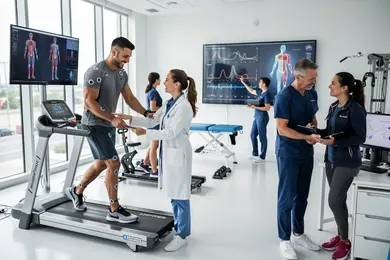
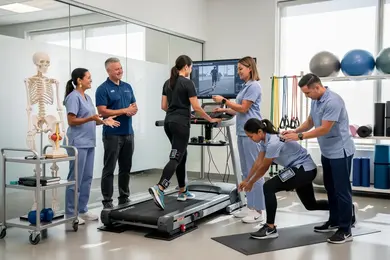
Online kinesiology programs that lack substantial hands-on lab experience fall short in preparing students for the tactile demands of motor assessments, exercise testing, and rehabilitation protocols essential in clinical settings. The differences between online and on-campus kinesiology practical training become most apparent where physical manipulation of equipment and direct human interaction cannot be adequately simulated. This limits a graduate's readiness for roles requiring demonstrated competence in functional movement screening or cardiopulmonary exercise testing, both highly valued by employers.
Many programs mandate hybrid models or partnerships with local clinical facilities to bridge these gaps. Students face tradeoffs between the geographic limits imposed by in-person labs and the flexibility of remote study. One professional navigating a career pivot chose an online degree requiring 300+ documented hours of independent, in-person lab work, enabling employment alongside study and ensuring alignment with employer expectations.
Employers in health and human performance fields increasingly seek demonstrated practical skills, as workforce growth for exercise physiologists exceeds average occupational rates. Students considering online kinesiology programs must evaluate how missing hands-on components affect certification and hiring prospects.
For those weighing online options against hybrid or full campus attendance, practical training support and access to local labs often outweigh the superficial convenience of entirely remote study. The landscape resembles other specialized fields where physical skill acquisition is indispensable, akin to the considerations in accelerated PMHNP programs online.
Which accreditations should you look for in an online kinesiology degree program?
Accreditation directly determines whether employers recognize an online kinesiology degree as credible and if graduates can pursue state licensure or certification exams critical for roles in physical therapy assistance or occupational therapy support. Prospective students should confirm accreditation by the Council for Higher Education Accreditation (CHEA) recognized regional bodies like the Higher Learning Commission or the Northwest Commission on Colleges and Universities, since these ensure robust academic standards. Programs lacking such accreditation risk limiting career mobility, financial aid access, and employer tuition reimbursement.
The practical value of programmatic endorsements from the Commission on Accreditation of Allied Health Education Programs (CAAHEP) or American Kinesiology Association depends on the student's specific focus. For example, kinesiology programs with Clinical Education or Practicum components aligned with national boards, such as the National Strength and Conditioning Association (NSCA) or the American College of Sports Medicine (ACSM), better prepare those targeting applied exercise science or rehabilitation careers. Oregon State University's online BS in kinesiology illustrates this with a median graduate salary of $60,964, ranking in the top 25% nationally among similar online programs per OnlineU 2026 rankings.
Analyzing accredited kinesiology degrees in the United States reveals that due diligence on accreditation standards correlates closely with employability and certification eligibility. Students should weigh these accreditation factors alongside cost and outcomes, comparing options like specialized masters of health administration programs when considering advanced education pathways.
What types of online kinesiology degrees and concentrations are available for people-performance careers?
Specializing in online kinesiology degree programs with people and performance focus requires balancing theoretical knowledge with hands-on skill acquisition, a challenge accentuated in virtual settings. Degrees combining anatomy, physiology, biomechanics, and motor control prepare students for applied roles in exercise science, rehabilitation, occupational health, or sports performance.
Programs vary significantly in how they integrate practical elements. For instance, sports performance analysts must master motion capture technologies and physiological data interpretation, whereas occupational health specialists need proficiency in workplace risk assessment. These differences influence hiring decisions, as employers prioritize candidates showing demonstrable impact on injury reduction or performance metrics. Graduates without access to effective practicum alternatives may face barriers despite strong academic records.
The job market for these fields reflects healthcare's preventive care shift, with 10% to 14% growth projected, per Concordia University Chicago kinesiology ROI data. Students targeting specific careers benefit from selecting concentrations aligned with employer expectations and training formats that offer virtual simulations or local clinical placements. Those making a strategic shift should compare these factors alongside program accessibility.
For working professionals weighing degree options, understanding tradeoffs between curriculum focus and hands-on learning is critical. Those interested in expanding workforce credentials might also consider related pathways such as RN to BSN online programs to complement kinesiology expertise.
Best online kinesiology concentrations for career growth in people-performance fields typically emphasize data-driven assessment and integrated health solutions critical to corporate wellness programs and rehabilitation services.
What courses and learning experiences are typically included in an online kinesiology curriculum?
Online kinesiology programs rigorously cover core areas like human anatomy, physiology, biomechanics, motor learning, exercise science, and research methods, all essential for applied roles in health, therapy, or sports performance. These foundational courses equip students to analyze movement data, design evidence-based interventions, and interpret results within real-world contexts.
The typical sequence starts with anatomy and physiology to establish a solid grasp of musculoskeletal and nervous systems, progressing to biomechanics and motor learning where mechanical and cognitive aspects of movement are studied. This progression supports careers in athletic training or physical therapy assistance.
Exercise physiology coursework introduces metabolic and adaptive responses crucial for crafting programs tailored to health or athletic goals. Research methods and statistics are vital for critically assessing scientific literature and conducting applied studies, skills increasingly expected by employers focused on injury prevention and performance optimization.
However, fully online formats face practical limitations with required practicum or internships, which remain critical for transitioning theory to client-facing practice. For instance, a professional shifting to strength and conditioning coaching relies heavily on in-field internship exposure alongside coursework to gain competitive advantage. Such experiential learning is often the differentiator in hiring decisions.
Program enrollment growth, like Arizona State University Online's reported 52,896 online students, reflects demand for flexible, scalable pathways but demands strong discipline to balance intense science content with internships. Prospective candidates should weigh these operational tradeoffs carefully when selecting online kinesiology programs.
What are the admission requirements and prerequisites for online kinesiology bachelor's and master's programs?
Kinesiology bachelor's programs require careful consideration of academic and practical prerequisites that directly influence workforce readiness. Admission standards uniformly demand a high school diploma or GED, proficiency in biology, chemistry, and physics, and often standardized test scores, although some public schools now waive these requirements. Foundational math skills-particularly algebra and statistics-are essential due to their application in anatomy and biomechanics.
For master's programs, a bachelor's degree in kinesiology or related fields with a minimum GPA near 3.0 is standard, alongside relevant coursework in human anatomy, physiology, motor learning, and statistics. Practical experience through internships or healthcare-related work is frequently mandatory, reflecting employer preferences for candidates with demonstrated applied knowledge and interpersonal skills.
Tuition costs present significant financial considerations: annual expenses average $16,808 at public institutions and $30,988 at private ones, with total bachelor's program costs ranging from approximately $67,232 to $123,952. These figures escalate when factoring in master's degree progression. Students must weigh this investment against market demand where technical proficiency and experience in rehabilitation, athletic training, or ergonomics often determine employability.
Ultimately, students navigating between bachelor's and master's kinesiology pathways face balancing intensive academic prerequisites with real-world experience to meet employer expectations and avoid skill gaps in a competitive labor market.
How long do online kinesiology degrees take, and what do they cost to complete?
Choosing an online kinesiology degree requires weighing the tradeoffs between duration, cost, and professional outcomes. A traditional bachelor's degree typically demands four years full-time, but accelerated options reduce this to two or three years for students with prior credits, balancing faster completion against a heavier course load. Part-time enrollment offers flexibility for working professionals-such as licensed massage therapists pivoting careers-though it prolongs time to graduation.
In-state tuition for fully online kinesiology programs averages $15,000 to $40,000, but private or out-of-state fees can exceed $40,000, excluding additional costs like textbooks or on-site clinical requirements. These financial and scheduling factors directly affect a student's ability to manage work, study, and personal obligations.
Unlike some degrees, kinesiology often functions as a stepping stone rather than a final credential, especially for roles like physical therapy, which require graduate-level education and further investment in time and money. The median annual wage for physical therapists stands at $102,760, with a job growth projection of 10.9%, reflecting strong labor market demand in allied health fields.
- Accelerated bachelor's programs shorten the path but intensify academic demands
- Part-time study accommodates current employment but delays entry into the workforce
- Additional expenses beyond tuition can add substantial financial burden
- Kinesiology's value hinges on subsequent specialization for many higher-paying careers
What careers can you pursue with an online kinesiology degree focused on people and performance?
Graduates with an online kinesiology degree face a diverse set of workforce expectations that extend well beyond foundational knowledge. Employers prioritize professionals who can critically assess human movement and design tailored programs that measurably improve performance while mitigating injury risks. For instance, strength and conditioning coaches within sports organizations frequently apply biomechanical analysis to optimize athlete recovery, a role demanding both theoretical expertise and recognized certifications.
Certification, particularly the Certified Strength and Conditioning Specialist (CSCS), materially influences earning potential, with data from Concordia University Chicago indicating a 15-25% salary increase within the first post-certification year. This credential is often a differentiator in competitive job markets such as professional athletics or specialized fitness centers.
Practitioners supporting rehabilitation clinics operate within multidisciplinary teams, using evidence-based exercise prescriptions to advance patient mobility. Success in these roles hinges on advanced physiology knowledge combined with interpersonal skills to enhance patient adherence.
Those pursuing corporate wellness roles confront varying state licensure requirements, especially when responsibilities overlap with physical therapy or athletic training. They must also commit to continuous education to maintain credentials and meet evolving industry standards.
Notably, practical experience remains a pivotal factor; entry-level wages are often modest, requiring candidates to leverage internships and applied simulations embedded in many online kinesiology programs to gain tangible outcomes and improve employability.
- Employer demand centers on biomechanics application, injury prevention, and measurable performance improvement.
- Strategic certification like CSCS can significantly boost early-career income.
- Licensure and ongoing education introduce complexity requiring careful planning.
- Hands-on experience remains crucial to advance beyond entry-level roles.
What salary ranges and job outlook can kinesiology graduates expect in people-performance roles?
Salary outcomes for people-performance roles in kinesiology vary significantly by location, specialization, and experience, typically ranging from $45,000 to $75,000 annually. Entry-level jobs in rehabilitation or fitness coaching tend to cluster toward the lower end, especially outside metropolitan hubs. However, positions focused on corporate wellness, ergonomics consulting, or advanced exercise physiology in urban centers can surpass the $75,000 mark. For example, professionals in San Antonio, TX, or Bloomington, IN, often benefit from strong regional demand paired with a high concentration of kinesiology graduates, enabling them to secure above-average compensation.
Projected job growth of approximately 10% through 2032 in kinesiology-related fields outpaces many sectors, fueled by an aging population's rehabilitation needs and expanding corporate wellness initiatives. Yet, wage growth stagnates in saturated markets like University, FL, where competition pressures candidates to obtain additional certifications or collegiate-level training to remain competitive.
To move beyond entry-level wages, specialization is essential. Credentials in occupational therapy assistance, strength and conditioning, or data analytics applied to human performance distinctly improve job prospects. Importantly, healthcare roles usually mandate licensure plus clinical experience, whereas corporate wellness roles prioritize program development and interpersonal skills. Navigating these tradeoffs directly affects salary negotiation power and job satisfaction for practitioners.
How can you evaluate and choose a reputable online kinesiology program that fits your goals?
Choosing a kinesiology program requires sharper scrutiny than simply comparing schools or prices, as program focus strongly influences future employability and workforce integration. For example, professionals targeting rehabilitation roles need programs emphasizing applied biomechanics and therapeutic exercise over general wellness curricula, as employers expect specialized competencies aligned with clinical demands.
Tuition disparities are significant-graduate per-credit rates vary from $230 to $475-yet higher costs don't guarantee better outcomes. Instead, assess faculty expertise, resource availability, and program length alongside financial aid options to better predict value relative to anticipated salary gains and debt management.
Program delivery format notably impacts skill acquisition. Fields requiring certification or licensure often mandate synchronous labs or internships. Without these hands-on experiences, graduates risk gaps that undermine job readiness. Additionally, employer networks and verified internship placements can provide tangible pathways into the workforce.
Review alumni job placement rates and sector-specific outcomes carefully. Research-focused careers benefit from programs featuring robust lab access and faculty publication records, while coaching or performance roles demand clear certification pipelines. Working professionals must also weigh program flexibility to balance education with employment obligations.
- Confirm accreditation status for academic and employer recognition
- Match curriculum content decisively with intended career trajectory
- Factor in hands-on training and employer engagement metrics
- Calculate total cost with attention to debt-to-earnings potential
Other Things You Should Know About Kinesiology
Online kinesiology programs balancing scientific coursework with practical skill development require sustained time commitment comparable to on-campus studies. Expect rigorous assignments in anatomy, exercise physiology, biomechanics, plus preparing for internships or virtual labs. Students managing full-time work should select programs with flexible pacing or part-time options to avoid burnout and maintain performance quality.
The main challenge lies in translating theoretical knowledge to hands-on client or athlete interactions without direct supervision. Strong programs mitigate this by incorporating mentored practicums, virtual simulations, or hybrid models to develop applied competencies. Graduates from programs without these elements may face steeper learning curves initially and need additional on-the-job training to meet employer expectations.
Choosing a specialized track in people or performance enhances targeted skills and marketability for specific career paths, such as athletic training or occupational therapy assistance. General kinesiology programs offer broader foundations but may require further certification or education for specialized roles. For career pivots or advancement, prioritize programs with clear alignment to your target profession and practical experiences tied directly to those job functions.
References
- Online Bachelor of Science in Kinesiology https://calbaptist.edu/academics/programs/online-bachelor-of-science-kinesiology/
- Online Bachelor’s in Kinesiology and Exercise Science Programs https://teach.com/online-ed/healthcare-degrees/online-bachelors-kinesiology-exercise-science/
- Kinesiology and Human Performance AS https://flcc.edu/academics/programs/kinesiology-and-human-performance-as/
- Virtual Labs vs Hands-on Labs: How to Know Which is Right for Your Online Science Lab https://www.scienceinteractive.com/blog/2023/virtual-labs-vs-hands-on-labs-how-to-know-which-is-right-for-your-online-science-lab/
- Kinesiology Courses https://www.cbc.edu/academic-department-course-descript/kinesiology-courses
- What Can I Do in My Career With a Master’s in Kinesiology? https://www.pointloma.edu/resources/health-sciences/what-can-i-do-my-career-masters-kinesiology
- Bachelors in Kinesiology Degrees, Online Included, Updated 2026 https://www.kinesiologydegrees.org/programs/degree/bachelors
- Online Exercise Science Degrees: Top School Review https://www.edumed.org/online-schools/exercise-science-degrees/
- Naturalistico https://naturalistico.com/en/learn/blog/7-kinesiology-career-paths-youll-actually-enjoy
- Master of Science in Kinesiology https://online.avila.edu/degrees/healthcare/masters-kinesiology/