2027 First Kinesiology Roles for Movement-Focused Students

Co-Founder and Chief Data Scientist
Aspiring movement specialists often confront a complex dilemma: how to secure entry-level roles amid a talent pool increasingly valuing interdisciplinary skills and flexible credentials.
The labor market now demands not only foundational kinesiology knowledge but also adaptability in hybrid learning environments, as evidenced by the National Center for Education Statistics reporting a 24% jump in online enrollment for health science-related majors since 2023. This trend highlights shifting access dynamics, where adult learners balance career pivots and education access, making program structure and timing critical factors in employability.
This article provides a clear guide to navigating first kinesiology roles focused on movement, tailored to real-world constraints and opportunities.
Key Things You Should Know
- Employment projections from the U.S. Bureau of Labor Statistics show a 12% growth in movement-related therapy roles by 2028, pressuring students to prioritize internships over extended coursework to gain employer-valued practical experience.
- Emerging employer preference for candidates with dual certifications in movement analysis and rehabilitation demands increased upfront educational investment, reducing entry to the workforce speed but boosting starting salaries by 15% on average per recent industry salary surveys.
- Due to program cost inflation averaging 5% annually since 2023 (National Center for Education Statistics), students face a tradeoff between accelerated diplomas with limited specialization vs. lengthier tracks offering broader expertise but higher debt burdens.
What are the first-entry kinesiology jobs for movement-focused students and recent graduates?
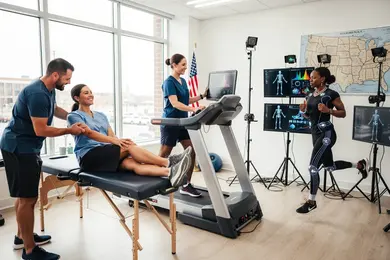
Entry-level kinesiology careers for movement-focused graduates in the United States commonly involve roles such as physical therapy aides, exercise physiologists, rehabilitation specialists, fitness trainers, and occupational therapy assistants. These positions demand applied knowledge of anatomy and human movement but typically do not require advanced clinical licensure at entry.
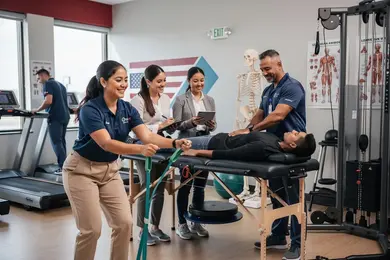
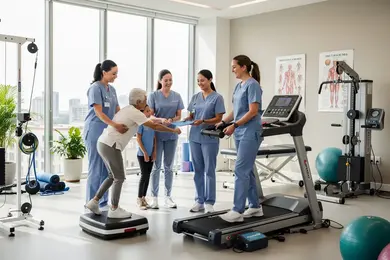
For example, a physical therapy aide supports licensed therapists by managing treatment areas and assisting patient exercises, providing essential hands-on experience that facilitates progression to licensed roles. Employers in outpatient clinics and rehabilitation centers prioritize candidates with practical skills and communication abilities over solely academic credentials.
Recent kinesiology graduates face workforce realities that include relatively modest starting salaries and variable job stability. Strategic geographic flexibility and pursuit of supplementary certifications, for instance, CPR, first aid, or strength and conditioning, can enhance employability and long-term prospects.
Data indicate a strong employment foothold, with 85% of kinesiology graduates employed within six months and 90% securing health-related roles, placing them ahead of many liberal arts and business counterparts.
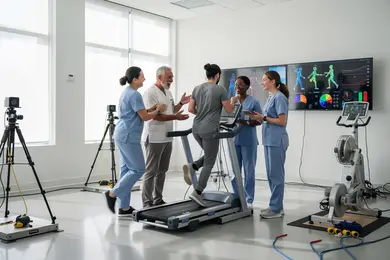
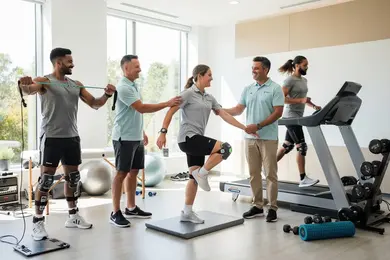
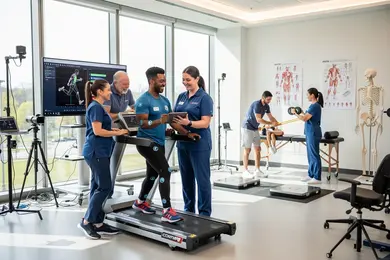
Top first job opportunities for recent kinesiology graduates with a focus on movement science require balancing immediate earnings against accruing clinical experience needed for advanced roles like licensed physical therapist or athletic trainer. Employers increasingly value candidates who augment kinesiology expertise with data-driven skills such as gait analysis or performance metrics.
For students considering career pivots or advancement, supplementing kinesiology study with internships or specialization in evidence-based technologies is critical. Additionally, prospects exist to explore allied health pathways, including pursuing an ASN program online that can complement or extend a movement science background.
What degrees and qualifications do you need to start a career in kinesiology?
Employers in clinical, athletic, and fitness environments consistently require candidates to hold at least a bachelor's degree in kinesiology, exercise science, or a related health and movement science discipline. This academic foundation imparts critical expertise in anatomy, biomechanics, physiology, and motor control, all essential for entry-level roles like exercise physiologist, rehabilitation aide, or fitness trainer.
Understanding the educational requirements for kinesiology careers reveals that a degree alone rarely guarantees employability or competitive wages.
Most practical kinesiology roles demand specialized certifications to complement the degree. For instance, certifications such as those from the National Academy of Sports Medicine or the American College of Sports Medicine not only increase job prospects but often dictate salary levels and client responsibility. Licensure requirements vary regionally, especially in rehabilitation fields, making due diligence on state regulations imperative before committing to any program or career path.
Consider a student aiming for strength and conditioning specialist positions: beyond the bachelor's degree, acquiring the Certified Strength and Conditioning Specialist (CSCS) credential from the National Strength and Conditioning Association can elevate earning potential significantly.
According to data from the U.S. Bureau of Labor Statistics and PayScale for May 2024, top professionals in this specialty earn between $68,000 and $98,500 annually.
Hands-on experience through internships or clinical rotations materially influences employment outcomes. Kinesiologists lacking practical skills often face slower wage growth and underemployment risks in a labor market where fitness trainers and instructors earn a median of $46,180 annually.
Students navigating their educational pathways might also explore options like the easiest RN to BSN program as an example of how strategically chosen credentials affect career transitions within health sciences and allied fields.

What common job titles and work settings are available in early kinesiology careers?
Entry-level kinesiology career opportunities and job titles vary significantly in work environment, licensure requirements, and growth potential.
Athletic trainers, whose roles require state licensure or certification, represent the fastest growth area with a projected 13% job increase and a median salary of $60,250 according to U.S. Bureau of Labor Statistics data for 2024. Their settings include schools, colleges, professional sports teams, and healthcare clinics, with work often demanding travel and irregular hours.
In contrast, exercise specialists and fitness coaches typically find quicker entry through certifications rather than licenses, working mainly in commercial fitness centers and corporate wellness programs.
These positions generally offer less income and job security than clinical roles and operate with more predictable hours but face intense competition. Rehabilitation aides support licensed therapists in physical therapy offices and hospitals but usually find advancement limited without additional education or credentials.
Choice of entry-level kinesiology work settings in movement sciences materially shapes daily responsibilities and career trajectories. Hands-on experience through internships or practicums is often essential for early roles, creating a barrier for some graduates. Balancing certification demands, employer expectations, and compensation requires strategic decision-making tailored to individual priorities.
For those considering further education, pursuing a masters in healthcare management may support advancement beyond initial kinesiology roles.
How do salaries and earning potential compare across entry-level kinesiology roles?
Entry-level kinesiology salary comparison reveals significant variation shaped by role and region, emphasizing the need to weigh immediate earning potential against educational and credentialing demands.
Exercise physiologists command a more robust median starting wage of $73,850, according to data from Arizona State University synthesizing Bureau of Labor Statistics figures. This reflects a strategic choice favoring longer preparatory time for a role with 7% projected employment growth between 2023 and 2033, outpacing average job market expansion.
Contrastingly, fitness trainers and wellness coaches typically enter the workforce with salaries ranging from $40,000 to $55,000, a range affected by local economic factors and employer type. These roles trade higher initial pay for more rapid market entry but often require continuous certification or entrepreneurial initiative to improve earning potential. Physical therapy assistants, another accessible kinesiology pathway, typically earn between $50,000 and $65,000 but must obtain specific licenses.
When evaluating earning potential for kinesiology graduates in movement careers, practical skills and relevant internships emerge as decisive factors for negotiating better starting salaries, often outweighing advanced degrees at entry-level positions.
Geographical disparities also affect compensation. Metropolitan healthcare hubs generally pay exercise physiologists significantly more than rural areas do trainers. Students should consider these nuances early to align educational investments with attainable income goals and market realities.
For those seeking efficient educational routes, options like a BSN to MSN online demonstrate how targeted degree programs can balance affordability with career progression.
What does the typical kinesiology curriculum include to prepare you for these roles?
Choosing a kinesiology curriculum requires focus beyond foundational science. Students must weigh how coursework aligns with rigid professional licensure and employment demands. Core studies cover musculoskeletal anatomy, exercise physiology, and biomechanics, establishing essential knowledge for clinical and sports-related roles.
Yet, the path to roles such as physical or occupational therapist typically depends on selective advanced courses and clinical practicums that develop specialized skills in neurological rehab, therapeutic exercise, and patient communication.
This pathway involves clear workforce consequences: kinesiology graduates without further credentialing often face narrow direct employment prospects. Employers value applied experience and compliance with state licensing prerequisites, which include targeted classes in pathology, pharmacology, and ethics. For example, bypassing proper undergraduate sequencing can prolong time to a Doctor of Physical Therapy degree and increase costs significantly.
Labor market data from the Bureau of Labor Statistics projects a 14% growth for physical therapists and 11% for occupational therapists over 2023-2033, with median salaries exceeding $98,000 annually, signaling viable demand but also competition. Undergraduates without hands-on practicums risk skill gaps that hinder clinical decision-making and team collaboration, competencies critical in healthcare environments.
How do online kinesiology programs compare with campus-based options for hands-on training?
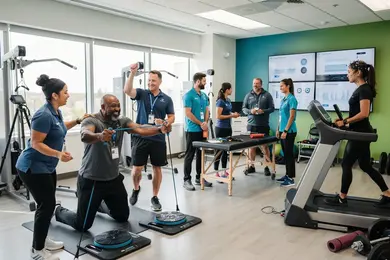
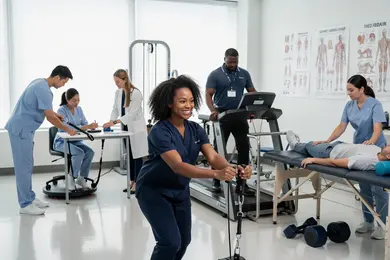
Hand-on experience is a decisive factor in kinesiology education for meeting employer expectations in clinical and corporate wellness environments. Online kinesiology programs offer scheduling flexibility but restrict access to essential labs, supervised practicums, and real-time equipment use, which are critical for mastering biomechanics, exercise physiology, and movement assessment skills.
Campus-based programs integrate these practical components directly into the curriculum, offering structured clinical exposure and collaborative learning that translate into job readiness. For example, kinesiology students working in rehabilitation centers or corporate fitness initiatives gain applied skills that support starting salaries typically around $40,000, with advancement potential to $70,000 or more tied closely to demonstrated hands-on competence.
Online students often face the burden of independently securing quality internships, a variable that can delay skill acquisition and weaken hiring prospects. Mid-career professionals aiming to increase their market value should prioritize programs with mandatory in-person practicums or hybrid models that bridge theoretical knowledge and applied practice.
Strategic evaluation of kinesiology programs should weigh whether hybrid or campus offerings sufficiently address the real-world functional skills employers demand to ensure graduates are workforce-ready.
Which accreditations and program quality indicators matter most in kinesiology education?
Employer and licensure demands define the practical value of kinesiology programs more than institutional prestige alone. Regional accreditation ensures a baseline of quality, but programmatic endorsements from entities like CAAHEP or the American Kinesiology Association better indicate curriculum rigor and clinical relevance.
For students aiming at healthcare roles, programs integrating clinical exposure significantly reduce credentialing delays and improve employability in a field with a 28% projected job growth from 2023 to 2033 and a median salary of $133,260.
Decisions between similarly accredited programs should prioritize tangible outcomes such as graduate job placement above 80% within six months, relevant licensure exam pass rates, and access to experiential learning like internships. For example, a student pursuing sports science must afford sufficient practical lab work, while one focused on research should prefer programs linked to funded projects and publication opportunities.
Tradeoffs include balancing cost against credit transfer policies, which affect long-term debt and the feasibility of accelerated advanced certifications. Employers increasingly seek credentials aligned with national certification pathways such as ACSM-EP, so program alignment with these standards can streamline workforce entry and reduce redundant training.
Ultimately, kinesiology candidates benefit most from programs offering transparent, data-driven outcomes and career integration rather than simply established names.
What licenses or certifications are required or recommended for common kinesiology roles?
Licensing and certification requirements in kinesiology create a distinct divide between clinical and non-clinical career trajectories, influencing employability and job scope. Those targeting clinical roles or rehabilitation must secure provincial registration or licensure like the Registered Kinesiologist (R.Kin) credential, which requires an accredited bachelor's degree and passing a standardized exam. Without this, opportunities narrow largely to assistant or supporting positions.
In contrast, ergonomics and occupational health roles rely on certifications such as Certified Professional Ergonomist (CPE) or Board Certified Professional Ergonomist (BCPE), which employers in manufacturing and corporate safety trust as adequate professional validation. Practical certifications like CPR and First Aid are universally required to meet workplace safety standards.
Additional licenses, such as Physical Therapy Assistant certification, expand functional versatility in rehabilitative settings but impose extra educational prerequisites beyond basic kinesiology degrees. For example, the projected availability of 820 kinesiology-related jobs in British Columbia from 2025 to 2035 indicates competitive hiring landscapes where credential specificity impacts marketability.
Students pursuing health promotion or fitness-focused careers may instead prioritize certifications from bodies like NASM or ACSM, which carry recognition within personal training and clinical exercise specialties but do not substitute for governmental or regulatory credentials required in clinical practice.
This dynamic necessitates evaluating tradeoffs between regulatory compliance and industry-recognized specialization when selecting credentials aligned with intended employment sectors.
What is the job outlook and long-term career growth for kinesiology professionals?
Job growth for kinesiology professionals, particularly exercise physiologists, is projected at 10% through 2033, resulting in roughly 1,900 new roles annually. This demand is primarily propelled by an aging population and rising chronic health conditions, pressuring employers to prioritize candidates with strong clinical expertise and rehabilitation skills aligned with preventive healthcare.
Advancement is contingent on specialization and work setting. For instance, hospital-based kinesiology professionals require certifications and clinical experience to progress, whereas those in corporate wellness often shift more rapidly into managerial roles. Securing advanced credentials, such as certifications or master's degrees focused on rehabilitation or biomotor sciences, is increasingly essential in interdisciplinary environments like physical therapy clinics.
Entry-level kinesiology candidates face competition intensified by employers' preference for data-driven outcome assessment and technology-assisted rehabilitation skills. Graduates must strategically choose between broad kinesiology degrees and focused credentials in exercise science or health promotion, ideally gaining internships or clinical rotations to enhance job readiness.
Lifelong learning is non-negotiable due to evolving treatment protocols and technologies. Professionals must allocate time and resources for continuous education to remain employable and advance amid shifting healthcare demands, limiting stagnation and improving job security over decades.
How can you choose the best kinesiology program aligned with your movement-focused career goals?
Selecting a kinesiology program requires aligning curriculum content and hands-on experiences with specific career objectives within movement sciences. For those targeting rehabilitation therapy or athletic training, programs offering accredited clinical internships alongside biomechanics and injury prevention coursework directly support meeting licensure and employer standards.
By contrast, careers in occupational health or ergonomics depend on expertise in workplace analysis and program evaluation methods, making those program components essential.
Employment outcomes are a critical metric: Concordia University Chicago's integration of BLS and PayScale data identifies unemployment near 3% in kinesiology fields with entry salaries around $45,000 escalating to mid-career averages of $70,000. Choosing programs recognized by industry certifications and local labor market demands correlates with improved job placement and wage growth.
Program logistics, from geographical proximity to kinesiology hubs to availability of in-person practicums and affiliations with healthcare or sports entities, impact experiential quality and network access. Exclusively online programs often limit these advantages, potentially constraining long-term mobility. Faculty expertise with active professional involvement in applied movement science enhances practical relevance.
Tradeoffs between program length and depth affect workforce entry timing and salary ceiling. Extensive clinical hours foster specialization and licensure readiness but delay earnings start; shorter curricula speed entry but may restrict initial job scope and income potential.
Other Things You Should Know About Kinesiology
Employers in entry-level kinesiology positions strongly prioritize practical experience, such as internships, clinical hours, or supervised labs, over purely academic credentials. While a solid theoretical foundation is necessary, graduates without hands-on skills often struggle to meet job expectations in applied settings like rehabilitation clinics or fitness centers. Students should prioritize programs offering extensive, supervised experiential learning to ensure job readiness.
Kinesiology programs balancing theory with active learning demand significant time investment, particularly when integrating lab work and practicums. Students often underestimate the workload required outside of lectures, including physical skill development and research participation. Those targeting fast entry into the workforce should weigh accelerated programs carefully, as reduced practical exposure can limit employability in hands-on roles.
Broad programs provide foundational versatility but may delay employment due to less targeted skillsets. Early specialization in areas like exercise physiology or motor control improves direct applicability to specific roles and employer expectations. Prioritizing specialization is recommended for students with clear career goals, as this approach aligns learning with workforce demand and enhances hiring prospects.
References
- Kinesiology Schools: Exercise Scientist & Kinesiologist https://www.medicaltechnologyschools.com/kinesiologist
- Careers in Kinesiology: Experience A Day in the Life! https://www.kinsk.ca/post/a-day-in-the-life-kinesiology-as-a-career
- Which Kinesiology Track Option Should I Choose? | UT Permian Basin Online https://online.utpb.edu/about-us/articles/kinesiology/which-kinesiology-track-option-should-i-choose
- Kinesiology and Exercise Science Careers Guide https://teach.com/online-ed/healthcare-degrees/online-bachelors-kinesiology-exercise-science/career-outlook/
- Online Bachelor of Science in Kinesiology https://calbaptist.edu/academics/programs/online-bachelor-of-science-kinesiology/
- American Kinesiology Association | Careers in Kinesiology https://americankinesiology.org/careers-in-kinesiology/
- Kinesiology Program Quality Indicators | Washburn University https://www.washburn.edu/academics/college-schools/arts-sciences/kinesiology/quality-indicators.html
- Career Services | University of Manitoba - Career Compass: Kinesiology https://www.umanitoba.ca/career-services/career-planning/career-compass-kinesiology
- Best Online Kinesiology Degree Programs, Updated for 2026 https://www.kinesiologydegrees.org/programs/online