2027 Online Forensic Science Degrees for Students Who Want Laboratory Analyst Roles

Co-Founder and Chief Data Scientist
Many aspiring laboratory analysts face the challenge of accessing specialized forensic science education without sacrificing current job responsibilities or geographic flexibility. This is especially critical given workforce projections from the U.S. Bureau of Labor Statistics showing a steady 11% increase in forensic technician roles over the next decade. Moreover, a 2024 National Center for Education Statistics report found a 19% rise in adult learner enrollment in fully online science programs, signaling growing institutional support for flexible pathways.
These shifts demand that candidates carefully weigh program structure, clinical training opportunities, and accreditation to avoid costly delays or credential gaps. This article evaluates the most viable online forensic science degree options tailored to laboratory analyst careers, providing clarity on how to navigate educational choices for timely workforce entry and advancement.
Key Things You Should Know
- Forensic science degrees average 3.5 years with lab hours often under 150, limiting hands-on experience; this tradeoff forces candidates to pursue costly additional certification or internships to meet employer practical skill standards reported by the NIJ.
- The 7% projected workforce growth in forensic science technicians through 2032 by the Bureau of Labor Statistics intensifies hiring competition, favoring graduates from programs with accredited lab partnerships and demonstrated casework simulation.
- Median annual salary for laboratory analysts in forensic science is $65,000, but degree cost averaging $40,000 nationally delays return on investment, pressuring students to weigh full-time study against income loss and part-time work feasibility.
What are online forensic science degrees for laboratory analyst roles?
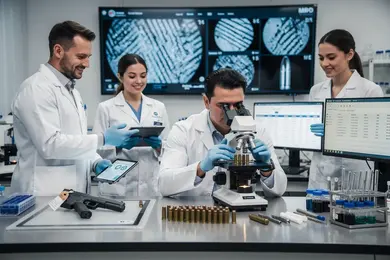
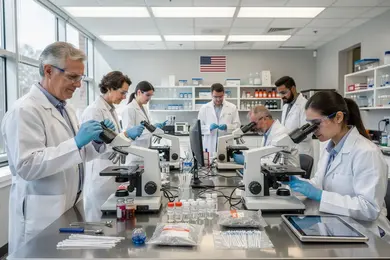
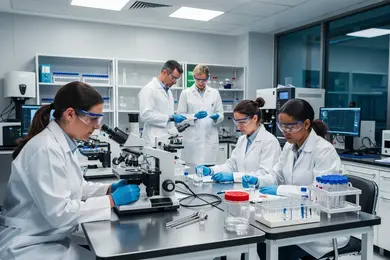
Forensic science degrees offered through online forensic science degrees for laboratory analyst careers are valuable only if they incorporate critical in-person lab practicums vital for hands-on skill acquisition. Employers in crime labs demand proficiency in chromatography, spectrometry, DNA analysis, and microscopy paired with strict evidence chain-of-custody adherence, skills unattainable through purely virtual coursework. The most reliable programs integrate local lab partnerships to ensure supervised practical hours, a decisive factor in employability and operational readiness.
Median starting salaries for forensic laboratory analysts hover around $72,060 annually, rising to $117,250 for analysts with specialized experience or credentials, reflecting the premium placed on demonstrable technical competence and forensic reporting integrity. Candidates pivoting from biology or chemistry fields must carefully plan to reconcile intense lab session requirements with work schedules, as practical experience outweighs theoretical knowledge in hiring decisions.
Program evaluation should also weigh curricula emphasizing case-based learning and laboratory quality management, which improve onboarding speed and effectiveness in forensic environments. Trade-offs between convenience of distance learning forensic science programs for lab analysts and comprehensive skill development directly affect long-term career stability and hiring potential.
Working professionals may explore related disciplines such as a forensic psychology major as complementary or alternative career pathways that add context to forensic laboratory work.
What accreditation should an online forensic science program have?
Employers hiring forensic science technicians often require degrees from programs with regional accreditation and recognition by specific bodies such as the Forensic Science Education Programs Accreditation Commission (FEPAC). This ensures curricula provide essential skills in evidence handling, analytical chemistry, and crime lab protocols-competencies non-accredited programs frequently fail to deliver comprehensively. Graduates from unaccredited online programs may face extended onboarding times or outright rejection, despite a projected 13% job growth in the field through 2032.
Key practical considerations include:
- Regional accreditation guarantees basic academic standards and credit transferability, which affect eligibility for many public sector laboratory roles.
- FEPAC endorsement signals adherence to forensic-specific educational rigor, aligning with employer expectations.
- Programs tied to accredited institutions often provide virtual labs, internships, or partnerships critical for hands-on skills development.
Without these accreditations, students risk limited real-world training opportunities, which can weaken readiness for the precise demands of forensic laboratories. When evaluating online forensic science degree accreditation standards, prioritizing recognized forensic science program accreditation bodies is strategic for job market competitiveness.
Aspiring students weighing options might also explore related fields with stronger online programs; for instance, a data science master online track could complement forensic analytics skills with robust, accredited curricula and better position candidates for forensic data roles requiring advanced statistical expertise.
What admissions requirements do online forensic science programs usually expect?
Admission to online forensic science programs often hinges on a baseline academic readiness, typically at least a high school diploma or equivalent. However, requirements for enrollment in forensic science degrees usually extend to some college-level coursework in biology, chemistry, or criminal justice, reflecting the essential scientific foundation that supports forensic methodologies. Programs aimed at laboratory analyst roles particularly emphasize competence in natural sciences and math due to their direct application in forensic techniques.
Applicants to bachelor's degree tracks generally must submit official transcripts, standardized test scores, and letters of recommendation, though testing waivers may apply for transfer students with sufficient credits or relevant experience. Those pursuing digital or computer forensic concentrations should demonstrate prior knowledge in computer science or information technology certifications, mirroring the current job market where specialists earn median salaries near $88,000 annually. Such alignment influences admission committees' evaluations to confirm that candidates possess the technical background needed for program rigor.
Many programs also request a personal statement to evaluate candidates shifting from unrelated fields, helping assess preparedness for both technical challenges and ethical responsibilities. Criminal background checks are standard due to the sensitive nature of forensic work, filtering out those with histories that could hinder laboratory eligibility. Additionally, supervised lab components may require geographic proximity to partner facilities; students balancing full-time employment or remote locations must plan accordingly to avoid training interruptions.
Prospective students weighing options often find parallels between forensic science and other applied sciences. For instance, those considering an online nutritionist degree face similar admissions complexities yet different workforce entry points, underscoring the importance of anchoring academic choices in realistic career pathways.
What courses are in an online forensic science degree?
Forensic science degree curriculum for laboratory analysts demands a rigorous balance of theoretical knowledge and applied skills, often overlooked in online forensic science lab analysis courses. Core subjects cover forensic biology, chemistry, and DNA analysis, alongside criminalistics and evidence management, but employer expectations hinge on practical competence with analytical chemistry methods, toxicology, and microscopy. Graduates without direct lab experience face notable hurdles in securing analyst roles, making programs with virtual simulations or onsite practicums indispensable.
Coursework also extends to quantitative reasoning and biostatistics, essential for interpreting forensic data under courtroom scrutiny. Specialized instruction in crime scene procedures and forensic ethics contextualizes scientific analysis within legal constraints. For instance, students concentrating on toxicology delve into controlled substance identification and metabolic processes, enabling them to support law enforcement drug investigations. Alternatively, a focus on forensic DNA techniques prepares candidates for cold case work involving complex genetic marker interpretation.
Since tuition averages $14,688 annually for undergraduate programs in the U.S., per National Center for Education Statistics data cited by Intelligent.com, evaluating total costs-including possible lab fees or mandatory residencies-is critical. This financial consideration weighs heavily against anticipated entry-level salaries in forensic analysis, informing realistic career planning.
Students exploring this pathway should also consider the affordability of related fields. For comparative insight, see rankings of masters in library science for cost benchmarks and sector-specific differences.
Which online degree level fits laboratory analyst careers?
Employers in forensic science prioritize candidates with a bachelor's degree for laboratory analyst positions, as this credential meets the minimum threshold for technical competency and independent lab work. An online bachelor's in forensic science or related natural sciences equips students with essential laboratory proficiencies-such as chemistry, biology, and evidence analysis-that align directly with employer expectations in crime labs and law enforcement.
By contrast, associate degrees generally offer limited technical exposure, insufficient for advancement or autonomous responsibilities, which restricts earning potential. For example, individuals holding bachelor's degrees in forensic science typically qualify for roles with a median annual wage of $72,060, with experienced analysts earning up to $117,250 according to U.S. Bureau of Labor Statistics data. This wage structure reveals the practical value employers place on formal education combined with hands-on skills.
Master's degrees and specialized certificates supplement expertise but do not substitute for the foundational bachelor's required to enter analyst roles. Prospective students must also weigh program structure, as remote forensic science degrees that incorporate virtual labs or hybrid options with regional practicum partners provide vital hands-on training, essential for workforce readiness.
Ultimately, completing a bachelor's degree online balances accessibility with credential recognition, supporting eligibility for entry-level forensic lab positions and offering a pathway to higher earning brackets as technical complexity grows.
How do online and campus forensic science programs differ?
Laboratory proficiency remains the defining divide between online and campus forensic science programs, with tangible implications for employability in lab analyst roles. Campus-based training mandates hands-on experience with essential instruments like chromatographs and microscopes, ensuring candidates meet employer demands for verified technical skills. Conversely, online degrees rely heavily on virtual simulations and require students to independently secure local internships or externships to fulfill practical requirements-a process that can delay readiness and complicate workforce entry.
Networking differences compound these challenges. Campus students engage directly with peers, faculty, and forensic professionals, facilitating organic career connections often unavailable to geographically dispersed online learners. Employer preferences continue to favor candidates who demonstrate supervised, physical lab experience over solely virtual preparation.
A case in point is Arizona State University's projection showing a 12.8% job growth for crime scene investigators, with average earnings near $72,060, signaling strong demand for forensic roles grounded in applied technical training. For working professionals or those constrained by location, online programs offer accessibility but necessitate deliberate planning to obtain credible lab exposure and minimize onboarding delay upon employment.
How long and how much do online forensic science degrees cost?
Choosing between a bachelor's and master's degree in forensic science for laboratory analyst roles requires assessing immediate cost against long-term wage premiums and job opportunities. Bachelor's degrees commonly take four years full-time, reduced to about three with transfer credits, while master's degrees add roughly two years. Part-time study extends these timelines, affecting working professionals balancing employment and education.
Salary data indicate early-career starting pay rises from approximately $48,000 with a bachelor's to $55,000 for master's holders; mid-career salaries increase from $60,000 to $78,000, reflecting employer preference for advanced credentials in specialized lab environments requiring supervisory skills.
Practical considerations include:
- The necessity of at least a bachelor's degree with hands-on lab experience to meet many forensic lab hiring standards
- Master's degrees making candidates competitive for supervisory or specialized roles with higher pay grades
- Wide tuition variation, from $15,000 to $40,000 annually for bachelor's programs and $20,000 to $50,000 for master's, influenced by institution type and residency
Working professionals pivoting careers benefit from two-year online master's programs that allow income continuity and faster ROI. Those entering forensic science should plan a path from bachelor's to master's to maximize long-term employability and earning potential while carefully verifying accreditation and alignment with local certification and lab requirements.
What jobs can forensic science graduates get as laboratory analysts?
Laboratory analyst roles for forensic science graduates often require balancing technical acuity with procedural rigor in dynamic, high-stakes environments. Positions such as crime lab analysts or DNA specialists involve hands-on handling of biological or chemical evidence, demanding familiarity with instrumentation like gas chromatography-mass spectrometry and DNA sequencing technologies. Employers, particularly in government labs, prioritize candidates who can navigate strict quality controls and maintain the chain-of-custody integrity under regulatory scrutiny.
Government forensic laboratories remain the primary employment outlet, offering structured career progression but imposing extensive background checks and certification prerequisites. By contrast, private sector jobs-found in consulting, pharmaceuticals, or environmental testing-may provide less stability and more variable professional growth, requiring candidates to weigh job security against work environment flexibility and compensation variations.
The U.S. Bureau of Labor Statistics forecasts an 11% increase in forensic science technician employment from 2021 to 2031, driven by expanding forensic casework and the integration of advanced analytical techniques, translating to roughly 2,000 new positions annually.
Key workforce realities include ongoing skill development to keep pace with evolving laboratory technologies and regulatory standards, as well as adapting to shift work demands. Graduates aiming for senior or supervisory roles should anticipate pursuing additional certifications or graduate studies to meet advanced competency requirements.
What salary can laboratory analysts with forensic science degrees expect?
Salary prospects for laboratory analysts with forensic science degrees vary widely based on employer type, geographic location, and specialization. Entry-level salaries typically range from $50,000 to $65,000 annually, but professionals in well-funded public agencies or private labs often exceed $80,000. Those with expertise in digital forensics or cybercrime can approach six-figure incomes, reflecting high market demand for technical proficiency beyond traditional laboratory analysis.
Federal and state forensic labs maintain structured salary scales influenced by experience and certifications, whereas private sector roles, particularly in cybersecurity and digital evidence, offer premium compensation but demand continuous skill development. For example, graduates from targeted programs such as Champlain College's online Bachelor of Science in Computer Forensics & Digital Investigations have median alumni earnings near $90,000, underscoring the advantage of specialized training aligned with evolving industry needs.
Key factors influencing earning potential include:
- Employer setting: government agencies versus private labs
- Geographic region and local market dynamics
- Discipline focus, especially shifting from physical evidence to digital forensics
Professionals pivoting toward digital forensic roles often see the greatest income gains due to skill scarcity and rising investigative priorities. However, initial wages can be modest, highlighting the importance of evaluating program rigor and regional job markets before committing to educational pathways that seek to balance investment and practical outcomes.
What certifications help forensic science laboratory analysts stand out?
Employment outcomes for forensic science laboratory analysts are significantly influenced by certifications such as those from the American Board of Criminalistics (ABC) and the International Association for Identification (IAI). These certifications not only verify advanced technical skills but also frequently serve as gatekeepers for senior or specialized positions within forensic labs. For example, a forensic toxicologist holding ABC certification gains access to federal and state agencies that prioritize certified expertise, which substantially improves job security and salary prospects compared to uncertified peers.
Practitioners should weigh the upfront costs of certification-application fees, study time, and case documentation-against realistic compensation returns. Tuition for online forensic science master's programs ranges roughly between $10,361 and $20,238, while national median pay for forensic science technicians is around $72,060. This suggests that one year's earnings can cover graduate education and certification fees, making this investment economically justifiable for candidates targeting laboratory analyst roles.
Additional credentials, such as familiarity with American Society of Crime Laboratory Directors/Laboratory Accreditation Board (ASCLD/LAB) requirements, enhance candidates' regulatory compliance awareness, which employers value. Ultimately, a focused certification strategy aligned with a candidate's laboratory specialization yields better professional returns than pursuing broad, generalized credentials.
Other Things You Should Know About Forensic Science
Yes, hands-on lab experience is critical for laboratory analyst roles and online programs must provide accessible opportunities for practical skill development. Students should prioritize programs that include supervised lab partnerships or mandatory in-person residencies to meet employer expectations for technical proficiency. Programs without robust lab components can limit graduates' hiring potential, as many forensic laboratories require demonstrated competence with equipment and procedures before employment.
For those aiming for laboratory analyst roles, it is more practical to prioritize programs with a strong emphasis on laboratory techniques, chemistry, and evidence analysis rather than crime scene investigation. Employers differentiate roles sharply; crime scene roles often require additional field skills and certifications, while lab analysts need deeper specialization in analytical methods and instrumentation. Choosing a program aligned with laboratory workflows improves readiness and credibility for lab-based positions.
Many programs require a capstone, and some require a thesis or laboratory research project. For laboratory analyst roles, expect a culminating course in your final term, usually 3 to 6 credit hours, with documented methods, data analysis, and faculty review.
Online forensic science degrees often require intensive time management, as coursework involves complex lab simulations, research projects, and detailed report writing beyond typical lecture material. Students juggling jobs or family obligations should evaluate program pacing, availability of asynchronous content, and support services before enrolling. Programs with flexible scheduling but rigorous expectations may demand prioritizing study time over other activities to maintain satisfactory academic performance and practical skill mastery.
References
- Analyst Certification Information - Forensic Resources https://forensicresources.org/2019/analyst-certification-information/
- Forensic Science Majors https://www.hamline.edu/academics/undergraduate/forensic-science
- Laboratory Technician Careers - Careers Guide https://www.youthemployment.org.uk/careers-hub-job-role/health-and-science-laboratory-technician/
- How To Become a Forensic Scientist: Requirements & Steps https://www.forensicscolleges.com/blog/htb/how-to-become-forensic-scientist
- Careers in Forensic Sciences - ASCLS https://ascls.org/careers-in-forensic-sciences/
- What does a Lab Analyst do? Career Overview, Roles, Jobs | NSPS https://careercenter.nsps.us.com/career/lab-analyst
- B.S. in Forensic Science | Rivier University https://www.rivier.edu/academics/all-programs/b-s-forensic-science/
- Bachelor's in Forensic Science https://www.ccis.edu/degrees/forensic-science-bachelor
- Forensic Science Course Salary: What Can You Earn? https://purchase.andlight.dk/andlight-news/forensic-science-course-salary-what-can-you-earn-1767648256
- Digital Forensics Certifications https://www.sans.org/cyber-security-certifications/digital-forensics-certifications