2027 Forensic Science Careers That Reward Strong Attention to Detail

Co-Founder and Chief Data Scientist
Imagine analyzing complex evidence on a tight deadline, where a single oversight in blood spatter interpretation could shift an entire legal outcome. Forensic science professionals face relentless pressure to maintain precision amidst evolving case complexities and technological demands. The field's growth is reflected in a 14% workforce increase projected over the next decade by the U.S. Bureau of Labor Statistics, signaling rising competition and specialization.
Additionally, with over 60% of forensic science graduate students engaging in online or hybrid programs as reported by the National Center for Education Statistics, accessibility and scheduling flexibility significantly influence enrollment choices. This article examines career paths suited for candidates excelling at detail-oriented tasks, guiding how to align education and credentials with practical workforce requirements and long-term career mobility.
Key Things You Should Know
- Forensic science salaries vary significantly by specialization, with DNA analysts earning a median $72,000 versus $50,000 for general crime scene technicians according to 2024 BLS data, impacting strategic credential selection.
- Employers increasingly require multidisciplinary STEM backgrounds combined with legal acumen, pushing candidates to invest 2-3 years in specialized master's programs, creating a barrier for rapid career pivots per recent professional surveys.
- Advanced certification costs and time commitments, often extending beyond standard degrees, cause delayed workforce entry; NCFS reports highlight a 15% hiring lag in smaller jurisdictions favoring candidates with practical lab experience.
What do forensic science professionals do and which careers demand strong attention to detail?
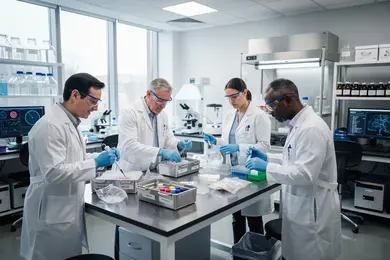
Accuracy in evidence analysis drives practical success in forensic science careers requiring attention to detail. Roles such as DNA analysts and digital forensics examiners hinge on meticulous comparison and extraction of data-errors in these tasks can lead to wrongful convictions or evidence rejection in court. For instance, a DNA analyst must avoid genetic mismatches that undermine case integrity, while digital forensics examiners must preserve metadata intact to maintain admissibility of electronic evidence. Employers seek professionals who rigorously document procedures and maintain chain-of-custody under evolving legal standards.
Careers in forensic science involving detailed evidence analysis increasingly reward technical precision: the median wage for crime lab analysts was $67,440 in May 2024, with employment expected to grow 13% over the next decade due to rising demand for skilled technicians. However, candidates lacking this precision risk costly contamination or errors, which have long-term repercussions on both cases and professional credibility. Real-world outcomes often depend on how well forensic professionals manage lab calibrations and data entry systems to minimize human error.
Effective preparation therefore requires program selection emphasizing hands-on training in forensic chemistry and digital evidence analysis rather than theoretical content alone. This enables mastery of complex instrumentation alongside adherence to exhaustive procedural checklists essential for legal defensibility. Prospective forensic careers should weigh these factors carefully, considering how practical skill development impacts employability and case outcomes. Additional insights into this field can be found at forensic careers.
What degrees and training are required to start a forensic science career in the U.S.?
The pathway into a forensic science career in the U.S. demands strategic academic choices aligned with employer expectations prioritizing applied skills over theoretical knowledge alone. Bachelor's degrees in forensic science, chemistry, biology, or related natural sciences remain essential, with a strong emphasis on laboratory coursework and statistical training to navigate real-world evidence analysis challenges.
Entry-level laboratory analyst roles typically require accreditation-backed programs featuring chemical analysis, DNA techniques, or toxicology. Internship experience is often decisive, as hands-on placements provide vital proof of capability beyond transcripts. Specialized fields such as forensic psychology or criminalistics generally require graduate-level degrees due to the nuanced interpretation of behavioral or pattern evidence.
Digital forensics training programs for forensic science careers in America face structural gaps; unlike the UK's well-established Scientist Level 6 Degree Apprenticeship, U.S. institutions offer limited apprenticeships, creating a bottleneck where agencies demand extensive practical experience alongside degrees. Adopting hybrid models combining degree study and on-the-job training could improve workforce readiness significantly.
Though federal licensing is absent, many states enforce professional certifications or licenses, especially for forensic psychologists and medical examiners, necessitating ongoing education to maintain credentials. Candidates must weigh the considerable time investment for advanced qualifications and seek programs that integrate classroom learning with substantive laboratory or field experience.
Cost considerations also influence decisions; prospective students may explore options like the cheapest master in data science to complement forensic skills with data analytics where applicable, blending disciplines to expand career flexibility.
How do salaries and earning potential compare across different forensic science careers?
Salary differences within forensic science careers hinge heavily on specialization, geographic region, and education level, shaping distinct earning trajectories. Forensic pathologists command the highest salaries, often exceeding $300,000 annually in affluent U.S. markets by late 2025. This premium reflects years of medical training and residency, balanced against a narrow job market and critical legal responsibilities.
Early-career roles like forensic chemists or toxicologists typically start at $60,000 to $90,000, climbing to around $110,000 in competitive urban areas. Crime scene investigators and forensic technicians begin near $40,000 to $50,000, rarely surpassing $80,000 without shifts into supervisory or specialized roles. Employers prioritize education and applicable skills, so a forensic biologist with a master's degree often out-earns bachelor's-level technicians, illustrating how credential depth shapes salary potential.
Strategic tradeoffs matter: a forensic chemist in a California state lab might earn similarly to a pathologist in smaller markets but with fewer training years and lower upfront costs. Students should also assess certification options and geographic job stability when planning their education-to-work pathway.
Those exploring advanced degrees may consider related fields and alternate credentials, such as master of library science online programs, which demonstrate how diverse academic options interface with forensic science career goals.
Understanding earning potential for different forensic science jobs is critical to align educational pathways with realistic workforce outcomes and avoid overspending years on training with limited openings or stagnant wages.
What is the job outlook and demand for forensic science professionals in the coming years?
Employment for forensic science professionals, particularly chemists and materials scientists focused on trace evidence analysis, is expected to grow by 5%, slightly exceeding average occupational growth rates. This reflects sustained demand for precise chemical and materials expertise to interpret complex criminal evidence in drug cases, fire debris, and trace linking of suspects to crime scenes.
Prospective students evaluating forensic science career growth in the United States should recognize that employers prioritize technical skill proficiency-especially in chromatography, spectroscopy, and microscopy-and rigorous adherence to lab protocols to avoid compromising legal outcomes.
Job demand for forensic science professionals nationwide often translates into preference for candidates with advanced degrees or certifications coupled with applied laboratory experience. Agencies with tight budgets seek professionals who adapt swiftly to evolving technologies and maintain stringent quality assurance standards. Consequently, education pathways emphasizing practical instrumental analysis training and quality control knowledge offer strategic advantages over more theoretical programs.
Forensic chemists earn a median salary of $86,620, a figure that underscores the financial tradeoff of investing in specialized graduate education against regional crime lab openings or private consulting roles. Those planning a strategic career pivot should carefully consider program costs and curriculum focus. For students exploring related fields, foundational skills in forensic science complement advanced training paths such as a masters in library science, which may enhance capabilities in managing forensic information resources or evidence databases.
How do online forensic science degree programs compare to campus-based options?
Online forensic science degrees often present a challenging tradeoff between flexibility and practical readiness. While they accommodate working professionals by allowing schedule adaptability, they generally lack the essential hands-on laboratory and crime scene training that employers prioritize for entry-level roles. Campus-based programs, by contrast, integrate dedicated lab hours and field practicums that directly develop the procedural competencies needed for dependable evidence handling and scene management.
Students choosing online formats must confirm whether their program mandates in-person practicums or partners with local crime labs to ensure real-world training. Without this, graduates face delayed job placement or the burden of securing additional certifications to compensate for practical experience gaps.
For those shifting careers while employed, online degrees can efficiently build foundational forensic science knowledge without sacrificing current work commitments. However, fresh graduates seeking roles aligned with employer expectations will often find campus programs superior, especially since senior crime scene investigators in markets like the UK command over £35,000 annually after experience, significantly above the typical starting wages of £15,000-£18,000 (University of Kent Careers).
In summary, the choice between online and campus forensic science education should hinge on the program's capacity to deliver validated hands-on training aligned with licensing and hiring requirements rather than convenience alone.
What forensic science coursework and lab experiences best build attention to detail skills?
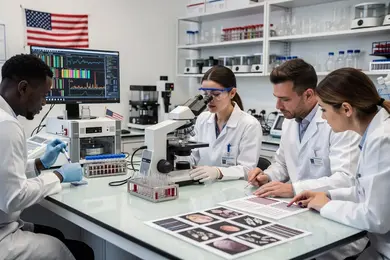
Effective forensic science coursework demands more than theoretical knowledge; it requires rigorous, hands-on training that mirrors the exacting standards of professional environments. Students who repeatedly engage in tasks like blood spatter angle calibration or metabolite identification develop the detailed observational skills essential to avoid errors that could invalidate evidence in court.
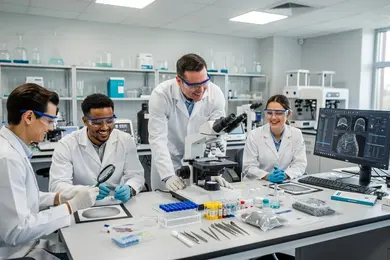
Programs emphasizing controlled experiments in biology, chemistry, and trace evidence analysis sharpen the ability to detect subtle differences-such as fiber color changes or atomic residue patterns-that matter in high-stakes investigations. Without lab intensives replicating real-world conditions, graduates face a steep learning curve when entering roles that mandate flawless precision.
Practical exercises additionally instill strict adherence to procedural protocols, from sample handling to chain-of-custody documentation. This foundational discipline influences employability and salary outcomes; for example, forensic science technicians at the federal level earn a mean annual wage of $119,630, compared to $73,860 in local government sectors, reflecting the premium placed on reliability and accuracy.
Prospective students should prioritize programs incorporating quality assurance labs and instrumentation calibration, alongside forensic statistics and report writing, which align with employer expectations for clear, analytical communication under pressure. Internship or cooperative education opportunities in federally certified labs further enhance workforce readiness by exposing students to complex casework that defines career trajectory.
What admissions requirements and prerequisites do forensic science programs typically expect?
Securing a role in forensic science often demands more than just baseline science coursework; employers prioritize candidates with demonstrated competence in STEM disciplines combined with practical exposure. While a high school diploma emphasizing chemistry, biology, and algebra may meet minimal entry requirements, competitive undergraduate programs typically require applicants to maintain a STEM-heavy GPA between 2.5 and 3.0 and complete foundational courses such as general and organic chemistry, physics, and statistics.
For those targeting forensic science technician positions within criminal justice or medical examiner settings, a bachelor's degree in forensic science or a closely related natural science has become increasingly imperative. Graduate programs typically expect an undergraduate STEM background, plus GRE scores and strong academic references, reflecting the growing technical complexity and interdisciplinary nature of the field.
Practical experience remains pivotal. Candidates who engage in internships, part-time laboratory work, or community college labs to build hands-on skills align better with employer expectations. The U.S. Bureau of Labor Statistics projects a 13% employment growth for forensic science technicians, equating to roughly 2,900 new positions annually through 2034, largely driven by retirements and workforce turnover.
- Prioritize programs integrating real-case training and research methods to enhance job readiness
- Assess GPA and prerequisite course requirements rigorously as gatekeepers rather than mere formalities
- Weigh the benefit of simultaneous work experience to offset academic limits and improve hiring prospects
How long do forensic science programs take, and what do they cost to complete?
Forensic science education requires careful consideration of time and financial investment against realistic career outcomes. Associate degrees typically take two years, offering a quicker entry but limited specialization, while bachelor's programs span four years, providing broader foundational knowledge. Graduate studies add two to three years and are essential for niche areas like forensic anthropology or toxicology where earning potential and role complexity increase.
Cost varies widely: public in-state undergraduate programs range from $7,000 to $15,000 annually, contrasted by private programs at $20,000 to $50,000. Graduate studies may cost $15,000 to $40,000 yearly, with online or part-time formats extending duration but increasing flexibility for working adults.
Employment data from the American Academy of Forensic Sciences in 2023 reveal a large salary range linked to specialization and credential level-starting salaries varying from $40,000 to $146,000, with medically qualified experts commanding $200,000 or more. This disparity indicates that general forensic roles often plateau without advanced training.
Decisions should weigh these factors: spending additional years and money on specialized graduate education often correlates with significantly higher salary ceilings and job complexity. Alternatively, faster, less costly degrees can lead to entry-level roles but with limited growth, especially if lacking access to robust laboratory resources and internship opportunities.
- Two years for associate degrees, four for bachelor's, plus 2-3 years for graduate specialization
- Annual costs from $7,000 (public in-state) to $50,000 (private)
- Starting salaries from $40,000 to $146,000, up to $200,000+ with medical qualification
What certifications, licenses, or professional standards apply to forensic science careers?
Certification choices in forensic science directly shape practical employment prospects and career trajectory. For example, professionals aiming for roles in Texas must strategically secure certifications like those offered by the American Board of Criminalistics (ABC) or the International Association for Identification (IAI) to meet both national and state licensing mandates. Such credentials validate critical technical skills and ongoing proficiency but require a substantial investment in examination preparation, documented casework, and continuing education.
Employers often prioritize accreditations tied to Forensic Quality Services (FQS) or standards from the American Society of Crime Laboratory Directors/Laboratory Accreditation Board (ASCLD/LAB), as these signal institutional quality control and reliability that affect hiring decisions. In regions with above-average job growth, such as Texas where forensic technician roles are projected to grow by 22.57%, aligning credentials with local regulatory frameworks can markedly improve competitiveness in a market with a national average wage of $36.18 per hour.
Pursuit of specialized certifications-such as in digital forensics-entails tradeoffs: narrowing immediate lab opportunities but enabling entry into cybersecurity investigations, sectors with distinct workforce demands. Candidates must weigh certification maintenance costs and time commitments against potential salary benefits and job stability. These practical dimensions underscore the importance of selecting credentials not only for market access but for alignment with one's targeted forensic discipline and geographic labor market realities.
How can students evaluate and choose an accredited, reputable forensic science program?
Choosing a forensic science program without recognized accreditation, such as from the Forensic Science Education Programs Accreditation Commission (FEPAC), can severely limit career prospects. Employers and certification boards prioritize graduates from accredited programs, as these ensure both theoretical knowledge and practical skills essential for effective casework. For example, a candidate trained without adequate lab experience or current technology exposure may struggle in digital forensic roles where cybercrime expertise is fundamental.
Hiring managers favor programs with faculty engaged in applied research or active partnerships with law enforcement, since this translates to relevant, experiential learning rather than purely academic theory. Access to internships or crime lab resources offers direct workforce readiness-something purely classroom-based offerings rarely match. Prospective students should verify these elements rigorously before enrollment.
Data from the SIUE Forensic Sciences careers page referencing BLS shows a median salary near $64,940 for bachelor's level forensic scientists, with a steady 13% job growth and approximately 2,600 openings annually over a decade. Such figures imply solid return on investment if the program aligns with licensure and certification pathways pertinent to the student's intended jurisdiction. Shortcuts on accreditation or program quality tend to result in lower hiring rates despite affordable tuition.
Practical advice includes early research on state-specific credentialing, verifying alumni employment outcomes, and scrutinizing employer relationships to avoid programs that overpromise yet fail to deliver tangible career access.
Other Things You Should Know About Forensic Science
While general forensic science knowledge is useful, specialization boosts employability and efficiency in technical roles like DNA analysis or toxicology. However, specializing too early without solid broad foundational skills can limit career flexibility. Candidates should prioritize programs that offer foundational training before enabling specialization, aligning with long-term job market trends and employer expectations.
The American Board of Criminalistics offers the Forensic Biology and Molecular Biology certification exams, which employers recognize for laboratory roles. Applicants typically need a bachelor’s degree and relevant coursework, and many agencies prefer 1 to 2 years of lab experience before certification.
Programs vary widely in offering hands-on lab and fieldwork, which directly impact skill acquisition and employability. Programs lacking robust practical training may leave students underprepared for employer expectations. Students should prioritize forensic science programs with integrated internships, up-to-date lab facilities, and partnerships with law enforcement to gain real-world experience essential for success.
References
- Forensic Science Careers UK Requirements: Complete Guide to Professional Entry and Advancement https://pathologylabtraining.co.uk/biomedical-sciences/forensic-science-careers-uk-requirements
- Tips for Students Pursuing Careers in Forensic Science https://forensicstats.org/blog/tips-for-students-pursuing-careers-in-forensic-science
- Careers in Forensic Science https://www.aafs.org/careers-forensic-science
- Forensic Science Degree Programs https://www.criminaljusticedegreeschools.com/degrees/forensic-science-degree/
- Educational Requirements for Forensic Science: From Courses to Certification https://www.scuhs.edu/mshgg-article/educational-requirements-for-forensic-science-from-courses-to-certification/
- How To Become a Forensic Scientist: Requirements & Steps https://www.forensicscolleges.com/blog/htb/how-to-become-forensic-scientist
- Forensic Science https://www.staffs.ac.uk/course/forensic-science-bsc-msci
- 13 Reasons To Become A Forensic Scientist https://www.openstudycollege.com/blog/3-reasons-become-forensic-scientist
- A Student’s Guide to Forensic Science Careers, Jobs, Skills, and Salaries https://criminaljusticeschoolscentral.com/careers/forensic-science-careers-jobs-skills-salaries/