2027 Business Job Market Outlook Through 2030

Co-Founder and Chief Data Scientist
Graduates and working professionals aiming to pivot or advance within business administration face a critical timing dilemma shaped by volatile labor demand and evolving educational access. The U. S. Bureau of Labor Statistics projects an 8% growth in business and financial occupations through 2030, yet concurrent shifts-such as a 26% surge in adult enrollment in online degree programs reported by the National Student Clearinghouse in 2024-reflect a transformation in how education intersects with career mobility. These trends reveal growing emphasis on flexible, competency-based learning but also intensify competition and uncertainty around program selection and completion speed. This article examines the business job market outlook through 2030, providing actionable insight to help prospective students and professionals align education choices with realistic workforce dynamics and opportunity timing.
Key Things You Should Know
- The U.S. Bureau of Labor Statistics projects 8% growth in business administration jobs through 2030, but automation will eliminate 12% of entry-level roles, forcing candidates to prioritize tech and data literacy over traditional generalist tracks.
- Employers now demand interdisciplinary skills; a National Association of Colleges and Employers 2024 survey finds 62% value business analytics combined with leadership experience, stressing integration over isolated competencies.
- Median graduate debt for business degrees rose 14% since 2022 per the Federal Reserve, extending payback periods by two years on average; accelerated certifications reduce time-to-employment but limit scope for career pivots.
What are the strongest business job trends and growth areas in the U.S. through 2030?
Employment projections indicate a selective expansion in the U.S. business job market, with growth concentrated in data analytics, digital marketing, supply chain management, and sustainable operations. These roles demand proficiency that goes beyond foundational business knowledge, privileging candidates who bring both strategic insight and technical skillsets. For instance, supply chain managers who apply AI-driven forecasting tools enhance operational resilience amid global disruptions, a decisive competitive edge.
The strongest business job trends in the U.S. labor market highlight an evolving requirement for data fluency and cross-functional collaboration rather than broad managerial training alone. Employers increasingly prioritize measurable impacts achieved through analytics software and sustainability frameworks aligned with compliance standards. Candidates must balance the tradeoff between generalized degrees and niche expertise, actively pursuing dual-certification or continuous upskilling to navigate this complex landscape.
Hiring friction arises where strategic vision intersects with technical proficiency. Professionals facing the fastest growing business careers in the United States should anticipate ongoing skill reassessments as automation expands. Ignoring digital competency risks displacement despite overall job growth, thus recalibrating educational choices is essential.
An online business administration degree can offer practical pathways to integrate analytics and project management skills critical for workforce relevance, provided candidates scrutinize program outcomes and real-world applicability carefully.
Which business majors and degrees best align with high-demand roles through 2030?
Finance, accounting, and management information systems (MIS) degrees align closely with employer demand through 2030, as business and financial occupations are projected to grow 6%, adding over 900,000 jobs. Finance graduates fill roles requiring quantitative analysis, regulatory expertise, and financial modeling, essential in corporate finance and risk management. Accounting majors are increasingly sought for compliance, audit, and taxation positions amid tightening regulatory environments, emphasizing accuracy and adaptability.
MIS provides a competitive edge by integrating technology with business strategy, appealing to companies expanding digital infrastructure. For instance, healthcare providers rely on MIS professionals to manage electronic health records while ensuring data privacy compliance, showing the degree's specific applicability in regulated sectors. Supply chain management and business analytics also meet rising needs, especially in manufacturing and retail, where data-driven strategies improve efficiency.
Tradeoffs exist between specialized degrees and broader business administration programs: the former offers technical depth in fast-growing roles, while the latter may lack this focus, potentially limiting immediate employability in niche sectors. Employer preferences increasingly favor candidates with combined business degrees and certifications in areas like data analysis or project management, which significantly enhance marketability.
Students pursuing top business majors for job growth should consider how hybrid skill sets affect long-term career resilience. Exploring an accelerated project management degree can provide practical credentials to complement core studies and meet employer expectations.
What salaries can business graduates expect by role, industry, and experience level?
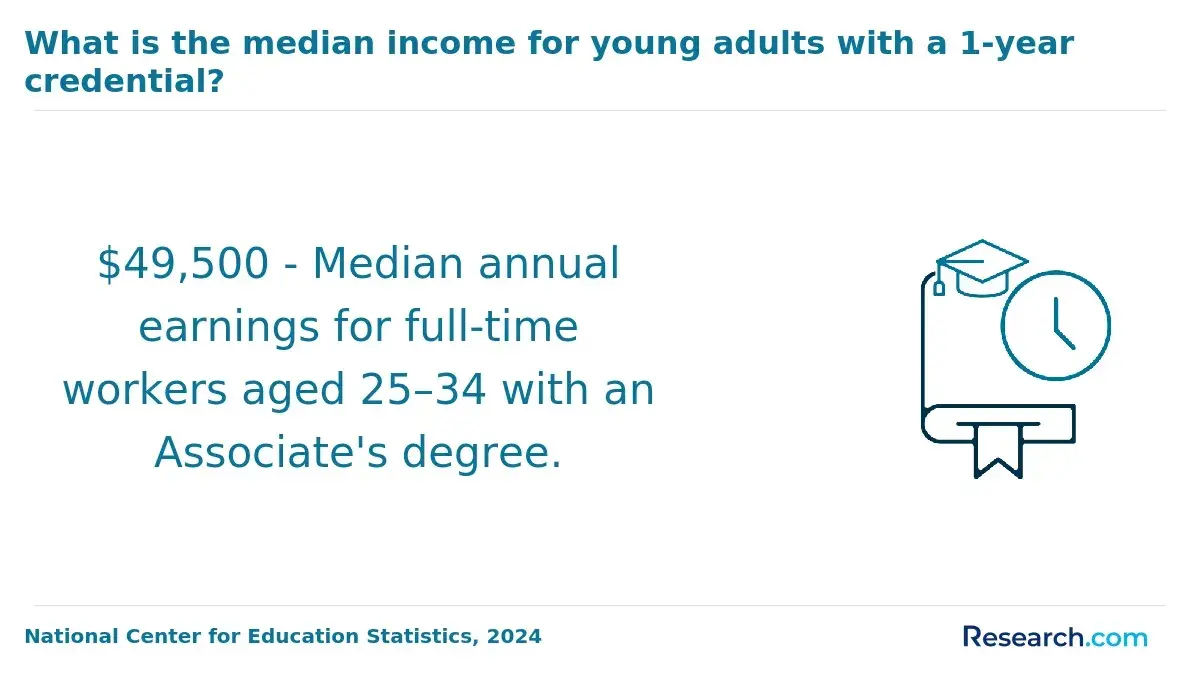
Salary outcomes for business graduates by role and experience level are increasingly segmented by technological adaptability and sector-specific demands. Entry-level analysts in finance or consulting typically earn between $65,000 and $85,000, whereas mid-level managers at tech-centric firms command $110,000 to $140,000, driven by premium skills in AI and automation. These market shifts necessitate deliberate skill investments to avoid wage stagnation amid expected automation-driven workforce reductions, as reported in the Future of Jobs Report 2025.
Industry salary expectations for business administration graduates vary notably. Healthcare administration and advanced manufacturing maintain stable salaries from $70,000 to $100,000 for professionals with several years' experience, but these roles demand proficiency in data analytics. Sales and marketing professionals with expertise in digital transformation and AI-enhanced platforms see starting salaries near $60,000, rising to $120,000 or more with sustained experience. By contrast, traditional retail roles tend to offer lower ceilings, often under $90,000, reflecting slower digital adoption.
Consider the case of a mid-career financial analyst who pivots to AI-driven banking roles-this realignment can increase salary potential by 20-30%, mitigating risks from automation-related job reductions. Employers prioritize adaptability and AI fluency; those lacking these capabilities may face constrained wage growth or job loss.
Given these dynamics, pursuing targeted credentials like certifications in machine learning or data visualization directly correlate with improved salary outcomes, particularly when aligned with specific job markets. For professionals assessing strategic transitions within business fields, exploring options such as project management degree jobs can provide a relevant bridge to roles balancing operational expertise with technological fluency.
How do job outlook and automation risk vary across key business career paths?
Job outlook and automation risk in major business administration careers are diverging sharply, favoring roles that integrate technology and data fluency. Positions focused on AI, machine learning, and fintech engineering are set for the fastest expansion through 2030, driven by ongoing digital transformation and spiking demand for advanced data infrastructure. By contrast, traditional administrative and clerical roles face significant displacement due to automation software, altering the fundamental employment landscape.
For instance, financial analysts who combine fintech solutions with advanced analytics experience growing demand, while routine accounting clerks confront shrinking opportunities amidst automated bookkeeping tools. Marketing managers who use AI for predictive customer targeting maintain more viable career paths compared to those executing manual campaigns. These dynamics illustrate practical tradeoffs between specializing in high-tech skills and remaining in legacy business functions.
employers expect business administration candidates targeting growth careers to demonstrate data literacy, coding basics, and familiarity with technology-adjacent frameworks. The cost is a steeper upfront investment in STEM-integrated curricula and project experience, but this yields discernible long-term benefits in career security and wage potential. Graduates lacking this skillset frequently encounter wage stagnation and limited advancement.
Decision makers should analyze automation exposure by skill intersections rather than titles alone, as transitioning to tech-enabled functions requires targeted reskilling in machine learning and fintech innovations. Industry data on business career paths employment trends and automation impact confirm workforce investment in these niches delivers 20-30% higher employment growth relative to traditional roles.
Prospective students might also consider programs like an online hospitality degree for parallel insights into managing evolving labor demands and technology use across sectors.
What education and skills do employers look for in future-focused business professionals?
Employers now expect business professionals to integrate strong data literacy and adaptive communication skills tailored for hybrid and remote work environments. Nearly 80% of remote-capable employees split their time between office and remote setups, demanding proficiency in digital collaboration platforms, asynchronous communication, and self-directed task management. Candidates who lack hybrid communication fluency or data-savvy risk slower career progression or the need for additional certifications.
Educational programs focused on business administration must move beyond traditional siloed skills and embrace interdisciplinary learning that couples analytics, information systems, and organizational behavior. For instance, supply chain managers must utilize predictive analytics and real-time inventory tracking to coordinate dispersed teams effectively, while marketing leaders rely on data-driven insights to optimize digital campaigns.
Soft skills remain essential but require translation to virtual contexts: emotional intelligence for remote team dynamics, negotiation in digital meetings, and early conflict resolution without face-to-face cues. Continuous learning aligned with evolving technology is no longer optional but a baseline expectation from employers.
Practical, project-based upskilling using real datasets and simulated remote teamwork is critical. Prospective students should scrutinize evidence of employer partnerships, successful placement in hybrid roles, and curriculum flexibility that aligns with current workforce demands to avoid investing in programs that do not prepare them for these operational realities.
How do online business administration programs compare to campus options for career outcomes?
Employment competitiveness for business administration graduates hinges more on program quality and network access than solely on the delivery format. Online business administration programs match campus options in employment outcomes when they maintain regional accreditation and relevant curriculums. Their principal advantage is flexibility, enabling working professionals-such as a mid-level supply chain manager-to upskill and apply new knowledge immediately without leaving their roles, accelerating readiness for promotion in sectors requiring continuous reskilling.
Yet, campus-based programs often provide greater in-person interactions, internships, and employer contact-critical for entry-level candidates lacking professional experience. Fields like financial services and marketing frequently prioritize internship experience and on-campus recruitment, making students outside these environments potentially reliant on external, sometimes less effective, networks.
The World Economic Forum estimates 59% of the global workforce will need reskilling by 2030, while 11% risk inadequate training, impacting job security. Online programs address this gap at scale but demand self-discipline and time management-key success factors often underestimated by prospective students.
Decisions should focus on measurable program outcomes, including career service strength and experiential learning opportunities. Graduates from institutions with these features demonstrate higher placement rates regardless of modality. Prospective students must weigh flexibility against networking access and verify programs align with real-world employer expectations.
Which accreditations and program quality markers matter most for business degrees?
Employers gauge the value of business degrees primarily through accreditation status, with AACSB, AMBA, and EQUIS certifications signaling program rigor and graduate preparedness. AACSB accreditation holds particular weight in finance and consulting, where hiring managers often equate it with superior alumni networks and higher starting salaries-typically exceeding $125,000 compared to $60,000 for bachelor's graduates. This gap reflects clear employer preference for advanced, accredited credentials.
Beyond accreditation, prospective students should assess curriculum relevance, faculty expertise, and experiential learning components such as internships or real-world projects, especially when targeting sectors like healthcare or technology. Purely theoretical programs, even if accredited, may deliver weaker returns unless supplemented by career services or corporate connections.
Choosing a program involves tradeoffs in cost, duration, and flexibility. Full-time AACSB MBAs offer strong salary upside but often require significant upfront investment and delayed earnings. Part-time or online options may sacrifice accreditation or immersive experiences, potentially reducing competitiveness in the job market. Aligning program traits with one's current career phase and financial situation is critical.
Soft skills and specialized knowledge embedded in curricula-such as data analytics or international business-are increasingly scrutinized by employers, emphasizing that accreditation alone is insufficient. Candidates must demonstrate measurable competencies that match evolving business demands to maximize career mobility.
What are typical admission requirements, program length, and costs for business degrees?
Employers increasingly weigh practical experience and timely credentialing over costly, prolonged business education, especially in Business Administration. Graduate entry demands a bachelor's degree or equivalent, while undergraduate admission typically requires a high school diploma plus competitive SAT or ACT scores. Leadership potential evidenced by extracurriculars or relevant work experience significantly enhances candidacy, particularly for MBA or specialized master's programs.
Program duration varies: associate degrees usually span two years, bachelor's last around four, and MBAs or professional master's take one to two years. Part-time or executive tracks extend completion but accommodate employed students. These formats are especially advantageous for sector pivots, such as healthcare management, where job growth projections exceed 28% through 2033, creating roughly 1.1 million new positions.
Cost considerations influence decision-making: public in-state bachelor's programs range $10,000-$15,000 annually, while private institutions often surpass $35,000 per year. Graduate programs like MBAs span $30,000 to over $100,000 total. Indirect costs, including fees and opportunity cost from lost wages, must also be factored.
- Accelerated credentials paired with internships or on-the-job training often yield faster leadership entry than lengthy, prestige-focused programs devoid of experience.
- Part-time or hybrid programs with healthcare management emphases provide income continuity during career transitions.
- Recent graduates may face higher upfront investment in traditional full-time routes but position themselves for longer-term advancement.
Choosing a business degree path requires balancing program cost, duration, and outcome relevance to specific career objectives-especially amid evolving employer expectations prioritizing ROI and experience over mere credential accumulation.
Which business certifications and licenses can significantly improve job prospects?
Certifications like the Certified Professional in Management (CPM), Project Management Professional (PMP), and Certified Business Analysis Professional (CBAP) have become decisive in securing higher-paying roles within dynamic industries. For example, PMP holders typically command salary premiums exceeding 20%, reflecting employer demand for validated project leadership amid global workforce shortages.
In sectors with structural growth-such as healthcare and education-credentials tied to management and regulatory compliance open doors to specialized roles beyond general business administration. The Certified Healthcare Financial Professional (CHFP) credential illustrates this point by aligning expertise with complex healthcare regulations and financial controls, essential as these fields adapt to demographic shifts.
Meanwhile, traditional licenses like the Certified Public Accountant (CPA) remain foundational for accounting professionals, mandating deep regulatory understanding crucial to public accounting and corporate finance. Lack of continuous certification updating can stall advancement, especially in structured corporates where formal qualifications influence promotion timelines.
Practical tradeoffs include upfront costs and renewal demands. Marketing managers, for instance, who pursue Certified Digital Marketing Professional (CDMP) certification can differentiate from peers reliant on generalist experience by showcasing proficiency with contemporary digital tools.
How can prospective students choose a reputable business program aligned with long-term goals?
Choosing a business administration program requires careful consideration of its alignment with evolving labor market demands rather than reliance on broad accreditation or traditional curriculum alone. By 2030, nearly 40% of current core skills will become obsolete, pressuring students to seek programs that emphasize adaptable competencies such as data literacy, digital management, and strategic decision-making.
Not all business administration degrees deliver equally on employability. For example, an individual pursuing leadership in fintech must prioritize programs blending financial technology with leadership development, rather than generic business curricula. Accreditation bodies like AACSB provide baseline quality assurance but do not guarantee practical exposure or employer connections. Partnerships with industry and real-world projects enhance graduate outcomes significantly.
Flexibility matters. Working professionals benefit from hybrid or part-time models that enable continuous skill upgrading without sacrificing income. Programs offering stackable credentials can preserve relevance as industries transform rapidly. However, specialization in emerging sectors involves a tradeoff: it narrows immediate job options but can unlock higher growth potential in targeted fields.
Effective program evaluation depends on two practical metrics: employer demand for the specific skills taught and verified alumni employment rates in desired industries. Supplementing marketing claims with independent labor market data helps validate these priorities.
Other Things You Should Know About Business Administration
By 2030, a business administration degree is poised to remain valuable for career advancement. It equips graduates with versatile skills relevant in diverse industries, thus enhancing employability in leadership roles across sectors like finance, marketing, and operations.
Specializing early can provide targeted skills for specific industries, improving job fit and advancement potential in fields like finance or marketing. However, a broad business administration approach fosters versatility, which is advantageous for shifting roles or managerial positions that require cross-functional understanding. Prioritize specialization when you have a clear career path; opt for generalist programs if you expect to pivot or lead diverse teams.
Balancing a business administration program with full-time work demands rigorous time management and may extend your program length. Expect reduced personal time and potential burnout if your courses include intensive group projects and case studies. Prioritize programs with flexible scheduling or asynchronous learning formats if maintaining full-time employment is critical for financial stability and career continuity.
Graduates rarely enter managerial roles directly upon graduation without relevant work experience. Employers expect demonstrated leadership capabilities and domain expertise beyond degree completion. Focus on building practical skills through internships, mentorships, or entry-level roles that offer managerial exposure to shorten the path to leadership positions.
References
- Fastest-Growing and Fastest-Declining Industries in United States & Common Jobs in Those Fields - USCI https://www.uscareerinstitute.edu/blog/The-Fastest-Growing-and-Fastest-Declining-Industries-in-the-United-States
- Business Skills for Professionals to Succeed https://www.bolc.co.uk/bolc-blog/business-skills-for-professionals
- Why Business School Accreditation Matters https://poetsandquantsforundergrads.com/news/why-business-school-accreditation-matters/2/
- The Smart Student’s Guide to Choosing a Business Degree – EU... https://www.euruni.edu/blog/the-smart-students-guide-to-choosing-a-business-degree/
- Preparing for the Future of Work: Trends in Job Market 2030 https://gfoundry.com/future-of-jobs-2030/
- Top 15 Highest Paying Business Degree Jobs in 2025 UK & Global Guide https://apexlearning.org.uk/highest-paying-business-degree-jobs-2025-2026/
- Online BBA vs. On-Campus BBA: What You Should Know Before You Choose | CourseCompare.ca https://www.coursecompare.ca/online-bba-vs-on-campus-bba/
- 5 Future Skills Employers Want You To Have https://ubisglobal.com/blog/5-future-skills-employers-want-you-to-have/
- 23 Best Business Majors for the Future Job Market | University of the Potomac https://potomac.edu/best-business-majors/
- Institutional vs Program Accreditation: What You Should Look For | Articles | Unimy https://www.unimy.com/article/institutional-vs-program-accreditation-what-you-should-look-for